Jubilee Range 2024 Feb

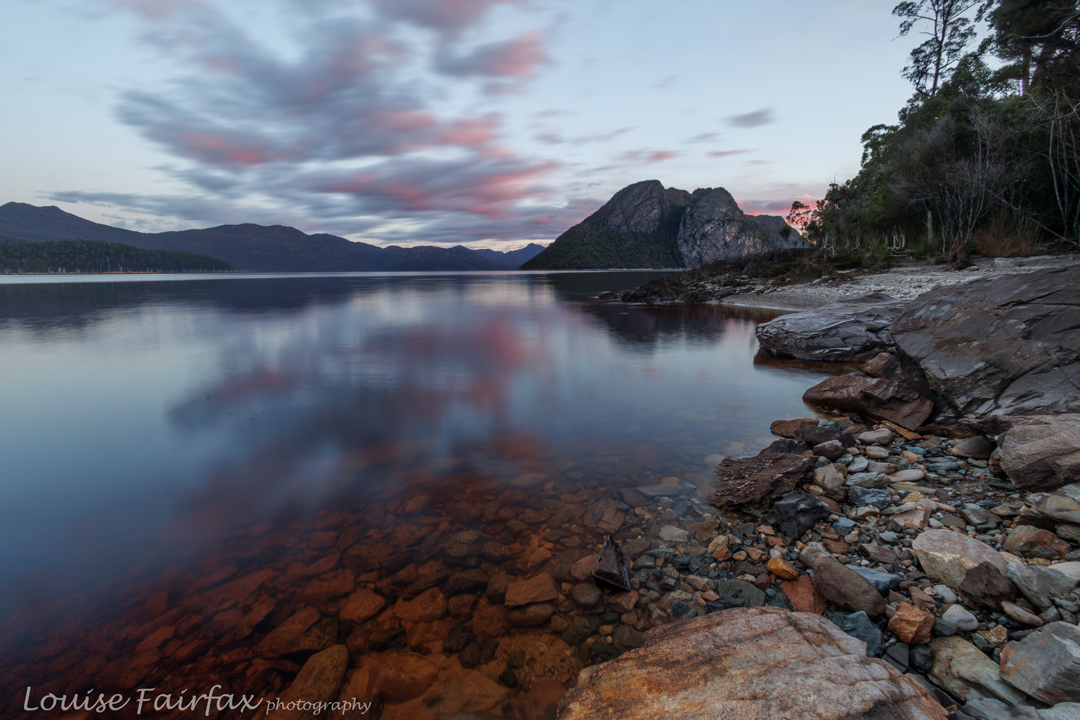
Over ten years ago, I said in my blog that I would like to return to the Jubilee Range, not only to reach the actual high point, but also, and far more importantly, to sleep up there. For me, sleeping on high and witnessing dawn and dusk are the essential elements of a satisfying wilderness experience. A single day pop-in doesn’t have nearly the same effect on me.
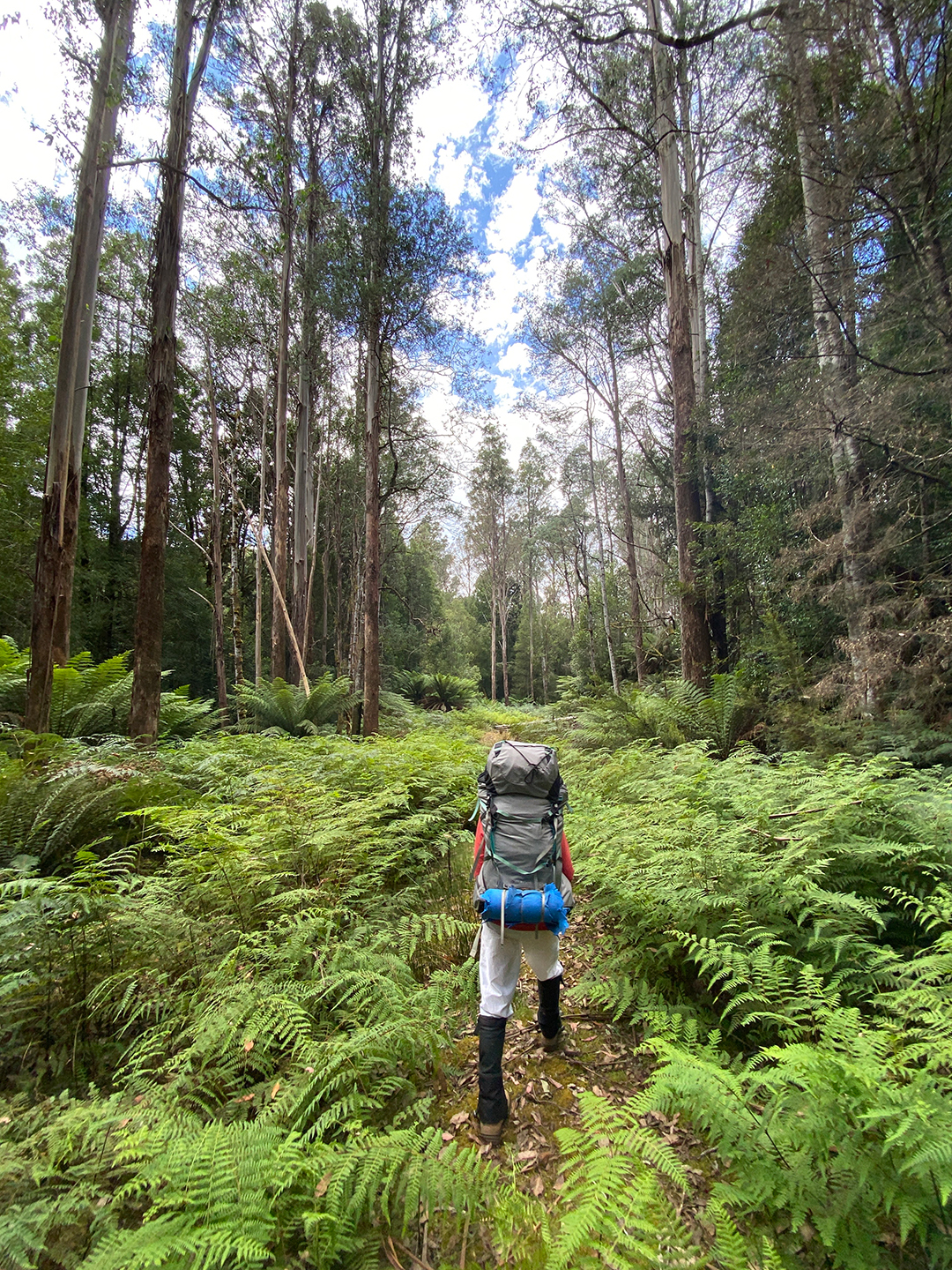
The road walk in : 3.5 kms. Photo cred: Adrian Bol. (White pants did not stay white).

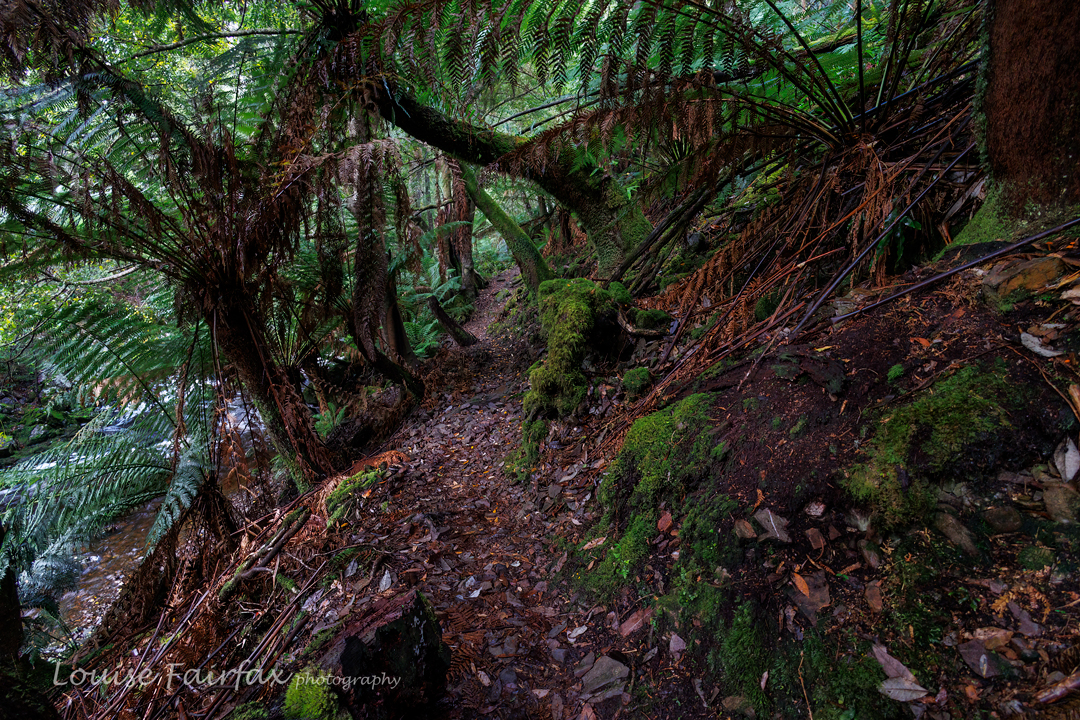
Luckily for me, one of my waterfall hunting friends, Adrian,  had decided he wanted to check out some falls way at the far end of the range, between it and Nevada Peak. He planned a trip with four of us eager beavers in mind, but two dropped out. I feared our speed difference would make the trip boring for him, but he disagreed and encouraged me to continue, so off we set. Thanks mate. He knew I needed the restorative powers of the wilderness to soothe my soul a bit. Nothing like pushing your way through dense melaleuca and bauera, piercing your skin with cutting grass, and goose-stepping over high button grass to soothe the soul. The steep climb in debilitating heat no doubt also contributed to distracting me from the state of my soul. I drank 5 litres of water on day one!!! Pity all the creeks were dry!
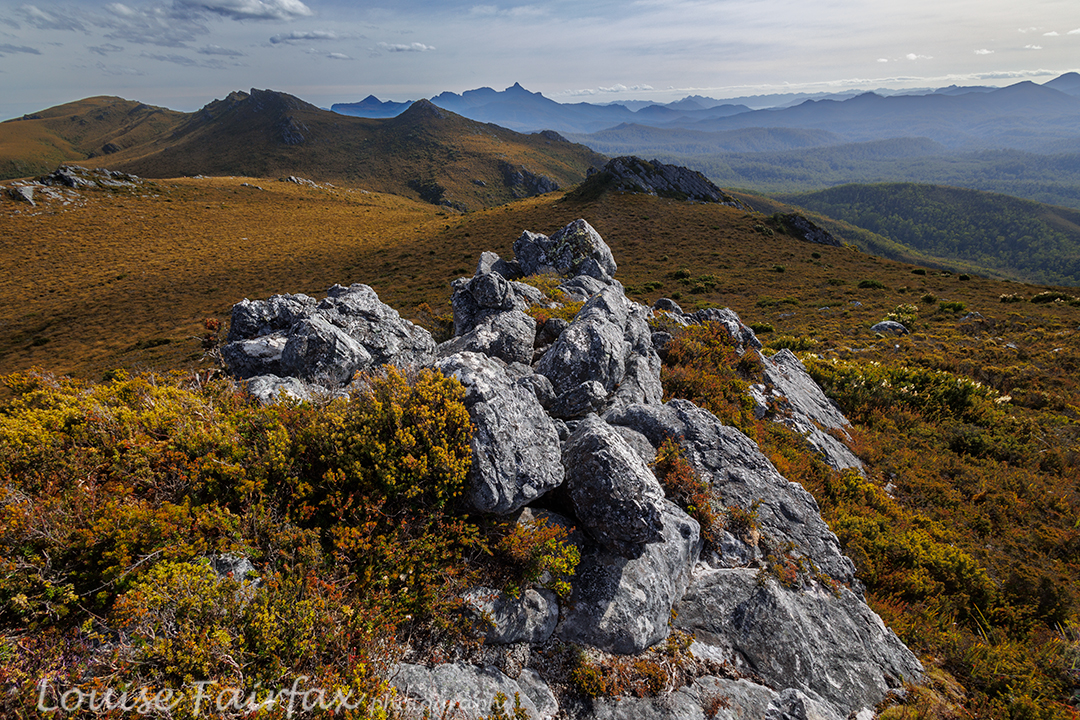
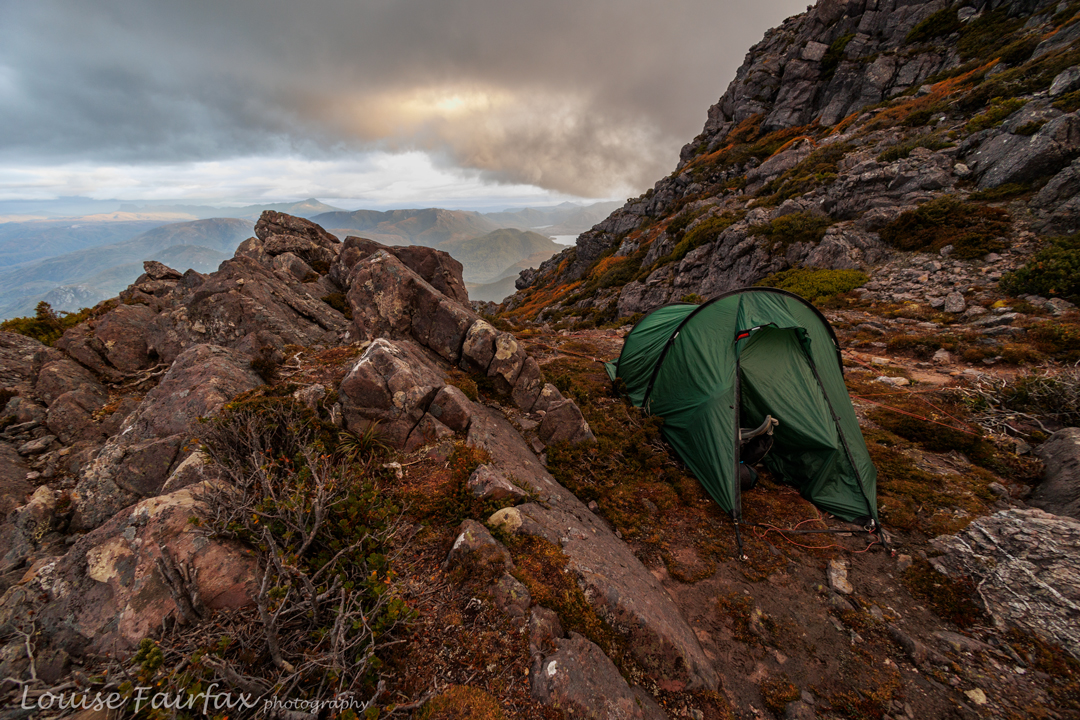
Jubilee Range campsite.

Our cause was not helped by the fact that the road is now impossible and impassable beyond the Styx crossing. We had to walk 3.5 kms to get to the actual start, which added over an hour in each direction.
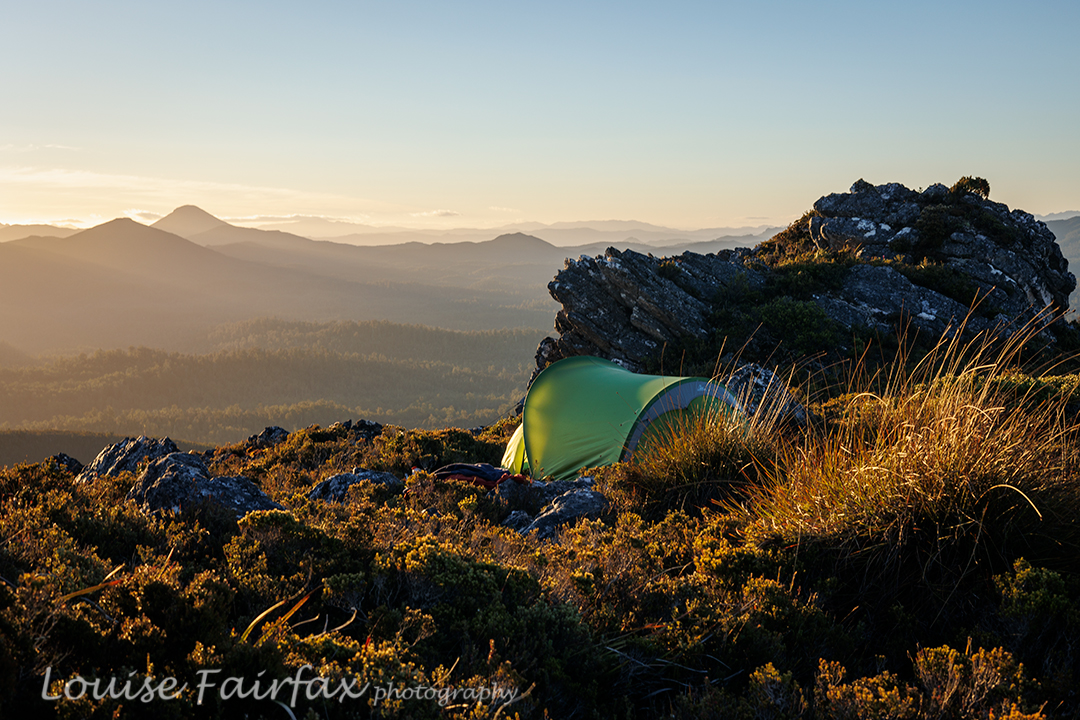
Jubilee Range Adrian’s tent

Luckily, we kind of had enough water to make it to Mt Jubilee. Progress was very slow, and every time we stopped, I needed another 500 mls – far more than on the Larapinta trail, where I drank 250 mls/hr. After one hour, first break, we had covered a mere single kilometre. This dd not bode well for our overall plans. We could only do whatever it was we could do. On we pressed. Up through the thick, resisting muck. More water disappeared from our bottles.
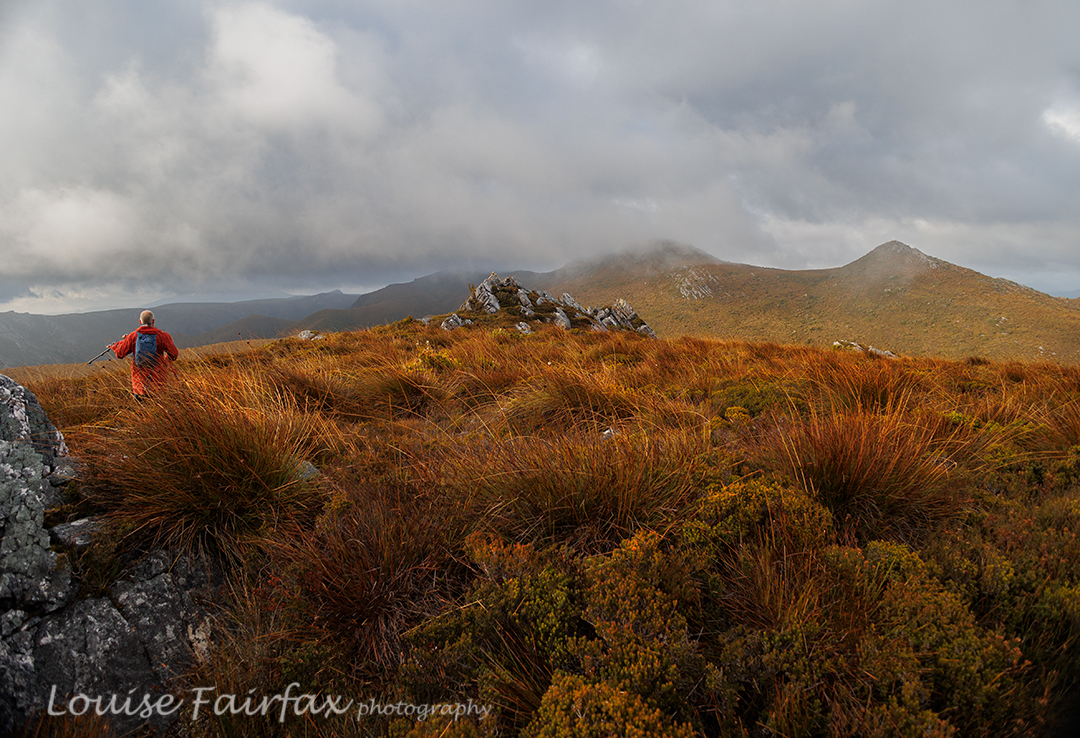
Jubilee Range day 2 begins.

I started to worry about the future of this trip. We had already consumed so much water that we didn’t even have enough for dinner. If we didn’t find water by the summit of Mt Jubilee, I decided, we would need to turn back. Our whole trip depended on finding a source of water somewhere up high, but as all creeks had been dry, the prospects did not look good.

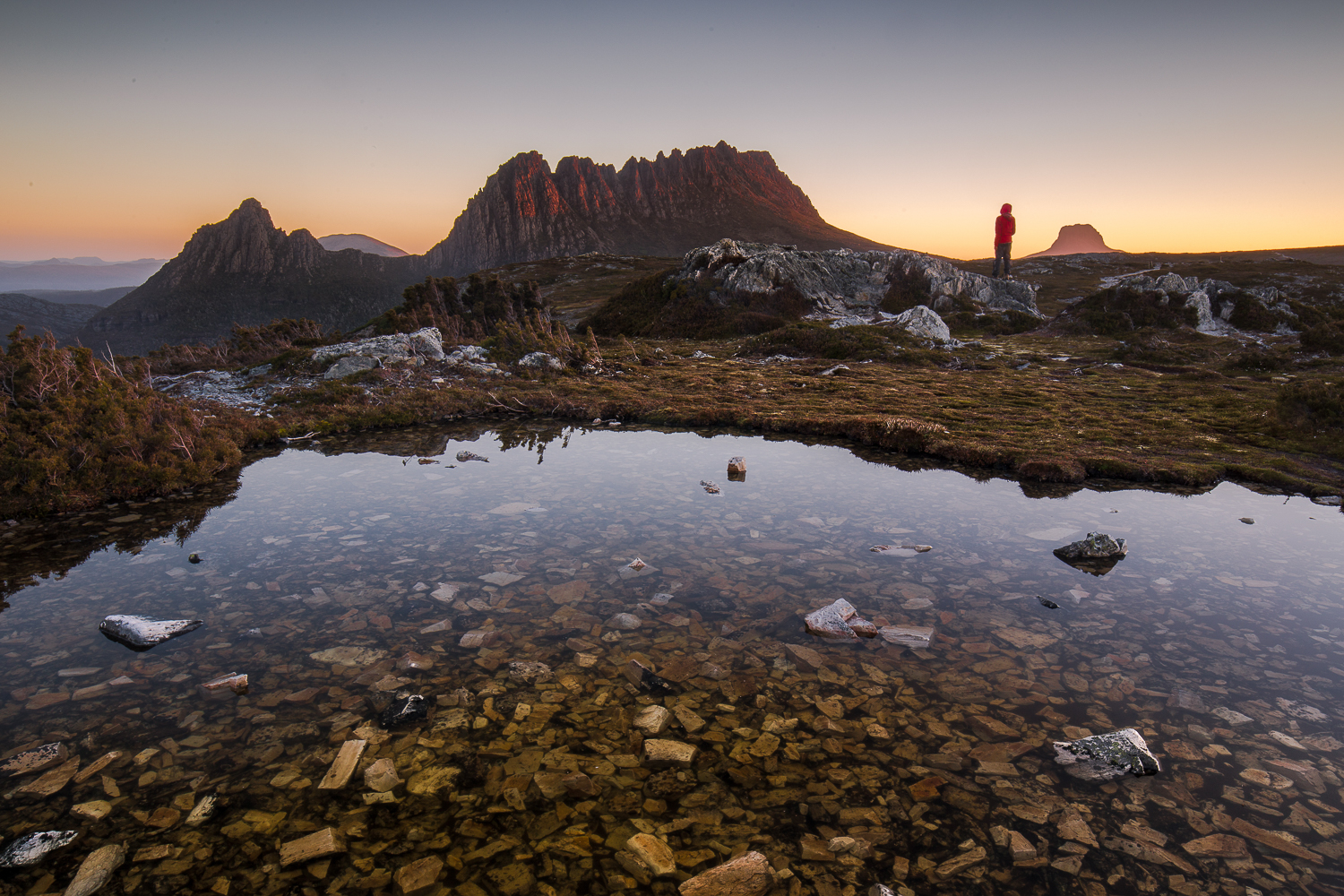
Jubilee Range: tarn below “Lunch Bluff” on “Endless Tarn Ridge”.

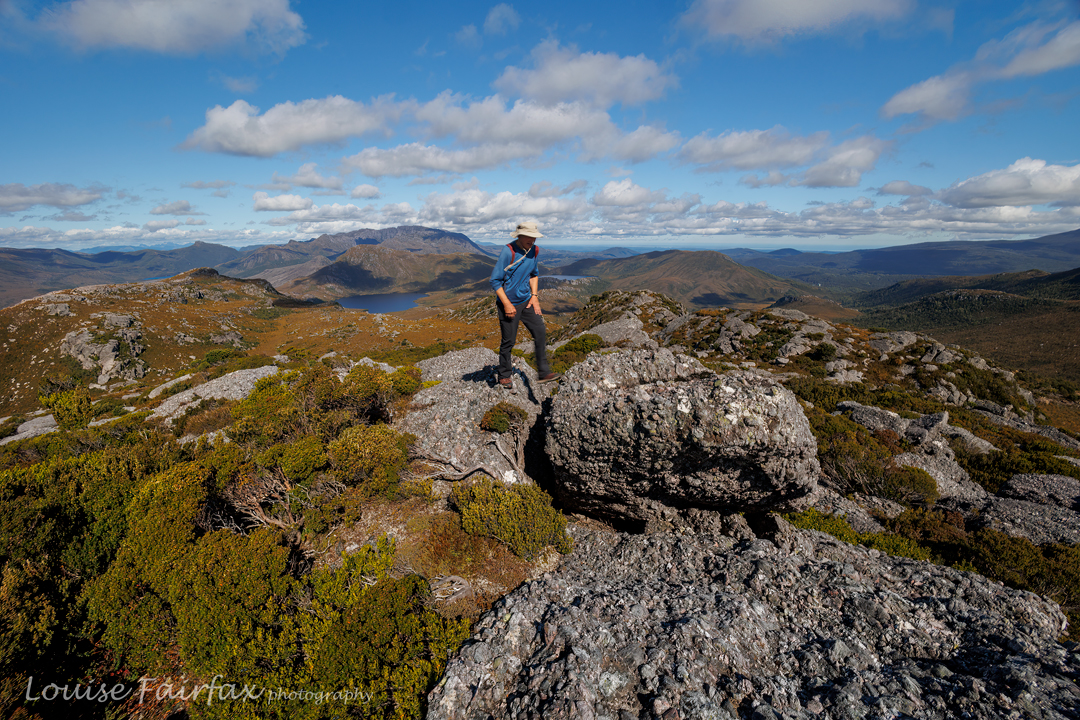
The slope looked like it was at  last levelling out. Our climbing trials were nearly over. We were going to crest the slope near a rocky, bluffy sort of arrangement, with Mt Jubilee itself just slightly to our left, only a couple of minutes away. I dumped my pack unceremoniously on the ground and looked to my left as I turfed it. Unbelievably, hidden behind the deep green of knee-high bushes was a tiny, tannin coloured, yet pure and clean, tarn. Our trip was saved. Yahooooo. Adrian dumped his pack, and we drank, and drank and drank. I needed more, so added two more protein drinks to the couple of litres I’d just gulped. Off we set on the 5-min ‘trip’ to Mt Jubilee. On top it was nice, but I was still thirsty, so had to return to the tarn for more water and two “post workout smoothies”.
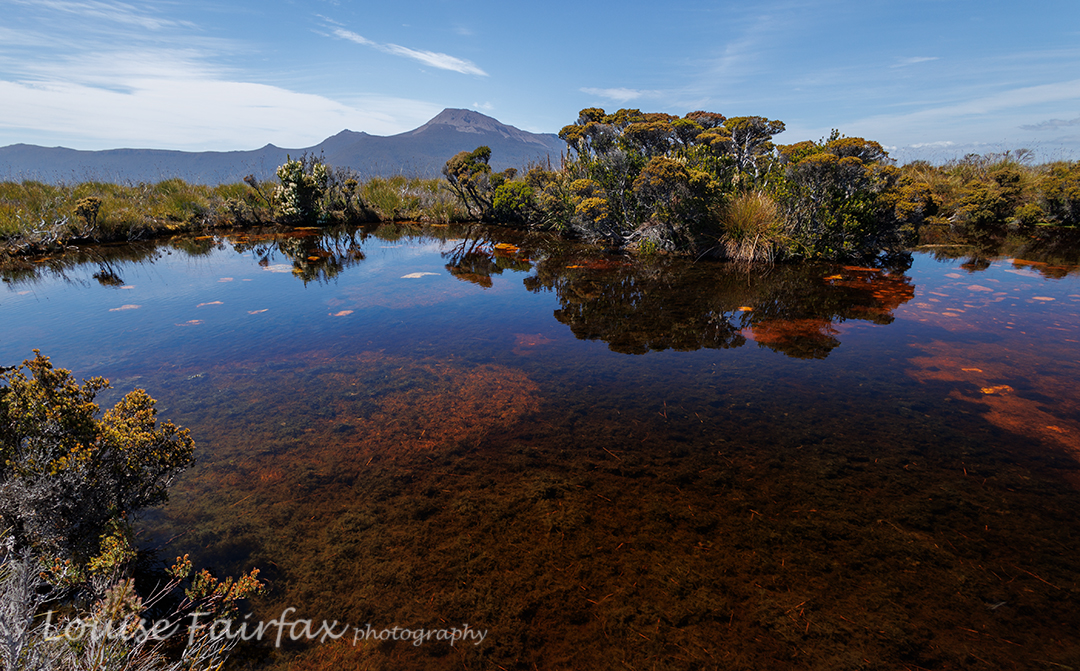
Jubilee Range day 2. The Pool sort of near Lunch Bluff. Nevada Peak behind.

It was only mid-afternoon by the time we had explored our first summit and drunk to our hearts’ content, but I was finished for the day. It had taken five walking hours from the car to where we were, and I have not done any pack carrying or bush bashing for many months. The plan had been to sleep near the actual high point of the range, but Adrian kindly agreed to sleep where we were. By this stage, I needed a cup of soup. I really was a hard case this day. Adrian had a cup of tea, and we spent the rest of the time between then and sunset climbing knobs and bobs nearby, of which there were plenty, eating more, and setting up our tents. I was so exhausted, and so out of practice, it seemed to take forever just to get my tent up. Sunset was pretty OK, but not exactly what we’d ordered. That’s part of the beauty of nature: it is unpredictable, so you just never know what it will deliver.
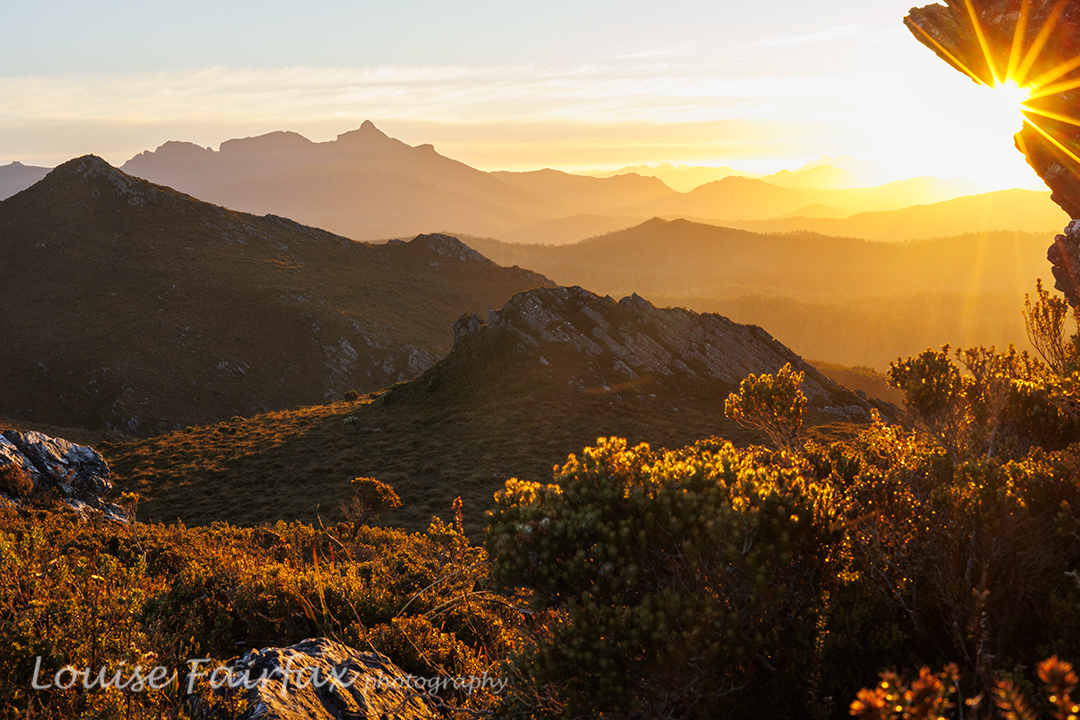
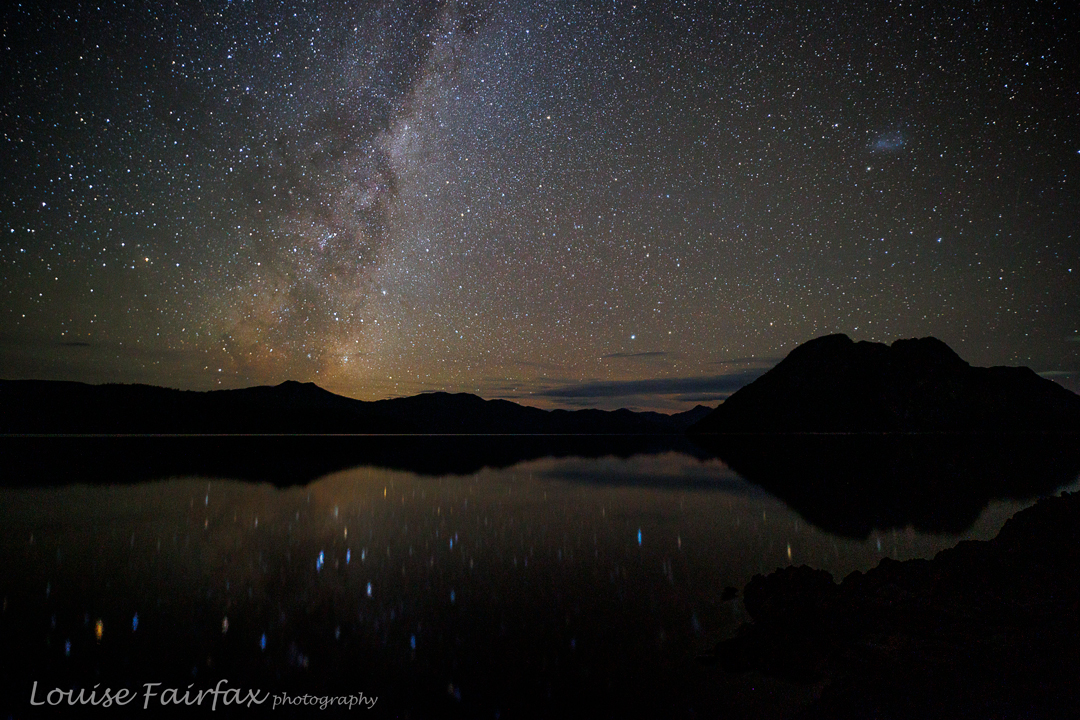
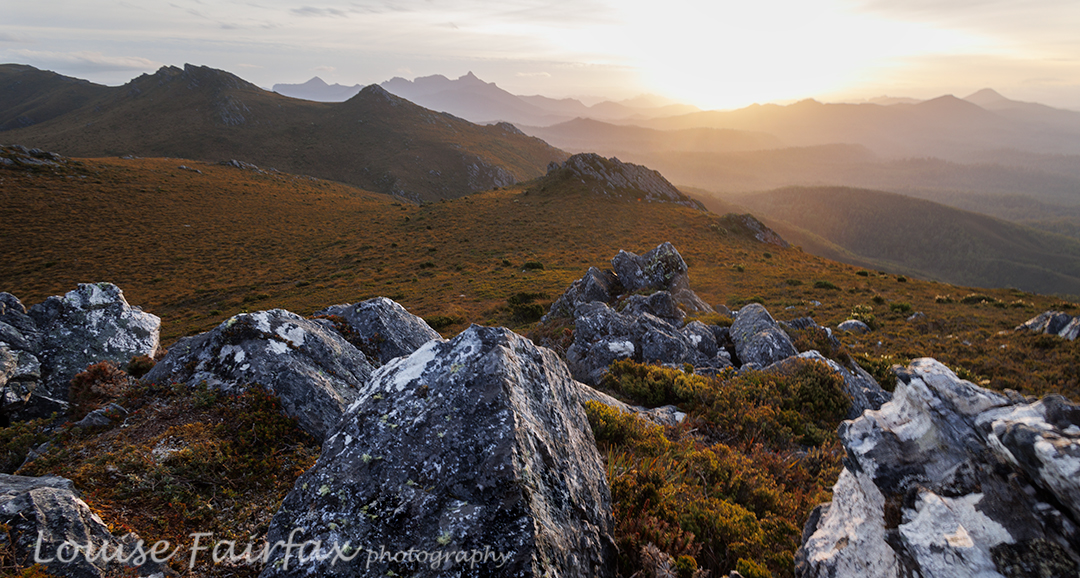
Jubilee Range sunset night 2. Mt Anne and friends behind.

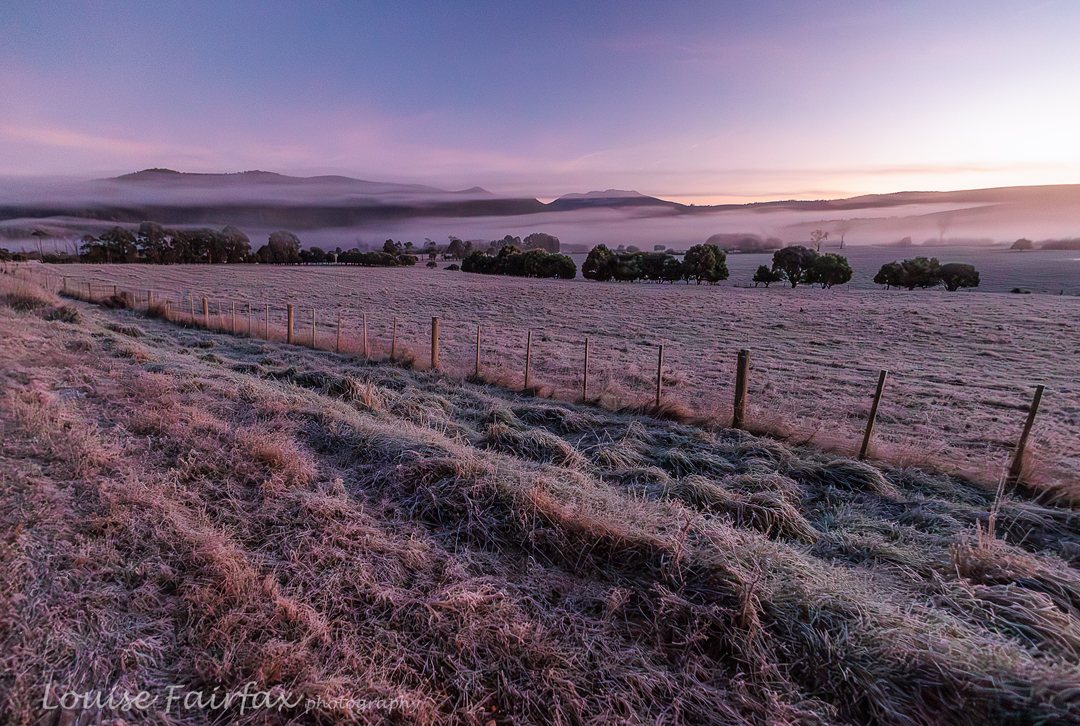
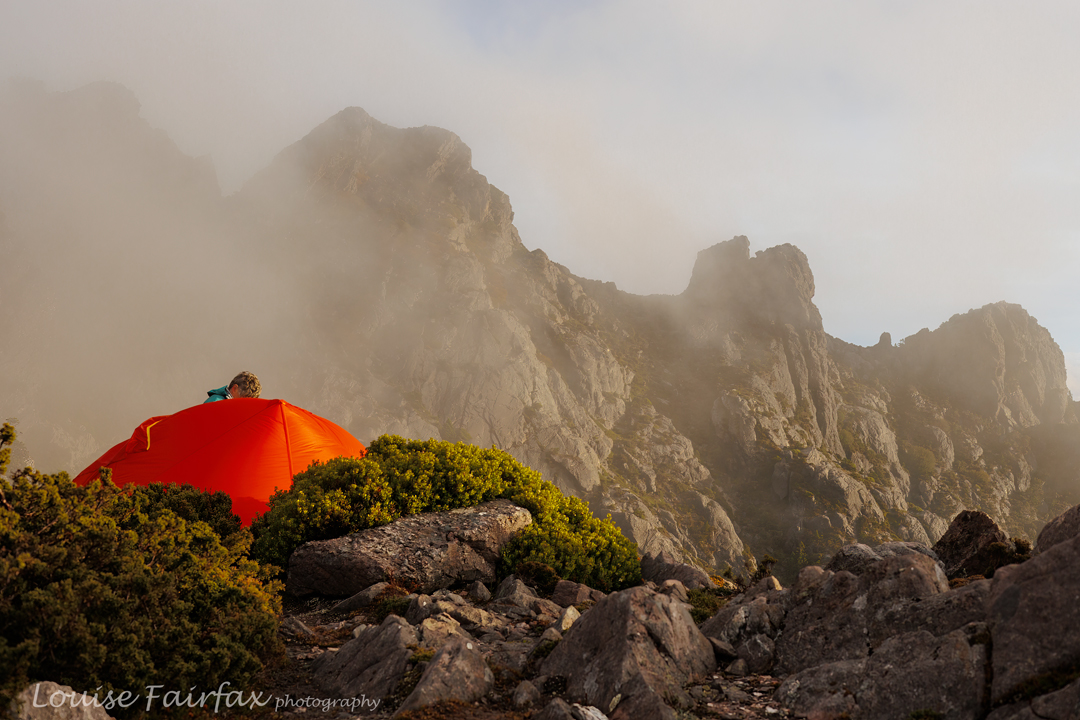
The next morning, an inversion layer had been predicted in some weather app. The predictors were wrong. We awoke to heavy, blanketing mist. I had set my alarm for 5.45. I peeped out my window, groaned and rolled over in my bag. Every time I checked, there was no improvement. Near 7, I checked on Adrian’s tent. We decided we would keep our tents where they were and just do a day walk. There was no point in lugging them higher in mist like this.
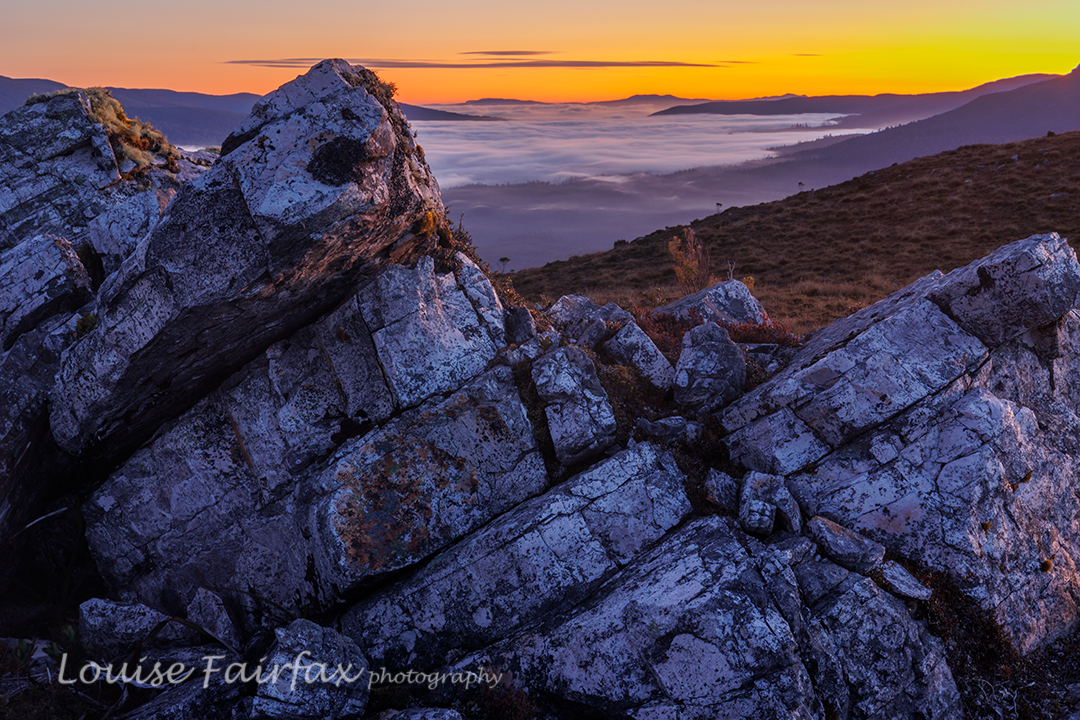
Jubilee Range dawn Day 3.

We walked for seven hours this day (plus stops), covering territory that we have never seen photographed or blogged (beyond the Jubilee Ra High Point). We explored “Endless Tarn Ridge”, “Neighbour Ridge” and Lunch Bluff, and photographed Special Tarn, Sibling Tarns, The Pool and more. There were far too many tarns to name; even far too many tarns to photograph them all, although we made a pretty fair attempt at that. By the end of seven hours’ exercise, I was glad to be returning to our tents. If nothing else, I was hungry for an early dinner.
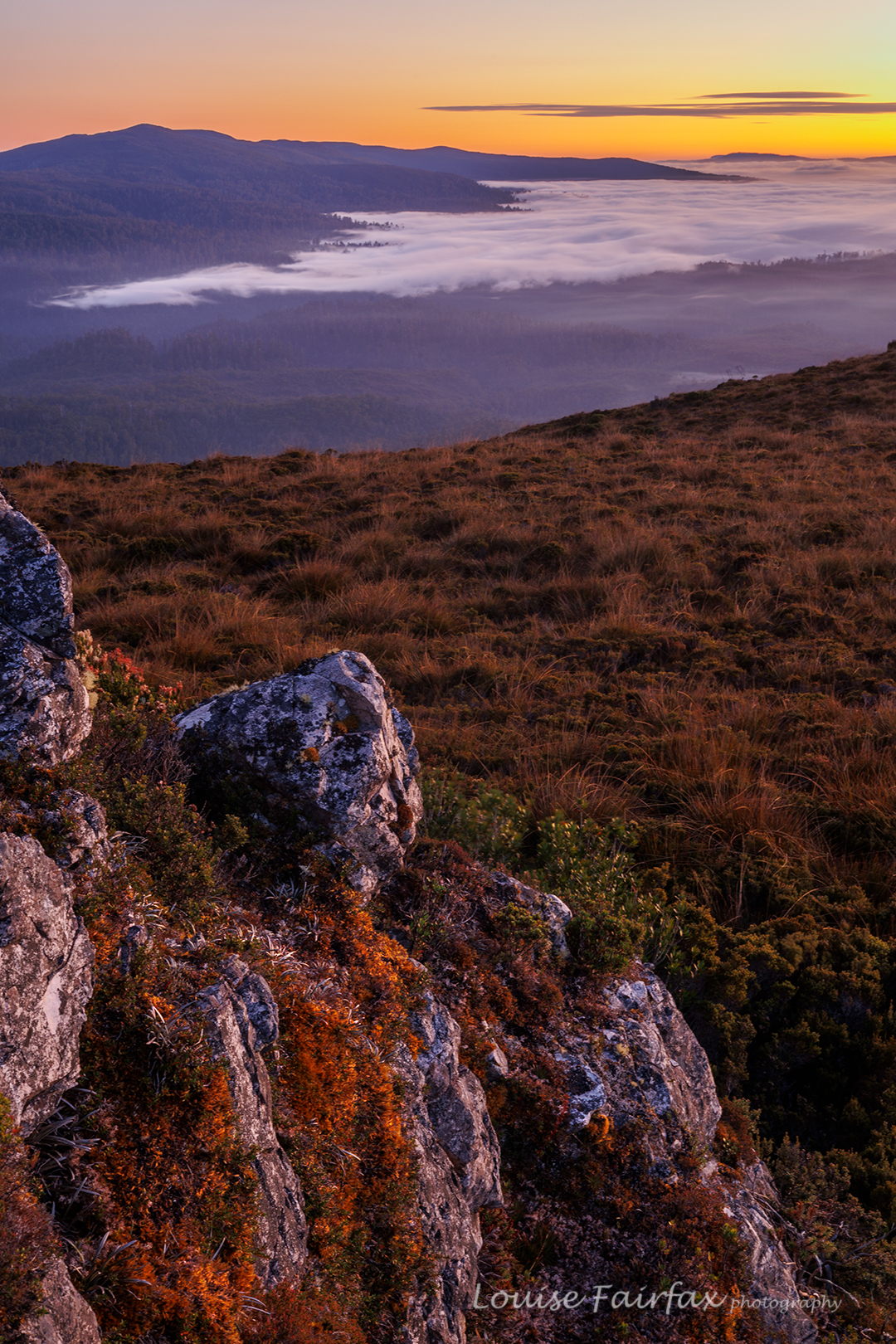
Jubilee Range dawn day 3.

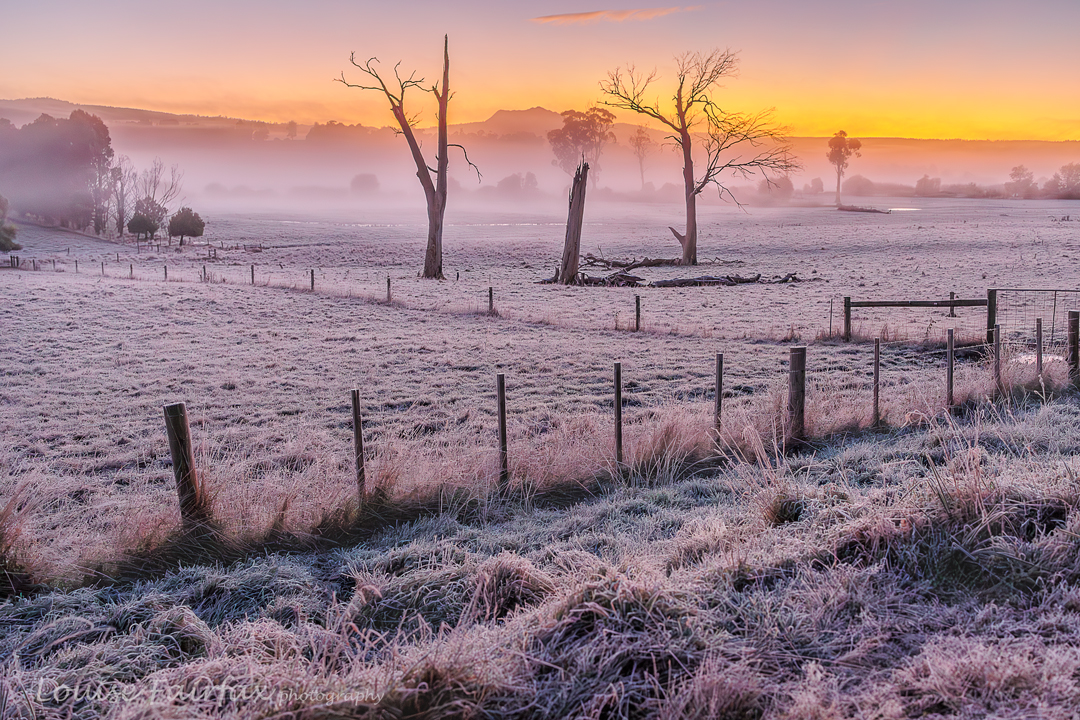
This night, sunset delivered, and the next morning, we got the inversion layer we’d wanted the day before, along with glorious colour. It was very well worth the early rise. Again, we climbed assorted knobs and bluffs for different vantage points, and shot happily until our fingers dropped off and the sun rose, and it was time for porridge.
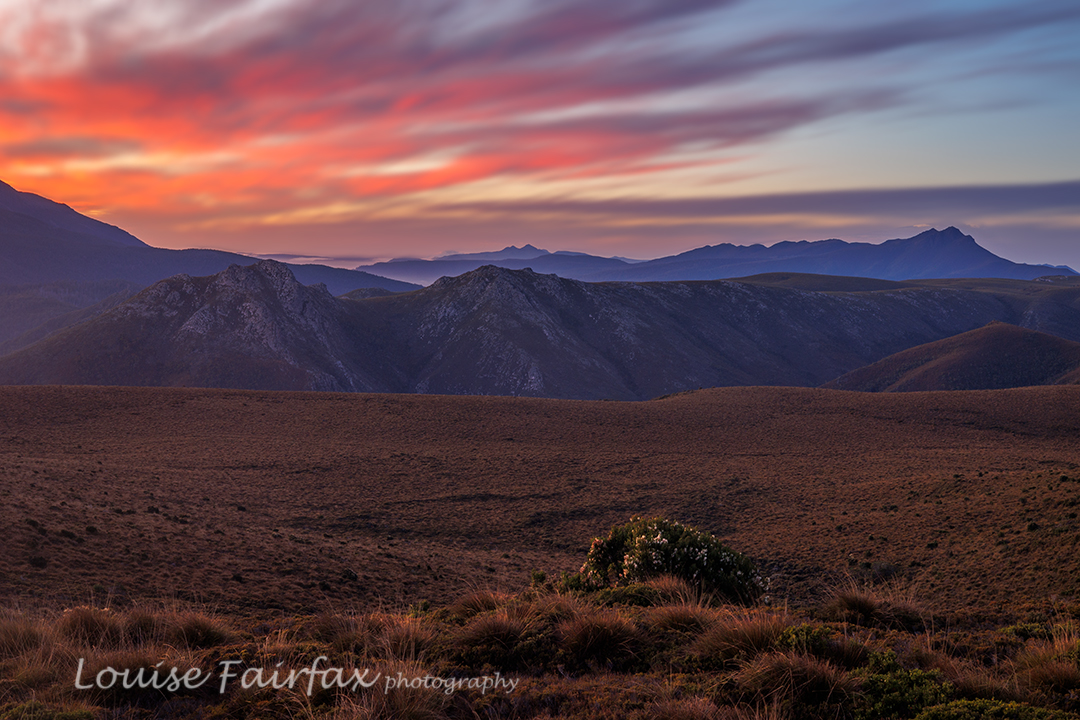
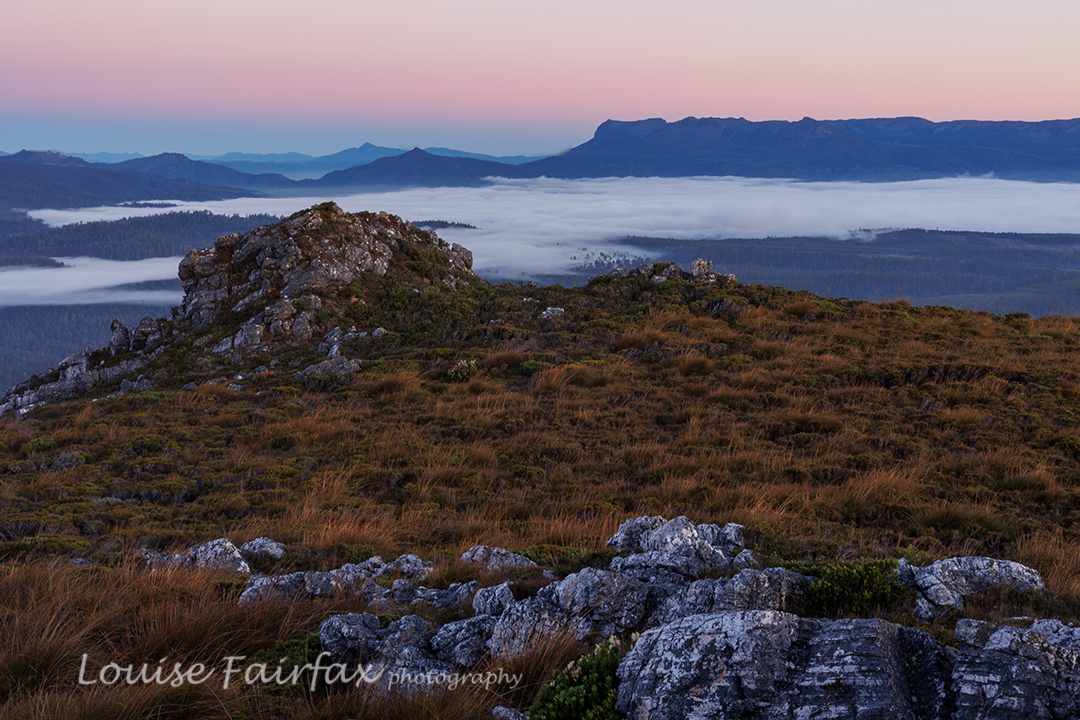
Jubilee Range dawn day 3
Jubilee Range dawn day 3.

It was glorious walking with the mist lingering below us. The scrub was still very thick, but descending makes it a bit easier. There was one section where it took us 15 minutes to cover 80 metres (the final creek crossing – quite a bitch).
I normally hate roads, but the concrete pipe that marked the end of bashing and the start of the road was perceived by us at that moment as a thing of great beauty. We cheered and gave each other a high five, had a break (drink) and then took the road (mossy covered, fern filled and shady) as quickly as we could. We both had an urgent appointment with the Possum Shed for lunch.
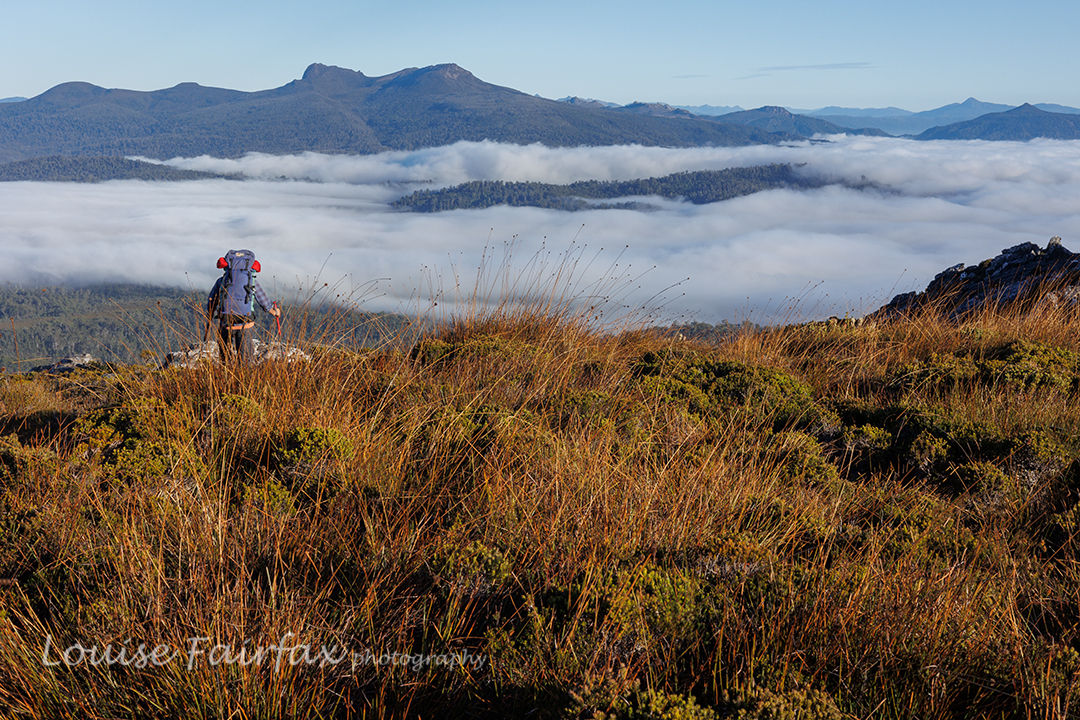
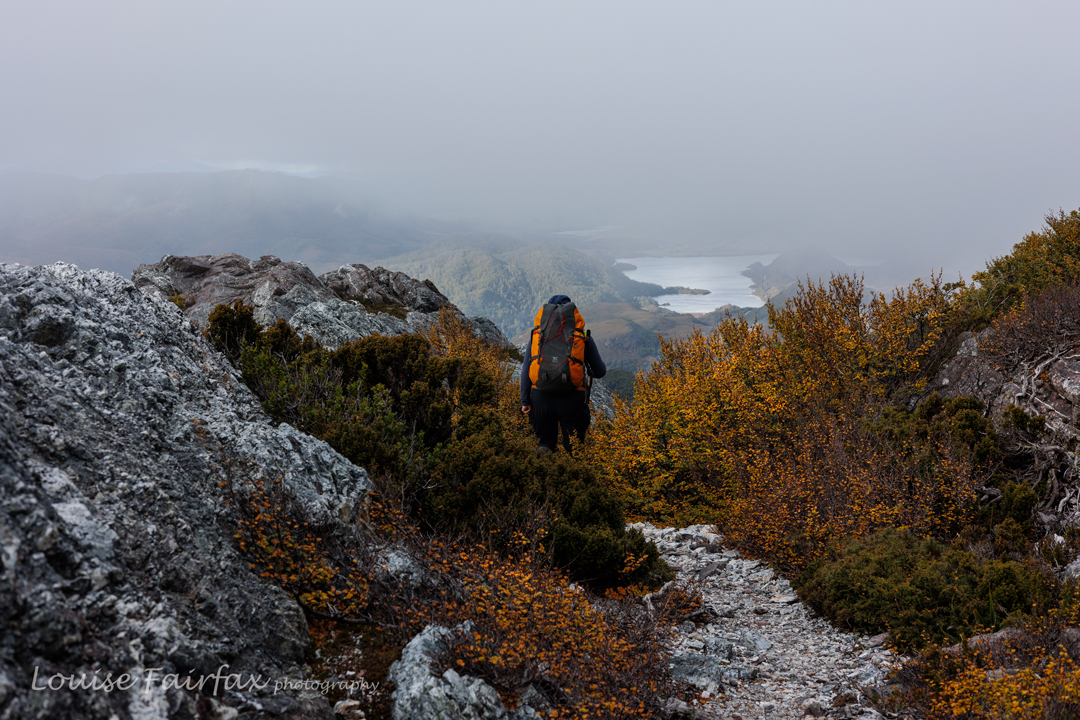
Jubilee Range. The descent.

Markham Heights Ben Lomond

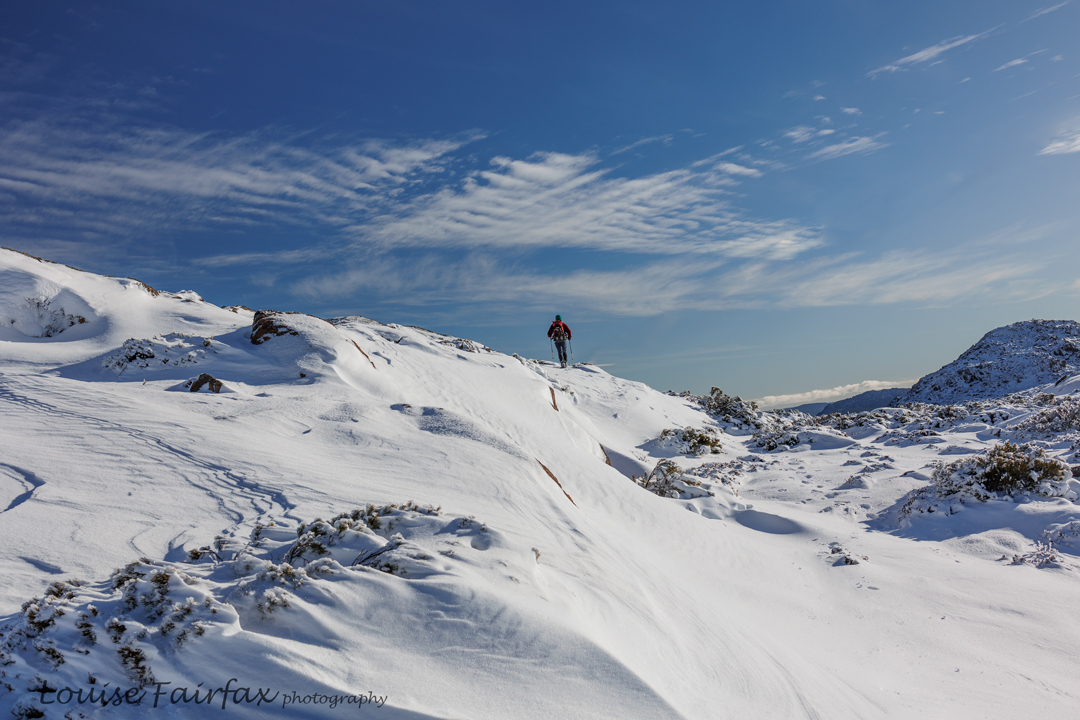
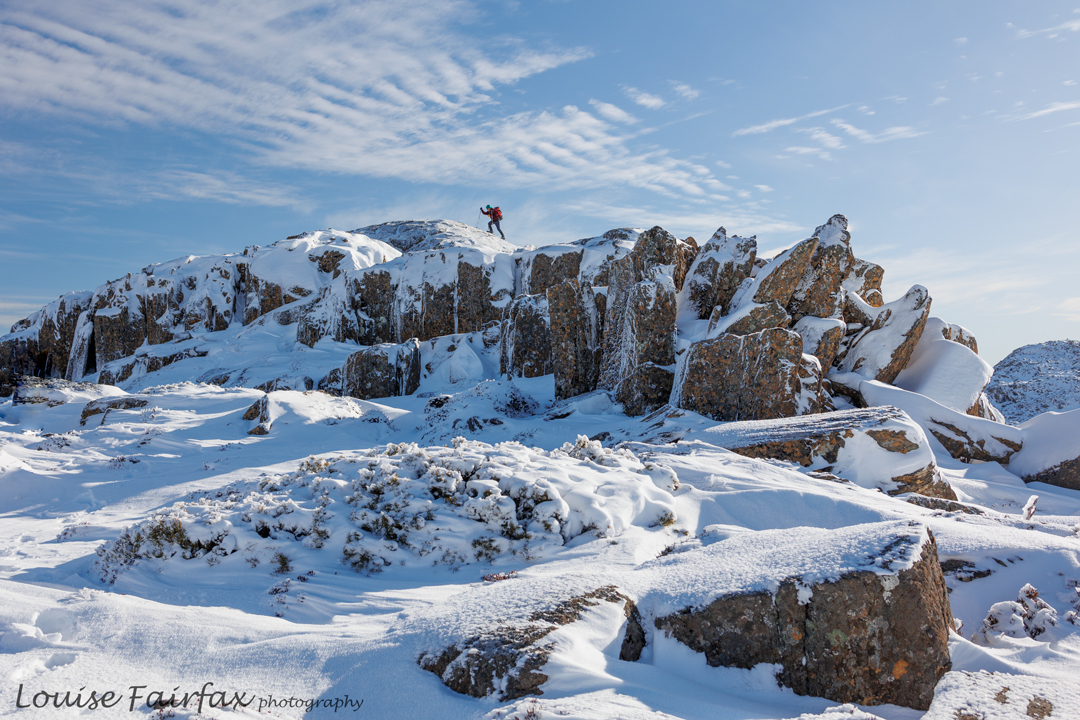
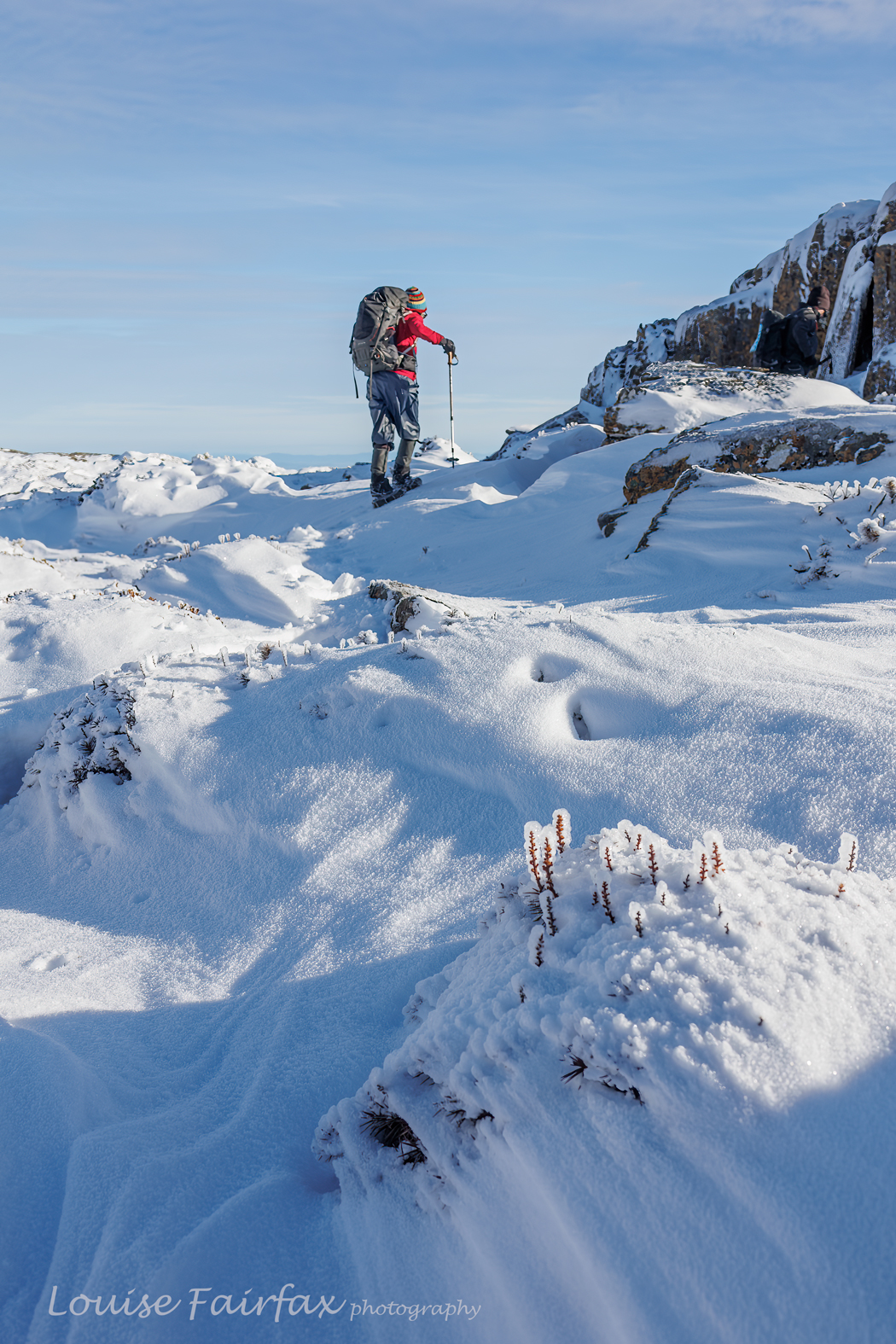
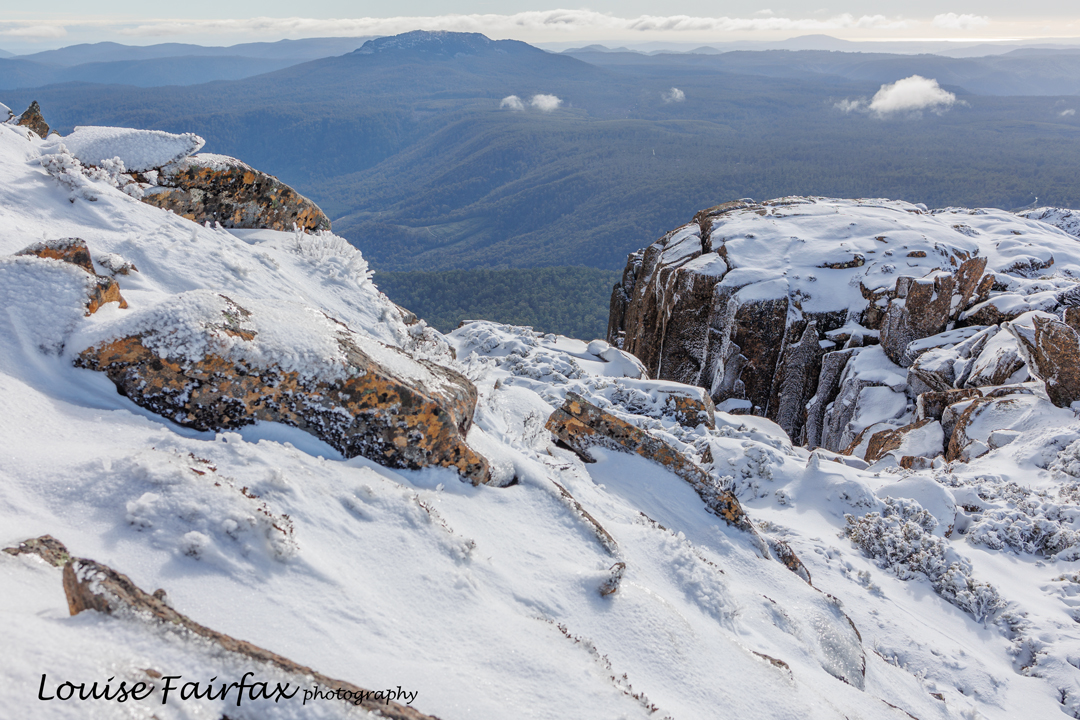
We didn’t choose Markham Heights on Ben Lomond for our Wednesday walk specifically because it was the shortest day of the year, and we also didn’t quite choose it because it was possibly the coldest day of the year so far (it was minus 8 as we passed through Blessington), but because the minus 5 we were expecting on top would be a lot nicer and safer with 30 cms snow on the rocks than where we had been going, which would probably just be a dangerous expanse of ice rime.

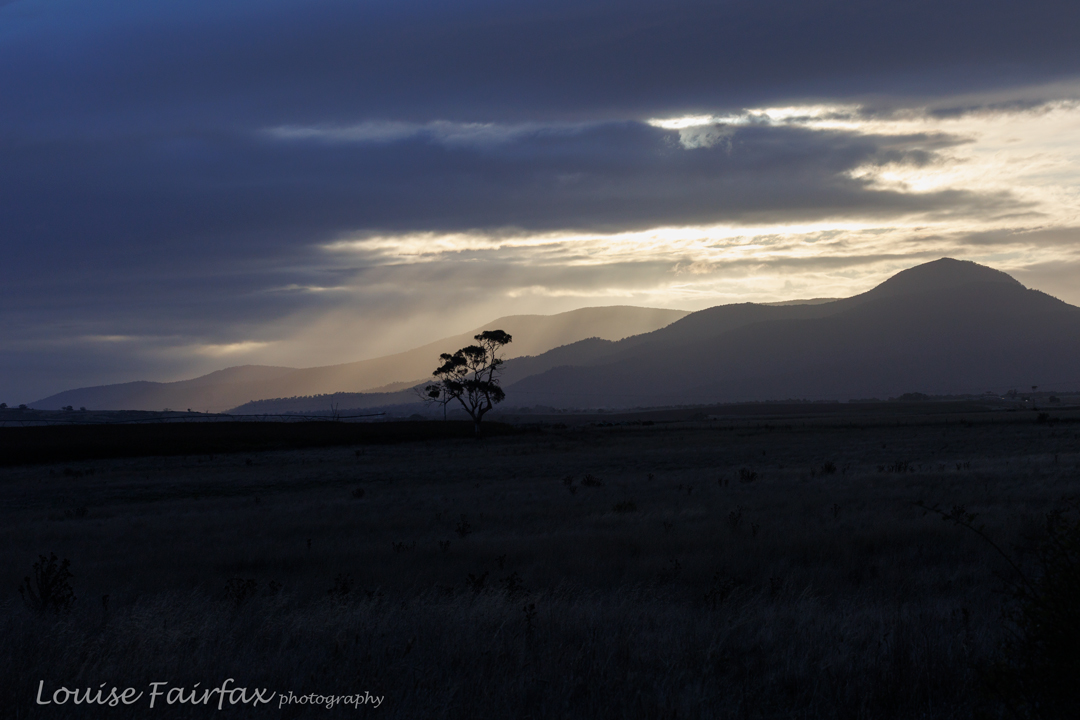
Blessington Valley
Blessington Valley

Meanwhile, I was, at the time of the decision, disappointed, as I had been looking forward to the original destination. Through the dark I drove, heading for the Ben Lomond National Park. My spirits picked up considerably as the sun began to rise and I saw the scenes of some of the photos here. I also nearly skittled a deer which ran across directly in front of me, and also nearly had a collision with a black shadow on the road which turned out to be a cow. Needless to say, with temperatures so low, the road was very icy and I was not familiar with its dangerous points, so drove pretty slowly after those two scares.

Off we set. Markham Heights leering down at us
Climbing higher
And higher
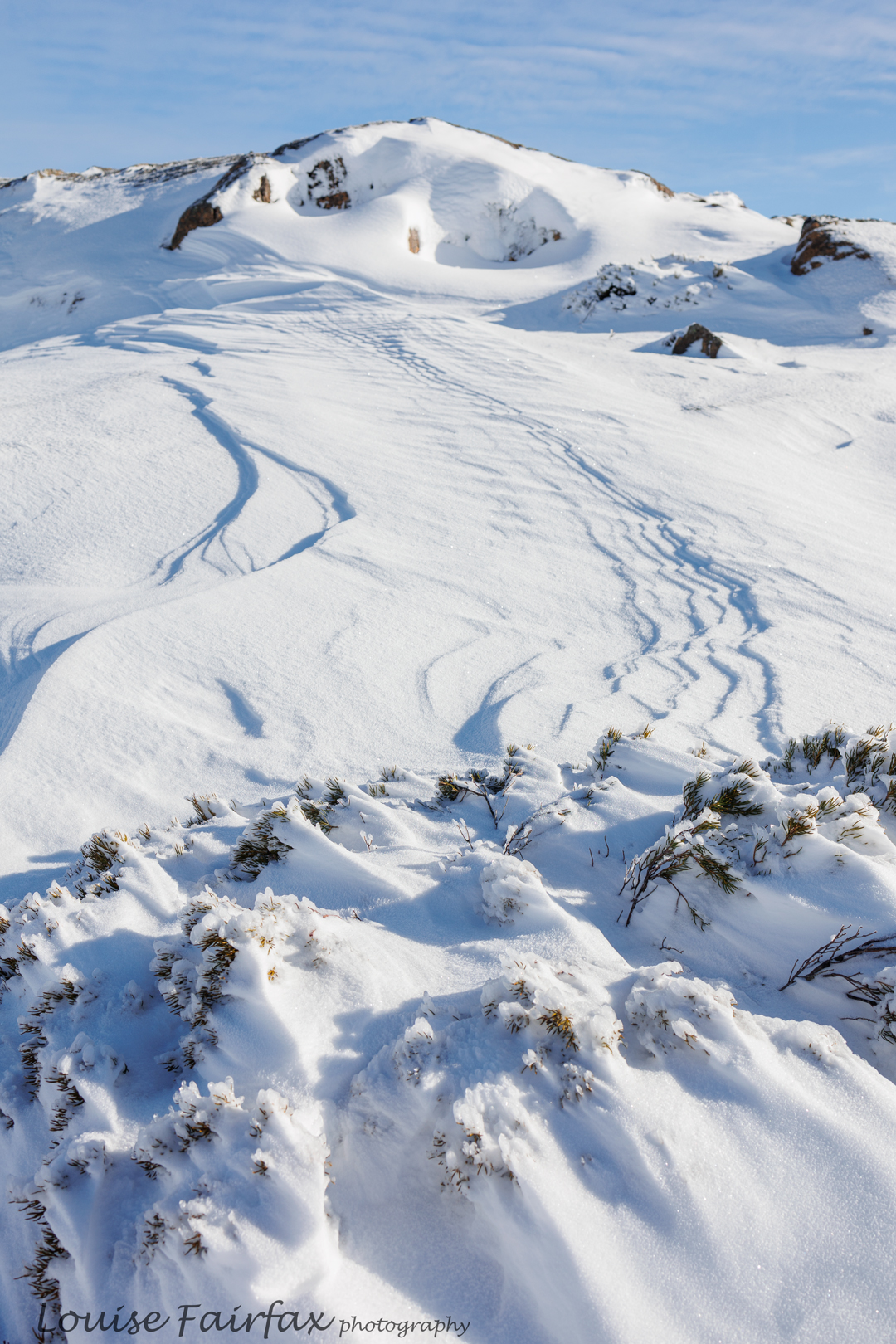
Ben Lomond patterns in the snow

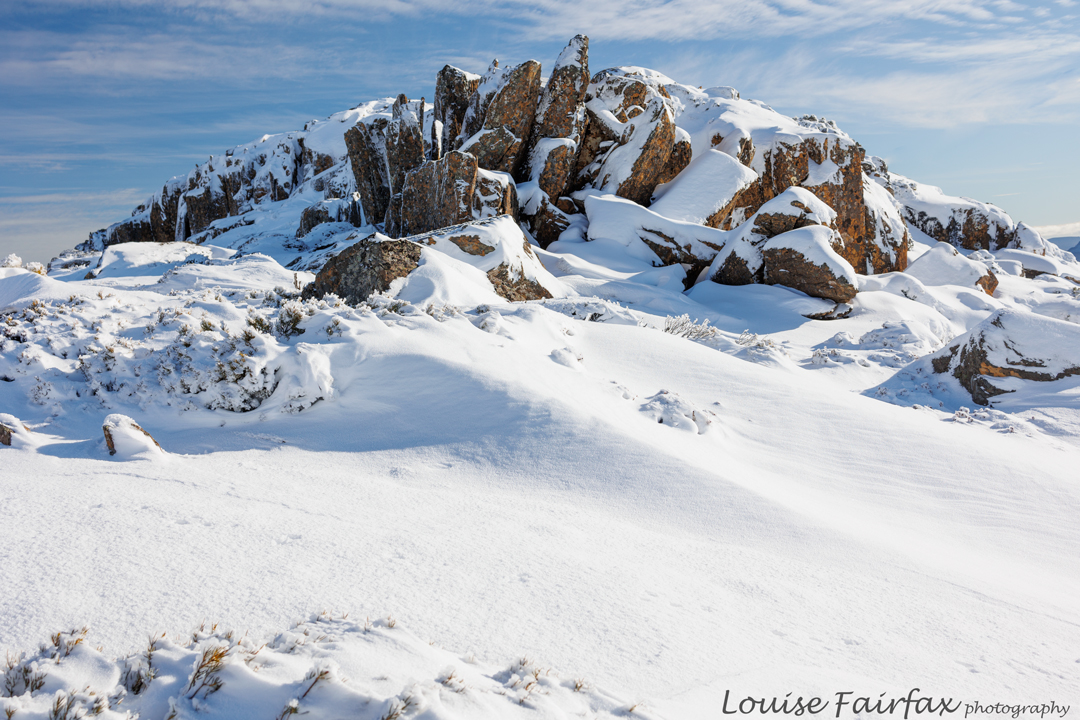
I have always wanted to camp under Ben Lomond to photograph the rocks at sunrise. Even though the sun had already risen, the rocks were still delightfully red on my arrival, so while the others did practical things like putting on boots and more coats and beanies, I dashed out and photographed rock. Hey; who needs to go to Central Australia for red rock? We have it a-plenty right here in Tasmania if we get up early enough (or hang around in rocks until sunset). Dolerite, the predominant rock in most of the state, colours up beautifully at the extreme ends of the day.

Climbing
Snowy scene
Unnamed knob. Dave arrives.
Sue climbs

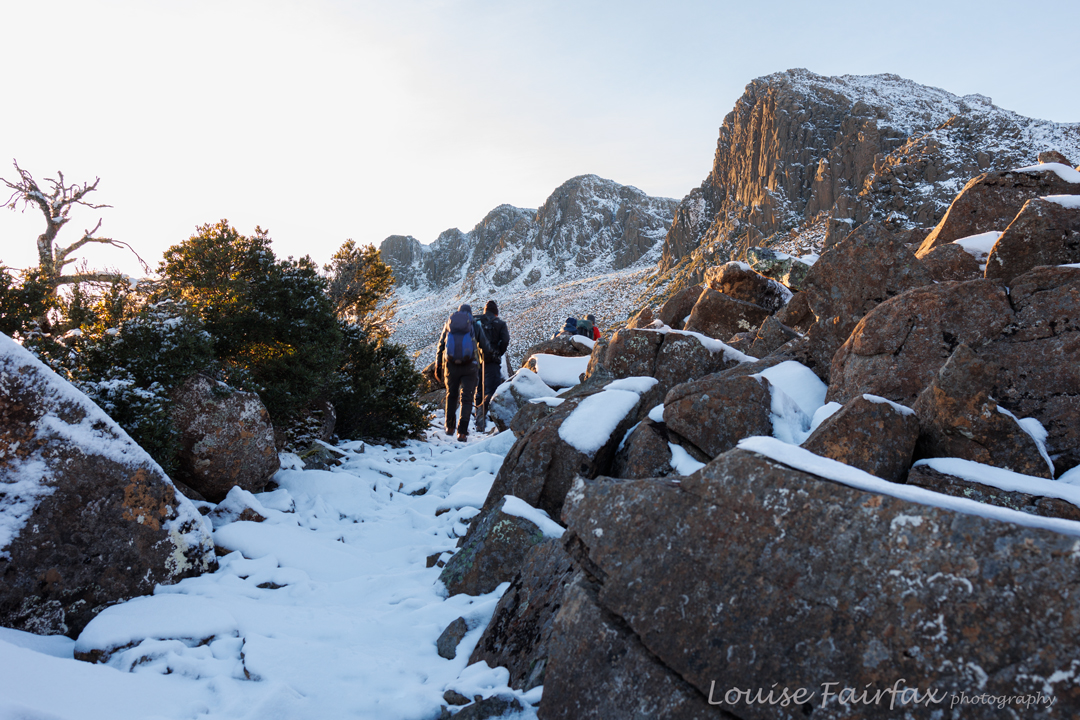
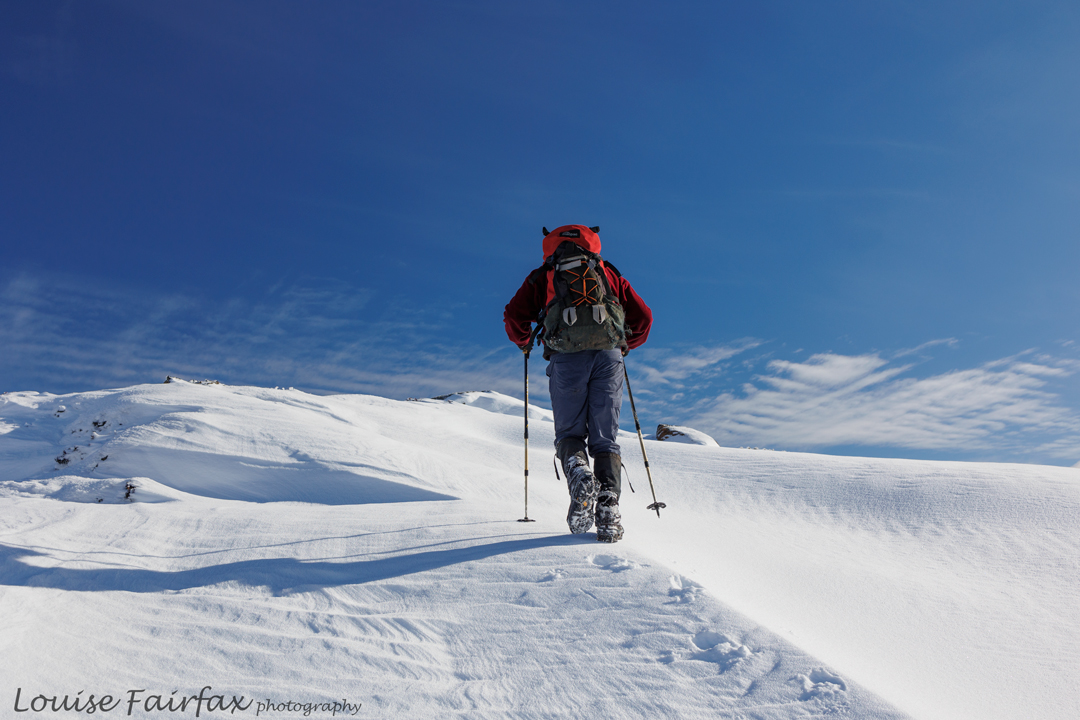
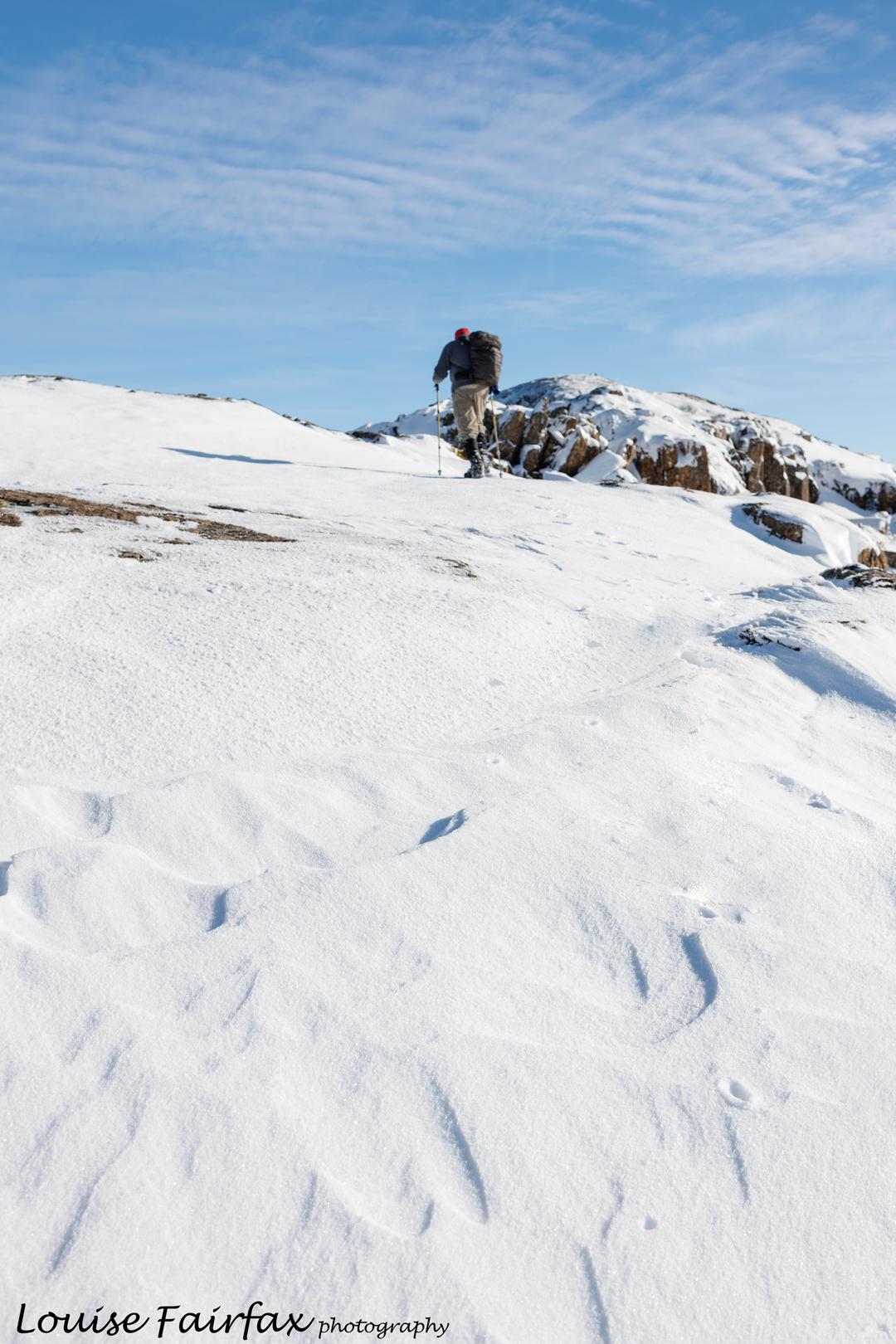
The rest of the day was a visual treat, seeing magnificent scenes of snow on bushes or rocks or windswept mini ridges.  We had morning tea on an unnamed knob, and lunch on Markham Heights, and assorted snacks here and there to spin out the day. My coils came off and another friend lost one of his mini spikes, so three of us got extra exercise retracing our steps, which also added nicely to the exercise value of the day, and the time spent moving in the white wonderland. I didn’t enjoy the stationary snack times as much as, well, minus 5 is minus 5, and even with 5 layers of warm clothing on, that is still cold.  When I’m moving, I’m fine. Here is a small collection of scenes from the day. I hope you enjoy them.

Dolerite from Markham Heights

Tullah region wanderings

Two friends and I spent three days in the Tullah region, climbing this and that, sleeping high and sleeping low. It’s a great area for exploring.

Camping high

Unfortunately, it has too often been my observation that pretty photos with names and locations attached have inspired the wrong sort of people to flood our beautiful wilderness and thereby ruin it. The Western Arthurs and the Walls of Jerusalem are two extreme cases in point.

Summit of Red Hills. I don’t mind naming this one, as it is not dramatic in an insta sense of the word; it is worth NO points; it is thus a thoroughly pointless exercise, ha ha. Not for us.
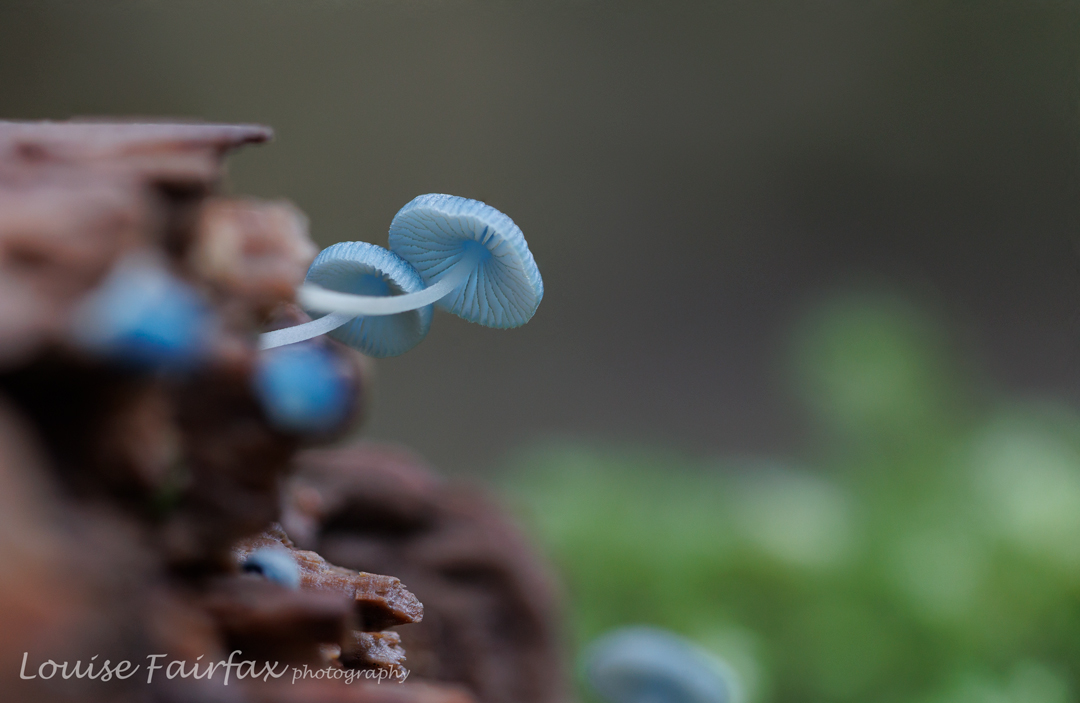
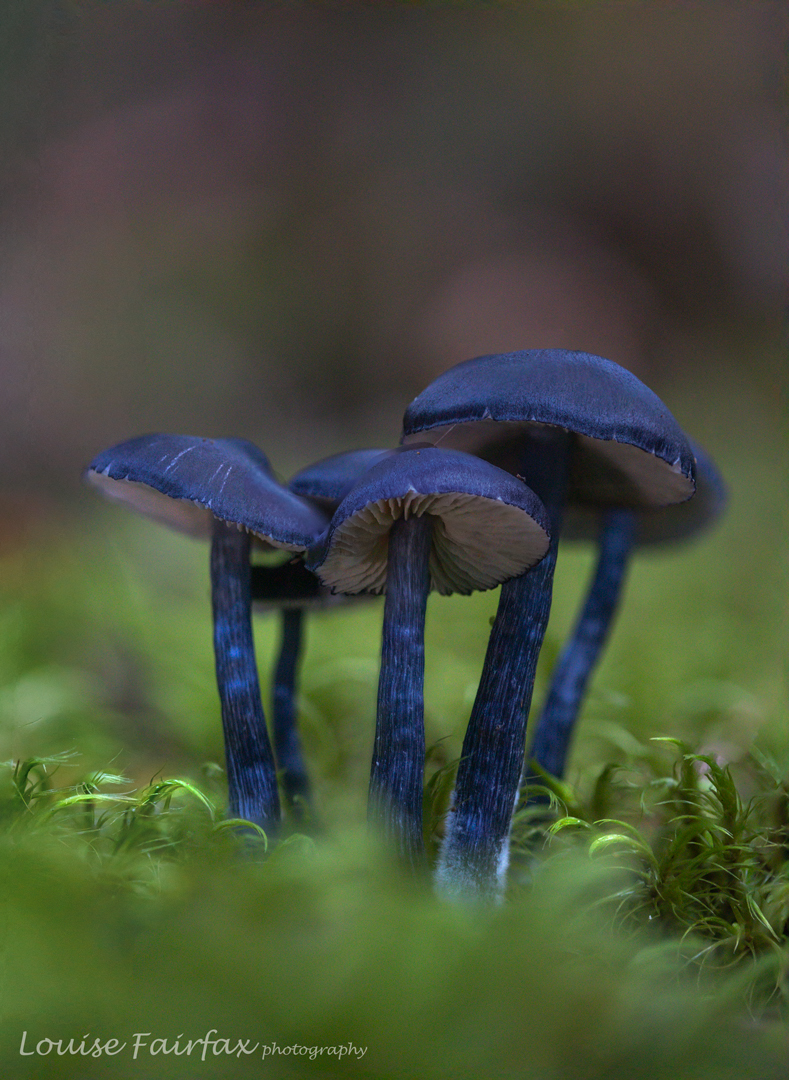
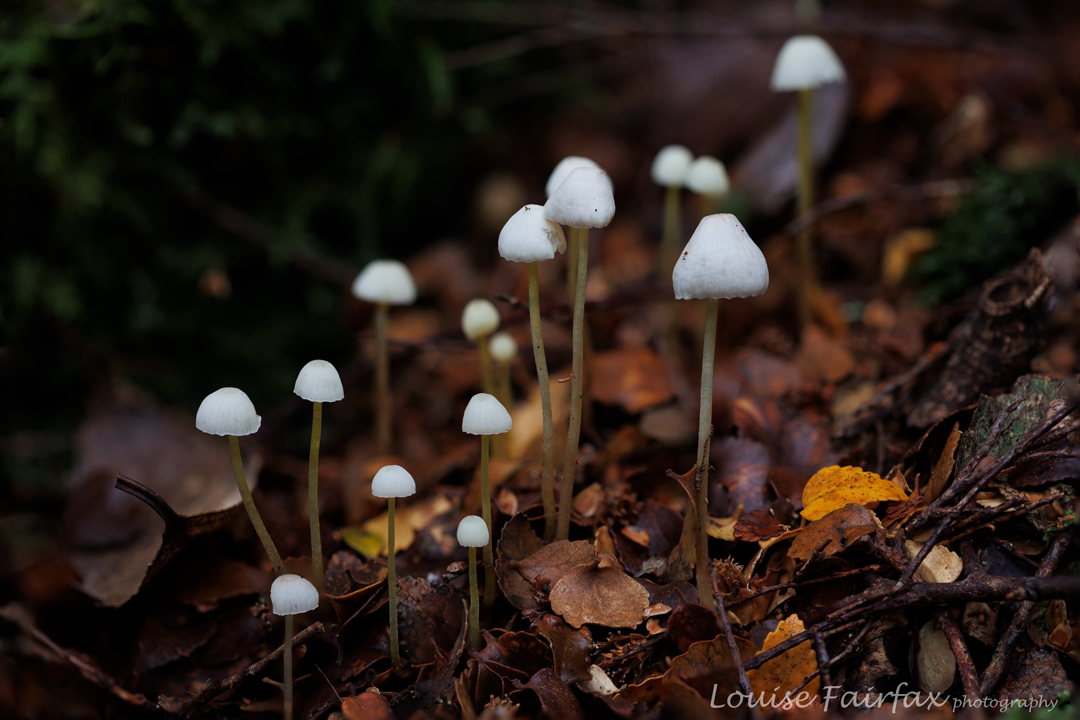
Mycena interrupta never fails to entrance

And who are the wrong sort of people? People who have not been taught any bushcraft and have made no effort to learn any; people for whom the words “Leave no trace” are a foreign language; people who seem to think that it’s just fine to spoil fragile areas now that they have seen them themselves; people whose sole aim in being there is to take some insta-photo and exit, without ever stopping to understand the place where they are; people whose sole concern is the self, who don’t care about the people who live near the area, or the children and ones yet to be born who might want to see the place. In short, shallow, selfish people.

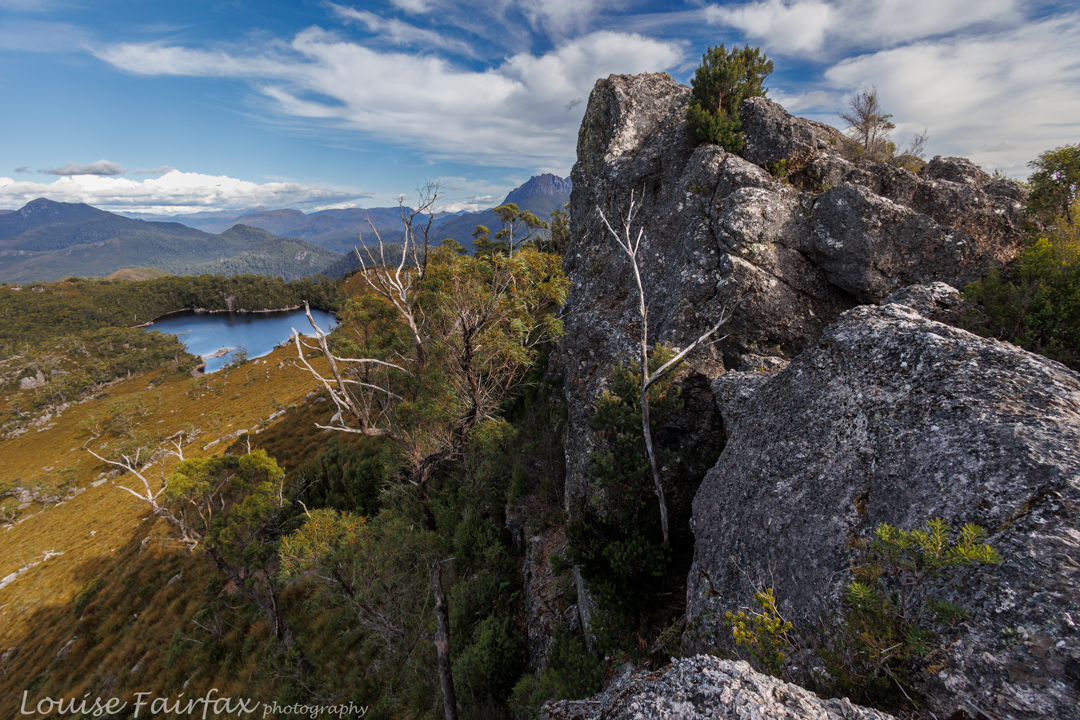
Lake Herbert seen from above

For some of us, these regions are our quasi “holy places”. They are places where we revive our spirits and refresh our souls; where we take time out to connect with the wider natural environment. They are not just precious to us: they are essential to our mental and spiritual wellbeing. They are not just huge playgrounds (which they are also. Give me a mountain rather than a gym and treadmill any day, thanks!!).

Core rise
Up high

My lack of blogs over the summer has had nothing to do with any inactivity on my part – I seem to have lived in the wilderness this summer – but rather due to my not wanting to over-popularise the beautiful areas I have been in. These spots are, or rather, were, our playgrounds, but we are now being locked out of them so that the tourists can come in and spoil them. They have been turned into a money-making commodity.

Entoloma discrepans I believe
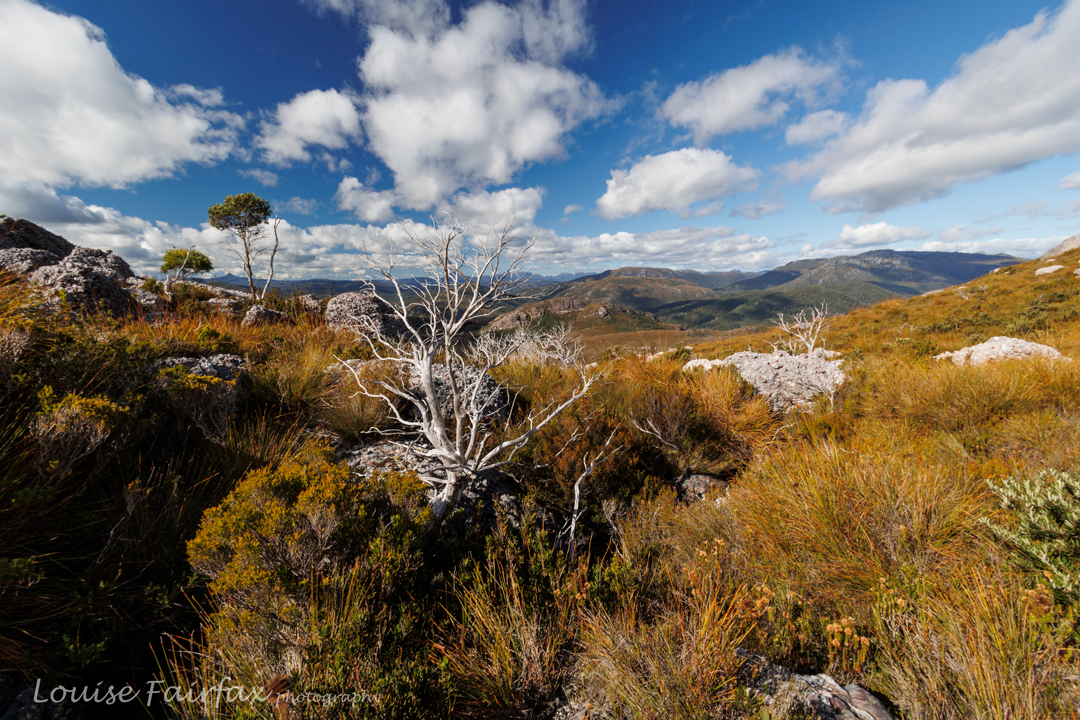
Dead tree – great caption huh.

Thus I don’t want to aid and abet that process by being too specific about anything much other than indicating “Tullah region”. If you can enjoy photos of beauty that don’t specify location, then please enjoy these examples of what our amazing planet has to offer to those who have worked on their fitness, and acquired bush skills to survive in lonely and challenging locations. We left no trace. Keep tassie Wild.

Mycena epipterygia
Sleeping high

Blackboy-Mathinna circuit.

Having once climbed Mt Blackboy by the easy route, I was not all that interested in a repeat, but today we took it head on and did a traverse along the high rocks, and that made it a totally different and really fun experience.

Fingal Valley

Not only did we attack the boulders from their most challenging angle, we also began way, way down at Mathinna Falls, giving us a climb of over 500 ms in the process, and not from the nearest road access as is normally done if you only have bagging in mind.

Hypholoma australe – these were near the carpark, before the real fun began.

The actual climby bit was probably only about 2kms horizontally. Do your maths: that’s STEEP. People from our small group were falling and slipping the whole time. It only counted as a fall if you landed on your bum or worse. I was relatively unscathed with only three falls. Several of my friends got into double figures. One specialised in quite spectacular landings.

Delvin Ck track to falls

Even just standing talking waiting for the rear to catch up, you kind of slid down the slope unless you grabbed a sapling to prevent the descent. I was sure I spotted a flat bit of ground somewhere down below (and John backed me up); this became a source of many jokes as we tumbled our way downwards.

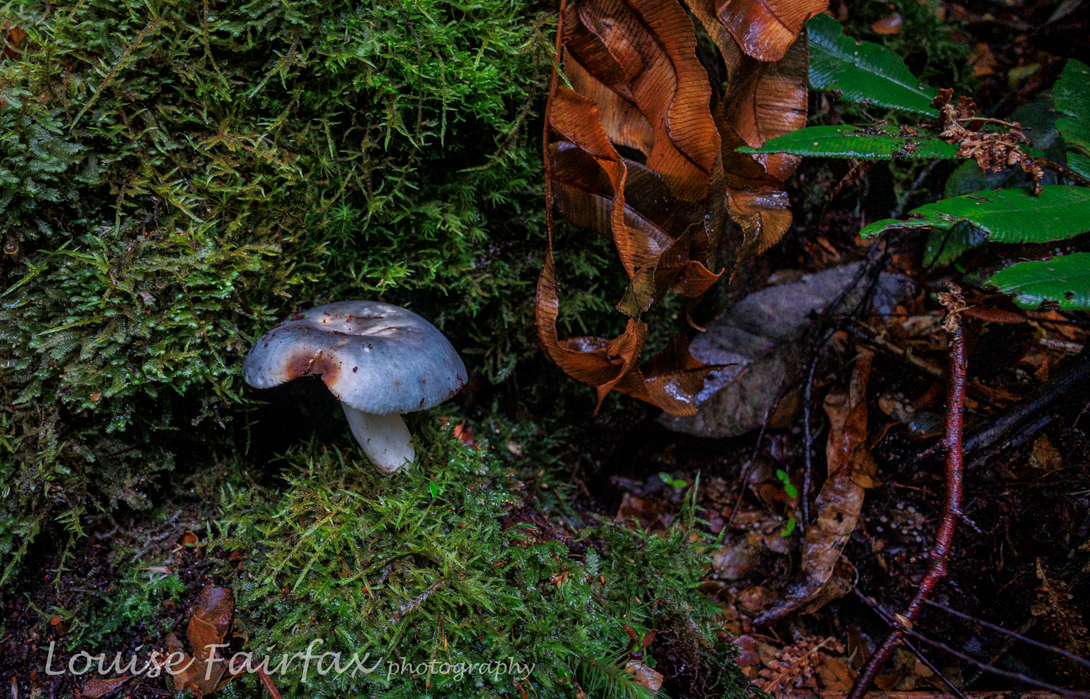
Russula viridis – very pleased to find this one! You don’t see them often.

Sorry for the lack of photos of rocks and forest: when you are above your head in ferns, it’s hard to get a shot, and the rocks were reached in midday glare, which I don’t find conducive to pleasing photography. I leave the massive and alluring boulders to your imagination. Meanwhile, if you know me, you know I love fungi.

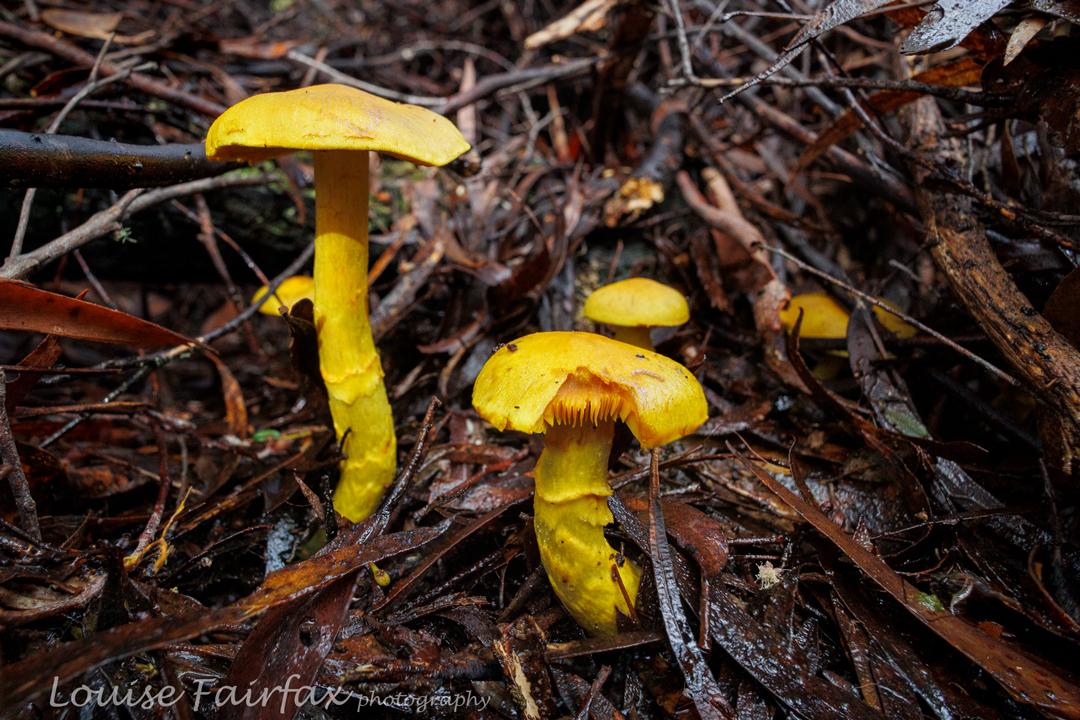
Dermocybe canaria. I have also not seen very many of these in my hunting.

I was quite proud of how clean my pants still were at the finish – ripped and muddy pants were the norm by the end of the day – until I got home and discovered a huge red patch base right, courtesy of a hitchhiking leech.
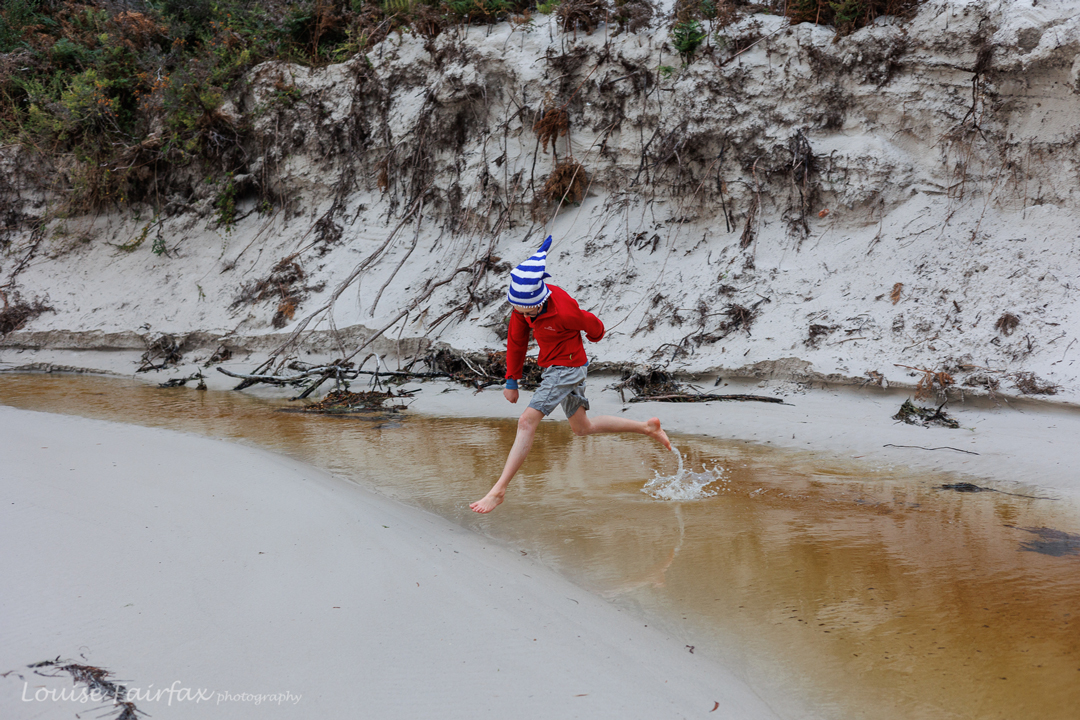
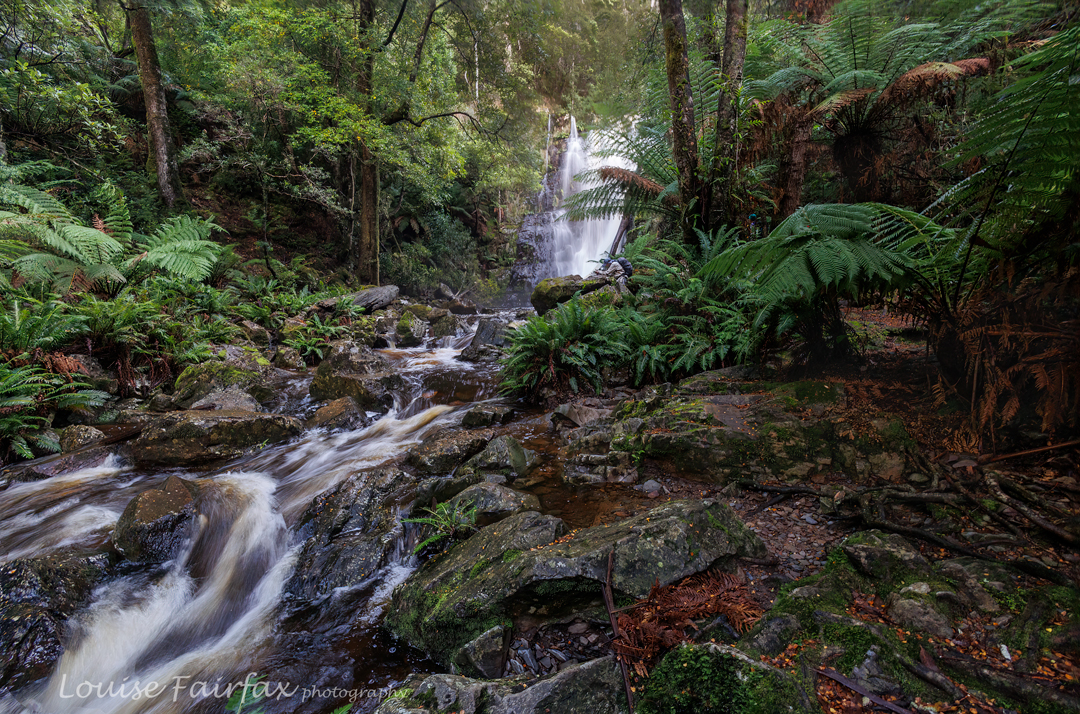
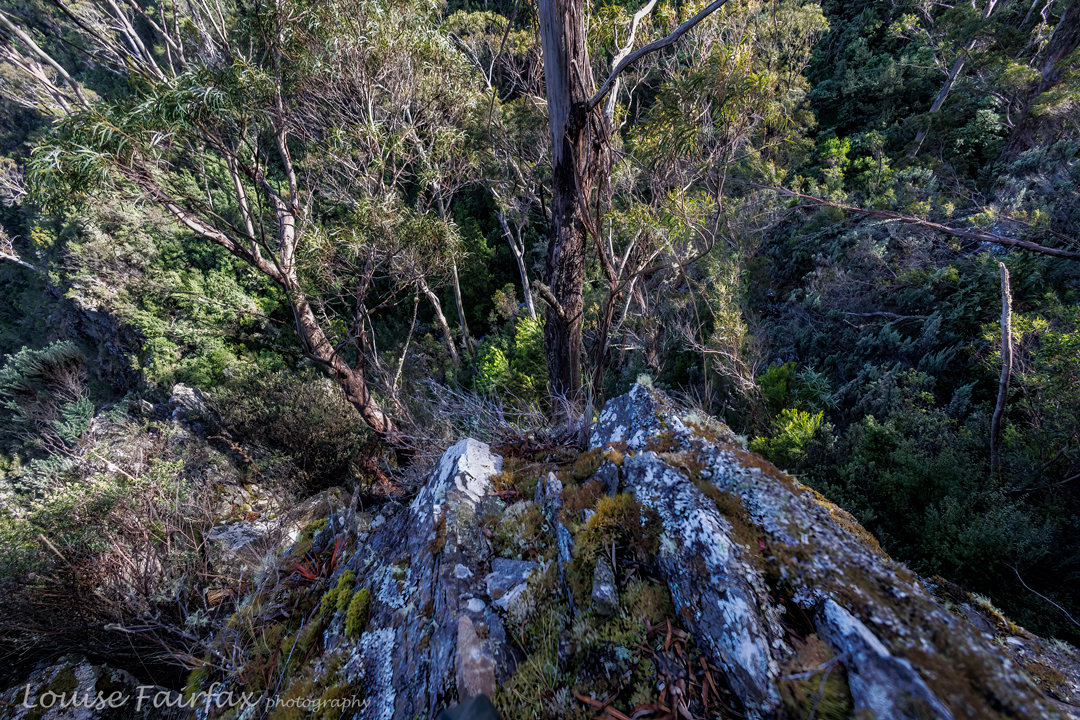
Blackboy Falls from above. We could see them, even if you can’t. This was as good as it got today. Work in progress!

We also visited the top of a waterfall en route, which, given its location and in order to be able to talk about it, I have dubbed Blackboy Falls. (It is an unnamed blue line on the map). We lacked time to visit the base, but at least we have now seen it, and have also (of course?) plotted our route for a more extensive, close-and-personal visit some other time. As it was, we didn’t get back to the cars before 5 pm, and it was more than dinner hour by the time we returned to Launceston. It’s worth being hungry to have had such a fun day. Very little beats real bushbashing, with its engagement with nature, and its total workout value. Keep Tassie Wild.

Traversing the ferns back near the bottom. Thanks for the photo Phil Andrew, who, being taller than I am, had a little less trouble taking a shot in the jumble.

Freycinet 2023

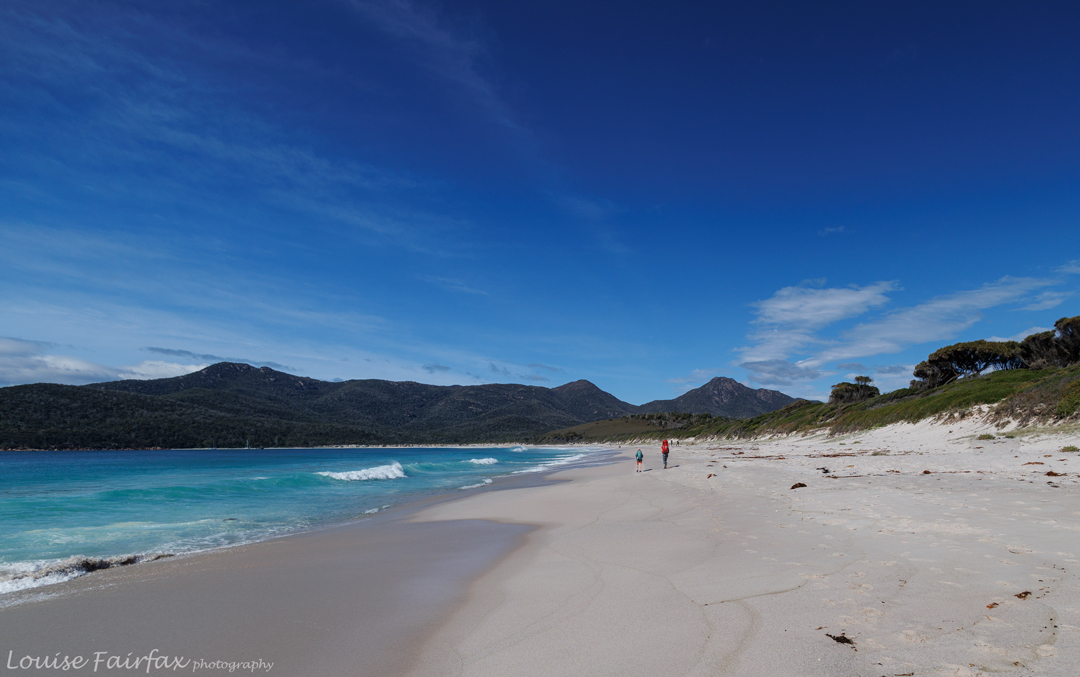
Freycinet peninsula wasn’t exactly plan A for Easter, but when the forecast turns to snow down to 200ms with gale force winds, then you change your plans: Freycinet it was. Even so, there were electrical storms the day we were supposed to leave, so we ran in the forest in the morning, and climbed Mt Parsons in the afternoon instead of setting out with children and rucksacks, and began the tenting part of our trip a day late.

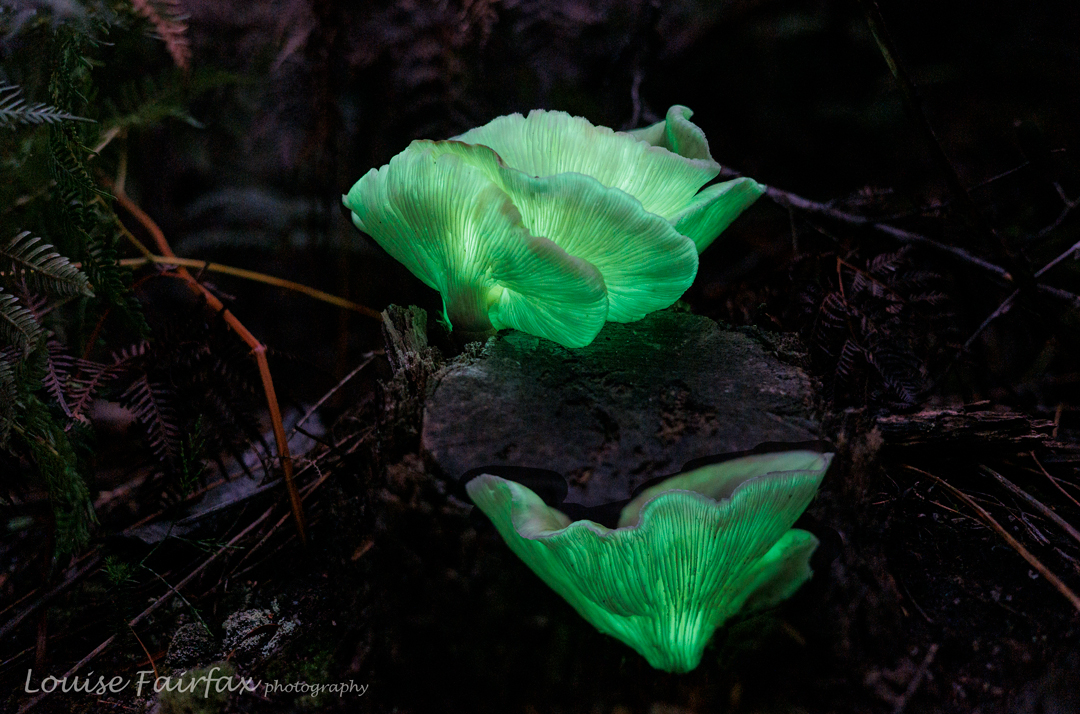
Omphalotus nidiformis
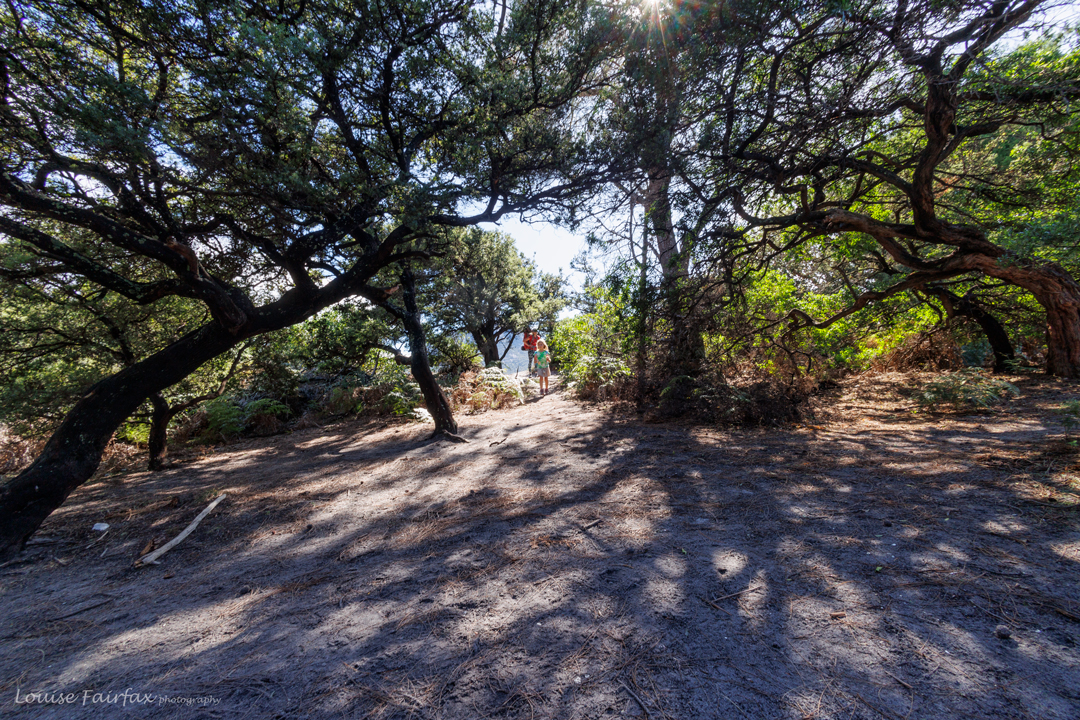
Underway

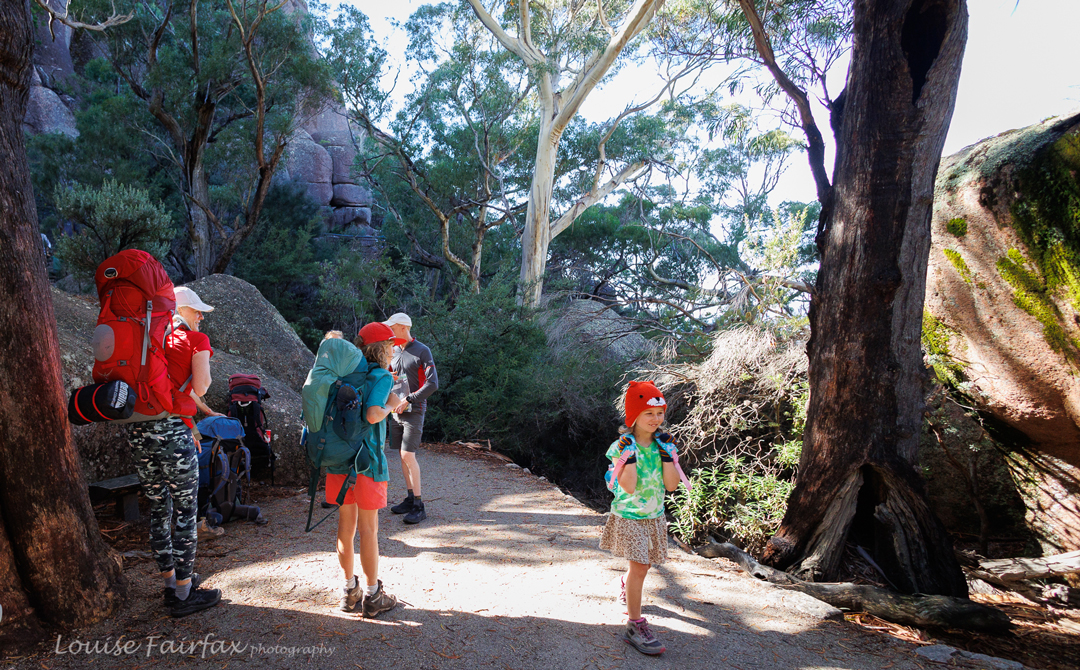
Even with an improved forecast, we weren’t exactly sure how the youngest, seven-year old Abby, would deal with the wind and light rain that would be our lot. The elements were kind to us, and we got in lots of activity, working around patches of rain. As it turned out, all three children loved it.

Abby and Karen arrive
Tristan playing near the campsite

I left my camera behind on several of our mini expeditions, as getting my camera wet is a very expensive thing to do, but luckily there were plenty of fun things to photograph around the campsite.

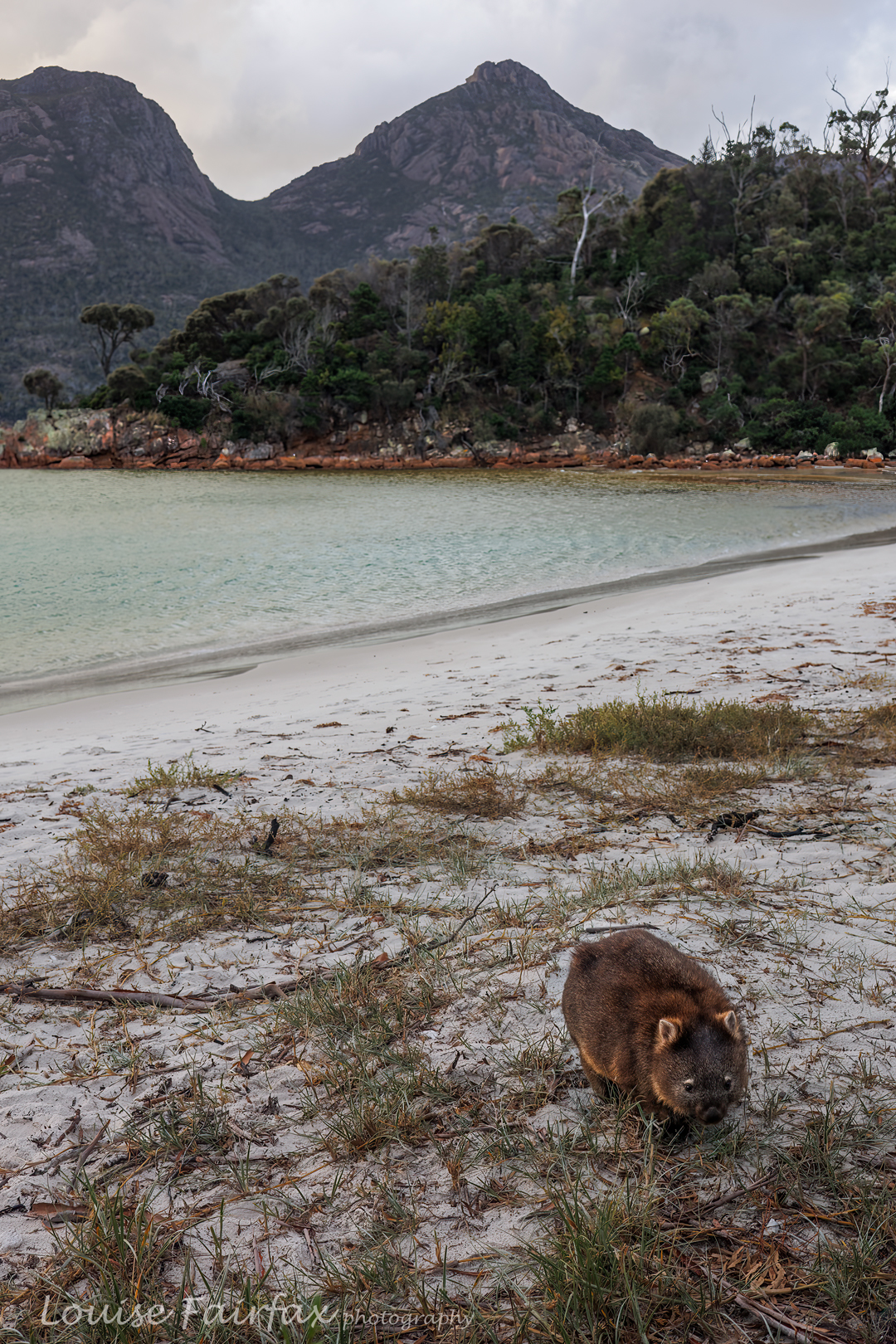
Wombat on Wineglass

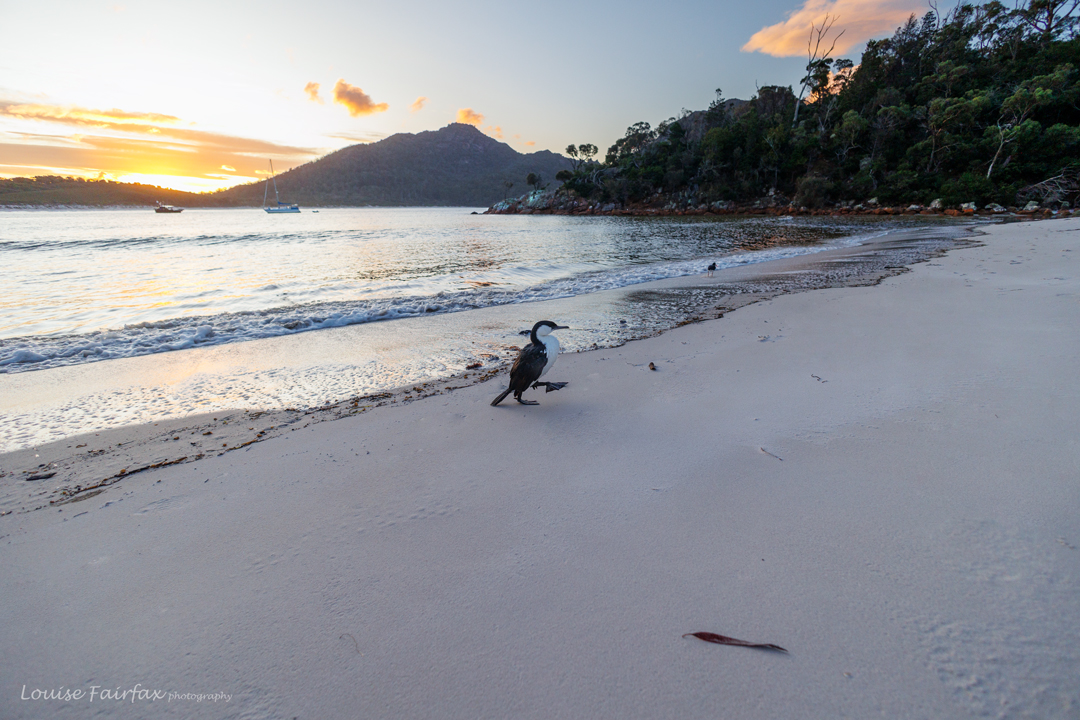
For fungi, we saw ghost fungi (Omphalotus nidiformis), Russula clelandii, Cantharellus concinnus and more, sighted dolphins swimming at dusk, noted pied oyster catchers and black-faced cormorants having evening strolls along the water’s edge and even saw the most obliging-ever wombat. Wallabies gate-crashed our Easter party, and Gussy and I had a most persistent (and insistent) possum that came into our vestibule three times during the night in an attempt to carry off Gus’s rucksack. I shone the torch in its eyes (useless), hissed menacingly at it (also useless) and hit it on the head with Gus’s walking boot (temporary victory). In the end, I only got some sleep by putting the rucksack inside the tent.

Pied Oyster Catcher Haematopus longirostris
Black-faced cormorant Phalacrocorax fuscescens

These are some of my favourite shots.