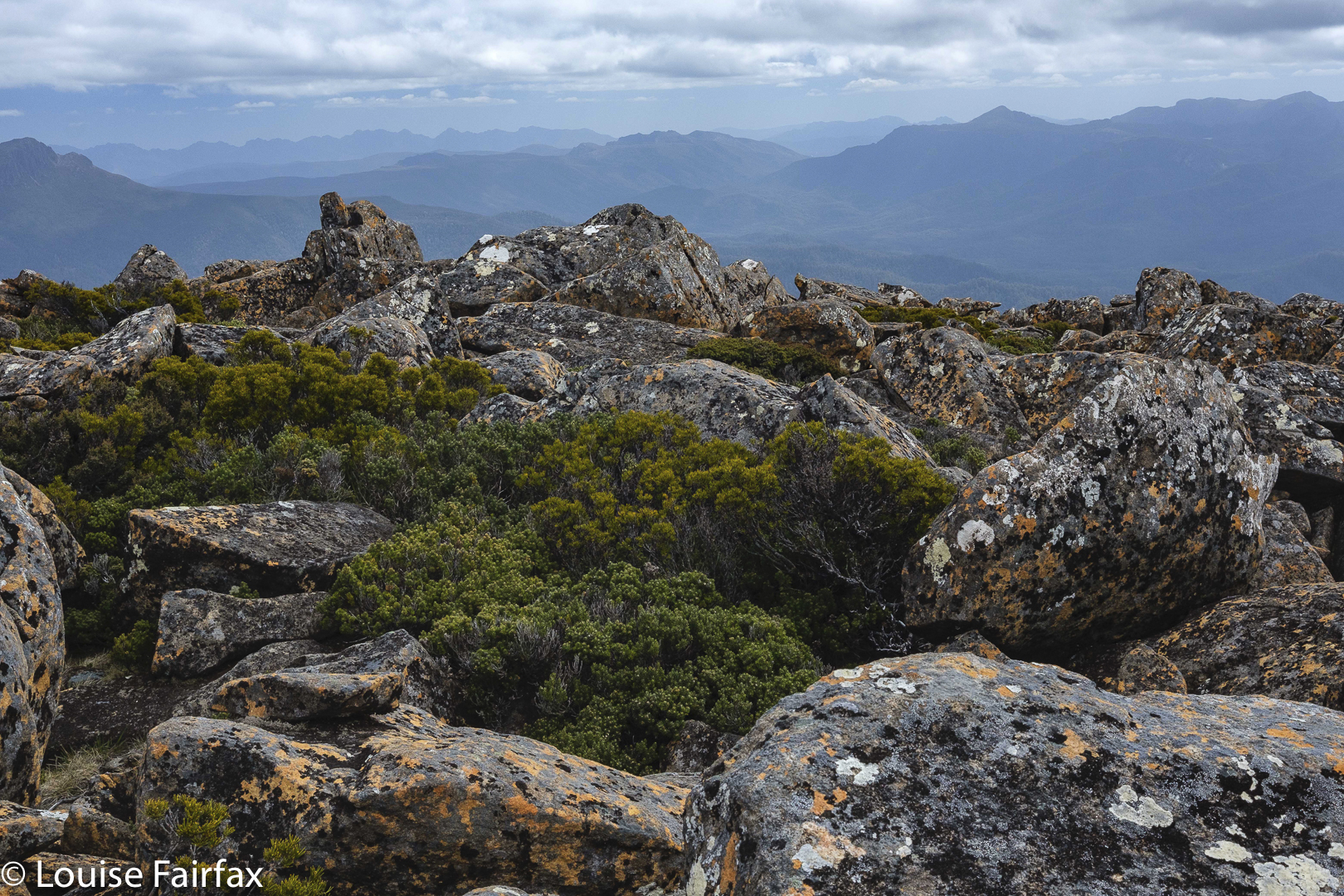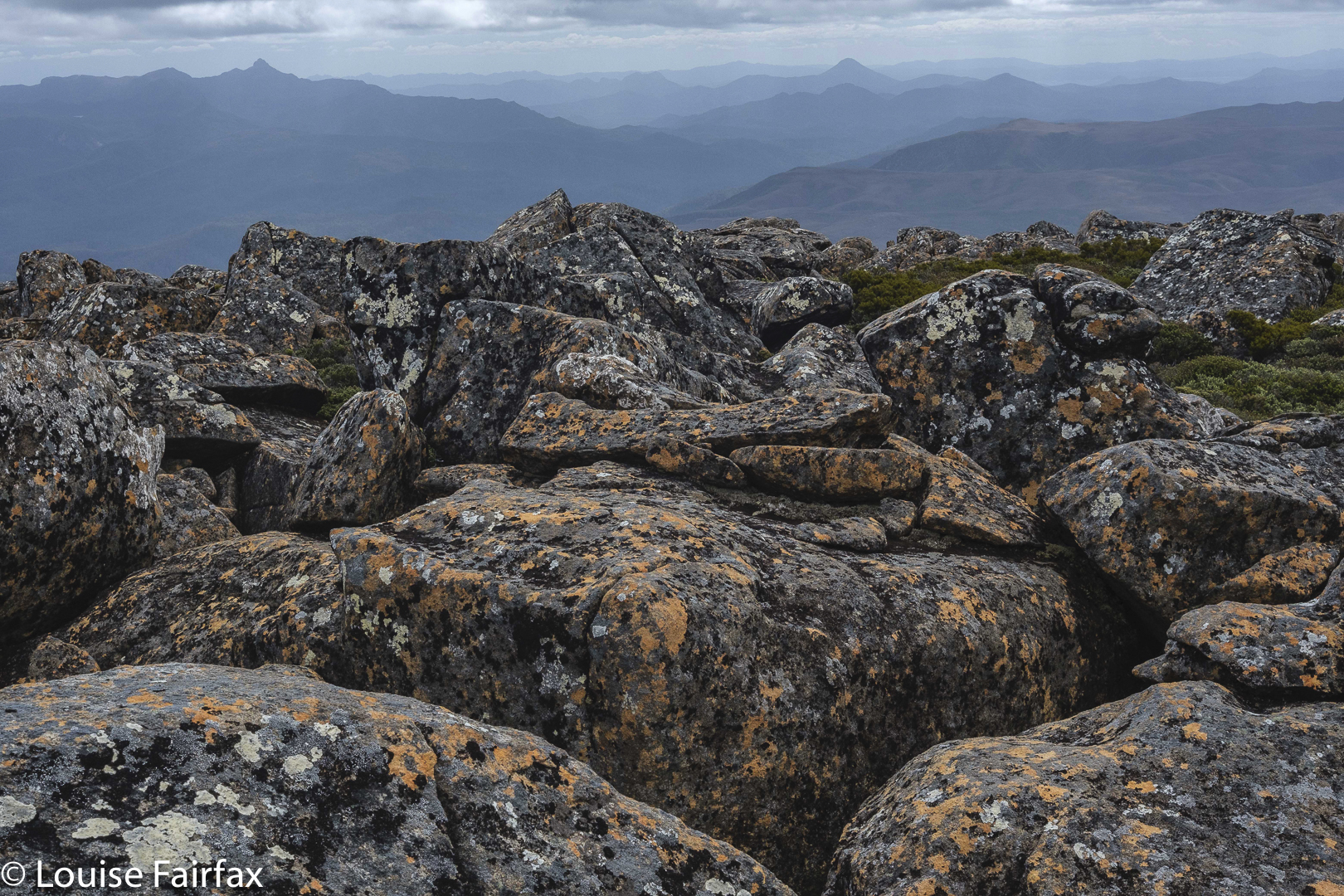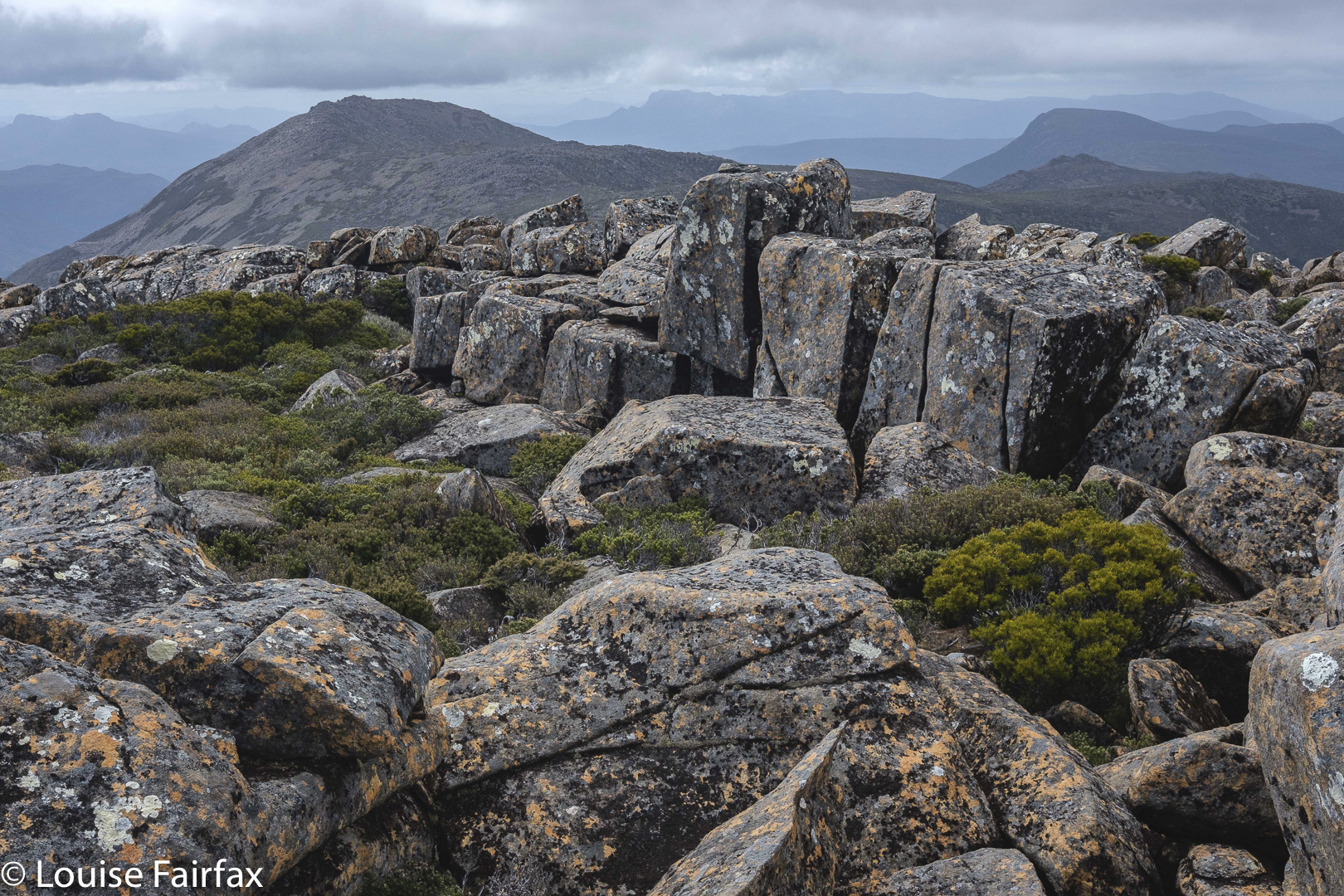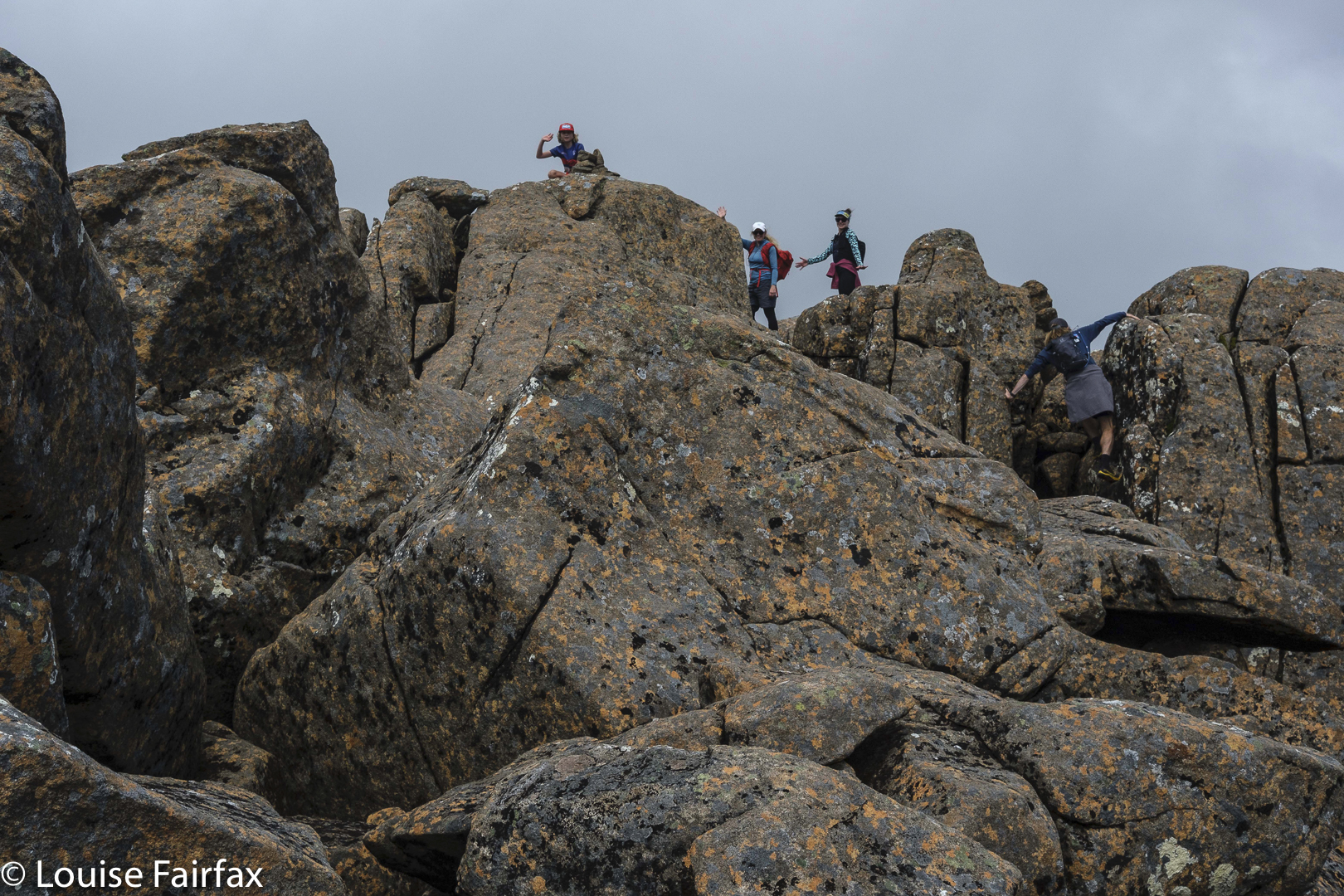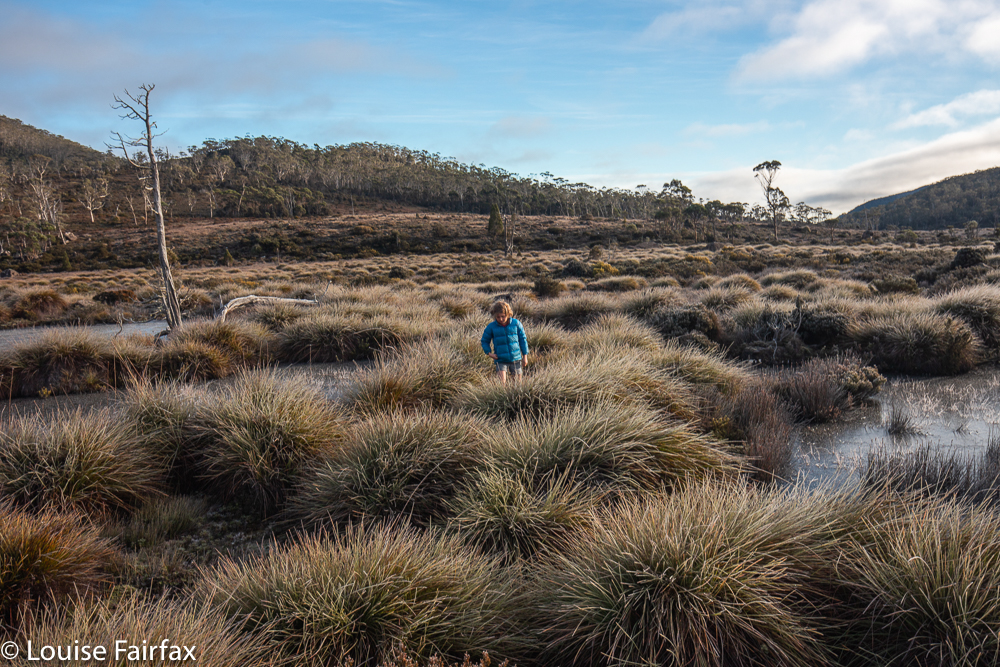
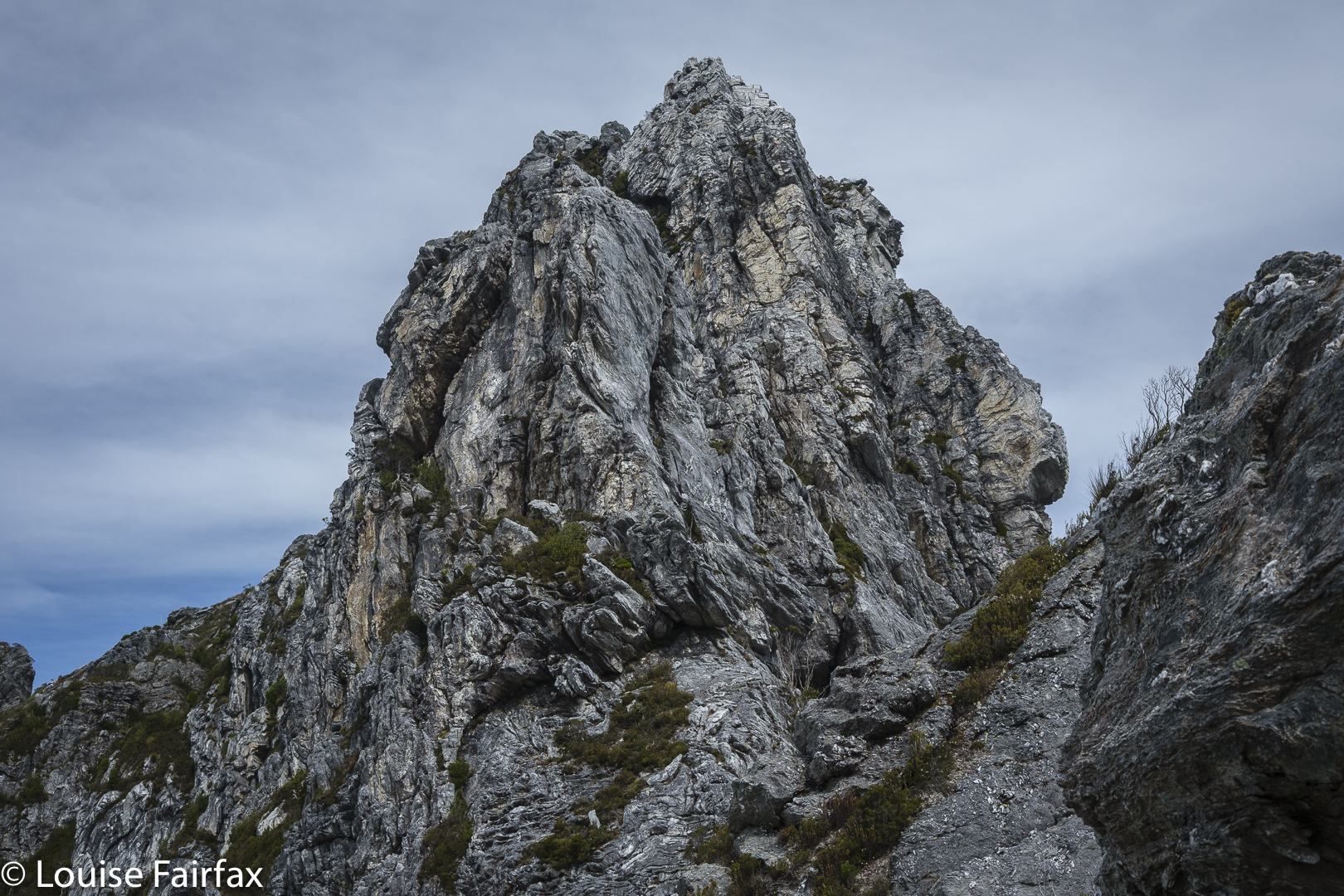
Sharlands Peak, Frenchmans Cap 2021

Here we were at another saddle on our supposed climb of Sharlands Peak. It was another dead end with a drop to certain death if we took another step, or peeped over the abyss too enthusiastically. I took another photo to match the mounting collection of “failure saddles”, sighed a meaningful sigh, and withdrew. Again. How many saddles were left for us to try?
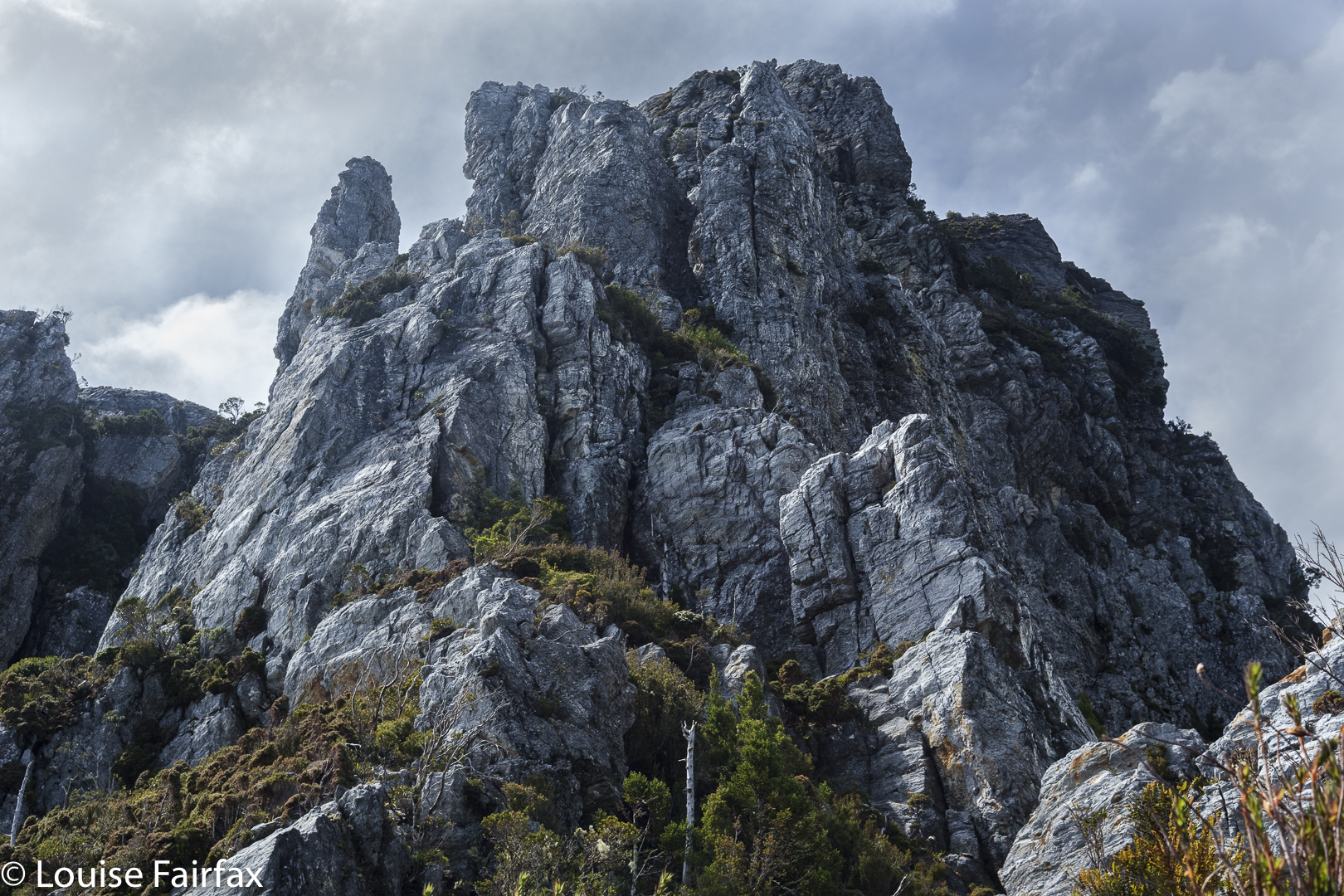
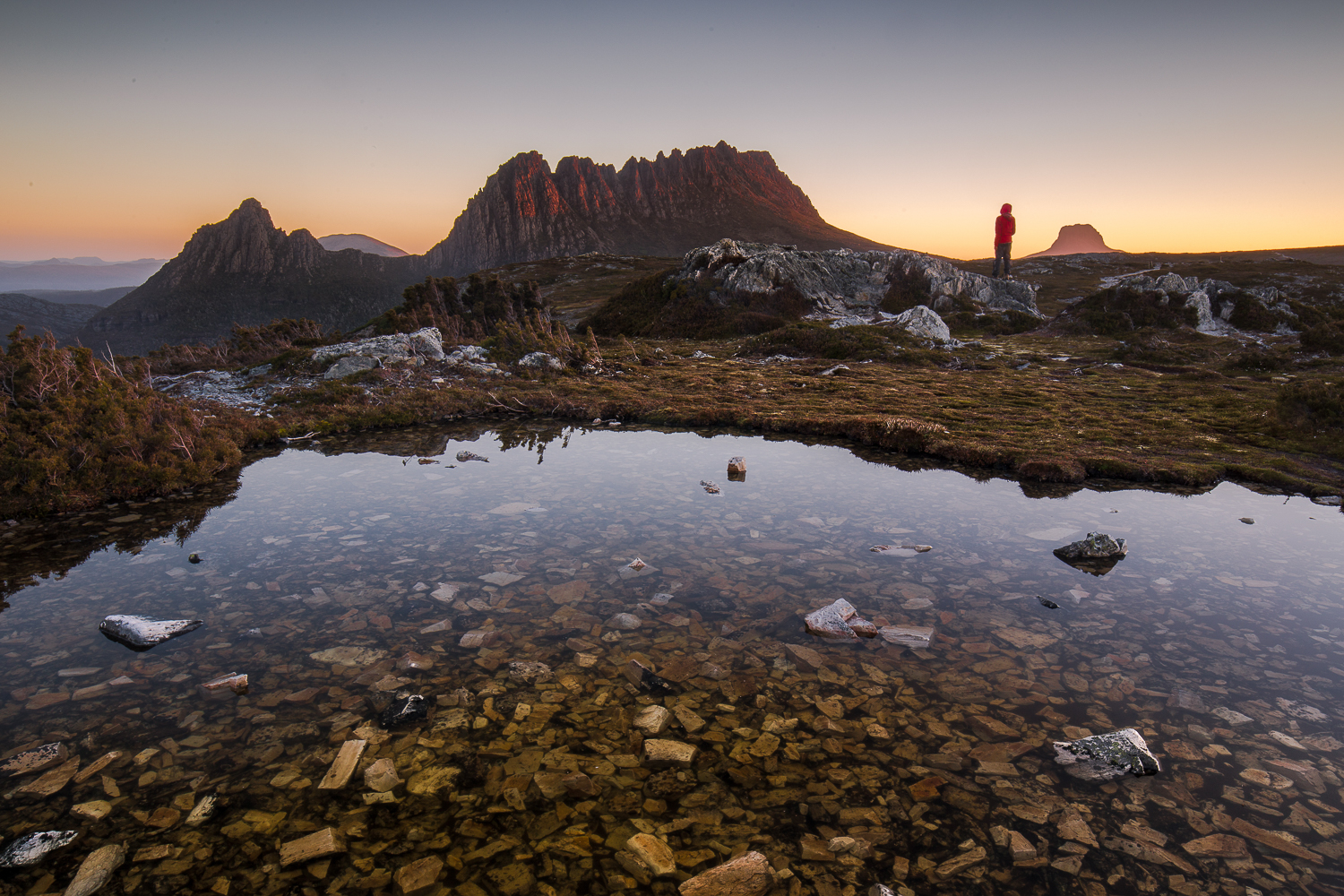
Nicoles Needles, a lower part of the Sharlands Peak tower group, nearest Barrons Pass
Climbing

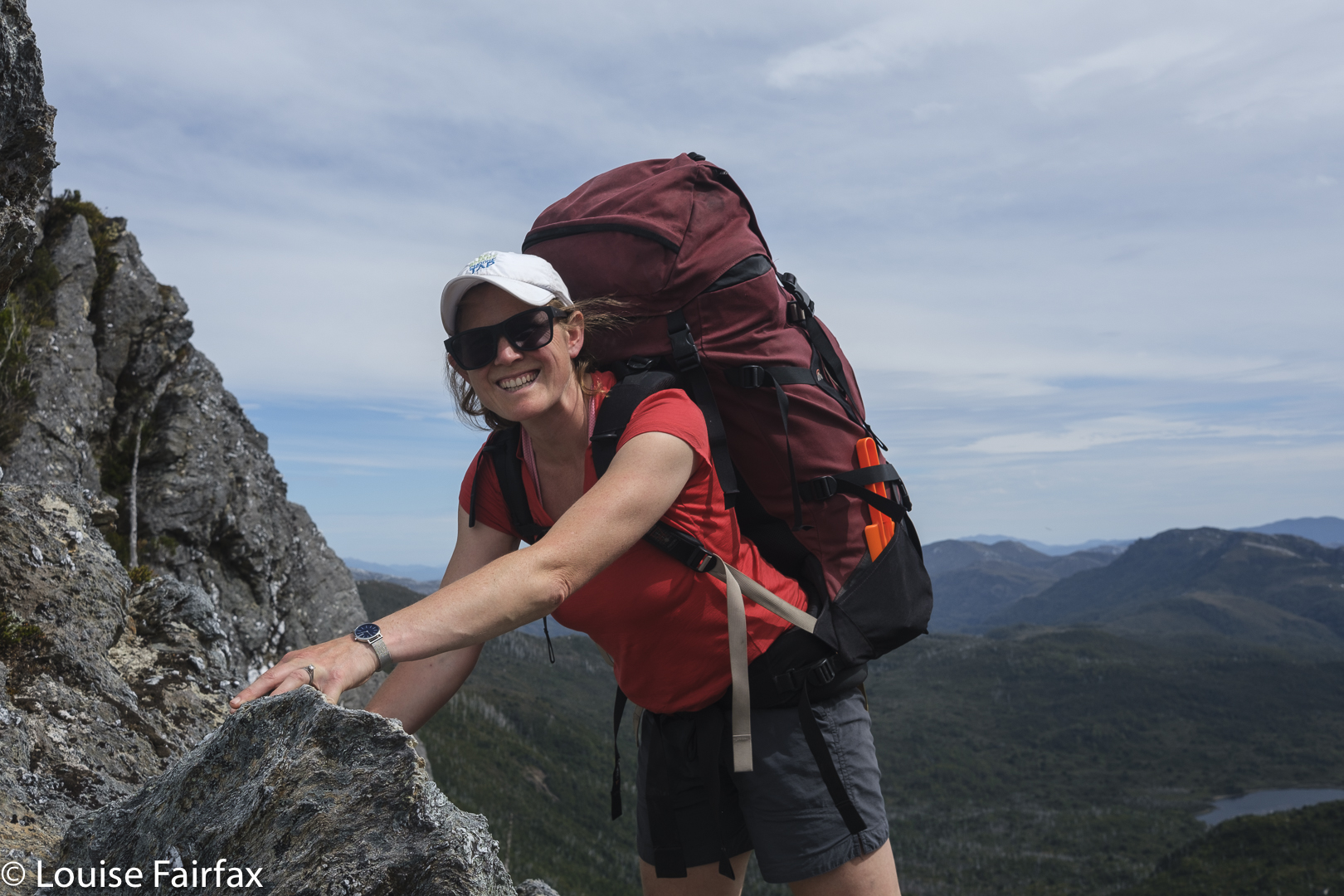
The book had merely said to head east to a saddle that had mild exposure. There had been something about a ridge offering dramatic views, as well. Did the writer not remember there are myriad tiny saddles up there? Or that east covers a multitude of general possibilities ranging over a possible eighty-nine degrees? We kept gazing over edges that dropped to eternity below and asked each other: “Does this constitute ‘mildly exposed'”? “Would you call this view ‘dramatic’?”
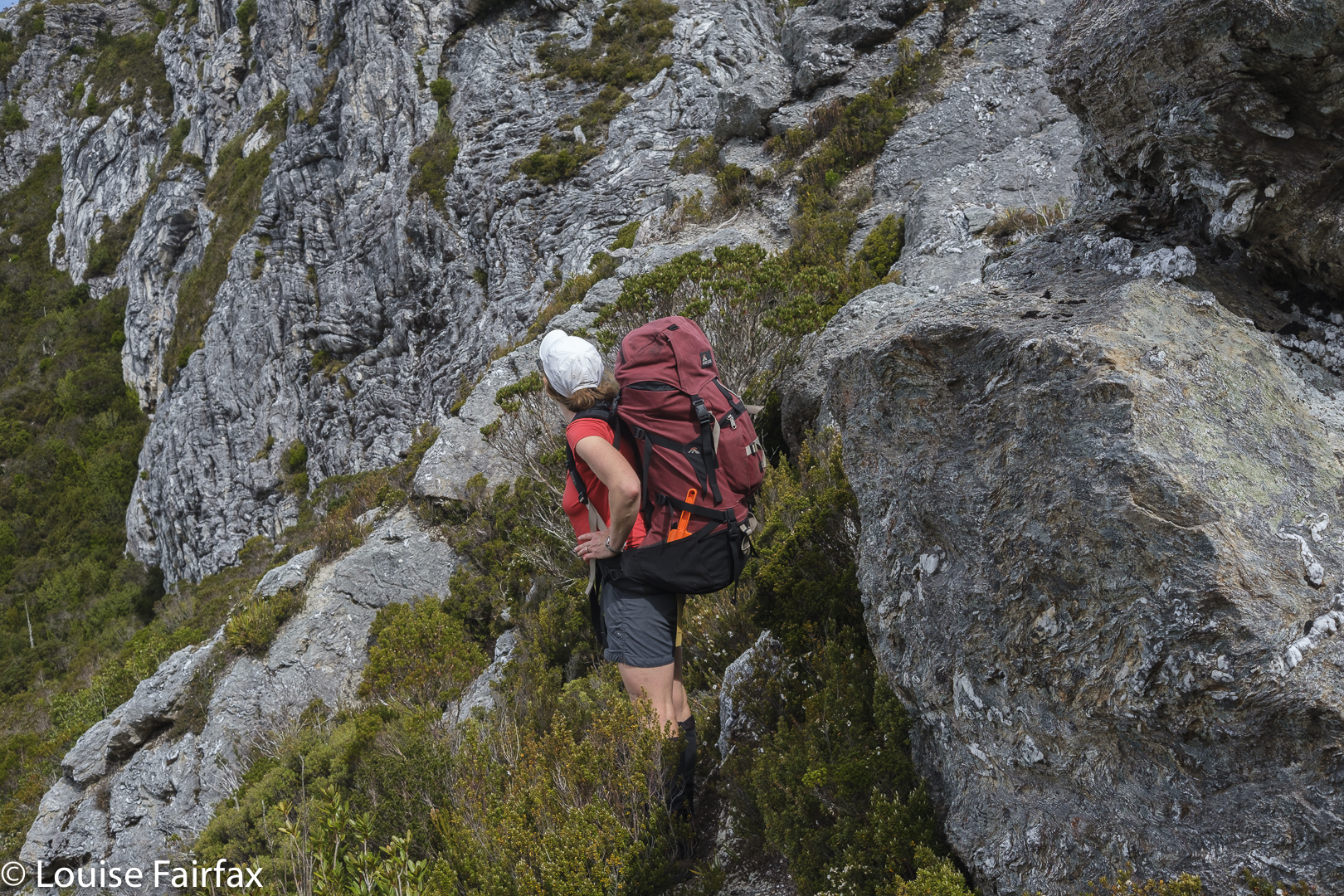
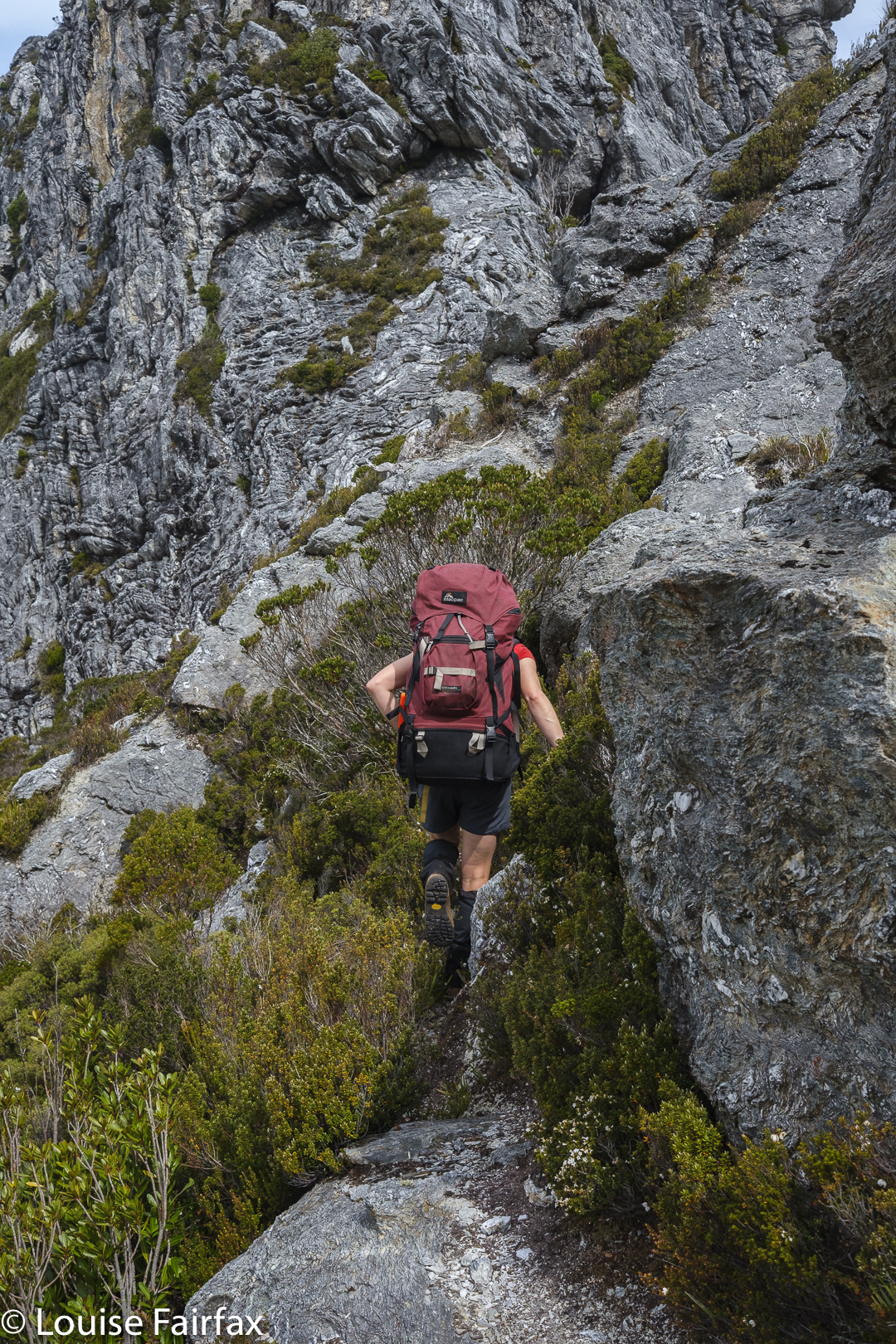
Hm. We go up THERE?
Traversing

All the views were dramatic. Every saddle had a certain degree of exposure. How nauseous did you need to feel before you could pronounce: “This must be the one; I can identify it by my stomach.”
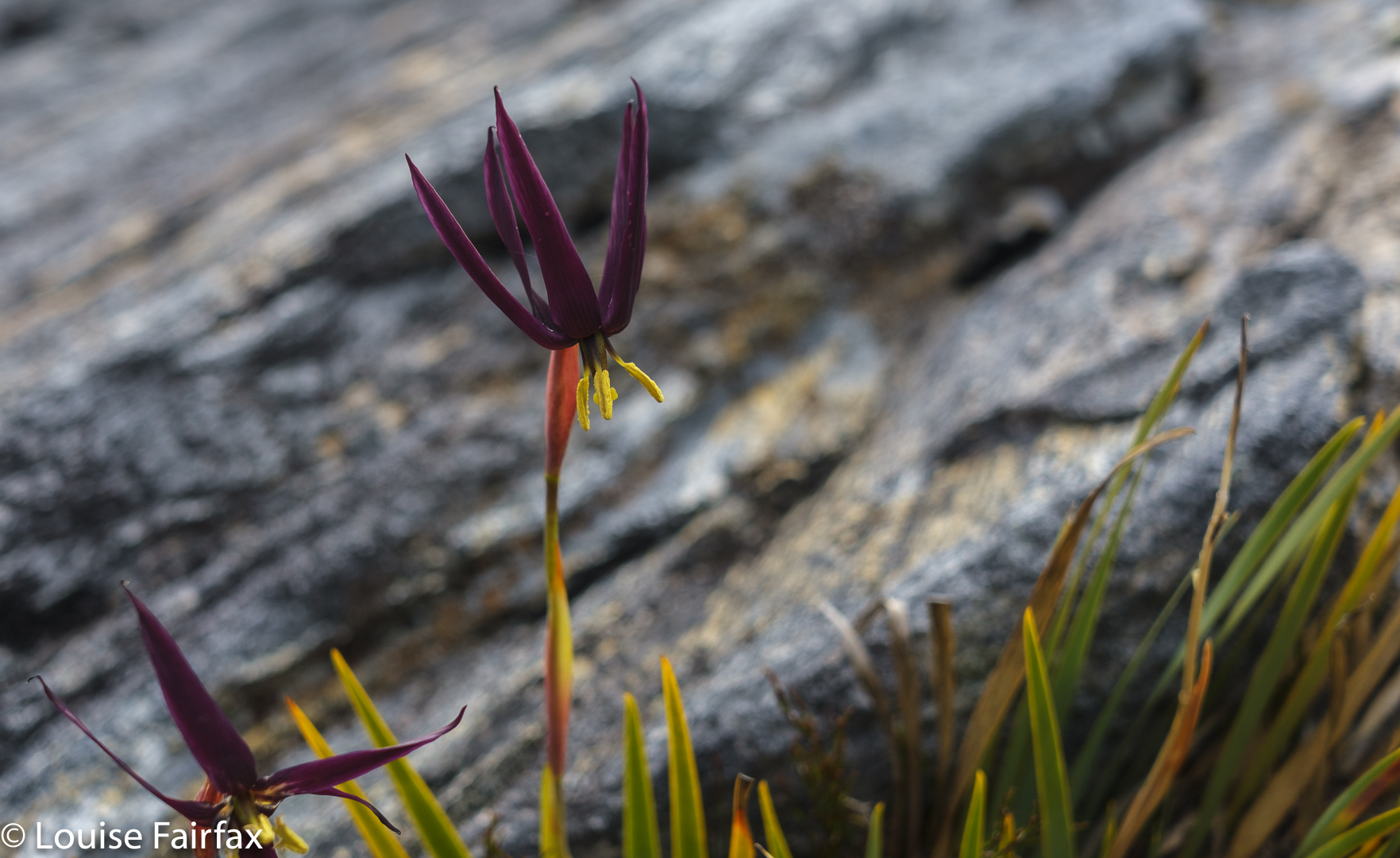
Isophysis tasmanica

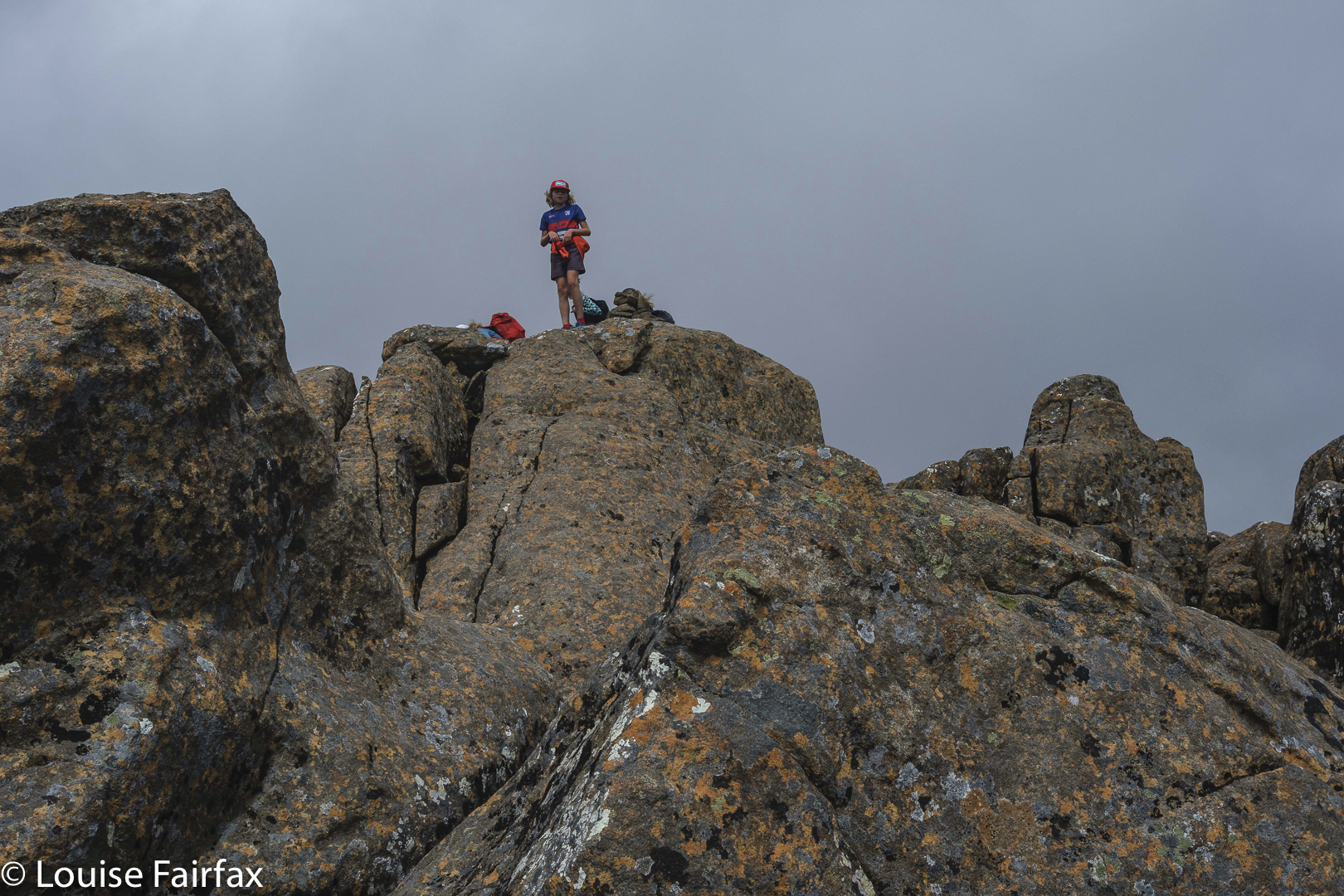
We would be on a saddle, looking up a knife-edged ridge that brooked no error: one rock falling out of the collection, one slip and the climber was gone. You couldn’t see what lay beyond the next dodgy climb. Was this where we were supposed to go? There was no point in risking it if it was yet another dead end, but we couldn’t see if there was any use trying from where we were. One of us would climb the next bit and report back on the likelihood of this being the way … or maybe offering A way, even if not THE one.
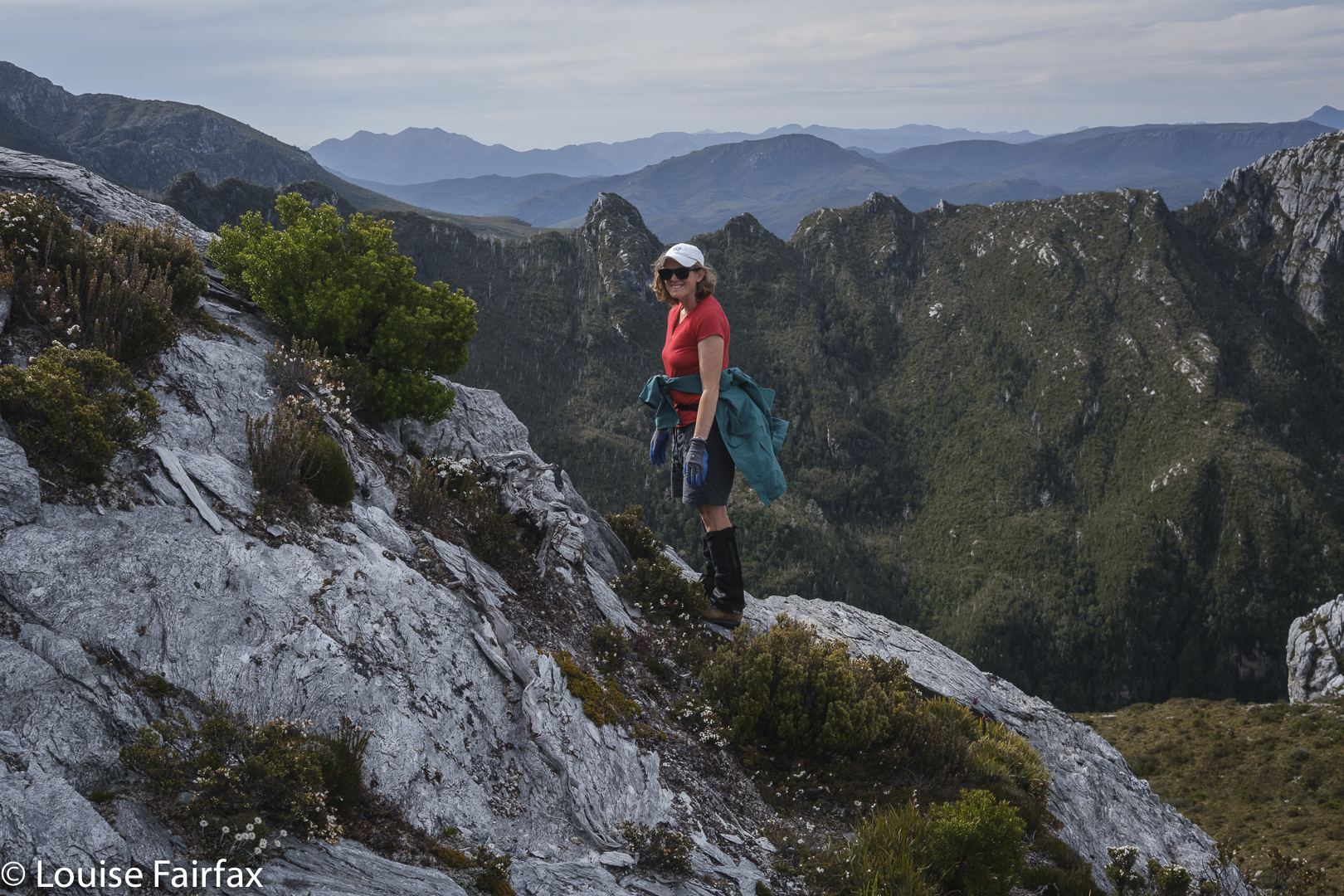
Getting higher

Now that it is all over, this nervy trial and error seems rather fun, but at the time, my nausea level was mounting, especially when it was my daughter’s turn to try out first and I could see my beloved offspring straining her way up rock that looked too loose for my comfort. She is very experienced and capable, so it seemed terribly condescending to call out: “Be careful. Test each rock hugely before you commit to it.” But love made me want to yell precisely that.
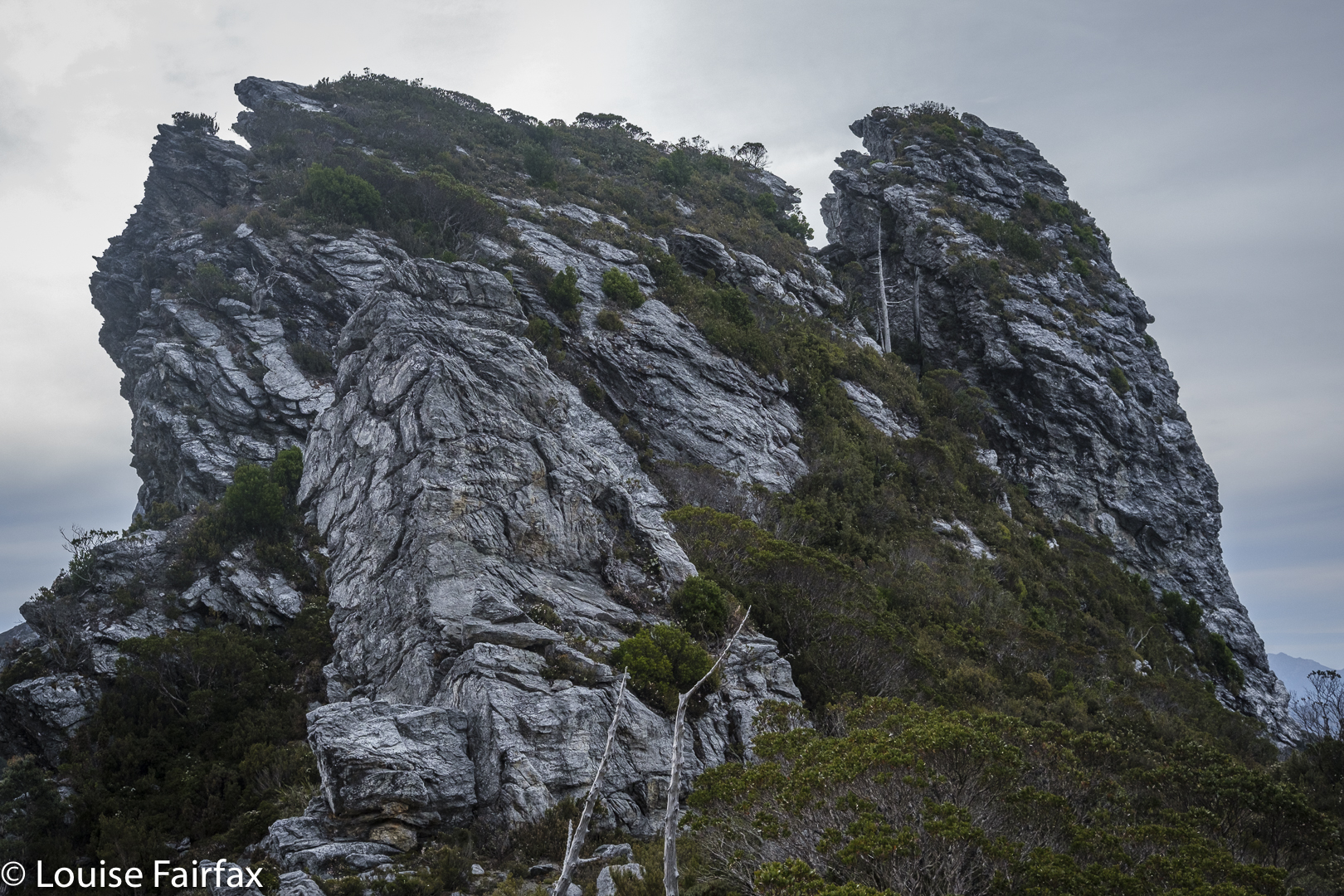
Another saddle, another needle but not the summit. Sigh.

We found ourselves by and by at the top of the landslide. The book had said not to go via the landslide, but it meant not to climb that way from below, and  implied the real danger was lower than we were. Should we keep trying here?
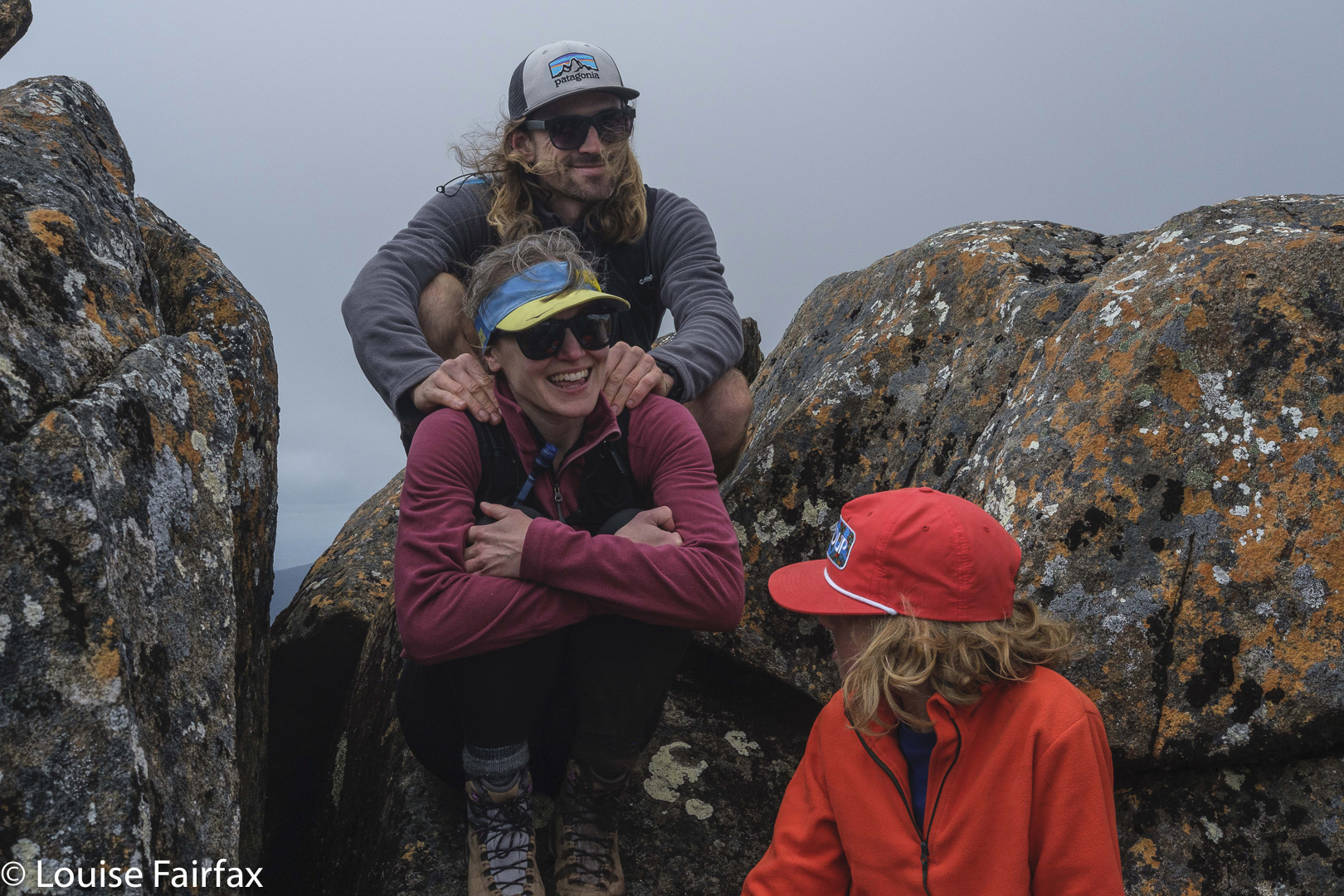
I was beginning to give up, I have to confess. I announced that I had just lost interest in this Abel, and thus in the idea of getting all Abels. I was ignored. Mercifully. We tried yet another tack. My turn to go first. From this knob, I could see a saddle that surely led to the top, and I thought I could make out a possible route that would find us at that saddle. Kirsten came up to get the view and agreed. Here  we go again. This was not the first time this had been said in our tour of these maze-needles. We tried on rough contour. Failed again. Dropped again but not too far and bingo. We could see a possibility of gaining the top.
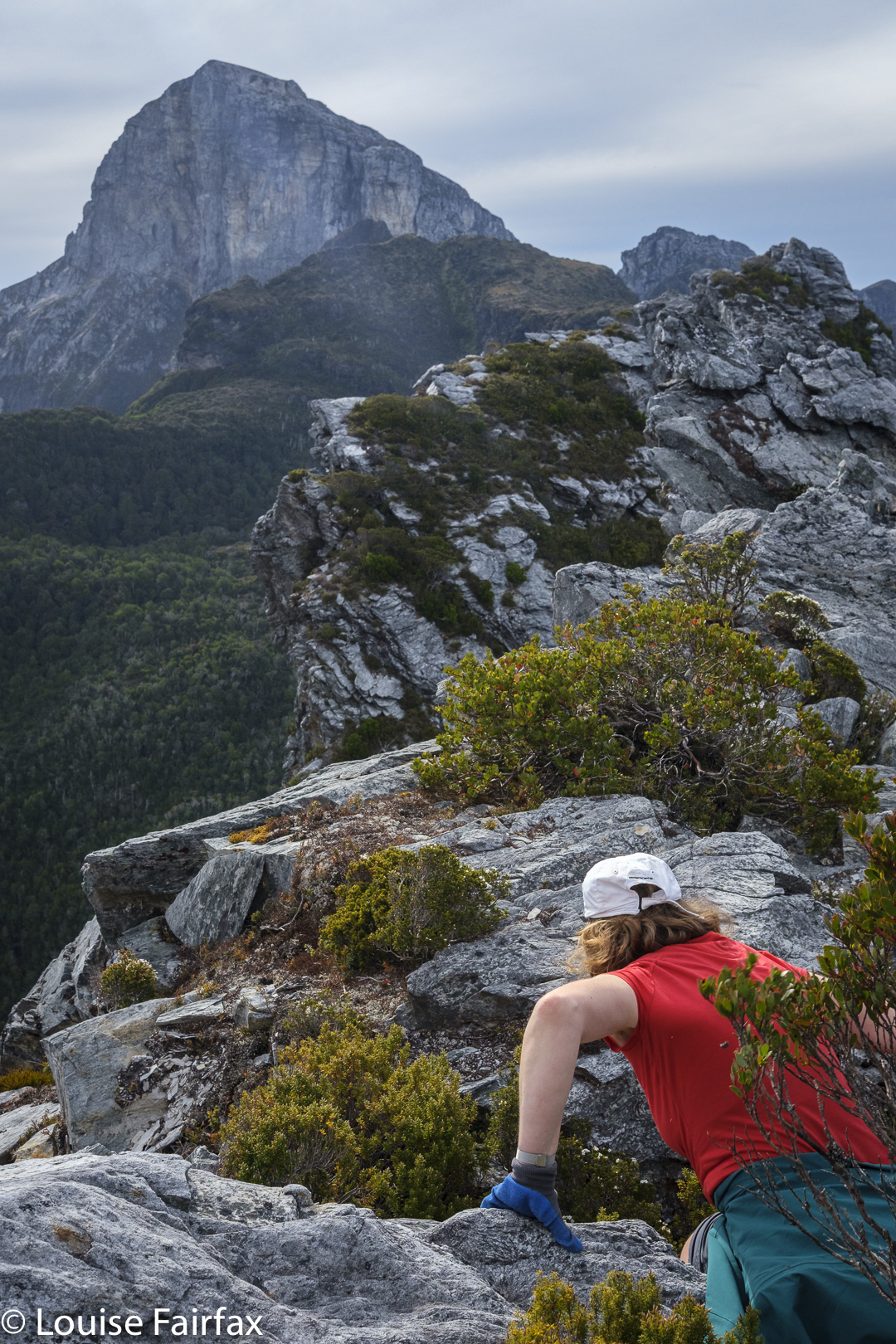
Another push up to a higher level, but we are not where we need to be. Great views, though.

Yet, even as we climbed this, we had to tack and back a bit in order to get a route that would take us up and not on the flight of our lives. Now that we have successfully done it, it all seems terribly easy. Uncertainty about whether what we were doing was yet another false manoeuvre was part of what was mentally trying. But, I have to say, the whole uncertainty ultimately engendered far more excitement at success than if we had known all along that we would get there.  It was fun having to work it out and do it for ourselves. Too much of our wilderness is being dumbed down. “Wild” and “dumbed down” are actually mutually exclusive, in that the word “wild” has as its antonym “tame”.  Could someone please explain that to our government?
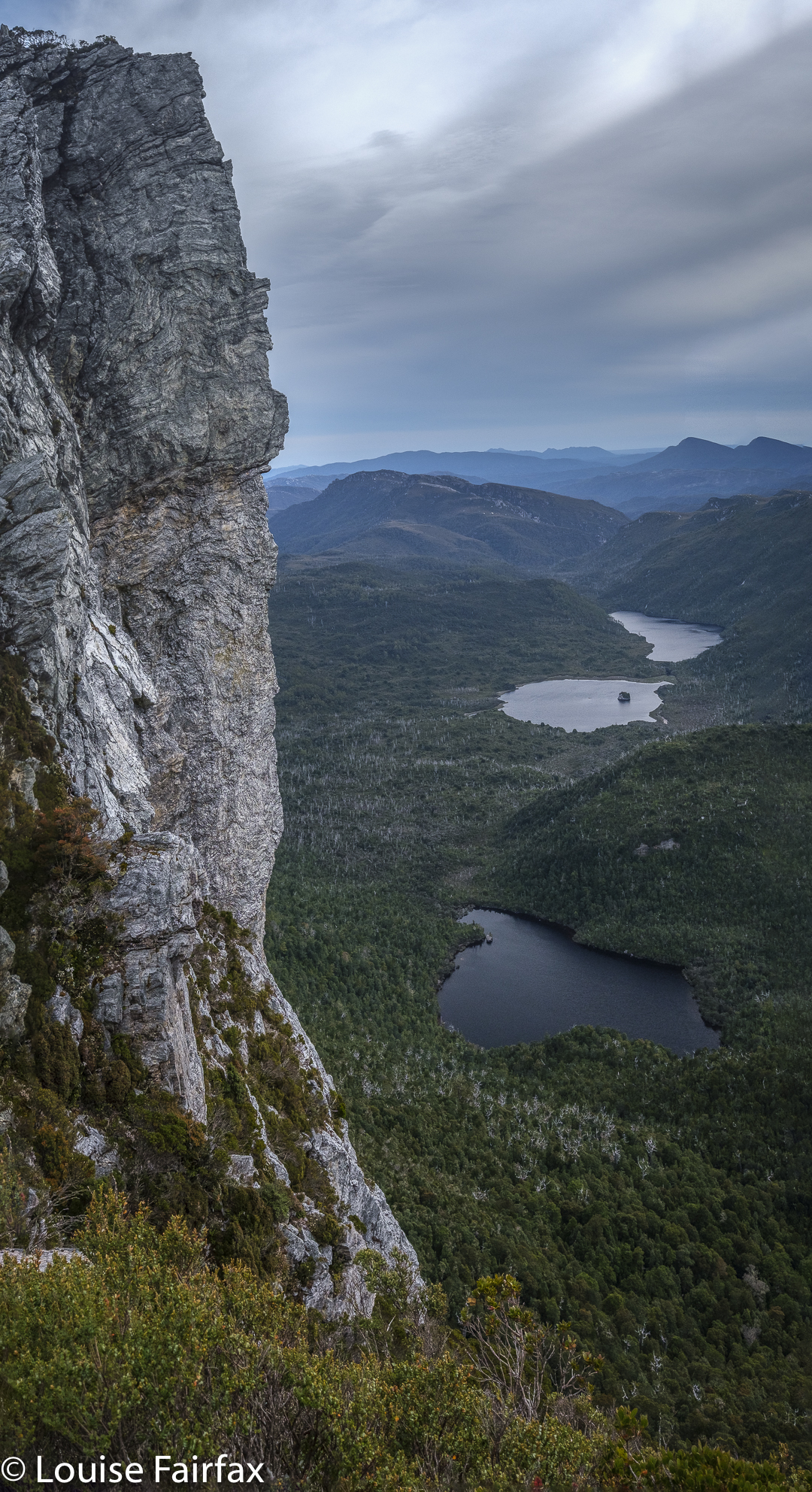
Pano. At last we have found the summit needle.

There was the summit stone. I couldn’t care at all about who touches first, but Kirsten wanted us to touch together. It’s a cute ceremony. We did it. I snooped around the back, and called out that I’d found a way of actually getting on top of it. (It was too high at the first point for either of us to scale it.)
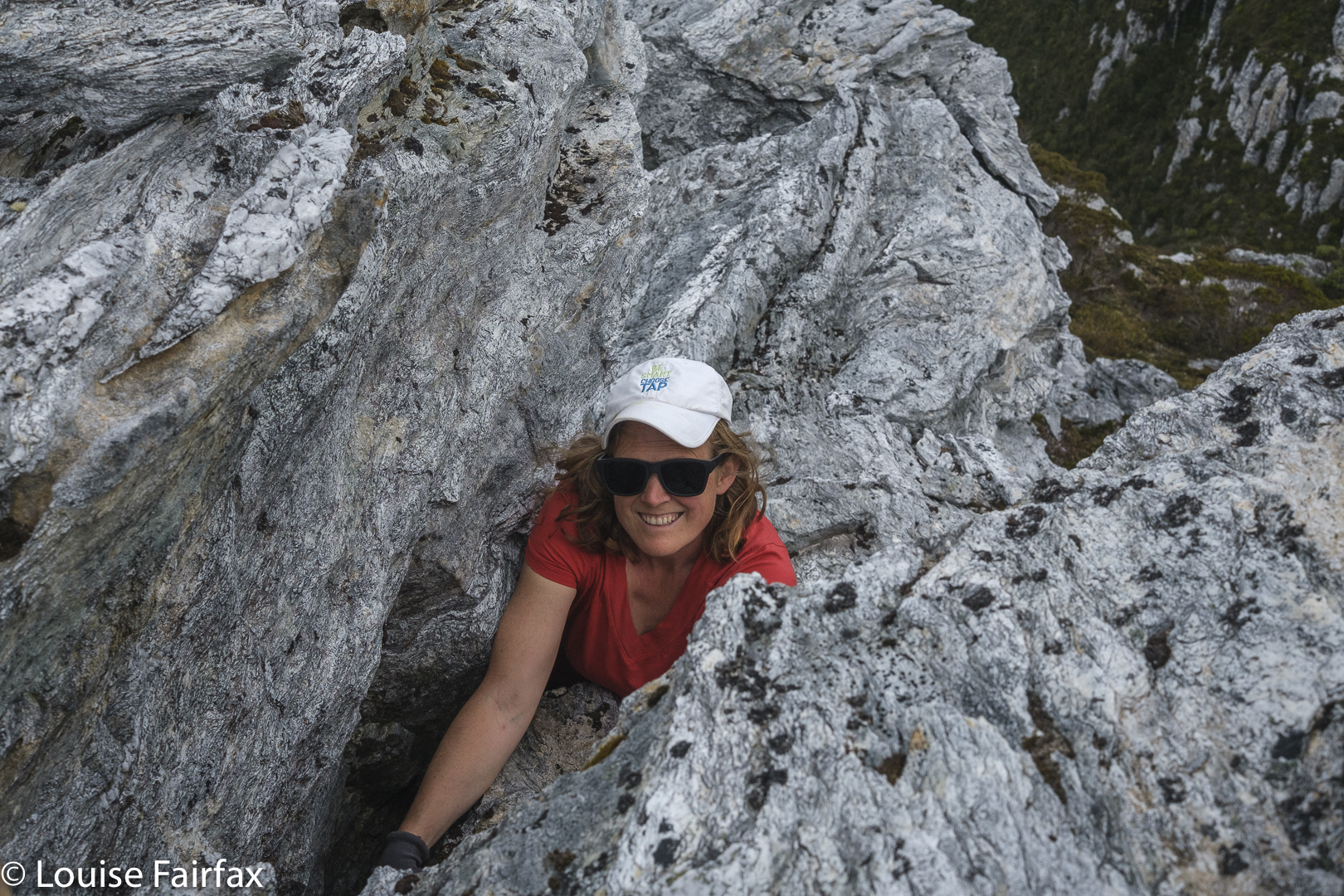
One final grunt and we’re both on top.

With a grunt and an accelerated effort, I gained enough height to then haul myself to be on top. Whoah, it was windy up here, only 2.3 or so metres higher. Kirsten of course, quickly followed. There was not room for a third person up there, but we were only a duo, so that hardly mattered. We briefly enjoyed the view, and descended extremely quickly now that we knew the best route. Our little welcoming tent far below signalled our new goal.
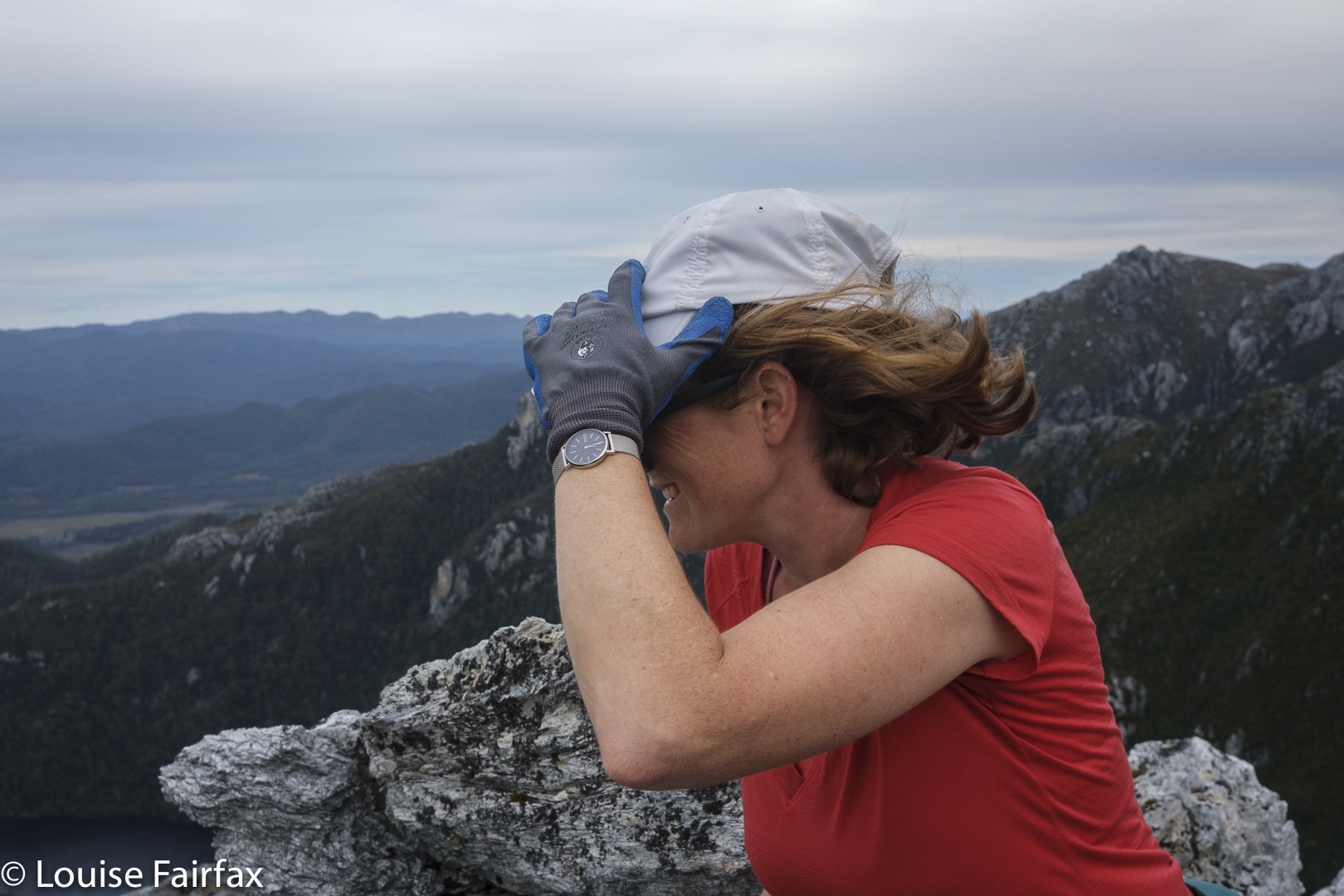
Weeeee. Made it. Summit of Sharlands

How lovely to reach our tent at last. It had been a long day. We had driven in, walked past the Lake Vera hut (where Kirsten had a swim en passant), climbed Barron Pass in what felt like oppressive heat, enjoyed the view up there, and then gone along to curve around to the valley behind our desired peak. We were filled with joy as we descended. There we were in a a quiet valley, surrounded by astonishing majesty and soothing silence. THIS was wilderness. This was what we’d come for.
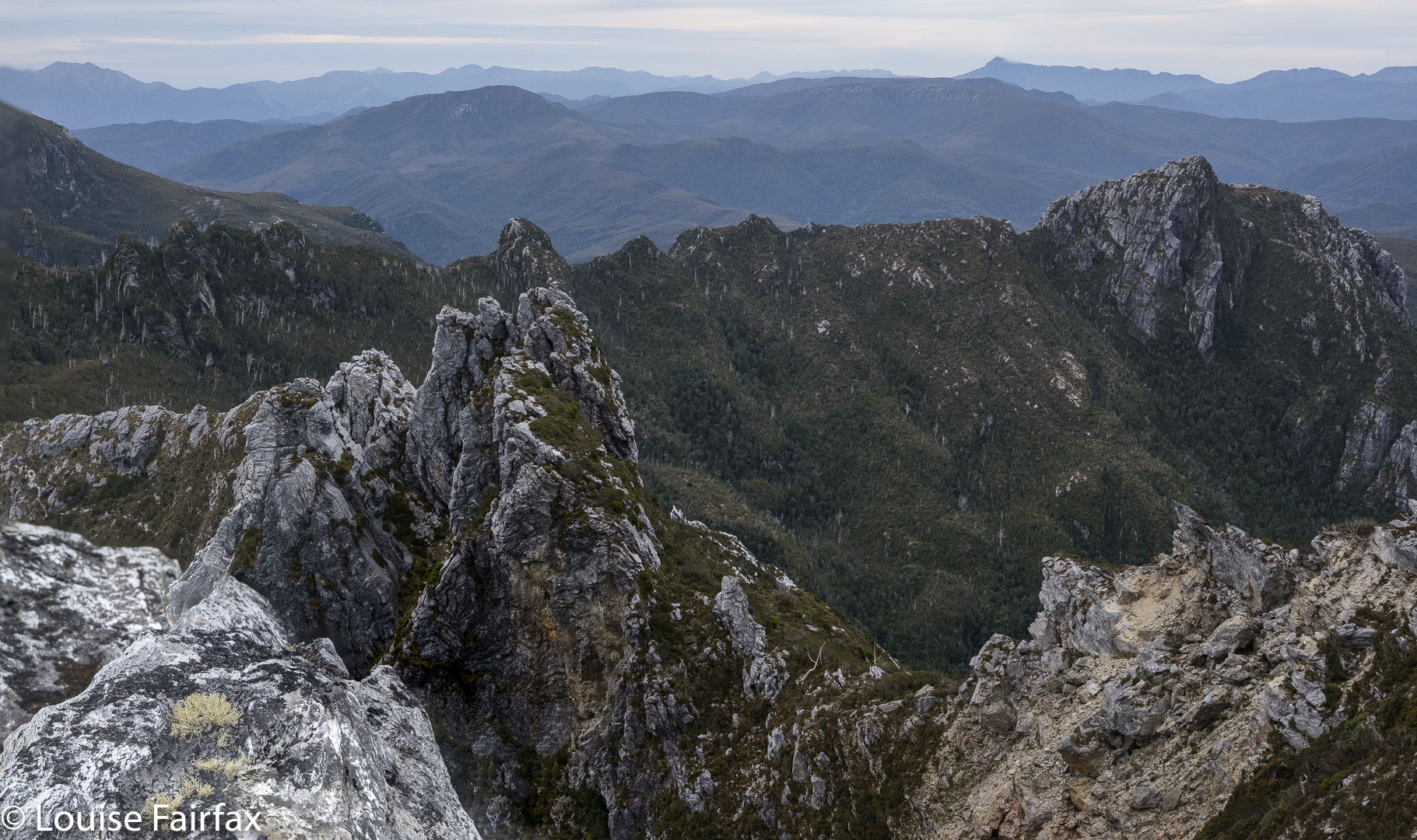
Views. The landslide from above.

Earlier, despite the already very long day, we had made the call to climb this peak today in case the bad weather came in early.  Now we were back at our tiny red haven, we couldn’t have been happier. The evening was mild enough to cook and eat outside and stare at the changing light as we ate our delicious (only in the wilderness) cauliflower and pea dahl – the normal rehydrated, formerly dehydrated fare.
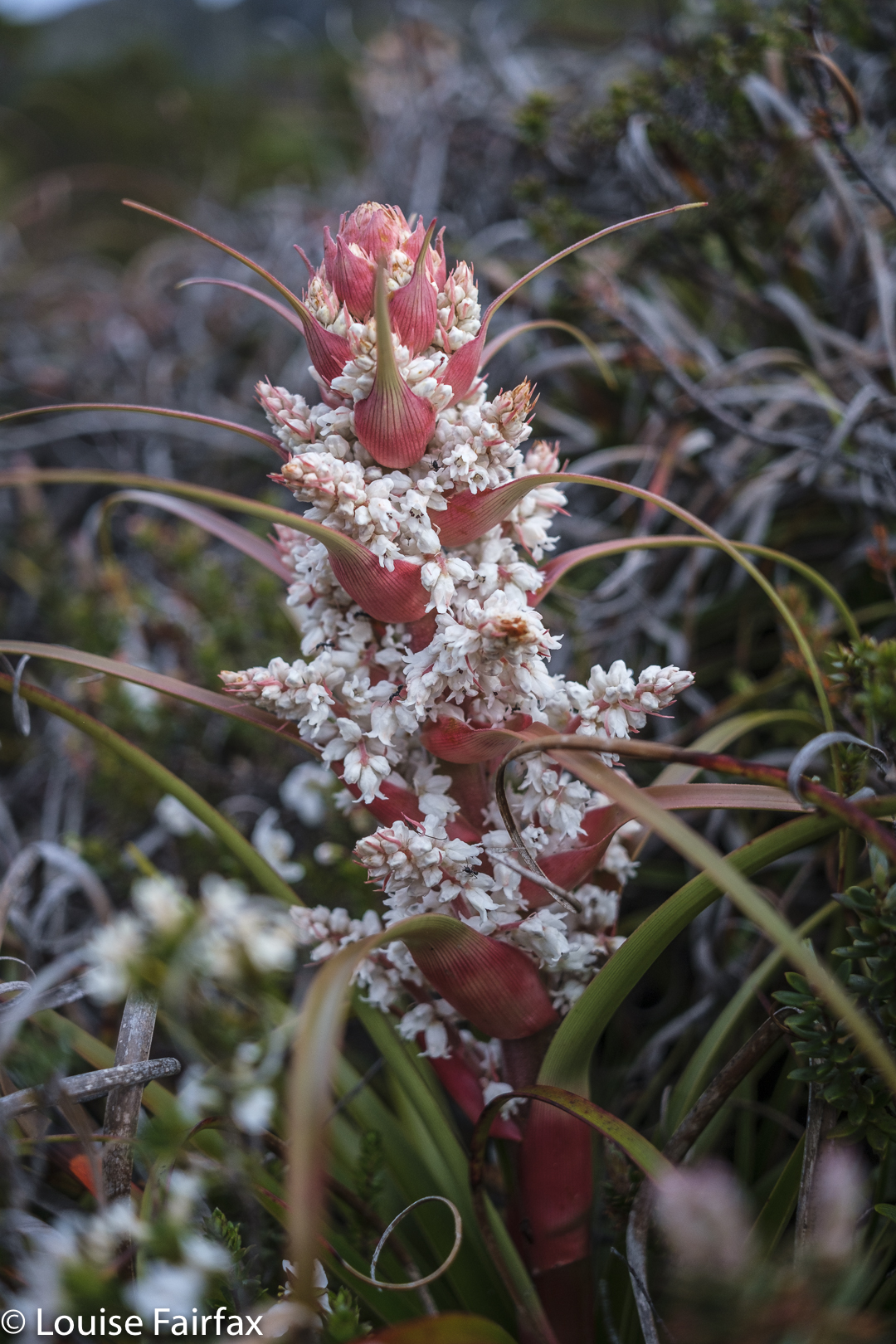
Dracophyllum milliganii near the tent

Sharlands was a kind of bonus, brought about by the expected bad weather which had been forecast for the next two days. We had changed plans and now got in a peak while the weather held. Now, if it turned totally sour, at least we had something to show for our efforts. Kirsten had kindly taken a day off work to be with me and climb a mountain together. It was great that her generosity was not in vain.
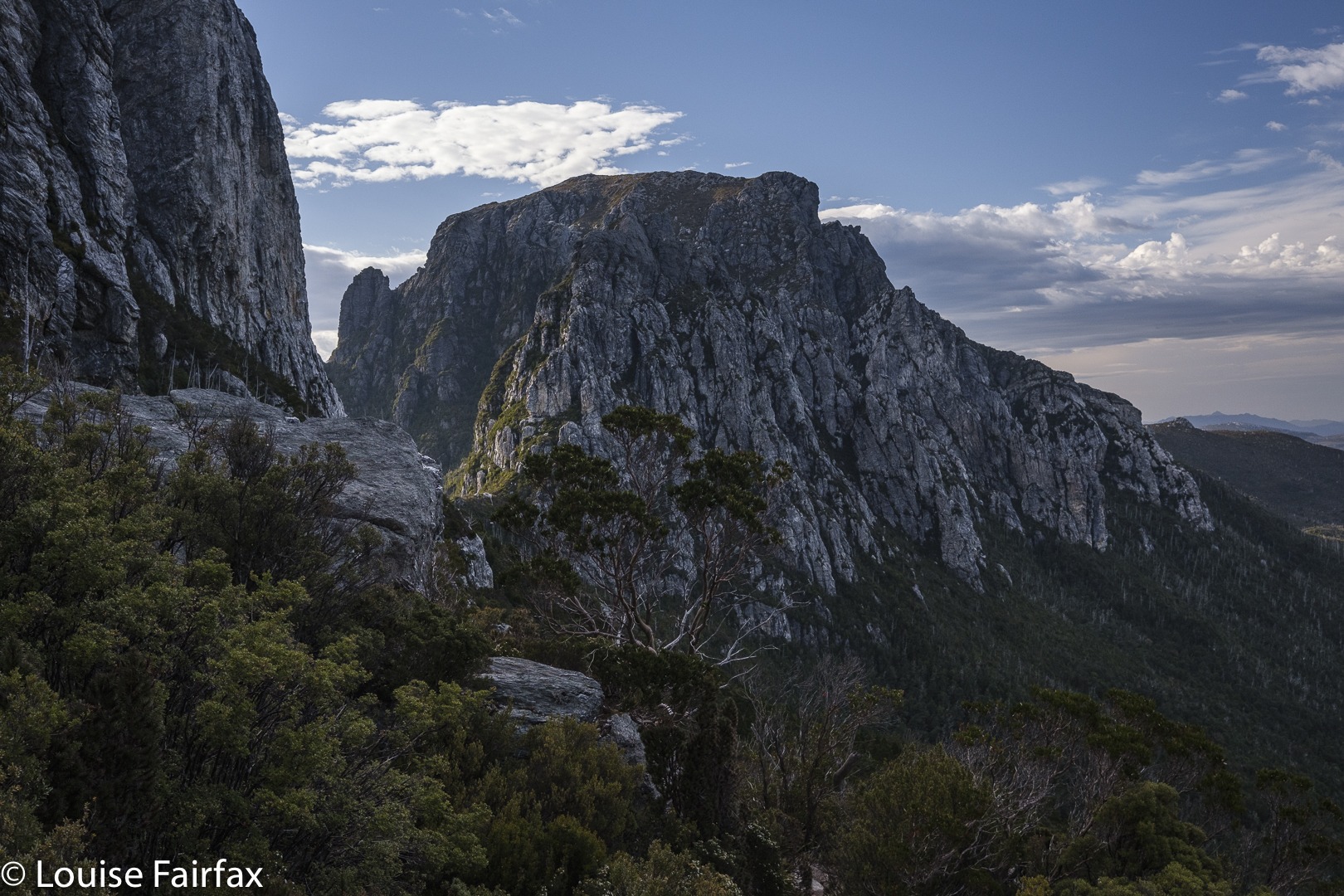
Day 2. Looking back to Barron Pass

The next morning, it was not yet raining, and there had only been a couple of light showers during the night, so we decided to head off in the direction of Frenchmans Cap, and maybe climb it, maybe not. The world was our oyster. We’d respond to how we felt.
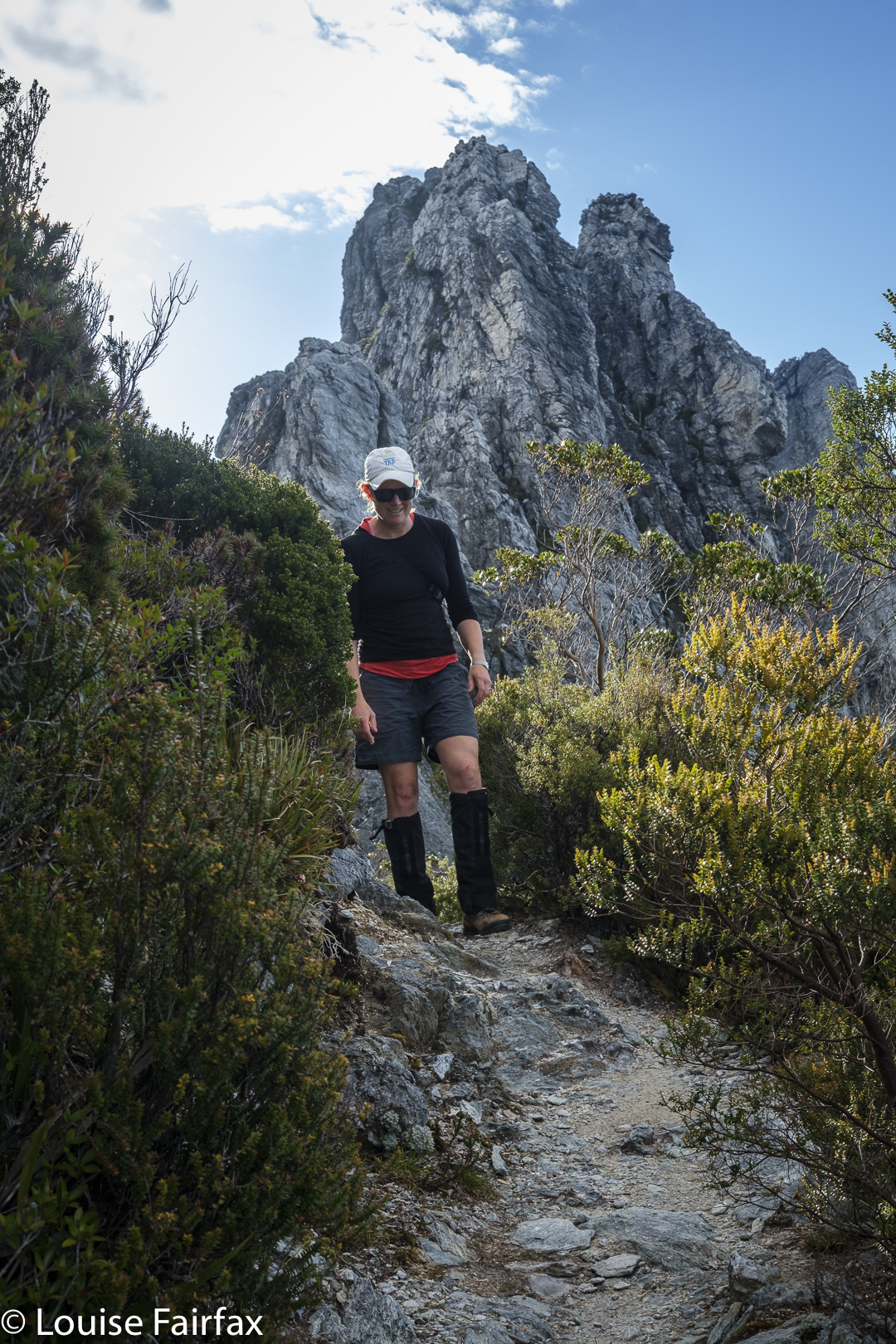
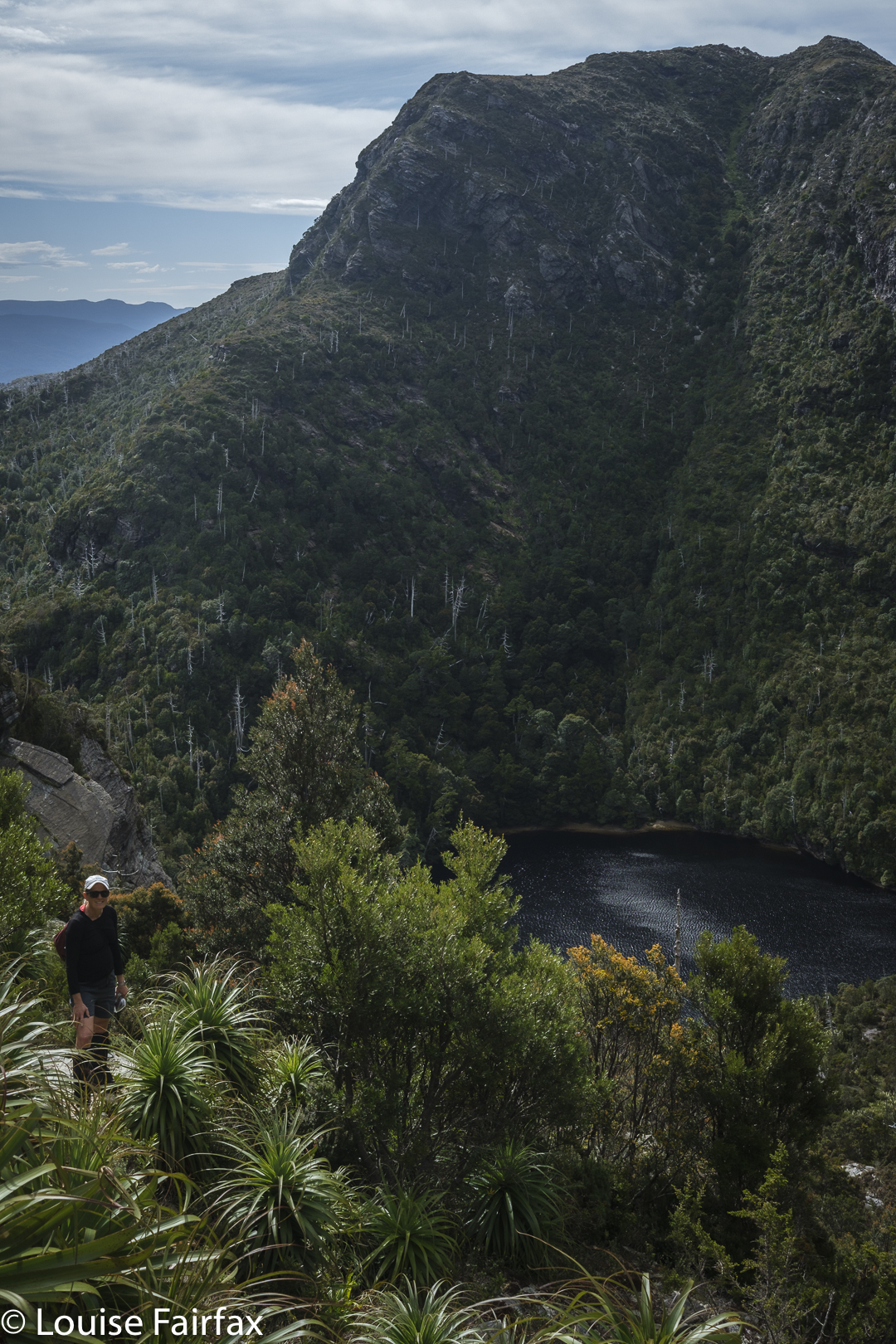
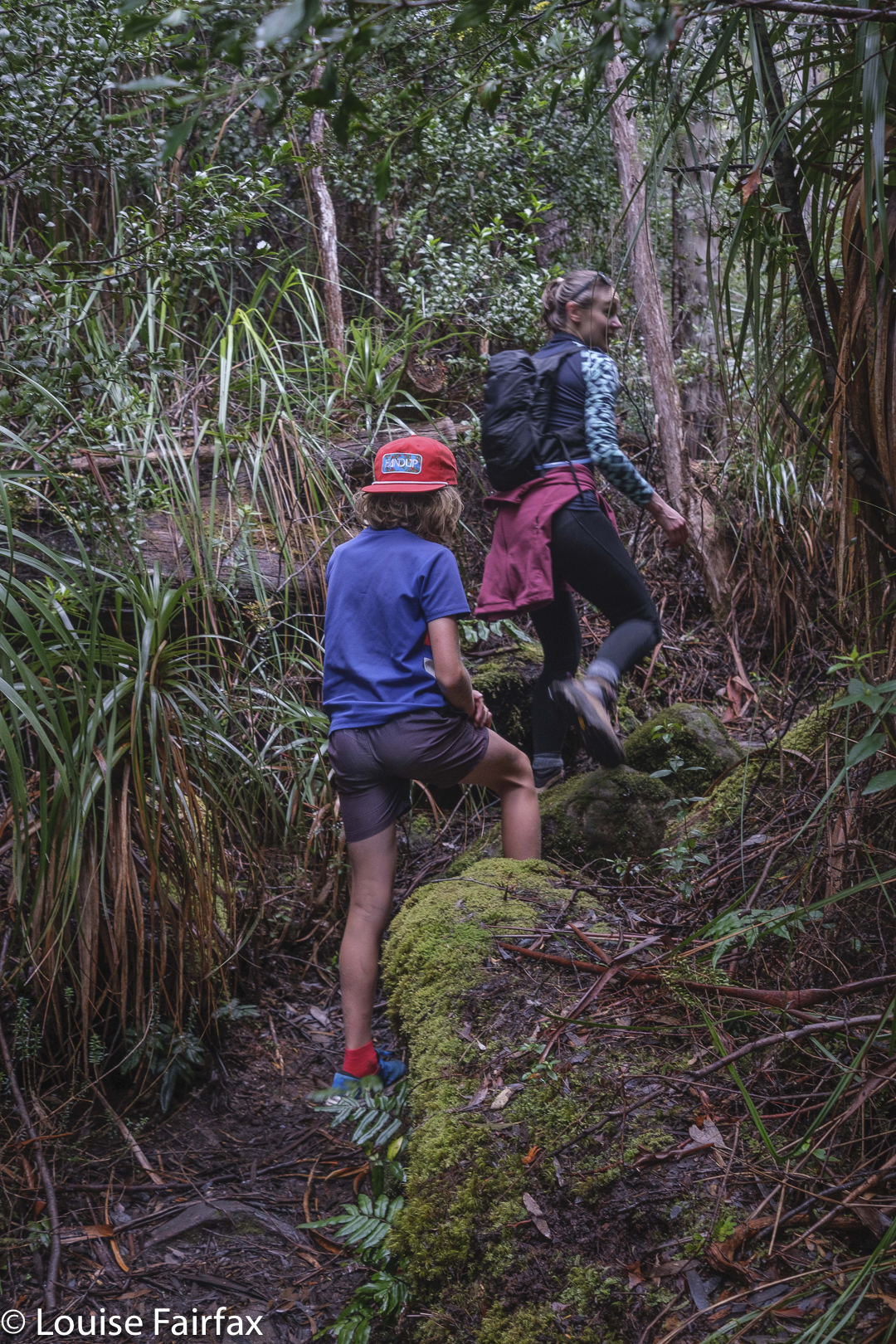
On the track to Frenchmans
Lake Tahune below as we climb higher

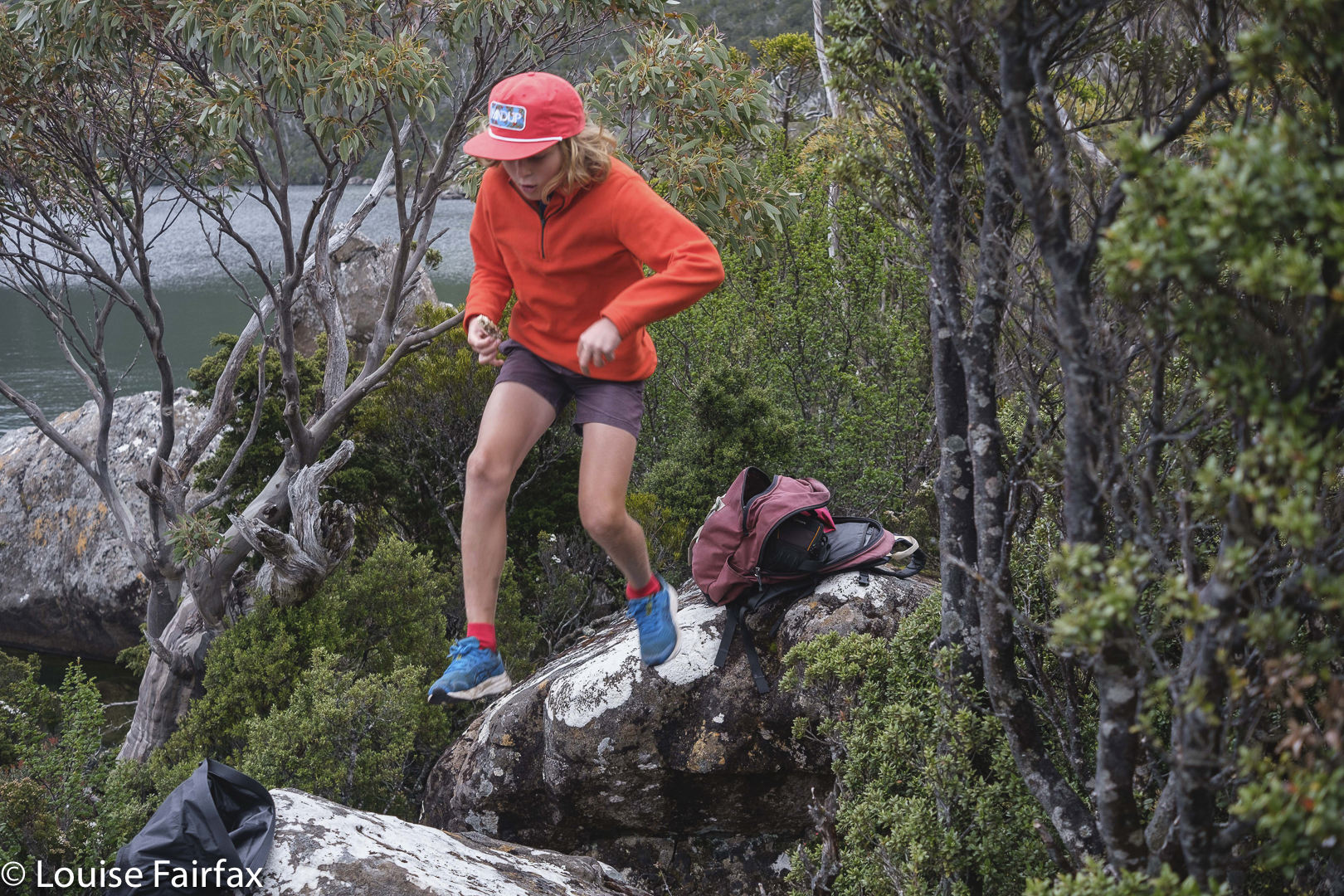
Of course, we ultimately felt like climbing, even though the weather started to close in (and we had to allow a great deal of time for photography of flowers and views, and for Kirsten to enjoy a swim in Lake Tahune). We were under no pressure, time or otherwise.
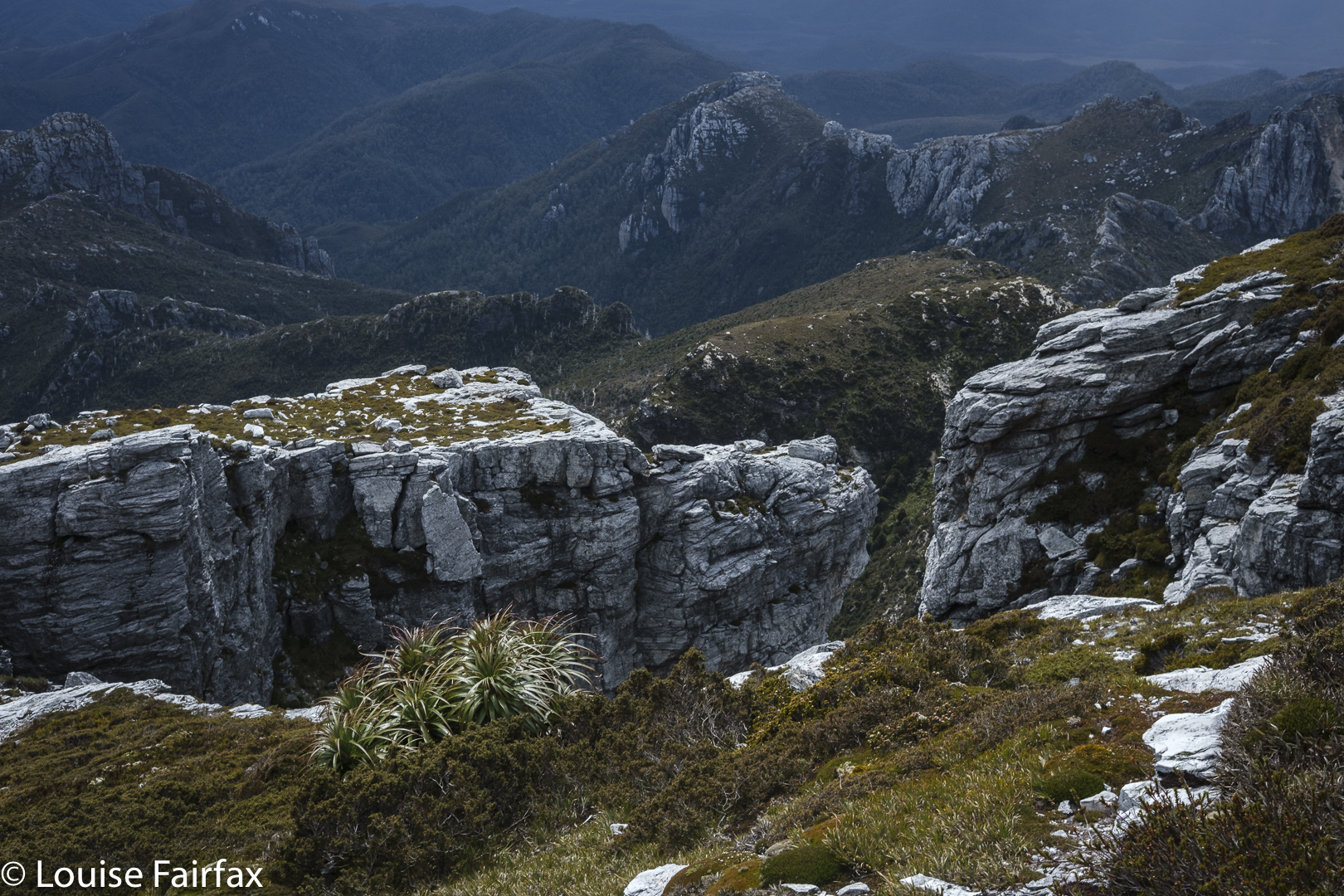
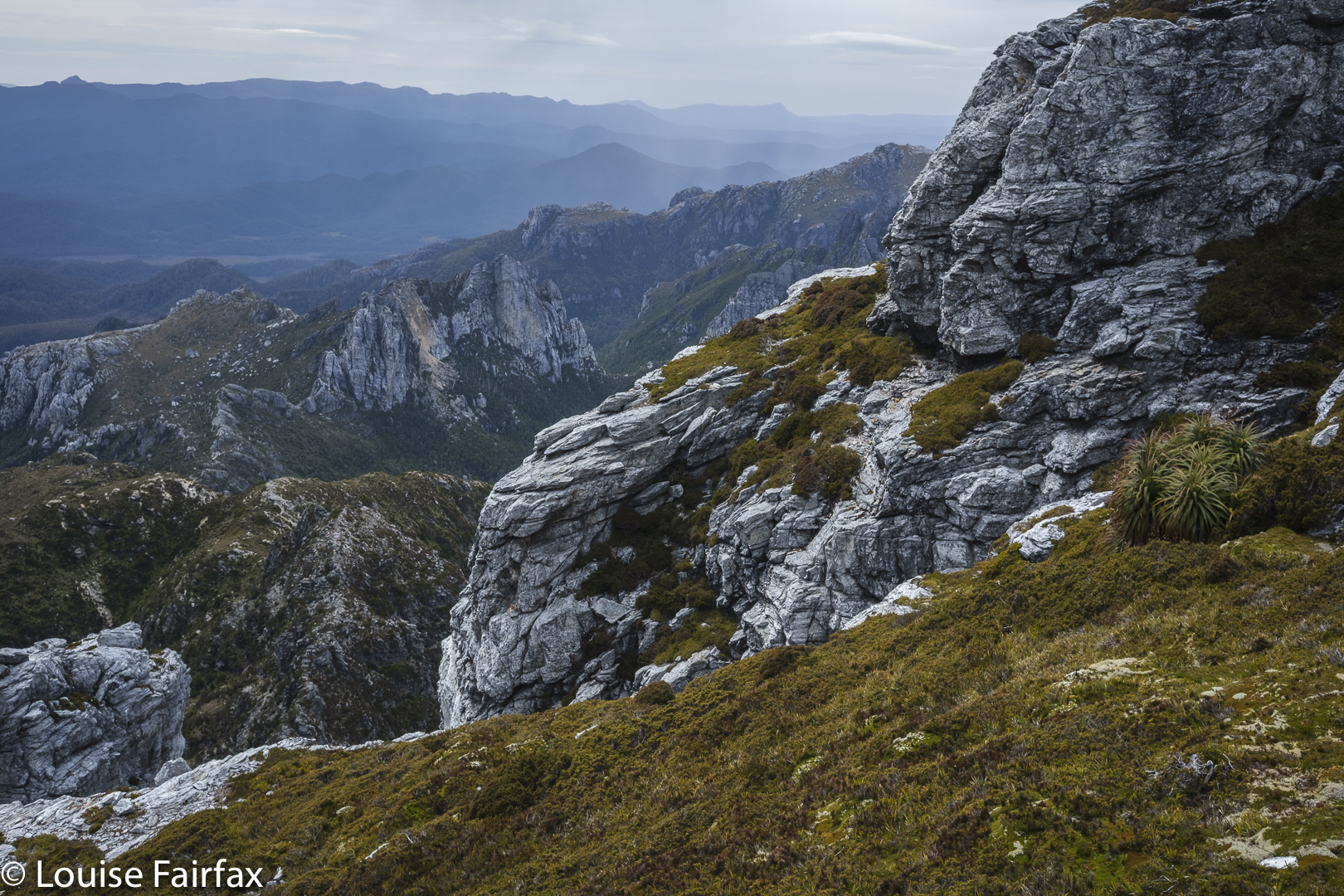
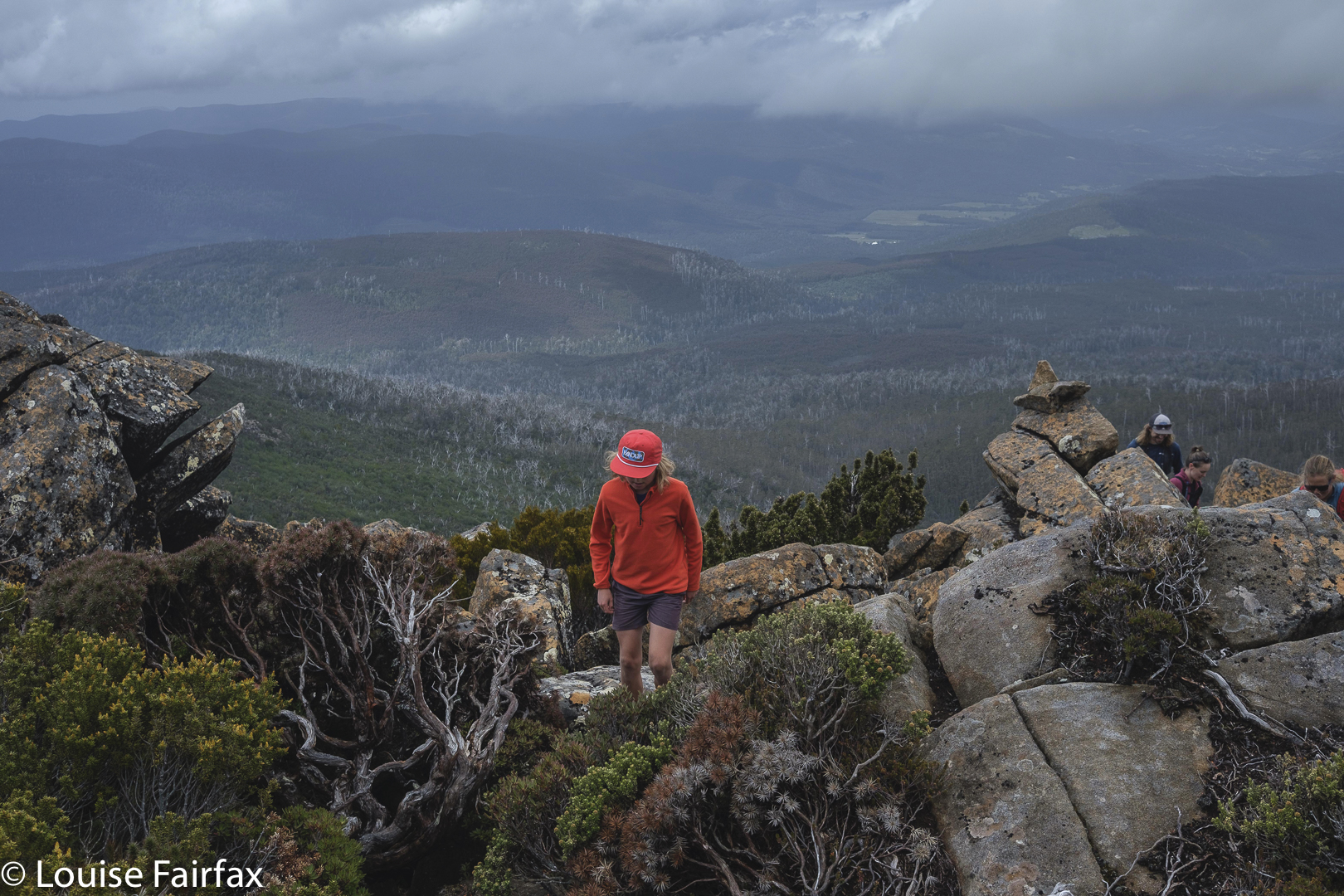
Mountain drama
More mountain drama

We had climbed it together (with Bruce) when Kirsten was a student, so this was a revisit, and in fact, I have now climbed it five times. Familiarity has not bred contempt. This is one heck of a beautiful mountain, and the climb is pure fun – especially on this day, with wildflowers everywhere, with high drama and an approaching storm and with a monster feeling of satisfaction that we had Sharlands Peak on our list of climbed mountains. Three Abels to go. Weeee.
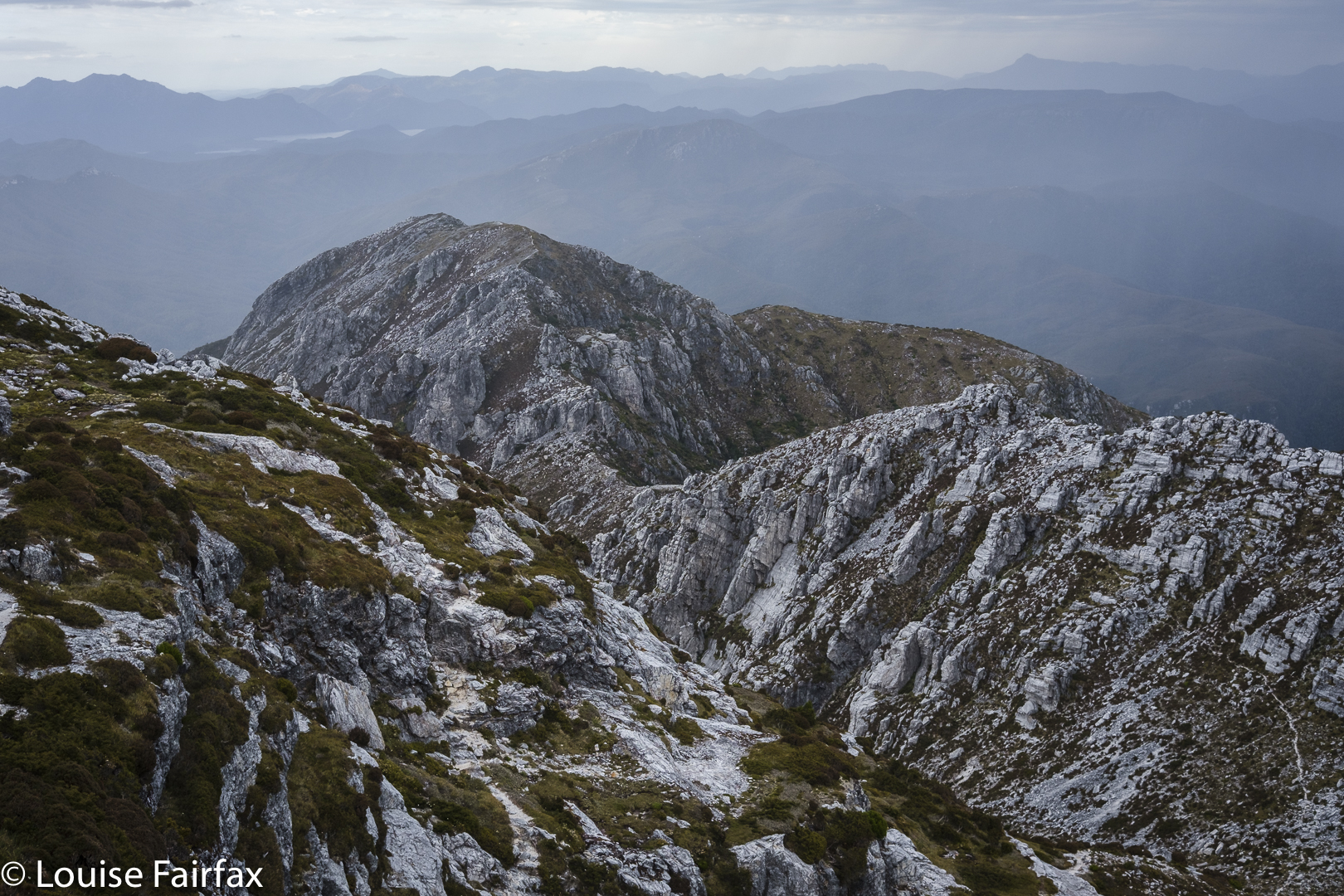
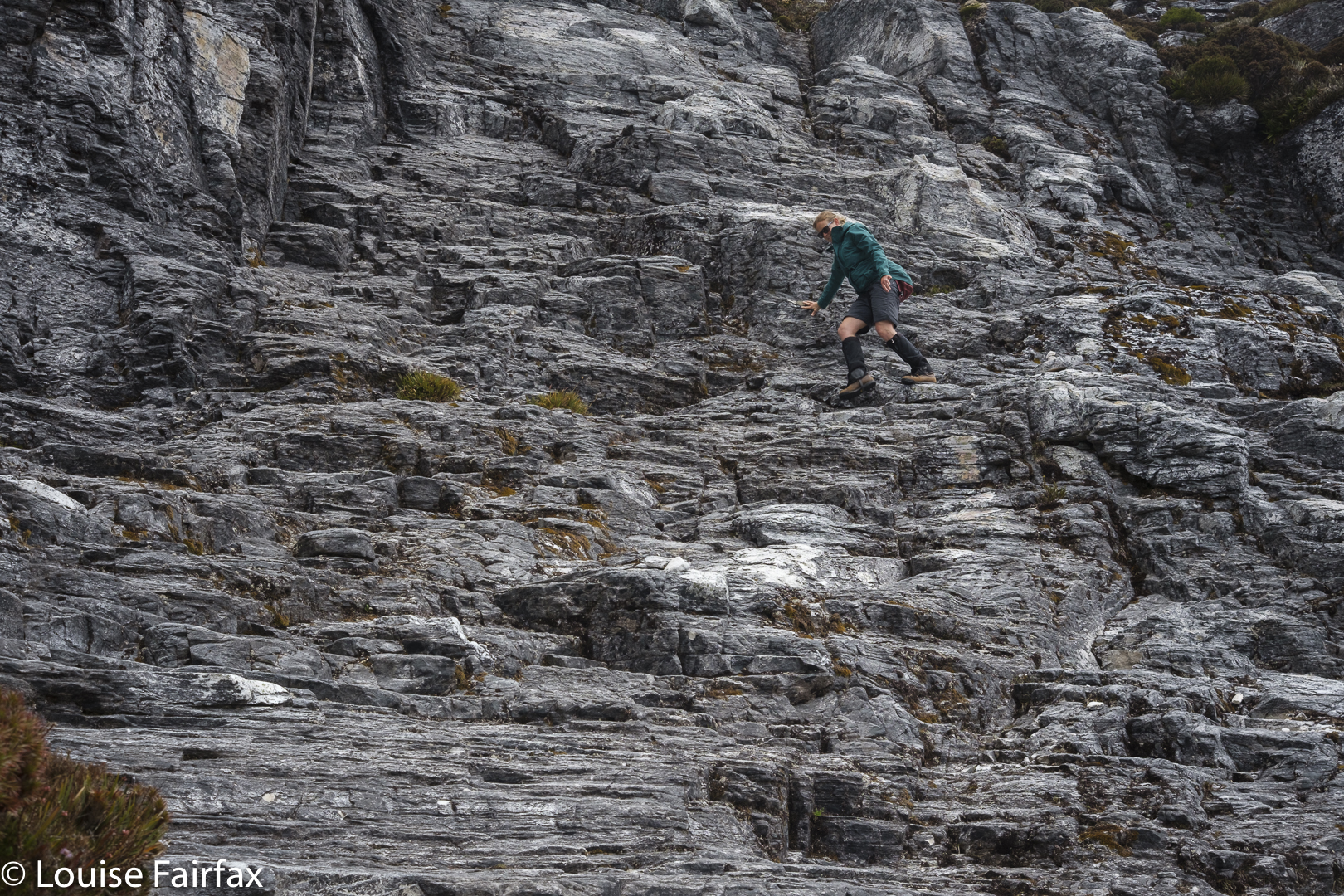
More mountain drama
Descending

We celebrated at the end of our walk out next day with a ‘works hamburger’ at the Hungry Wombat. After three days of bush fare, I felt unaccustomed to so much real food all in one go, and was uncomfortably full as we continued on our way. It’s Christmas. We boomed out the Messiah as we drove back to Hobart, singing along together with gusto as we headed east.
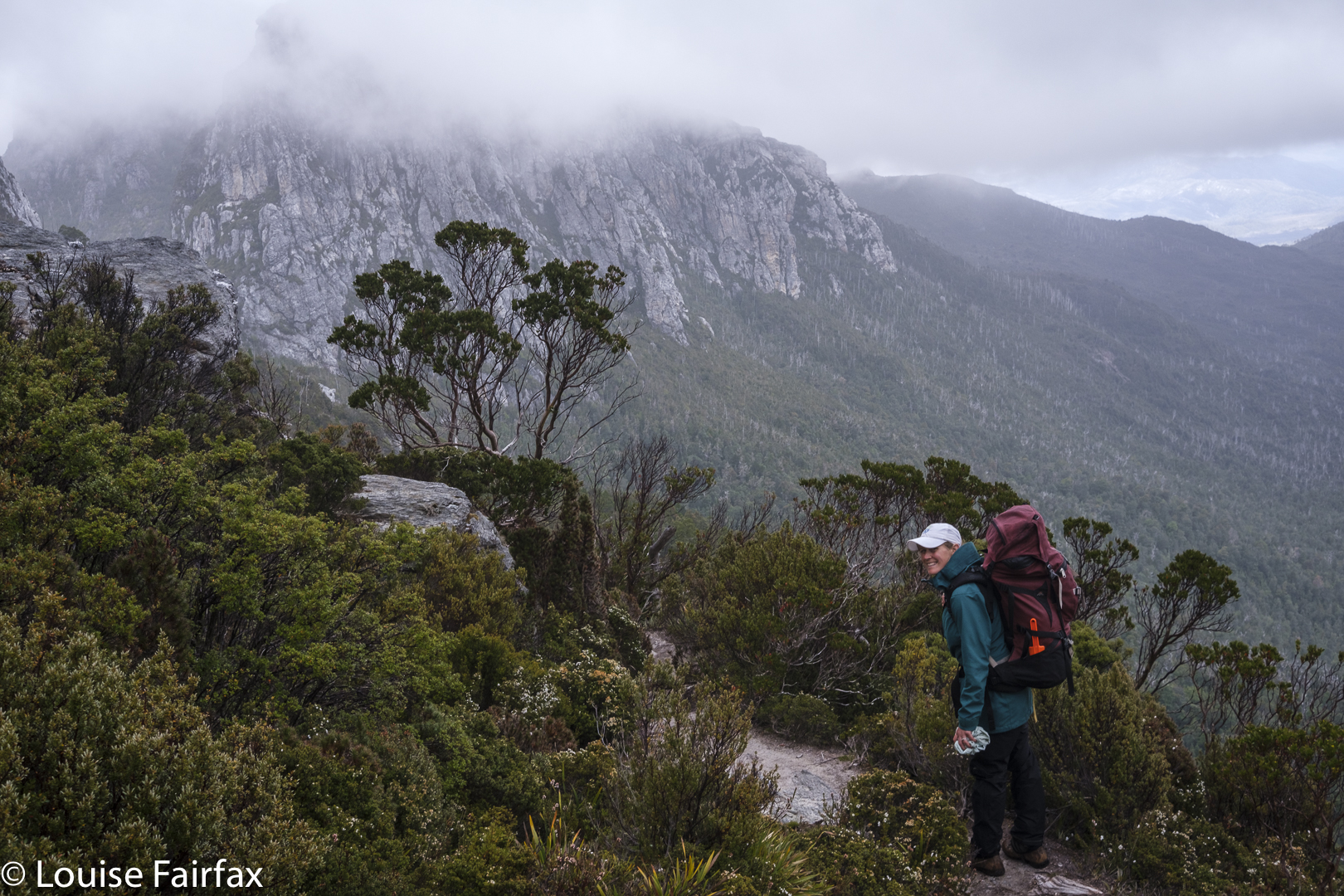
Back on the track with the trusty pack
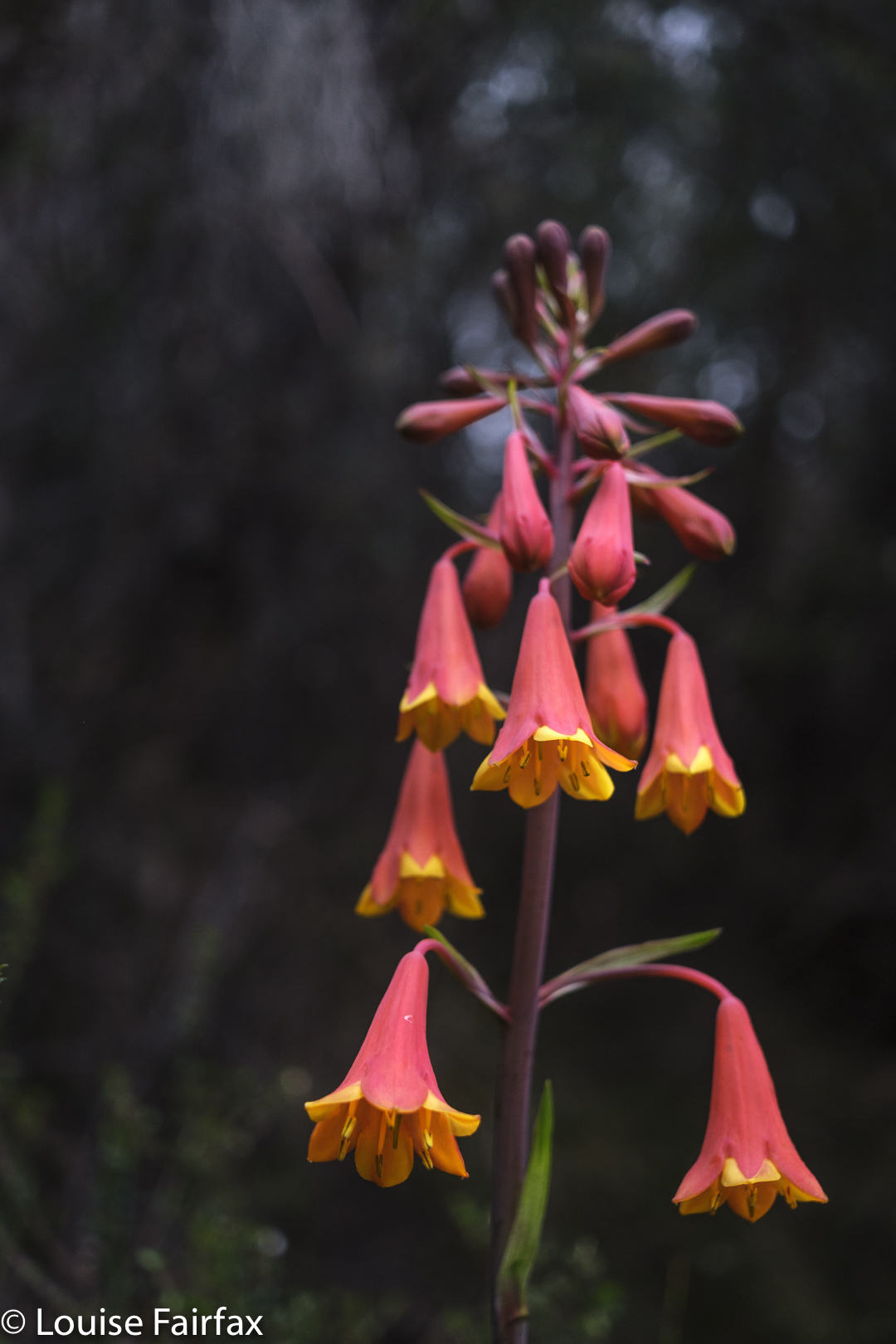
Blandfordia punicea for some Christmas cheer on the way out.

Snowy South 2021

It was my daughter’s birthday, and a friend had suggested she climb the Abel Mt Snowy South on this momentous occasion. An invitation was extended to Gussy and me, and so it transpired that six of us set out for Snowy South on World Mountain Day.

Forest below Snowy South
Playing at Lake Skinner

Abby elected to stay at home and play with her father, and, considering the fact that Snowy South is quite demanding, this was a good move, even if pretty sad for Keith, who would normally have loved to join in. It probably would have been even sadder, however, to carry a reluctant and possibly complaining 15 kg daughter on a walk advertised as lasting six hours, if that’s how things worked out. No one wants her to hate bushwalking / mountain climbing, and as a result, all her walks are entirely voluntary.

Snowy South, near the end
View near summit of Snowy South

We started quite late, and then celebrated with excellent pastries in Ranelagh before we began our pleasant way through the lush green rainforest, up to our first break at Lake Skinner, after 1 hour 15 mins walking.

View near summit of Snowy South

After more climbing, I announced I was very hungry. I know we had had a late morning tea, but I am an animal that constantly needs feeding, so I spotted a little tarn and requested that we at least had lunch number one there. It was 2.10 pm after all – waaaay past my lunch time.

View Snowy South to Nevada Peak

This water was in a flat section before the last climb, which proved to be rather good fun. This is not a mountain you stroll up. Young Gus is only in fourth class, and some of the hauls to the next level required quite an effort from him. I could hear him grunting on several occasions. At his height (he is very tall for his age, but still lacks the reach of an adult, especially his orangutang nana), he has to be quite creative about how he can enable the next level, as often the route we take is not one that’s suitable for him. The day before, he had raced the individual event of the Primary Inter-Schools’ Triathlon in the morning, and in the afternoon had raced the run leg for his relay team in the same event. In addition, he had been in his primary school’s mountain bike race the day before that. He did well in all three races. I was impressed that he even wanted to come, let alone cope as well as he was now doing, and do it all with such enthusiasm.

Gussy leads the final summit push

Five of us (including him) reached the summit, where we discovered it was freezing cold that high in the sky, so descended without eating. Once more, I was starving in the flat bit under all the rocks, so pleaded for lunch number two, it now being something near 4 pm, or was it 4.30? Either way, Gussy and I needed food! We sat together by the tarn, finishing off our salad rolls.

With two great friends, Lou and Josh

On the way home, a plaintive voice sounded from the back of the car: “If I fall asleep on the way home, will daddy carry me into bed?” Poor darling. He didn’t fall asleep, but on arrival home, he cleaned his teeth and tumbled straight into bed without dinner. When I later added up the distance and height factors of the day’s effort, he had covered twenty kilometre equivalents in a time of just under six hours. Next morning at breakfast, he piled six Weetbix into his bowl, before he even thought about the next course.

Robbies Falls

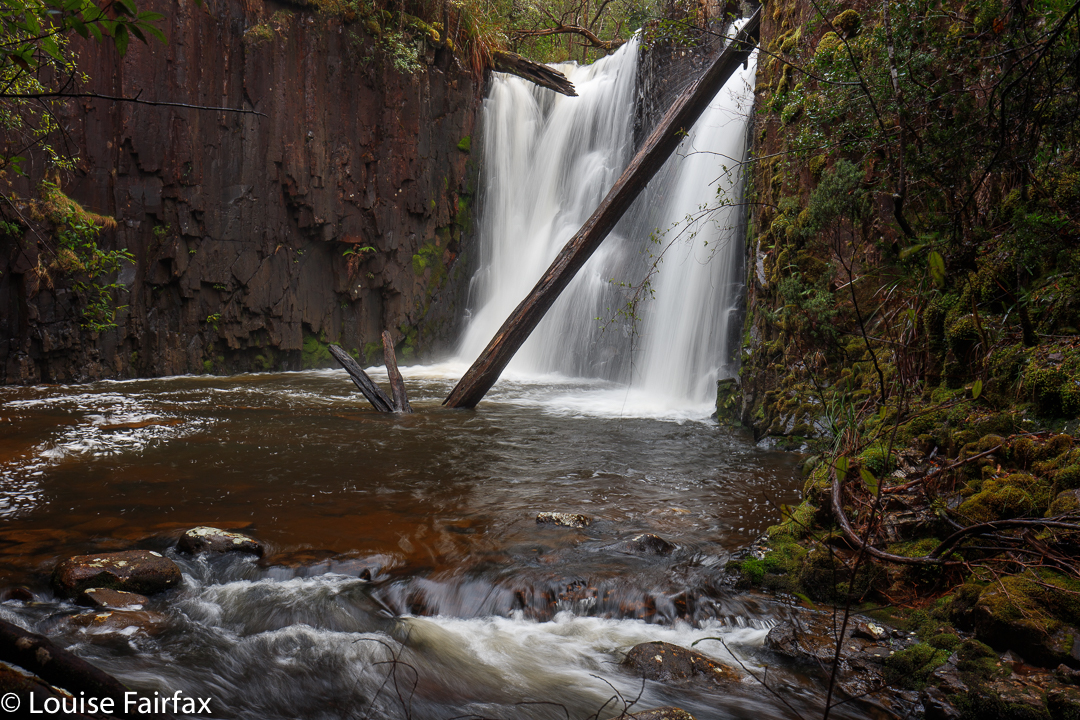
Robbies Falls are situated on the beautiful Falls Rivulet, which issues out of Lake Skinner, nestling under Mt Snowy South (an Abel). From the lake, the picturesque rivulet tumbles down over cliffs and skirts obstacles until it loses its identity as it merges with the Little Denison River further east.
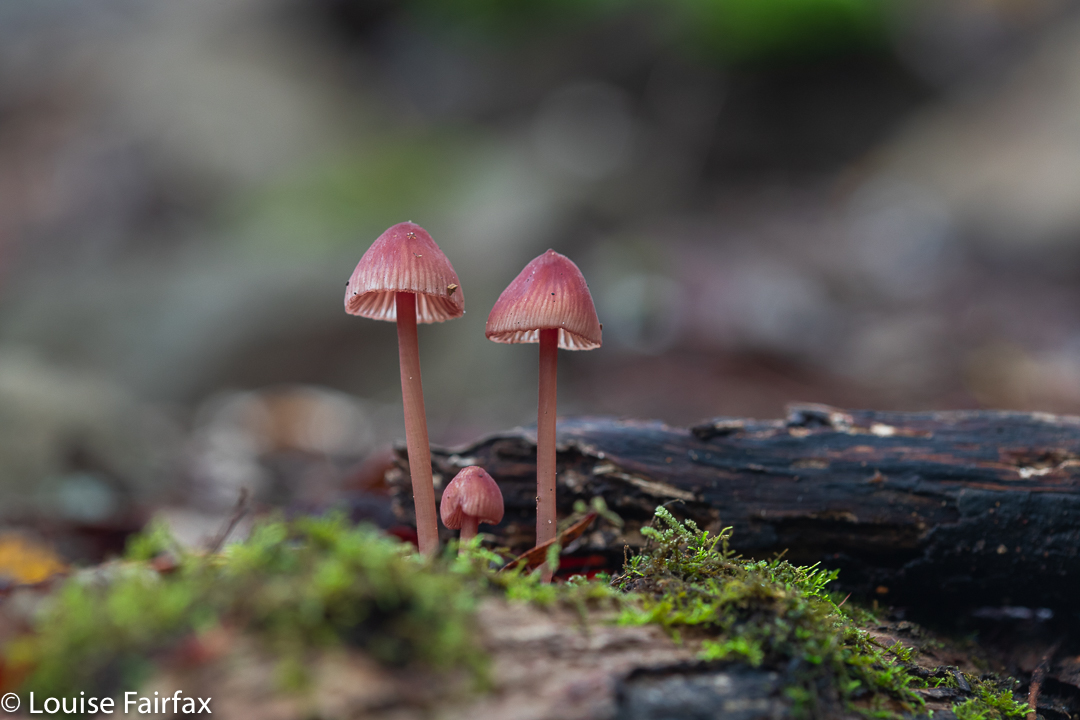
Robbies Falls

Because the closest access is McDougalls Rd, we early visitors called it McDougalls Falls, but were later informed that another person (“Robbie”) had discovered it, and used to frequent it, and it was known by his friends as Robbies Falls.
Visiting it now (as opposed to when “Robbie” visited, yesteryear), there is a daunting palisade of cutting grass that has opportunistically used the available light following logging. It mounts a mighty defence to ward off visitors. A different Rob, who had worked out it should be there, plus Caedence and I, bashed through this dreadful stuff for a long time, and then gave up. I vowed I would never return. Rob was more persistent, however, and went back using a better – in his words, smarter – route, and he and two other friends got there. I couldn’t go that weekend, but once I saw the shots, I had terrible FOMO. (Do I confess, envy?) Grr. Why had I not cancelled other obligations and gone too?

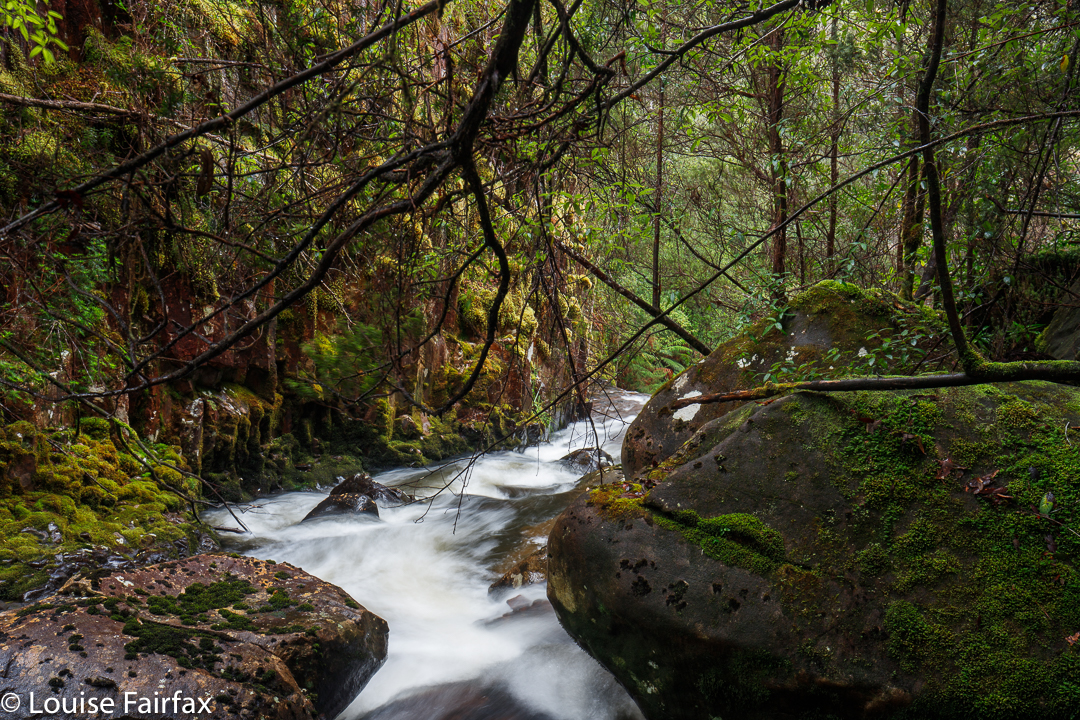
Falls Rivulet, below Robbies Falls

This weekend, Adrian said he’d show me the new route, so I got to finish the unfinished business. Using Rob’s improved route, it was pretty easy. Warning: it is still very possible to get enmeshed in cutting grass if you are not careful! Standard contour maps don’t tell you where the cutting grass lies, so you need more than just a traditional map.

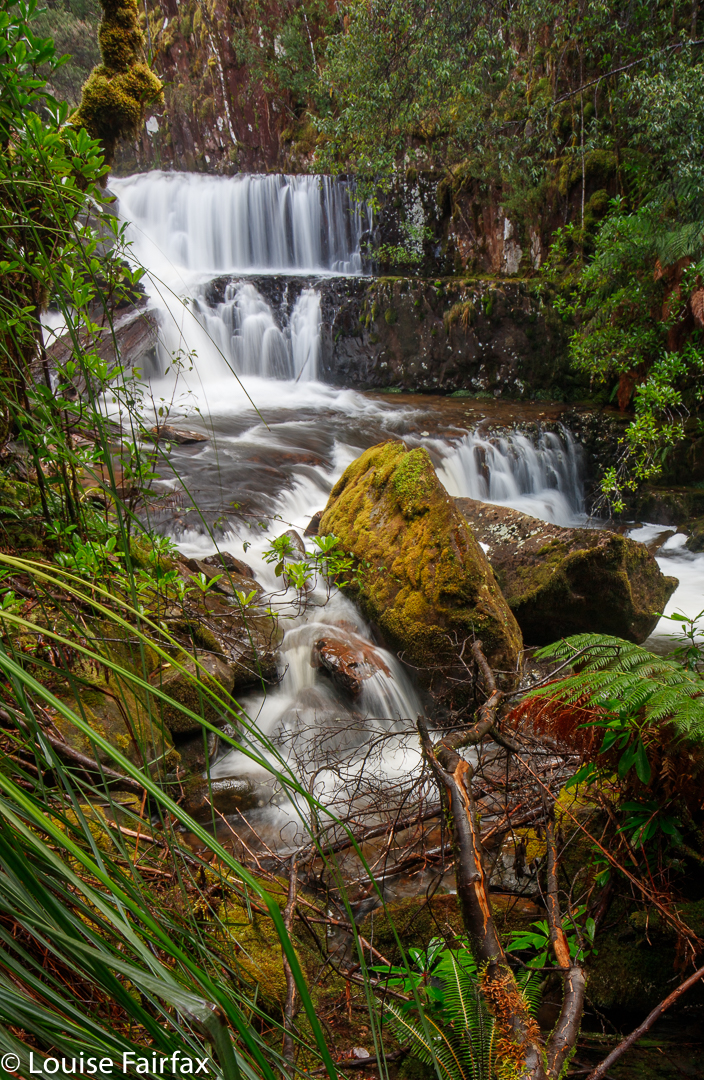
Lower Robbies Falls

Pictured above are Lower Robbie Falls, which are not as high as the main falls, but, in my opinion,  are more photogenic.
The other – also magnificent – waterfall that also lies on this rivulet, although higher up, and accessed from the northern side rather than the southern, is Compton Falls, which have their own blog. If you are a competent and experienced bushwalker, then both falls are a total delight.
http://www.natureloverswalks.com/compton-falls/

Further directional information: Falls Rivulet lies under the Snowy Range, west of Judbury (which, in turn, is west of Huonville). when exiting Judbury, take the Lonnavale Rd, then Denison Rd, and finally, McDougalls Rd. From it, you head north to the falls.

Mt Field NP. Winter holiday

Not everybody knows, but if you don’t mind unheated huts with no pampering, Mt Field has Government huts that can be hired by families (or other groups) for a very reasonable sum. Our family made a three-day booking for the school holidays just gone by. To say it was cold is an interesting and inadequate summary, but not something that would ruin a holiday: in fact, it probably made it more memorable and enjoyable.

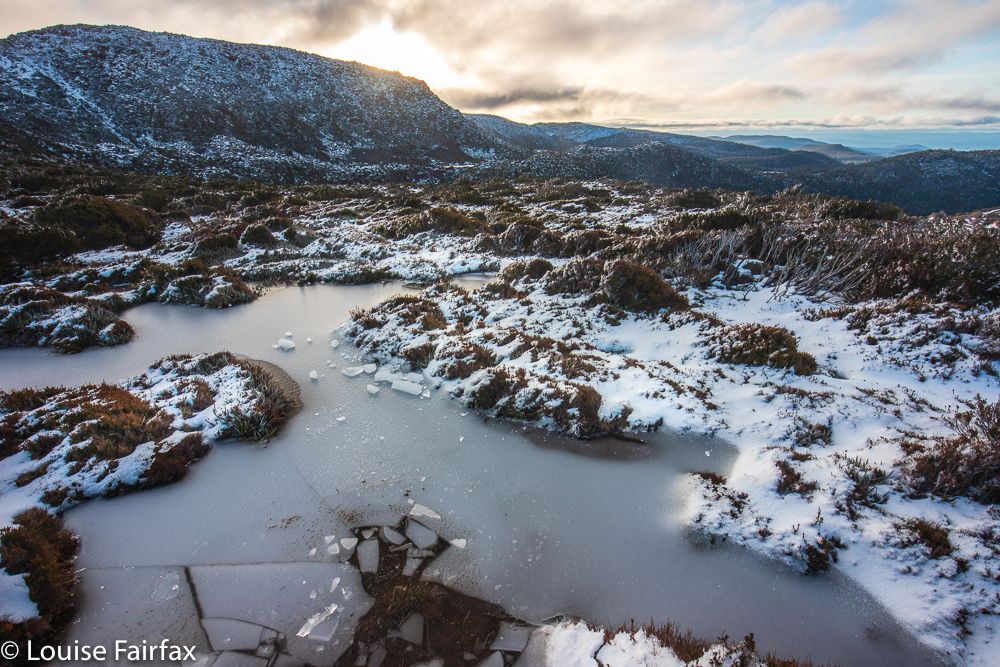
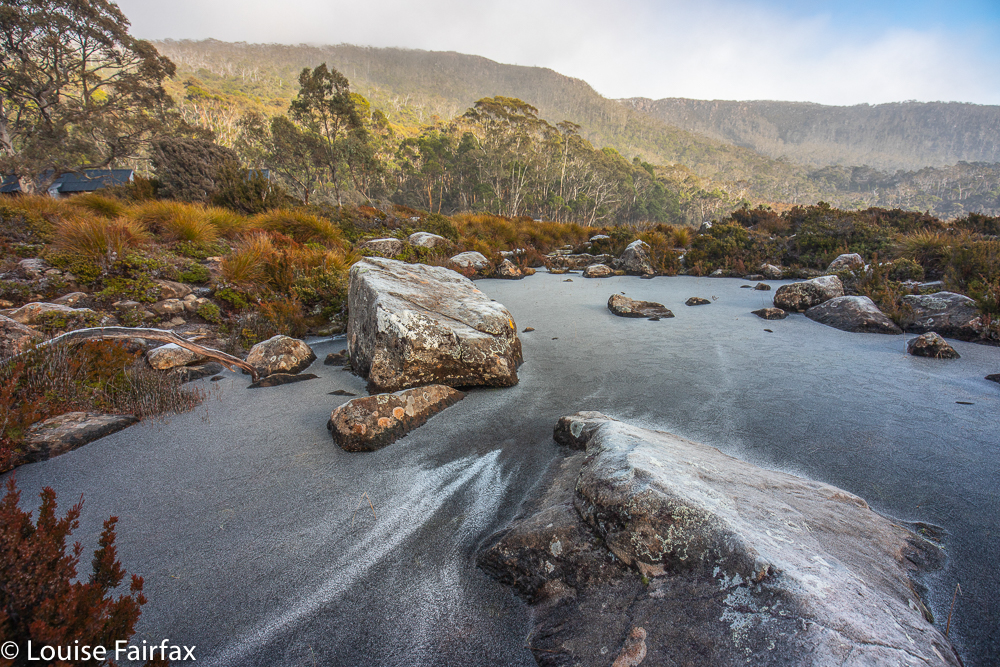
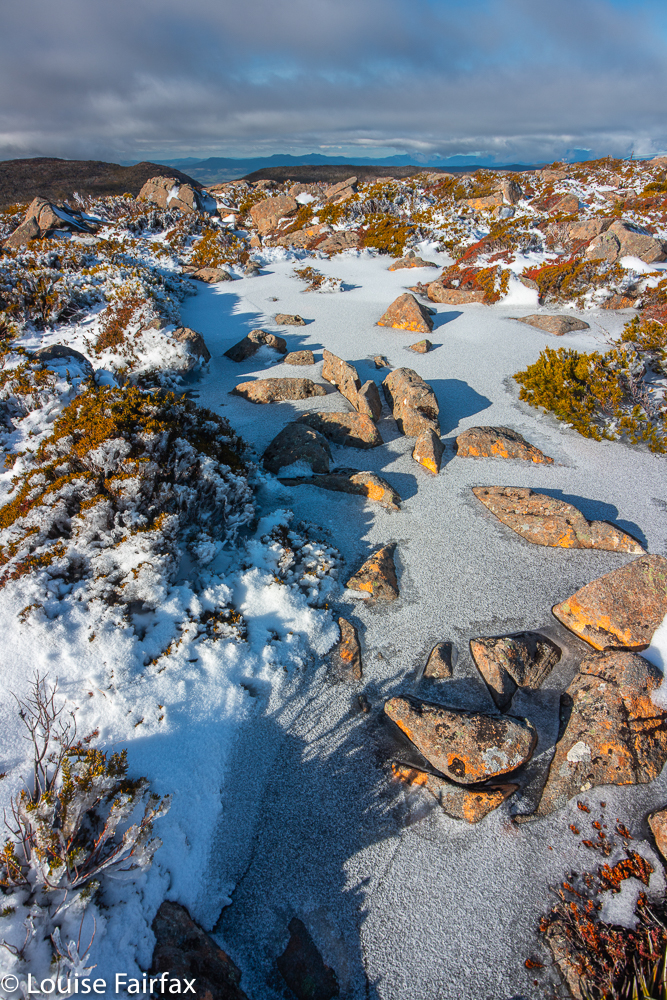
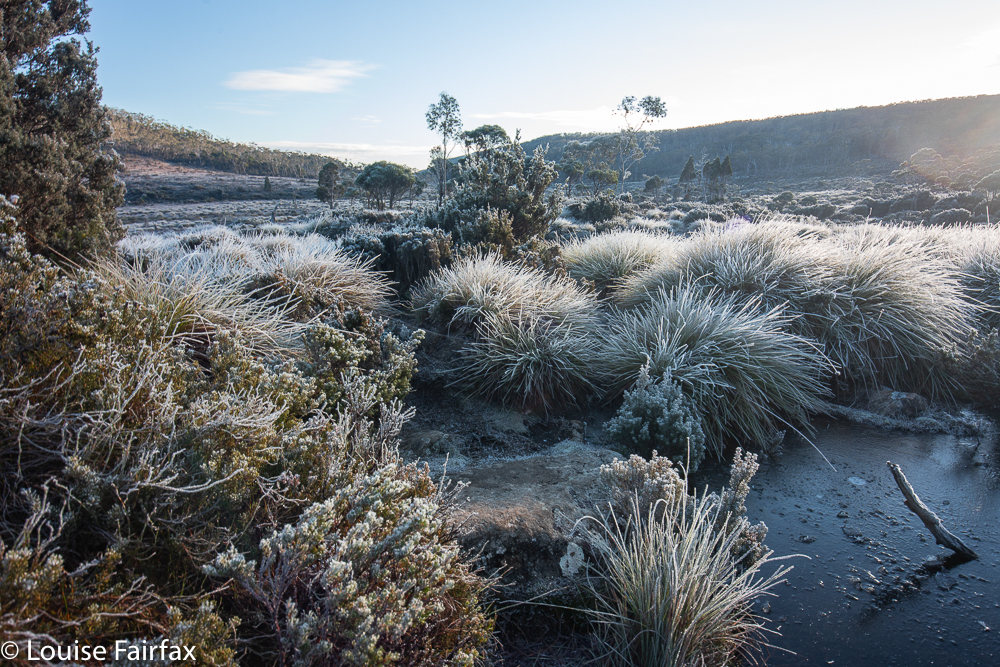
When you wake up to this, you decide you weren’t so cold after all. Beauty is exhilarating.

It didn’t help that we arrived in the dark, a few hours after work, and were not particularly successful in getting the fire going strongly at that hour. I can do “being cold” in my tent, as I warm up the space quickly enough, especially if I have jut been exercising, but a hut with “big space” and no preceding exercise  is different. Luckily we were prepared with blankets as well as sleeping bags.

Close of day up high
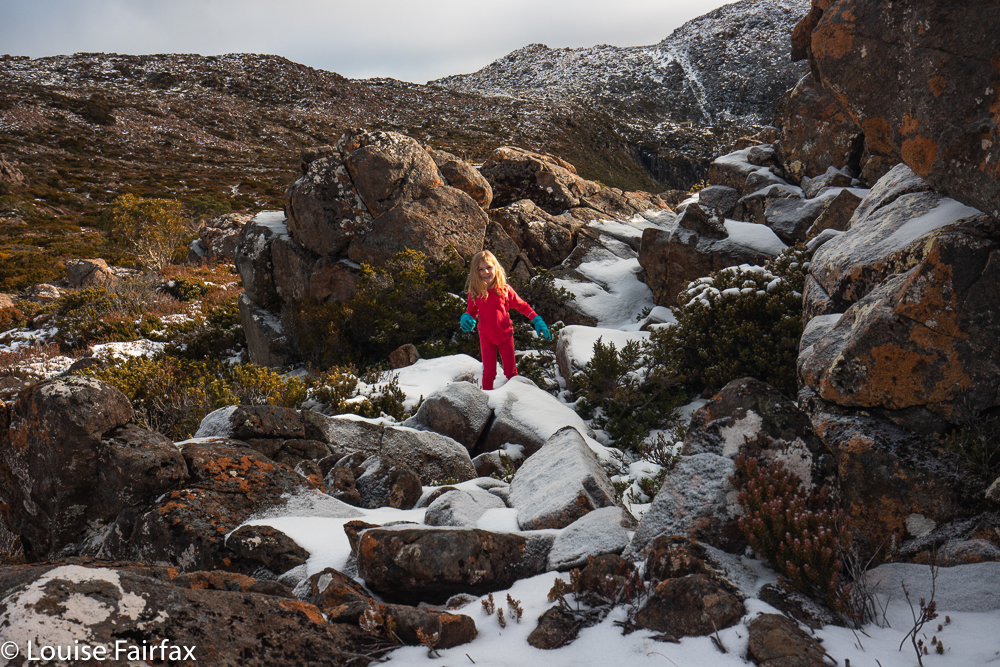
Playing up high

I was cold enough during the night to think that this holiday was not such a good idea and maybe I had urgent business at home that I had forgotten about, but when I saw the beautiful white frost out the window on awakening, I decided this was worth a little discomfort, and I couldn’t remember the urgent business.

Wandering along Broad River Flats in shorts
Ice Queen

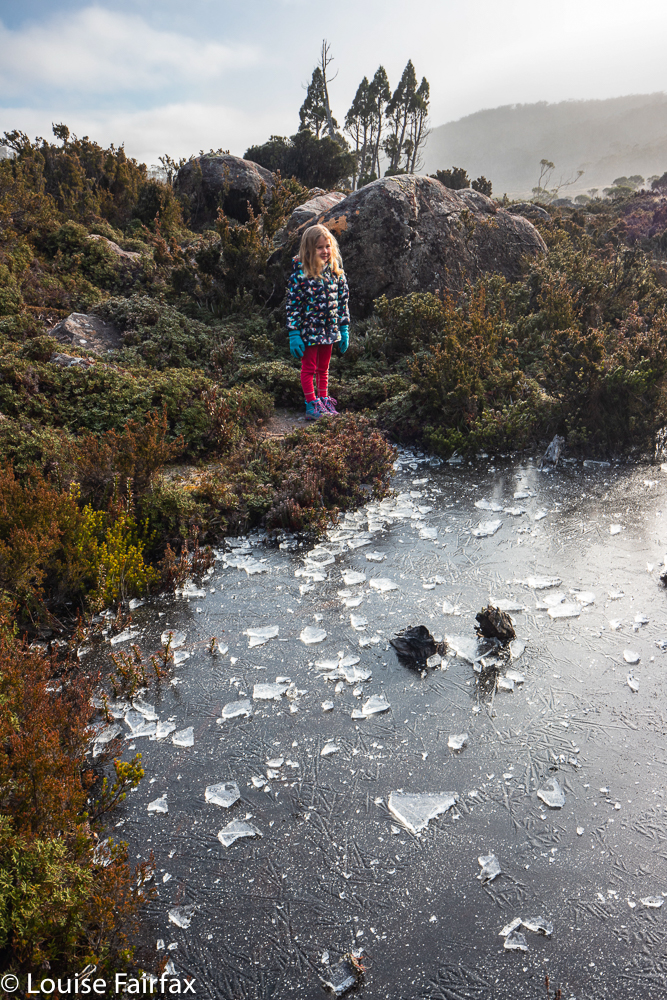
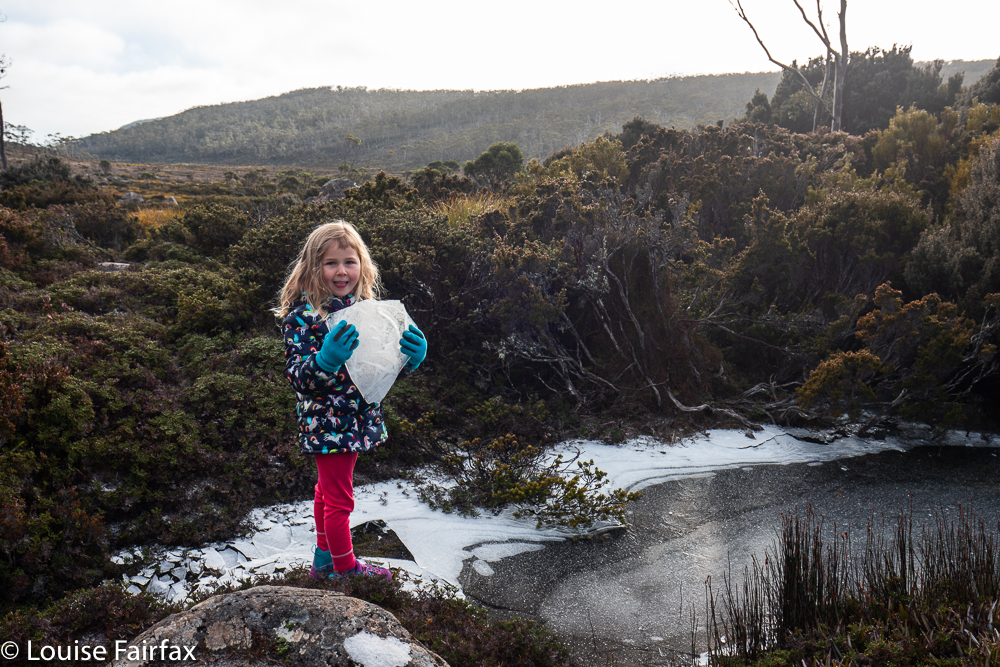
The children were also excited by all the ice, and had fun trying to walk on tarns and seeing if they would fall in. I tried to go for a training run, and did get as far as Lake Dobson, but once I’d had a free skating run on an icy slope there, I decided I wouldn’t go any further in that direction. I got in my exercise down a bit lower on the Lady Barron Falls track instead.

Throwing ice at ice
Back up high

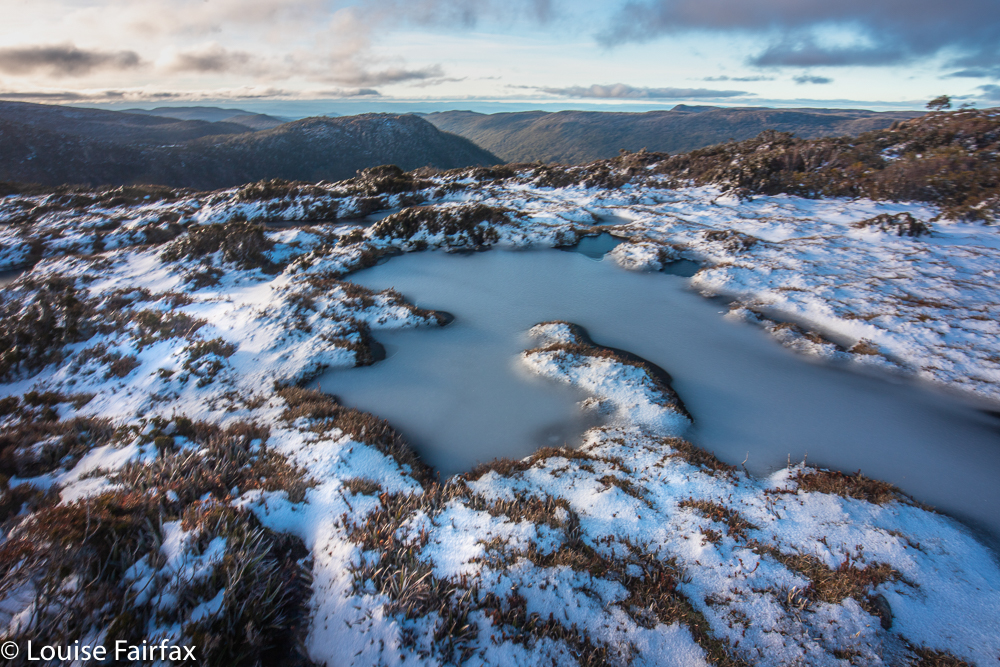
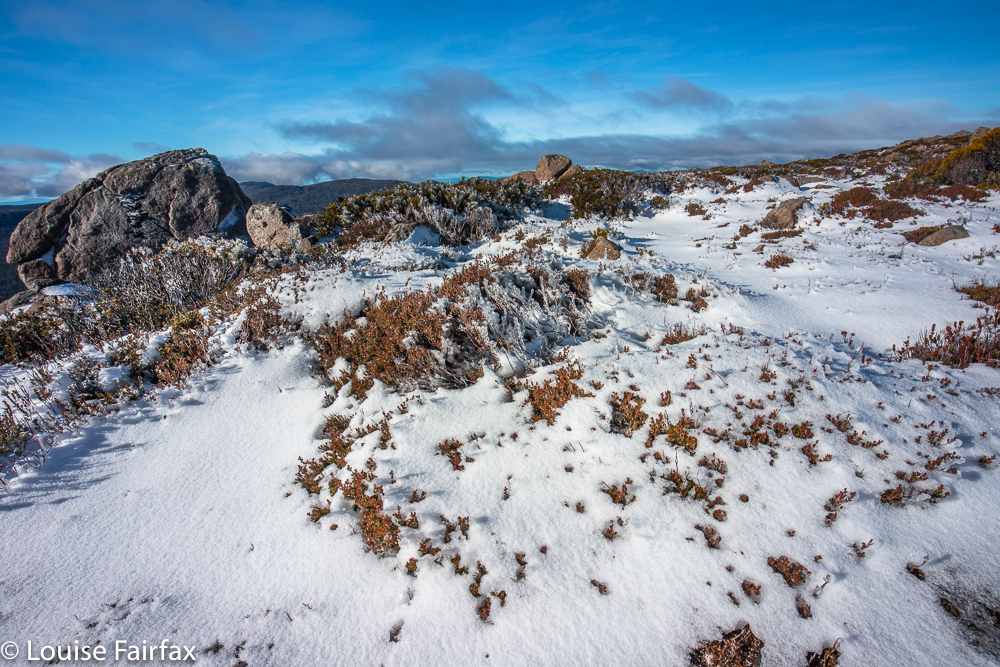
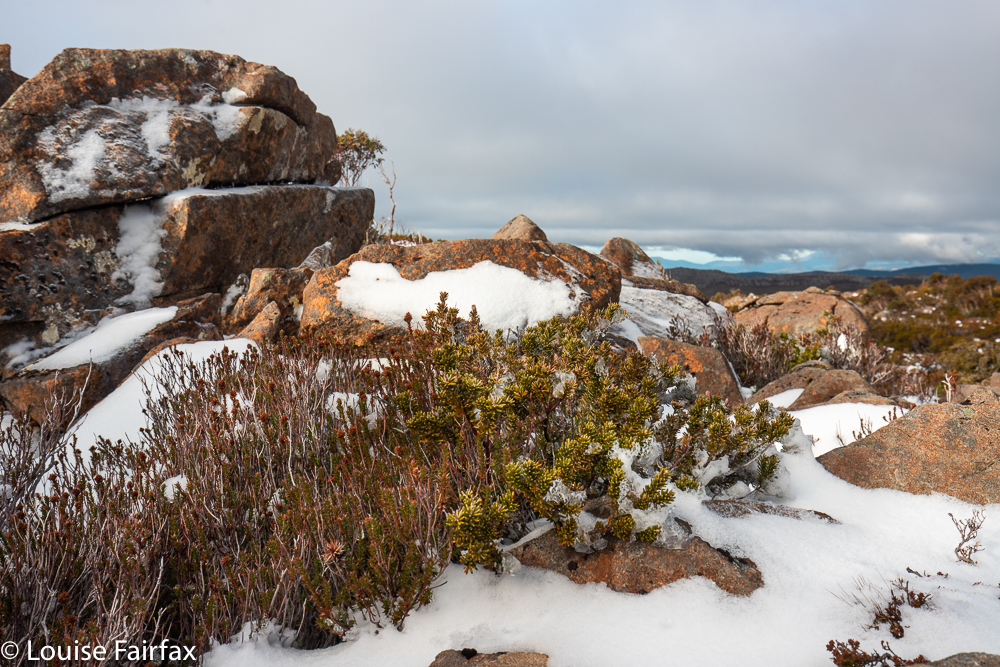
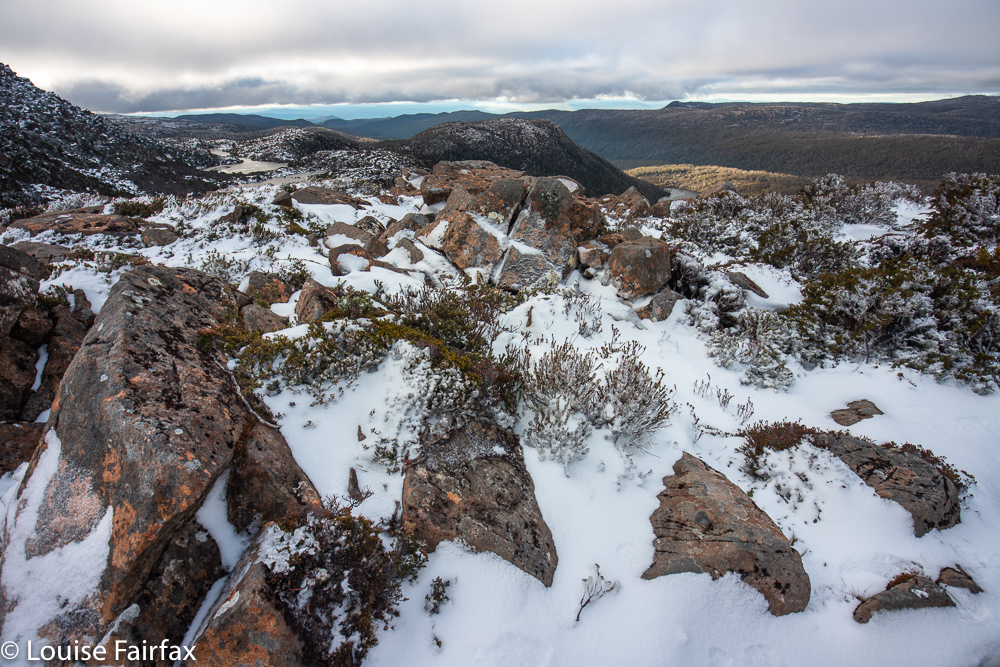
That afternoon, after games in the now-warm hut, my daughter and l set out for the snow on Tarn Shelf. It was very slippery and icy, but we took care, and it was superbly beautiful.

Tranquility

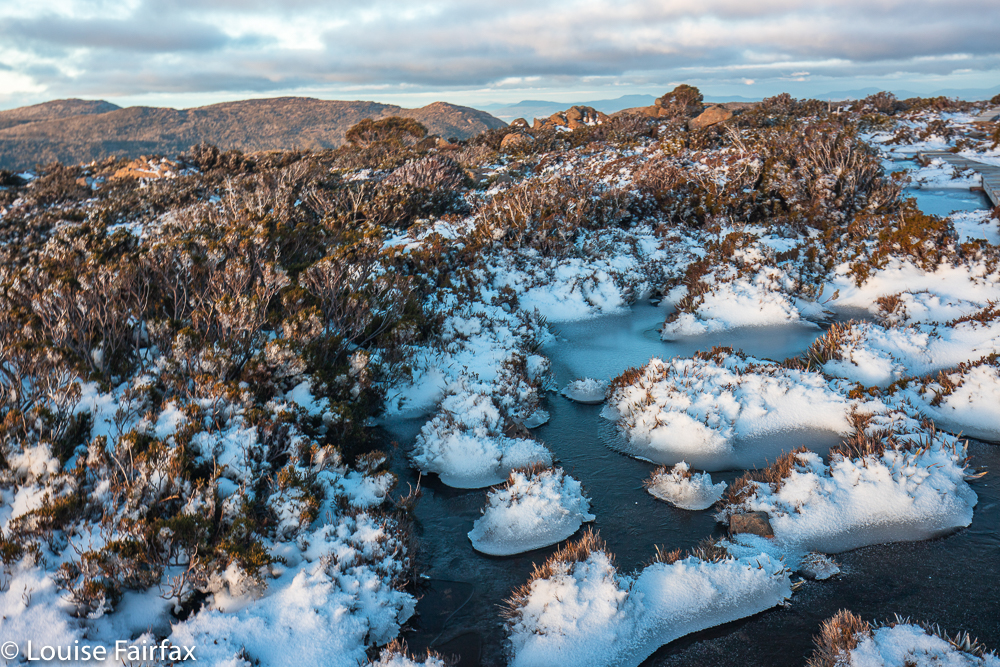
The next day was even colder, (minus 5 in the valley, so, less where we were), and the tarns were even more alluring. That day the children were also keen to go up high and have a snow fight and a general play, so we all climbed up and had lunch in the snow.

Climbing around Lake Seal Lookout
Lake Seal Lookout

Snow fights don’t amuse me, so I climbed higher, onto the Mawson shelf to check out things there, and then dropped back down to join the others at the Lake Seal Lookout, for round X of the snow war. Eventually the children were prepared to move on further, to the hut just past the Rodway Range intersection in the track. Funnily, we bumped into another family from the children’s  primary school, also exploring the snow up there. I am so pleased to have grandchildren who are prepared to get out into the environment and enjoy what it has to offer rather than sitting inside staring at and swiping screens all day.

Time to go back down … alas.
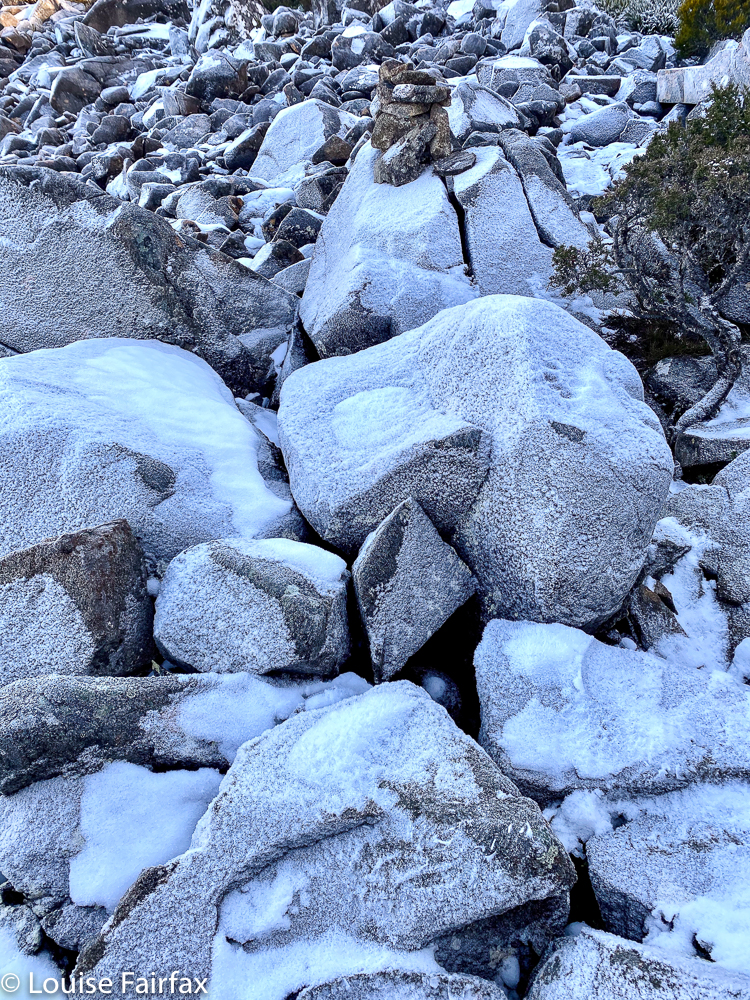
Final morning – the best frost of all

On the final day, Gussy, his dad and I climbed Mt Field East, which had very thick icicles on all the rock sections. Gussy is 9 and that is his ninth Abel. There is something quite neat about that. The days when I had to slow down and wait for Gus are now behind us. These days, he has a very tidy pace indeed, and was faster than I was over the ice cubes. I preferred four points of contact while he was content to dance on ice – a much faster way to move.

The welcoming slopes of Mt Field East.
I was the one holding us up. Oh weh.

Fungi of Cataract Gorge 2021

Launceston’s Cataract Gorge is my playground. I can be found there every day of my life – unless I am up a mountain or off exploring some distant waterfall. The gorge is my “daily drag”, to which I owe much of my fitness. It is my sanity and my soul’s revival. Whilst my husband deteriorated with his illness, the quiet beauty of the land, the gurgle of the river, the pattern of flow as the river defined its daily course over boulders and smaller rocks, the tweets and songs of the birds … all these things brought me peace while my legs beat out the rhythm of my daily run. With that as medicine, I needed no other.

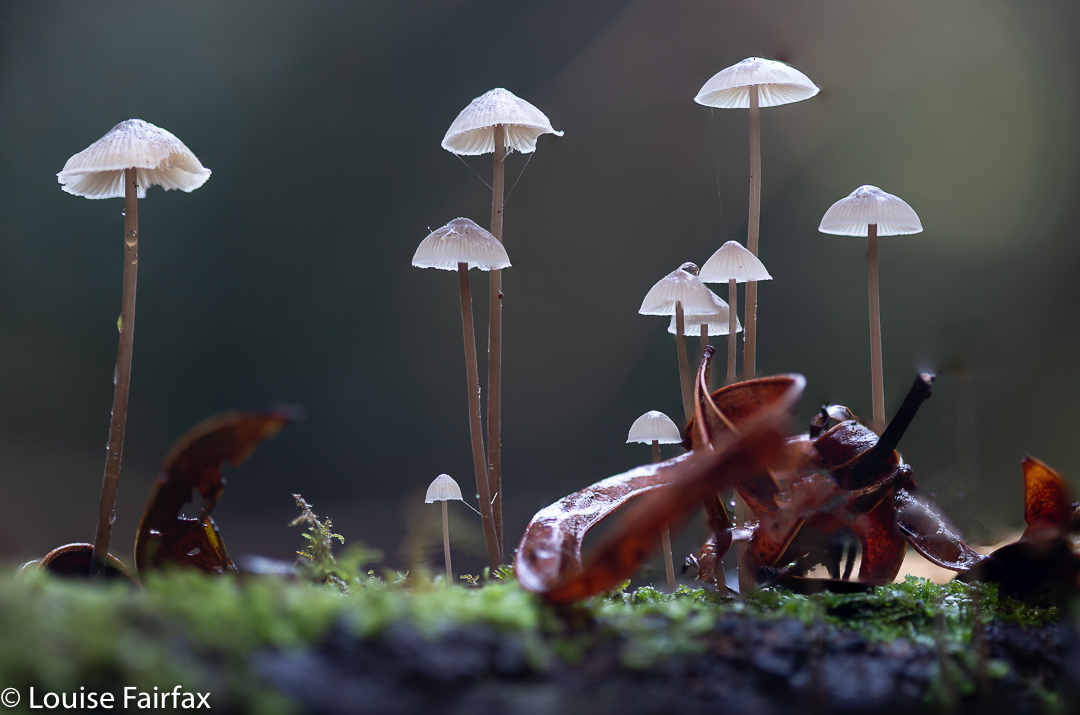
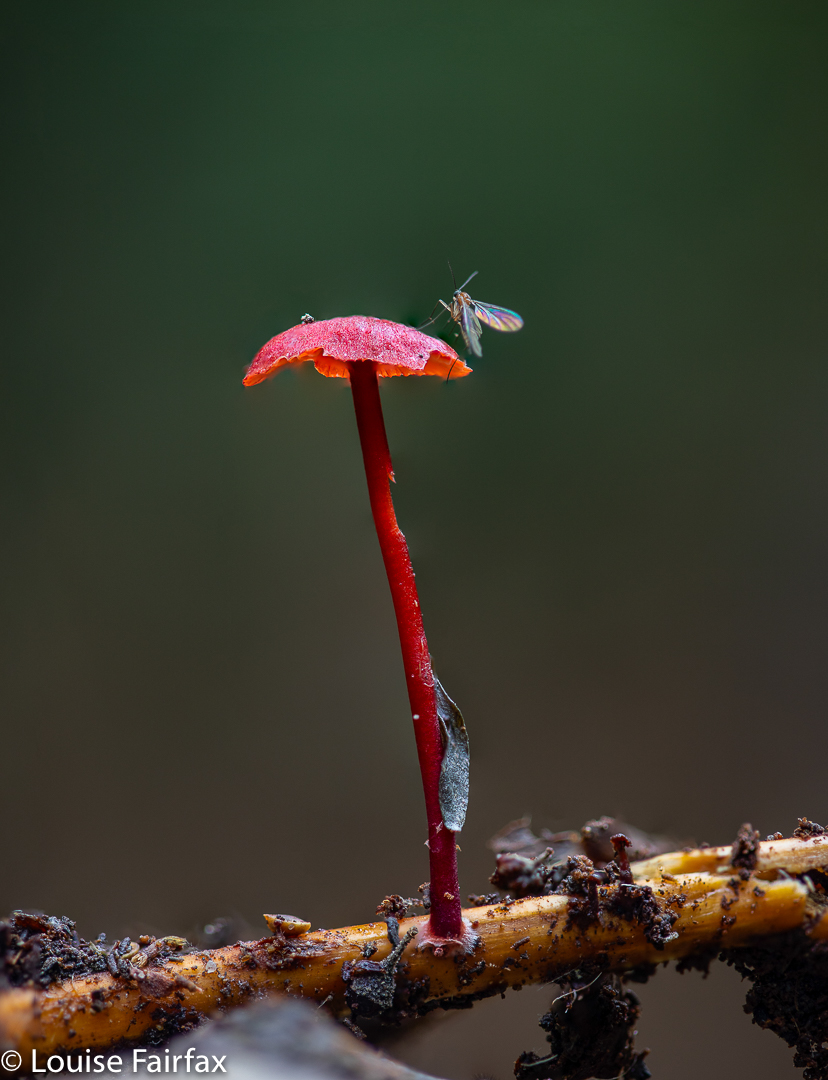
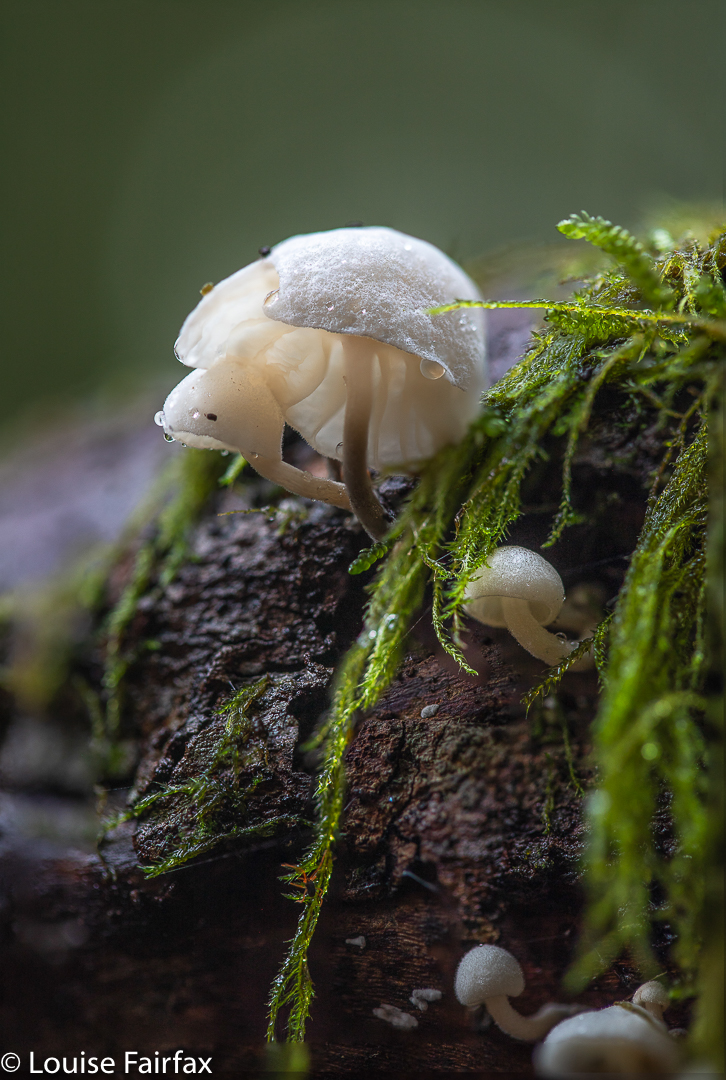
Mycena nargan
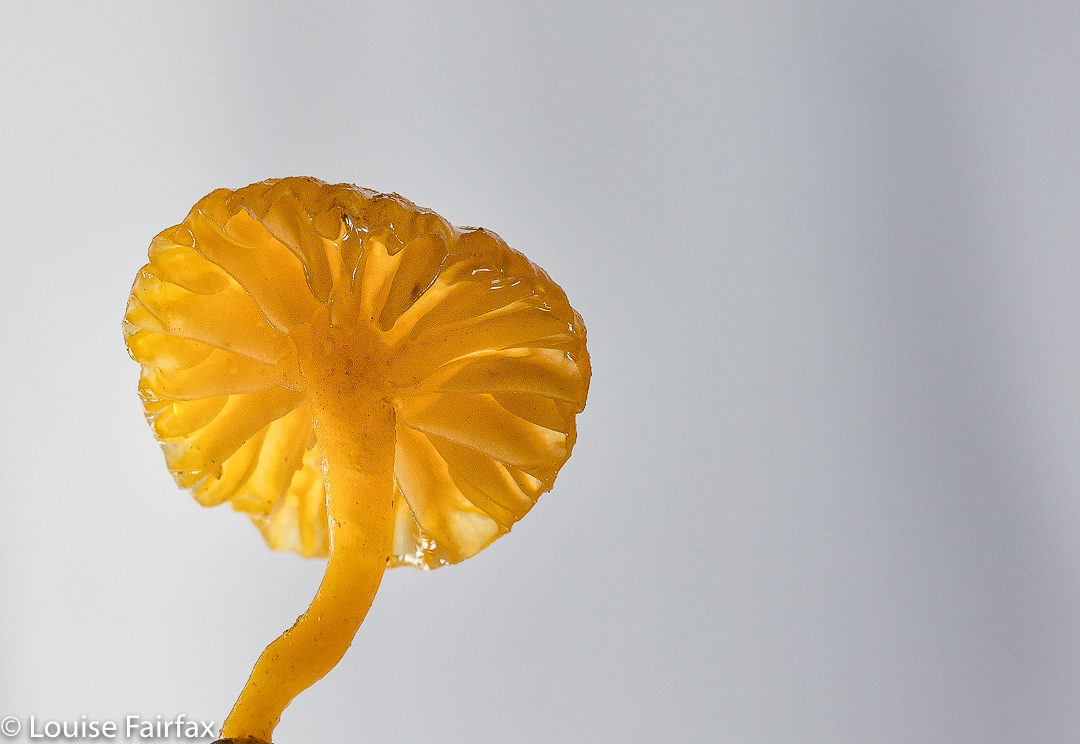
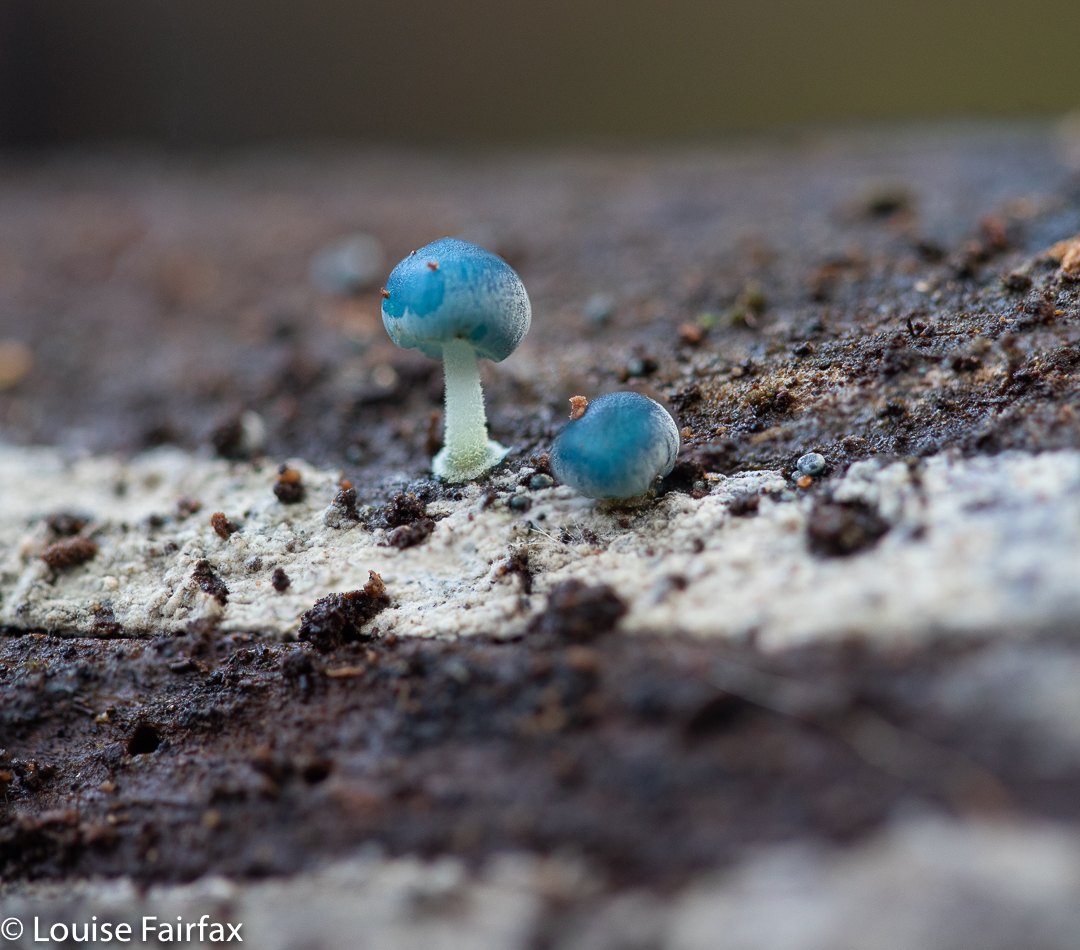
Lichenomphalina chromacea
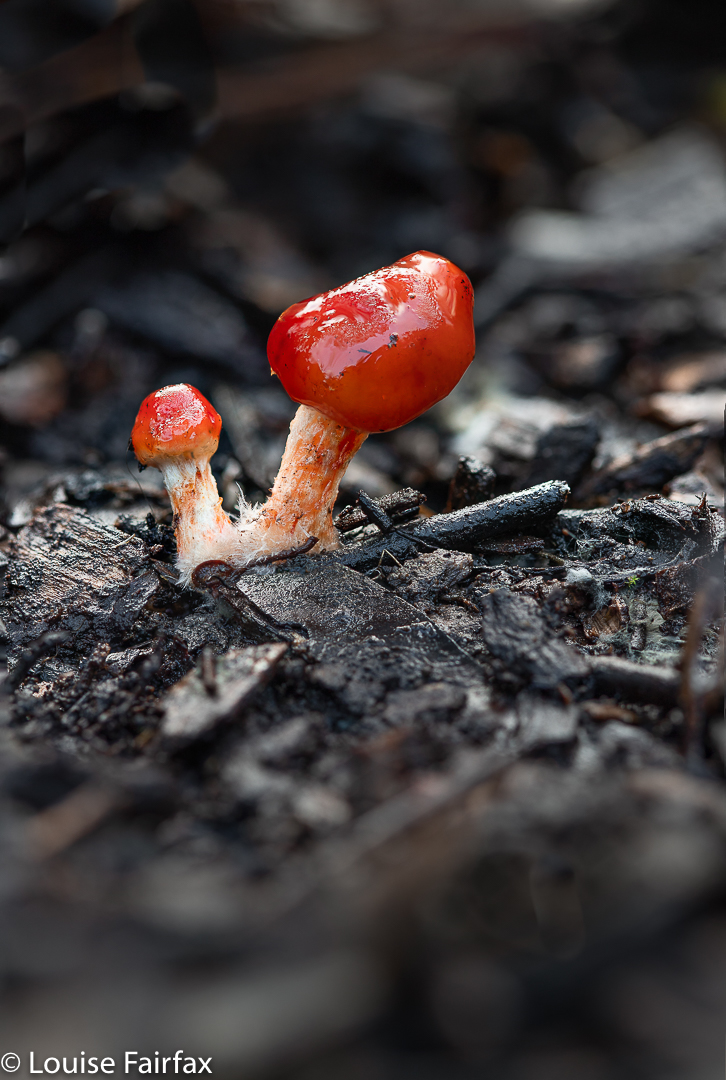
Mycena viscidocruenta

Every day I run my chosen path, delighting in the workout provided by the many hills present, noting en passant the flowers, leaves, flow lines and fungi that line my route. Past the “tourist section” filled with beautiful flowers, pademelons and wallabies I go, and on to my preferred lonely sections of mostly unmaintained paths that are wilder, freer and less populated. Manicured nature does not please me for more than ten minutes or so.

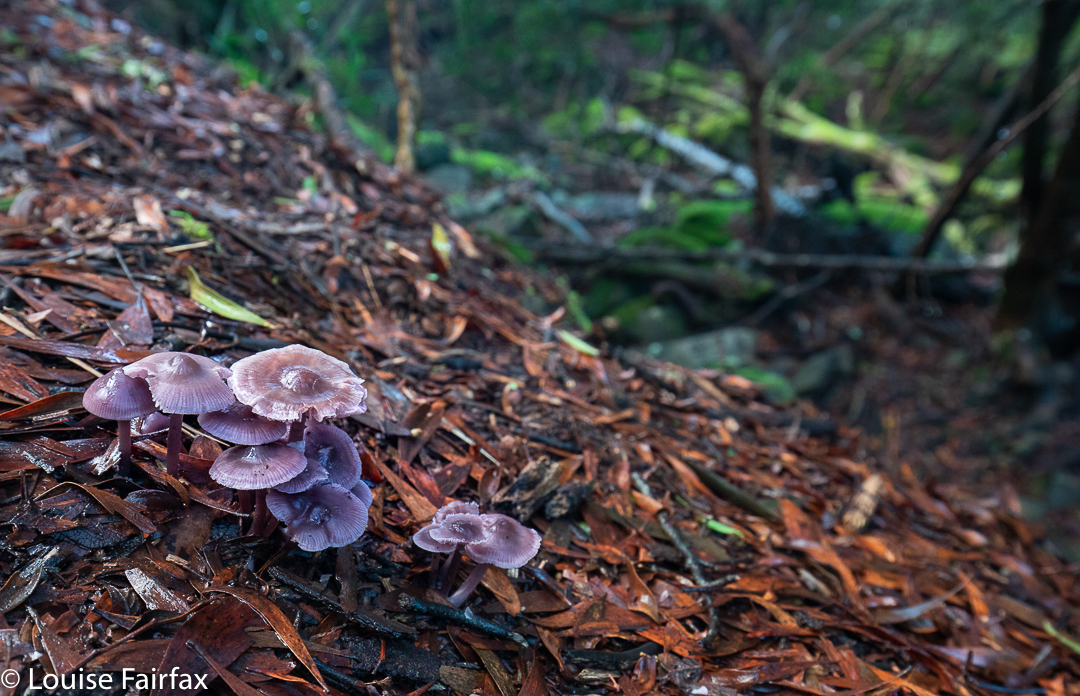
Mycena kuurkacea
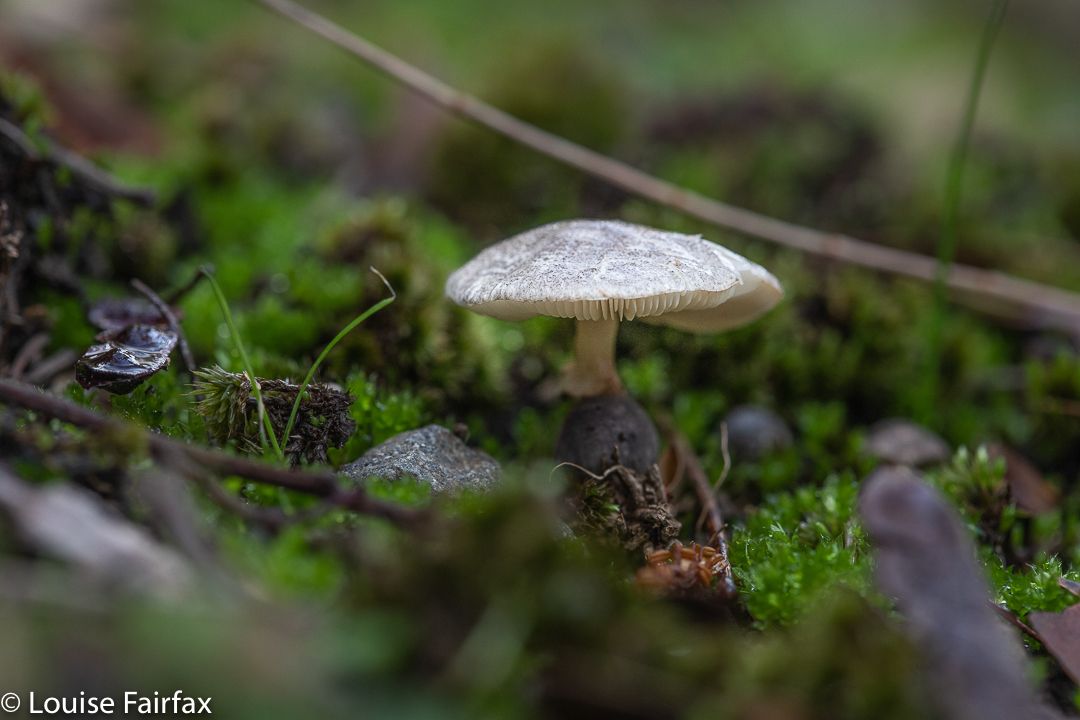
Lepiota fuliginosa
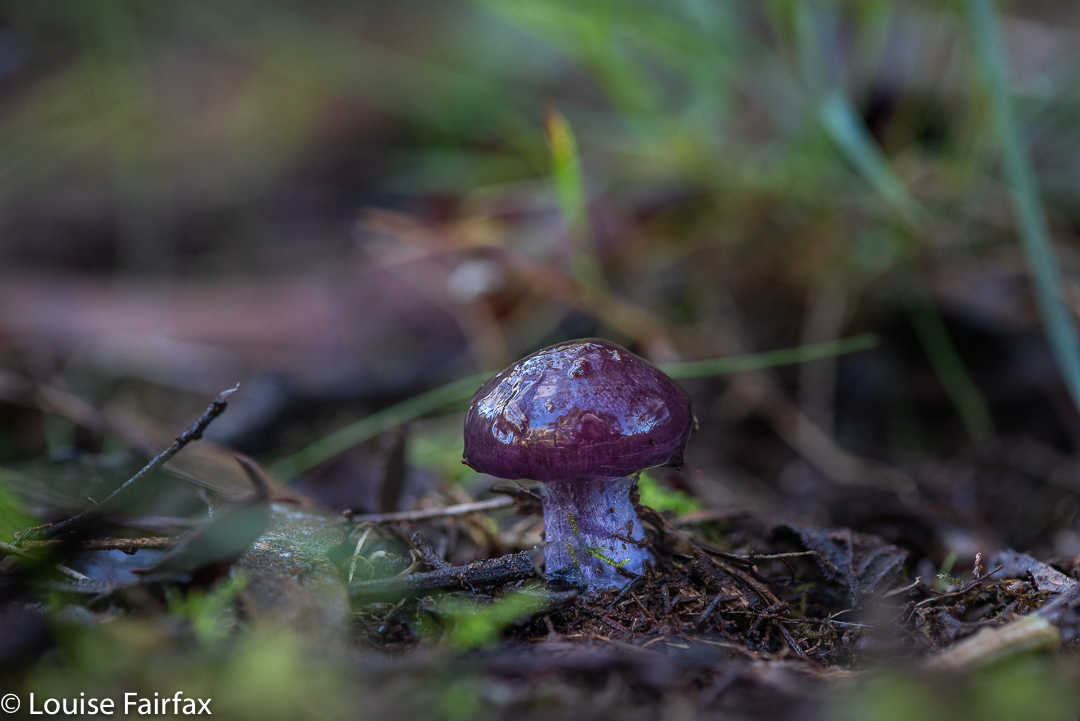
Cortinarius archeri

And then came Covid.  Australia went into lockdown, but we were still allowed our Gorge. Like cattle, we were herded into the one nice place to go. I figured that if I could smell someone, I could also breathe their germs, and the main gorge paths were now full, seeing’s we were locked out of all National Parks. As the paths were crowded, I spent my runs holding my breath and gasping for air once I found an empty spot. I had to change the paths on which I ran. This led to new opportunities, and I have never returned to my old route. I still haven’t worked out how you can claim that herding the citizens into a small area and locking them out of the wide open spaces provided by National Parks helps prevent the spread of disease. Such a rule also locks us out of spiritual space that many of us need for our personal peace. As soon as they made the announcement, I said: “They’ll have a massive mental health bill to pay”, and my words have unfortunately proven to be correct.
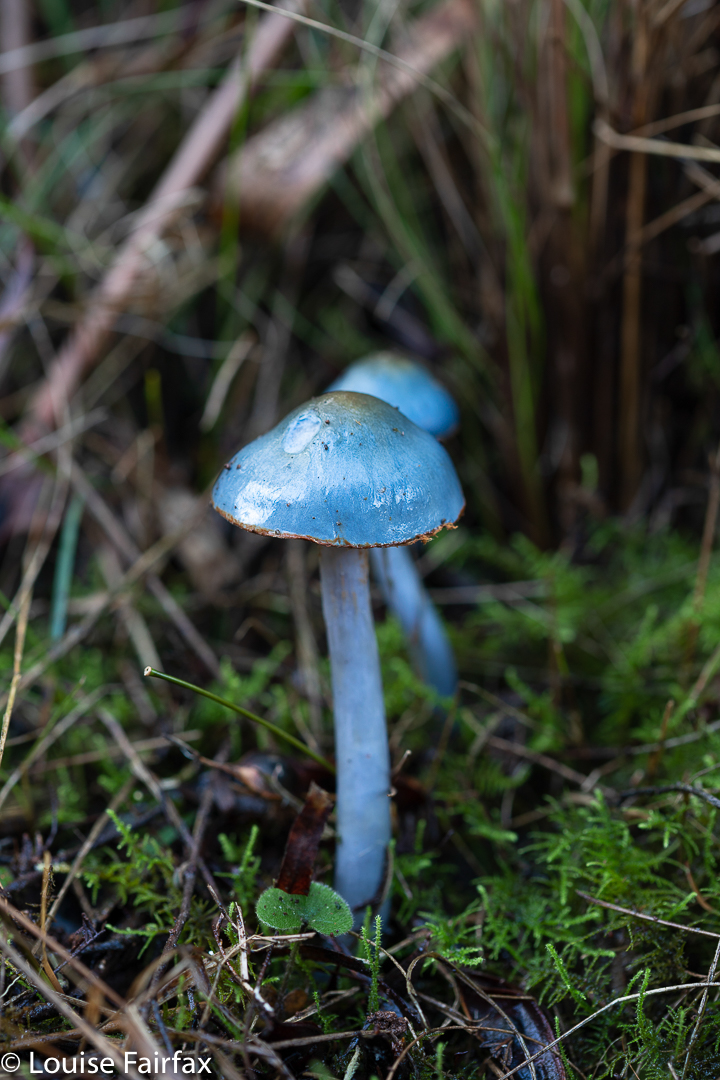
Leratiomyces ceres
Cortinarius rotundisporus
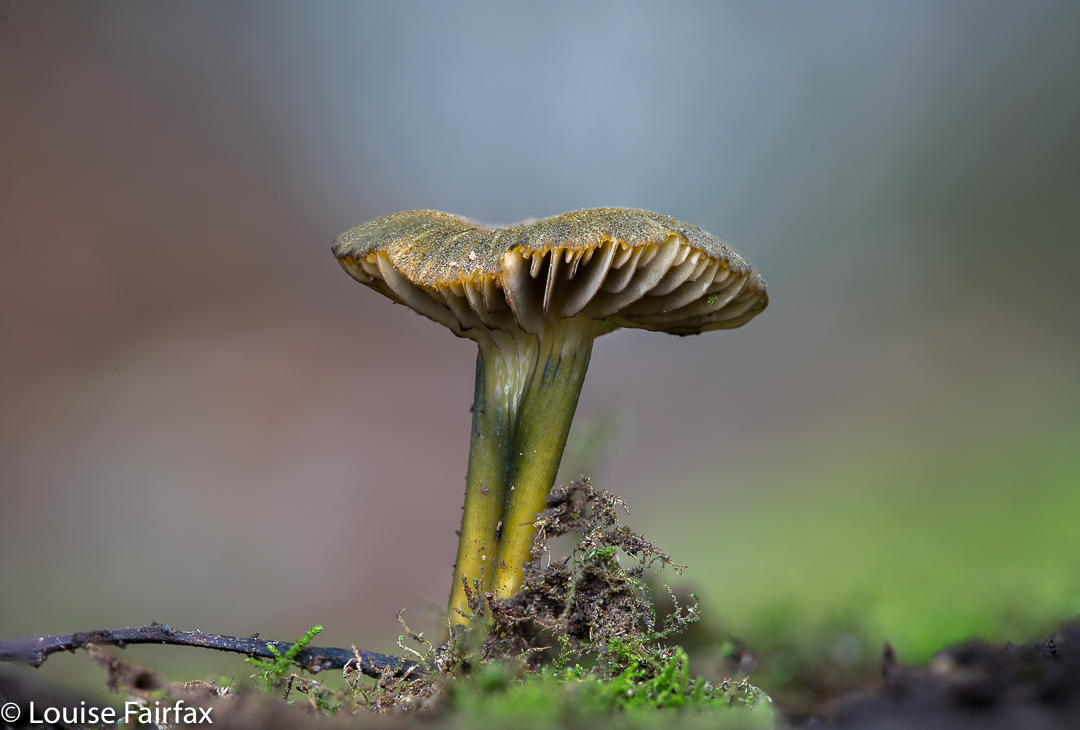
Entoloma viridomarginatum

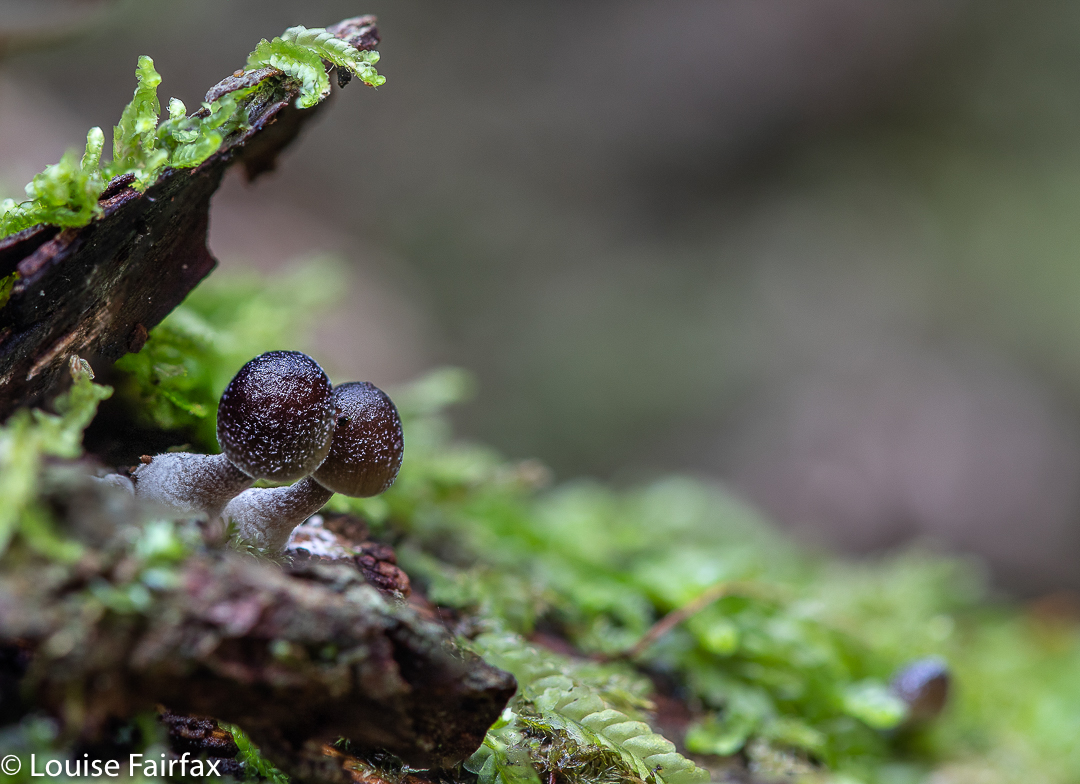
In order to find space in the gorge, I began to explore off-track areas and tiny paths that had not previously called me. My rewards were many, and the number of new fungi genera and species that I found in these conditions has been a massive bonus. I have continued with my “covid routes”, even though lockdown ended over a year ago. And I continue to find wonderful fungi.

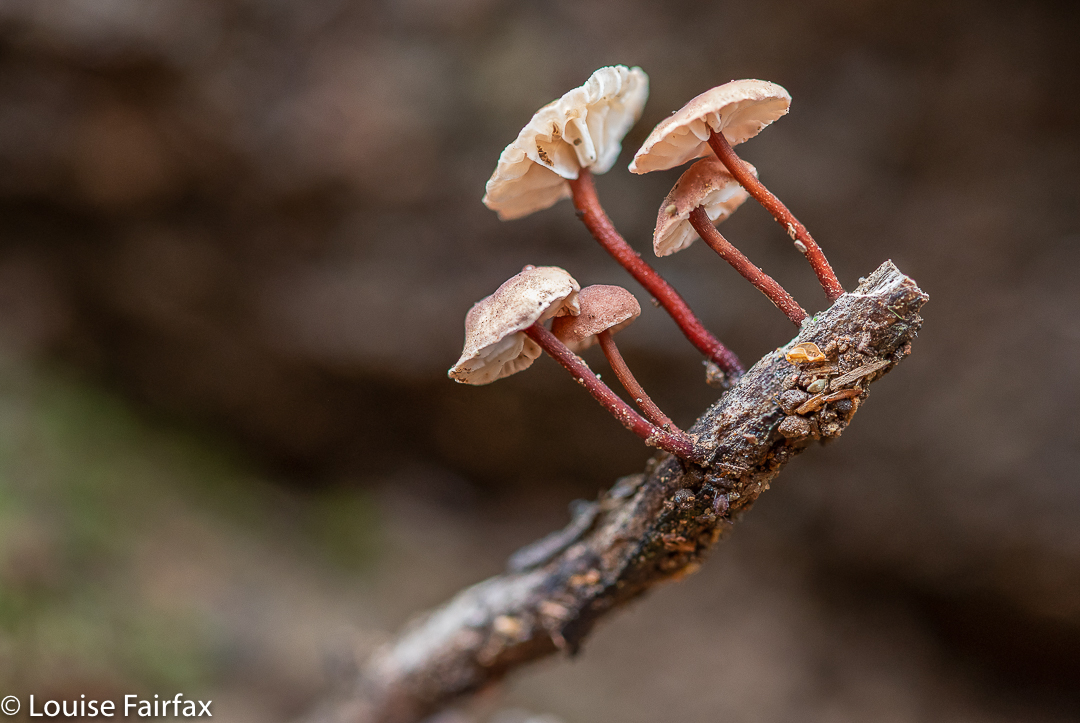
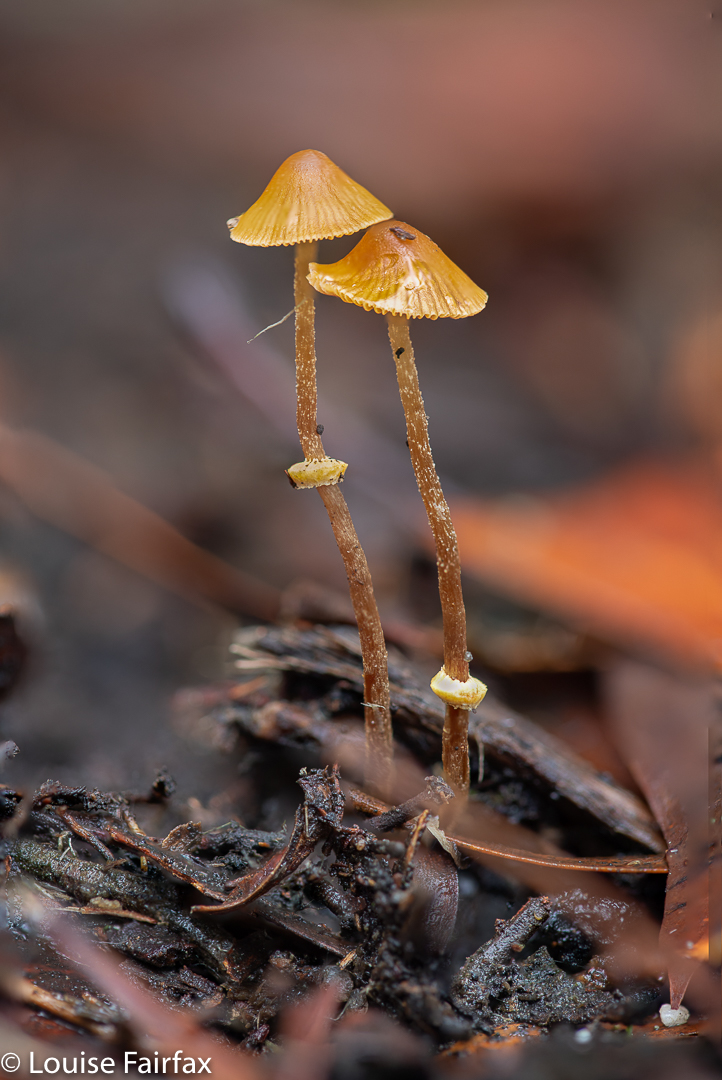
Marasmiellus ‘earth odour’
Mycena interrupta
Mycena kuurkacea

Here is a collection of 20 or so favourites from the gorge. You will see my natural instinct is to favour the small and dainty ones. However, I also love many of the larger ones as well. Space does not permit me to show everything.

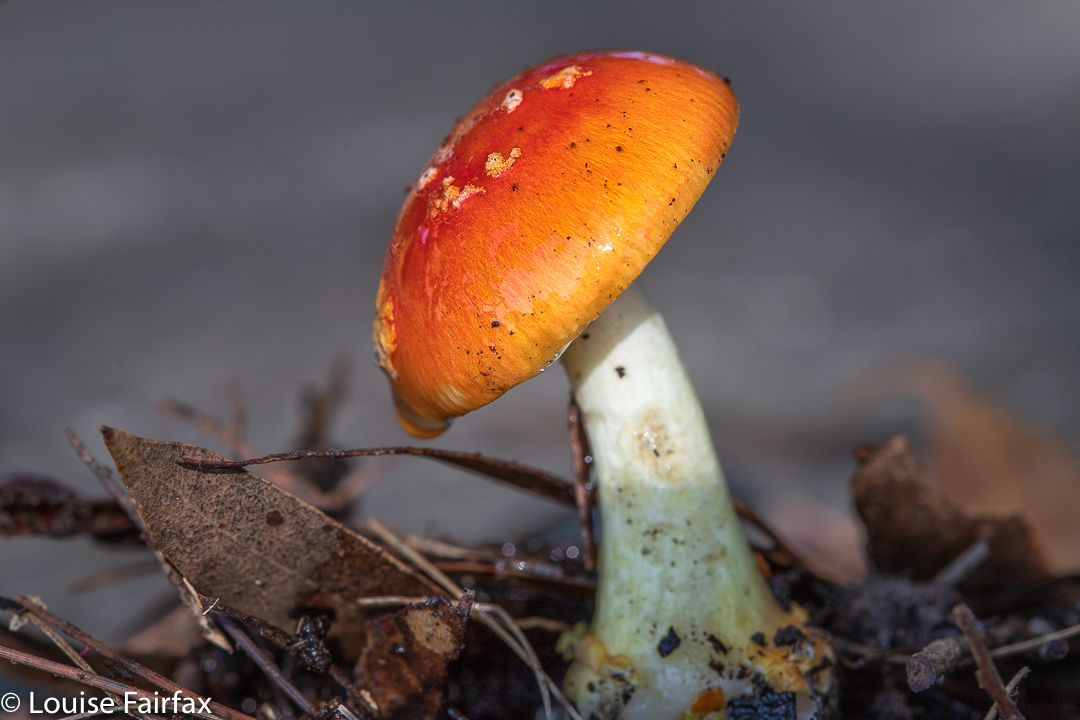
Amanita xanthocephala
Marasmiellus candidus

Amongst the genera and species not shown here, just in case you’d like a full check-list of what I have found and photographed in the gorge, are the following:
Agaricus austrovinaceus
Agaricus marzipan
Amanita carneiphylla
Amanita pagetodes
Armillaria luteobubalina
Austropaxillus muelleri
Byssomerulius corium
Callistosporium ‘dry red’
Cantharellus concinnus
Chlorociboria aeruginascens

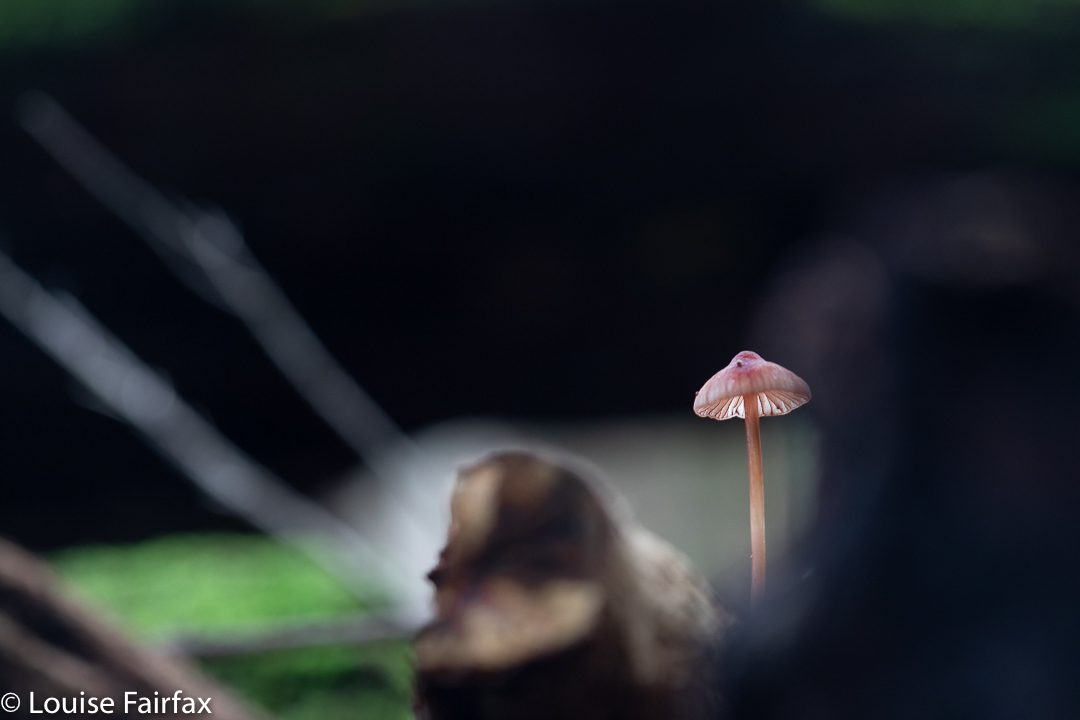
Mycena vinacea

Chlorophyllum brunneum
Clitocybe semiocculta
Clitopilus pseudopiperitis
Coprinellus disseminatus
Cortinarius ‘green gills’
Cortinarius austrovenetus
Crepidotus orange
Crepidotus variabilis
Datronia brunneoleuca
Dictyopanus pusillus
Entoloma albidosimulans
Entoloma purpureofuscum
Entoloma rodwayi
Entoloma sepiaceovelutinum
Inocybe sp
Laccaria sp
Lepista nuda
Leucopaxillus amarus
Limacella pitereka
Macrolepiota clendandii

Descola phlebophora

Mucronella pendula
Mycena albidocapillaris
Mycena austrofilopes
Mycena carmeliana
Mycena cystidiosa
Mycena subgalericulata
Omphalotus nidifomis
Oudemansiella gigaspora
Postea dissecta
Pseudomerulius curtisii
Rhodocollybia butyracea
Rickinella fibula
Russula persanguinea
Singerocybe clitoboides
Stereum ochraceoflavum
Tyromyces merulinus
There are others that I have seen but either I have not got around to photographing them, or couldn’t ID them, so saw little point. Some of the “big browns” and “big whites” are rather challenging to ID.
I hope there are no misprints, typos or false IDs. Please alert me if you spot errors. There is far too much misinformation in the web. I do not wish to be part of it! I hope you have enjoyed seeing what our gorge has to offer.