Wedge 2014 Aug

Mt Wedge

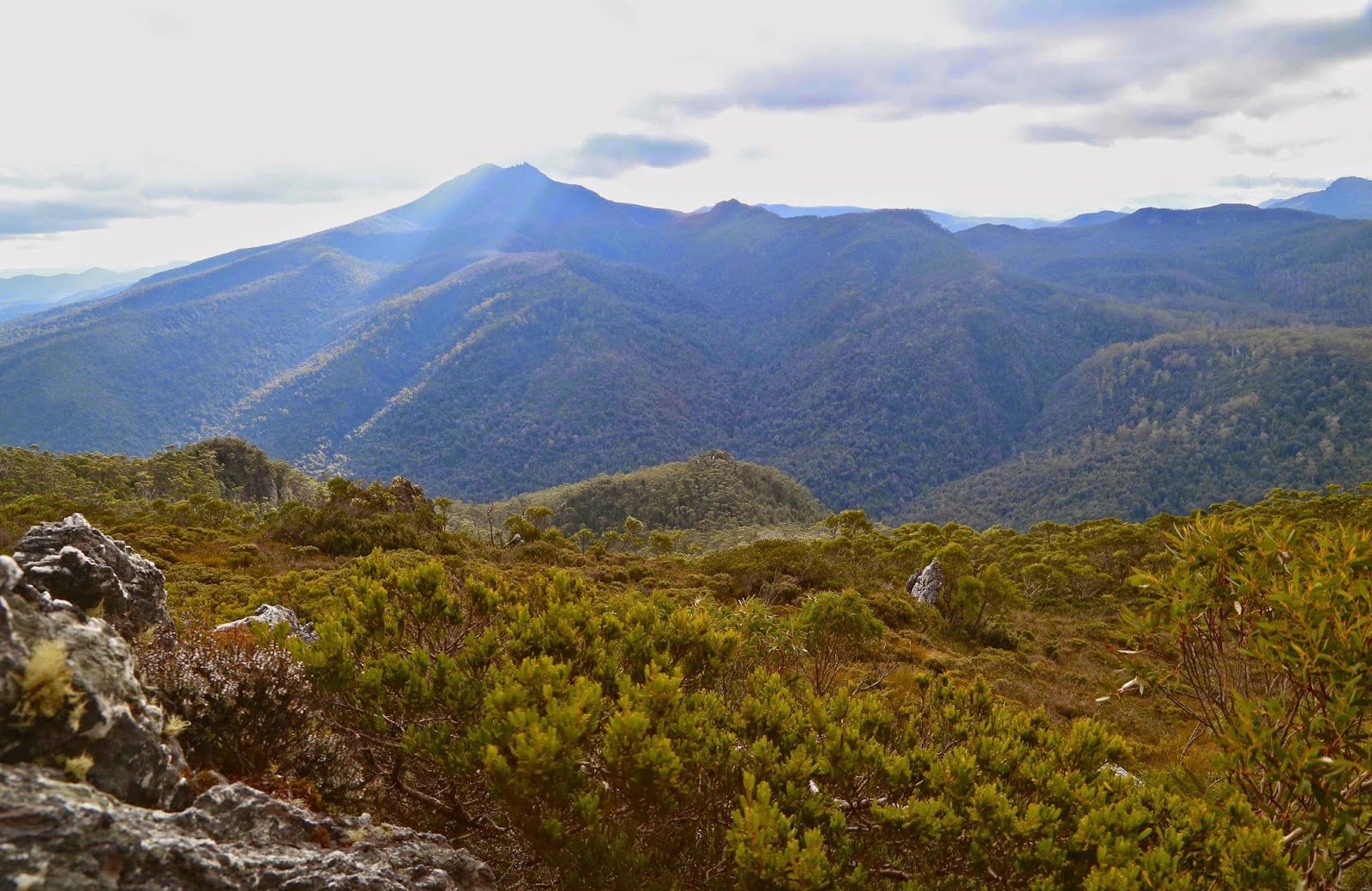
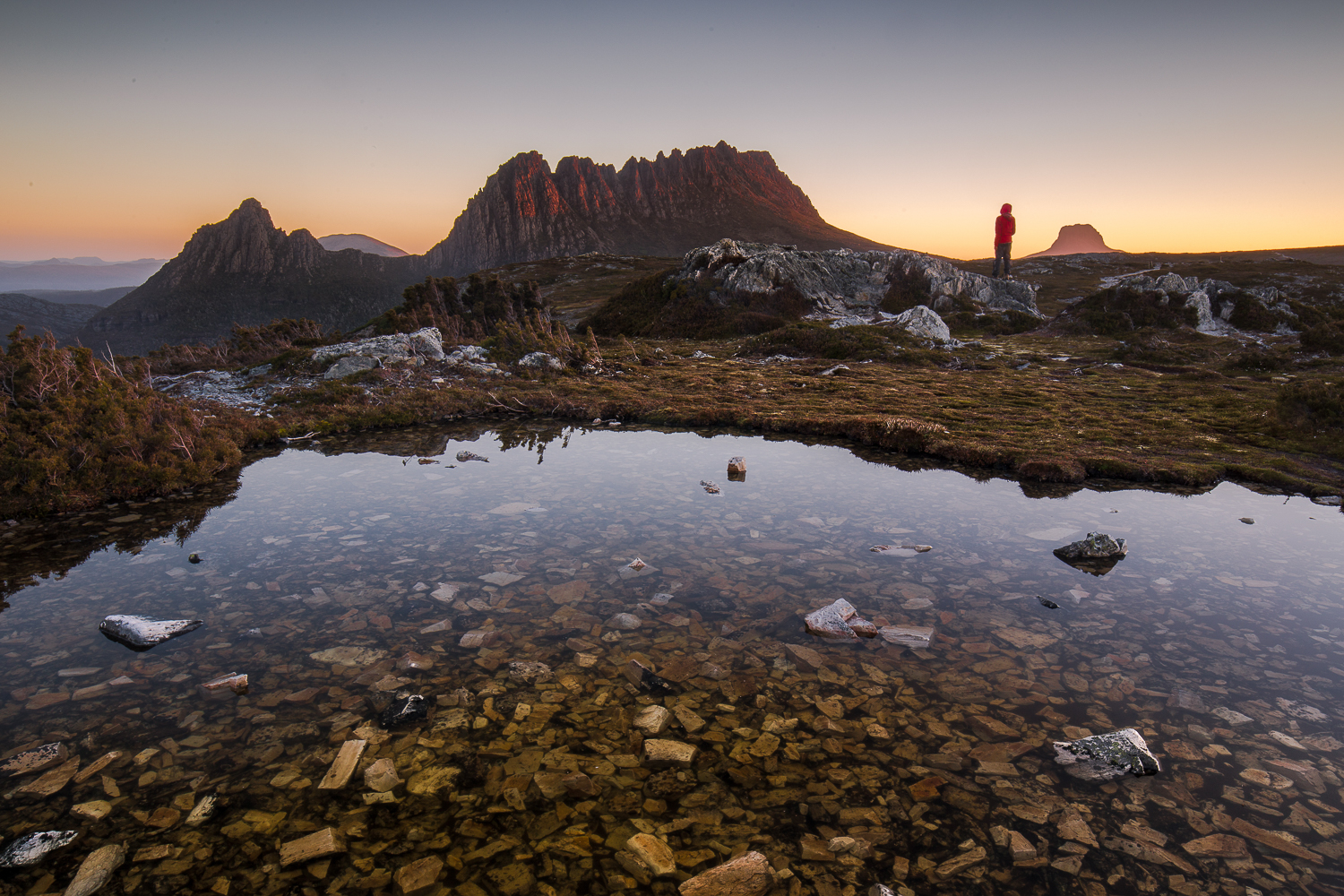
 I am amazed at the number of times I have climbed a mountain and gazed across to a cloud-covered giant near the waters of Lakes Gordon and Pedder and had a friend identify the leviathan as Mt Wedge. It seems to loom large in the vistas from an unlikely number of places and directions – almost as often as Frenchman’s Cap – and has an uncanny knack of turning up to every party, even when least expected. Whether you are on the Western Arthurs, the Mt Anne group, the Sentinels, Snowy Range, Denison Range, on Clear Hill, Frenchman’s Cap, or Wylds Crag, Mt Field West or Mt Mueller (the list goes on), there it is.

 So, why have I waited so long to make its acquaintance, and why choose precisely this weekend to end the drought? I guess part of that was the knowledge that it has a track up it, and is therefor a mountain that can be done at any old time, and solo or in company; there was no rush. When other, less-hospitable mountains appeared on an agenda, it seemed more sensible to do them as the opportunity presented itself. But this weekend there was nothing else calling, and I have been sick in bed all week, so it seemed a perfect time to do a mountain that has a track. (Tracks are much less demanding than making your own way through ‘scrubbery’).  The day packs from last week’s failed attempt at getting out of the house still littered the bedroom floor. No packing was needed – just a bit more health than last week. I was no longer running a temperature. Let’s go.
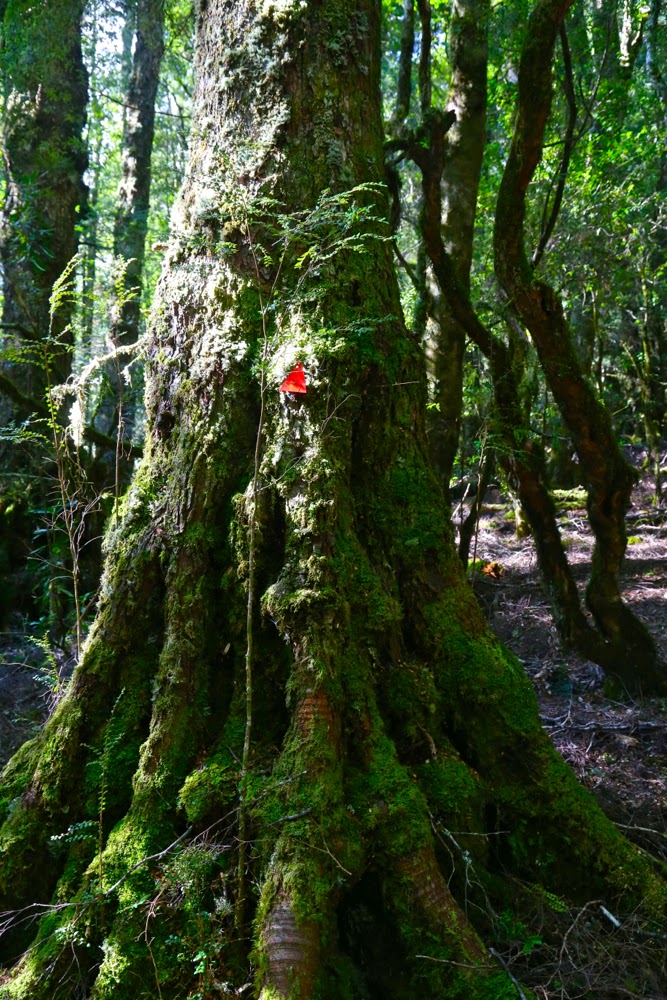
 Unfortunately we had a flat battery and required the services of RACT before we could get started, killing a precious hour, but at last at 11 o’clock we were in the carpark and ready for our mountain. The sign said 5 hrs return, so even if we took the time it said, we still had enough light. Ideally we’d be faster than that and would get a decent chunk of the long drive home in the light. The early section of the walk is through myrtle forest with lots of lush moss and brown humus – not as green as some forests, but refreshing nonetheless. One goes through a sort of nature trail for a very short way and hangs a left where indicated by a sign to eventually go along a road for a couple of minutes, from which another sign points right, to the top, and the real climb begins. We took 11 mins to negotiate that kind of “pre-start” area.
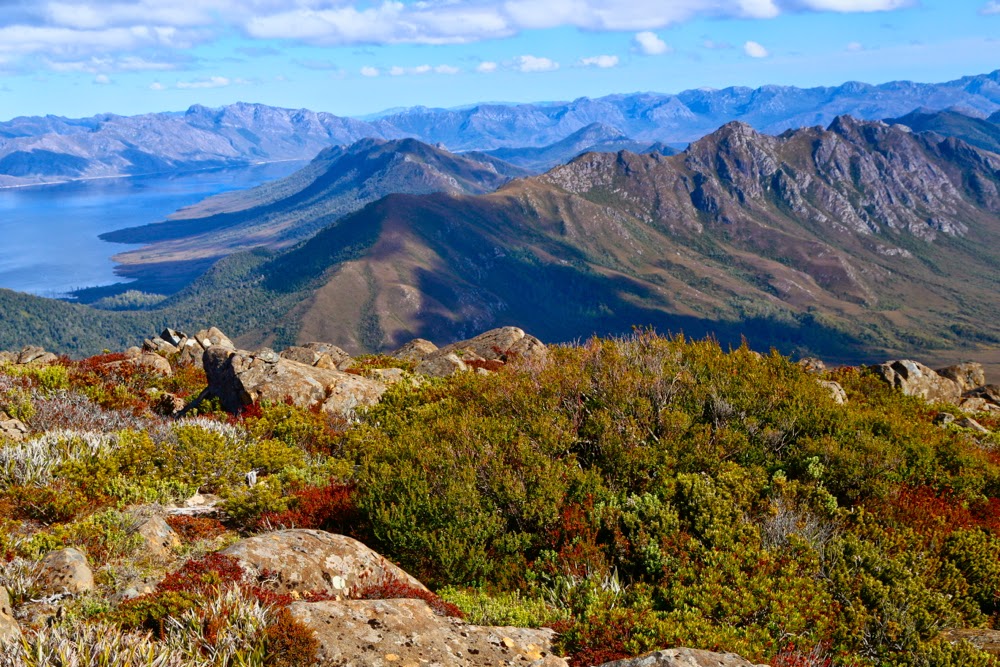
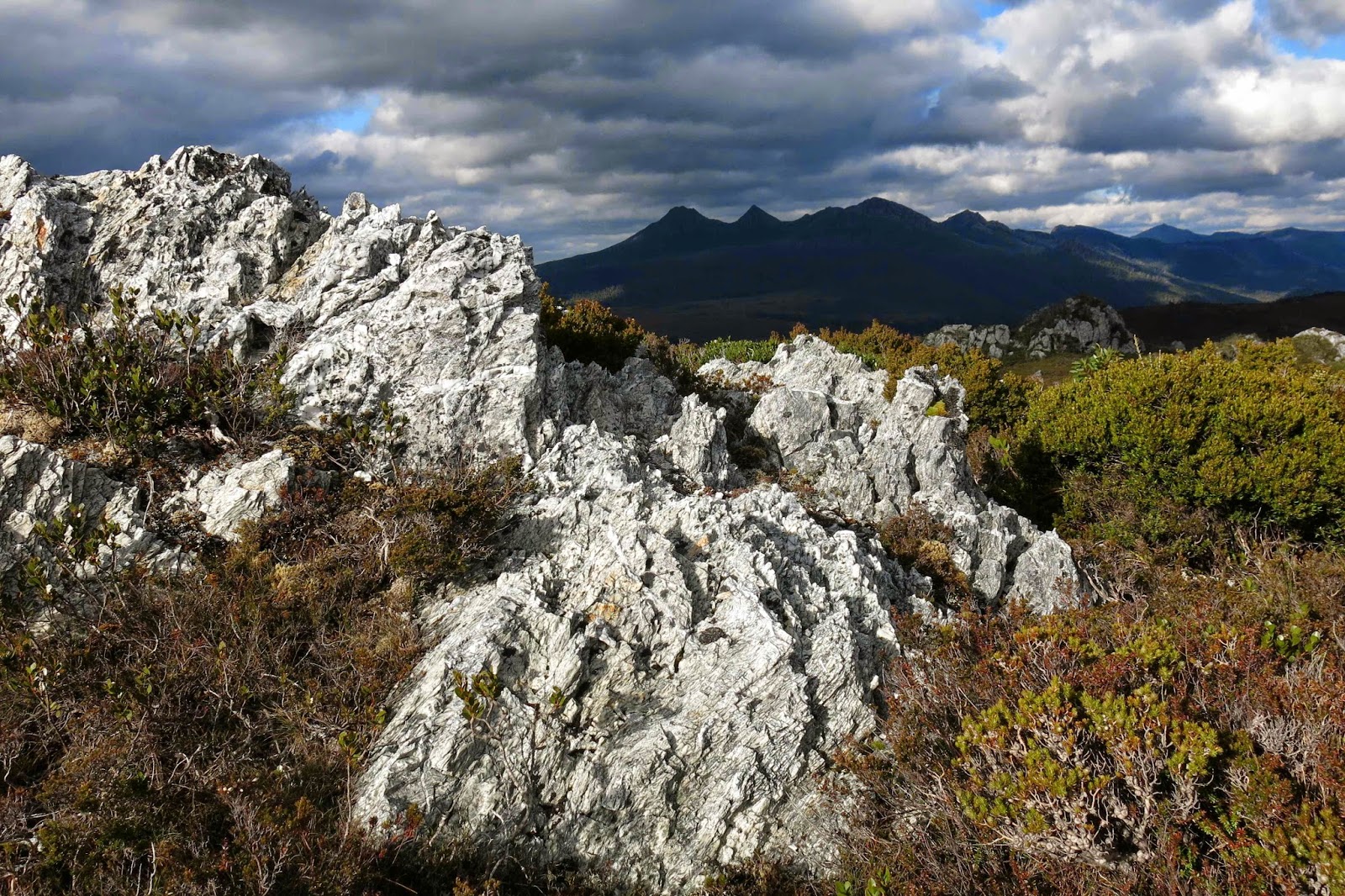
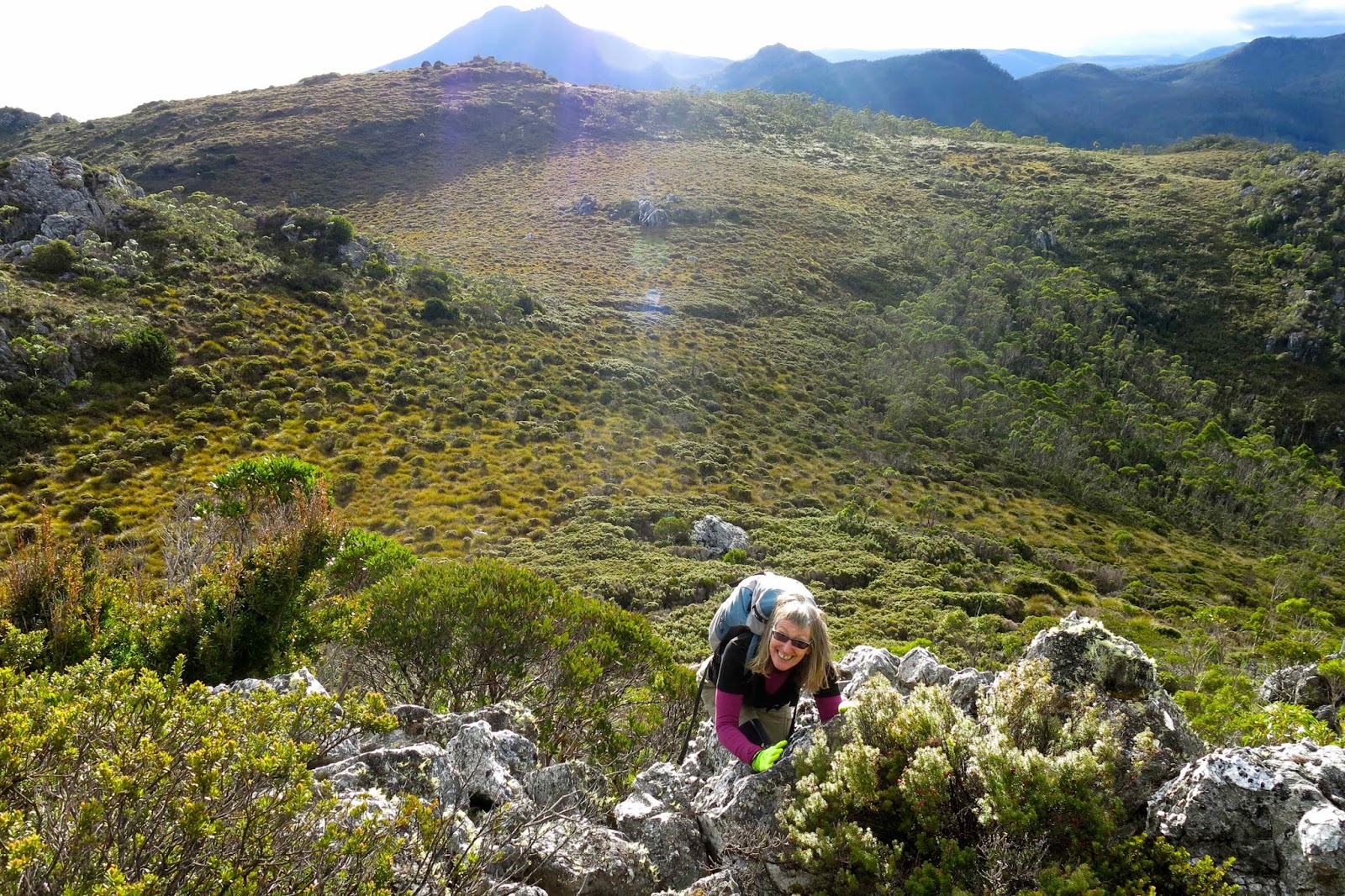
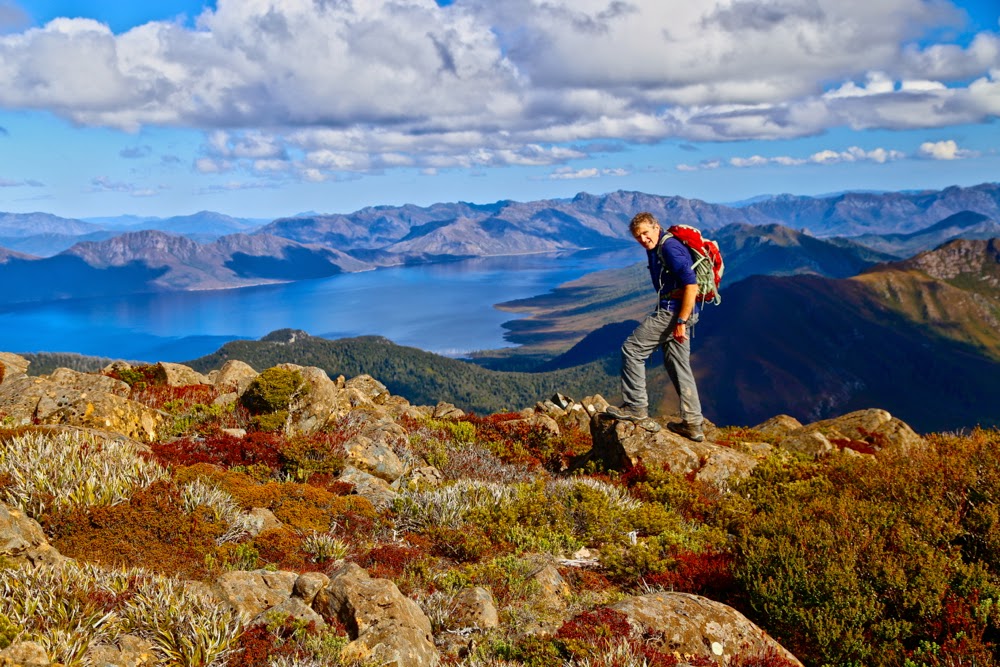
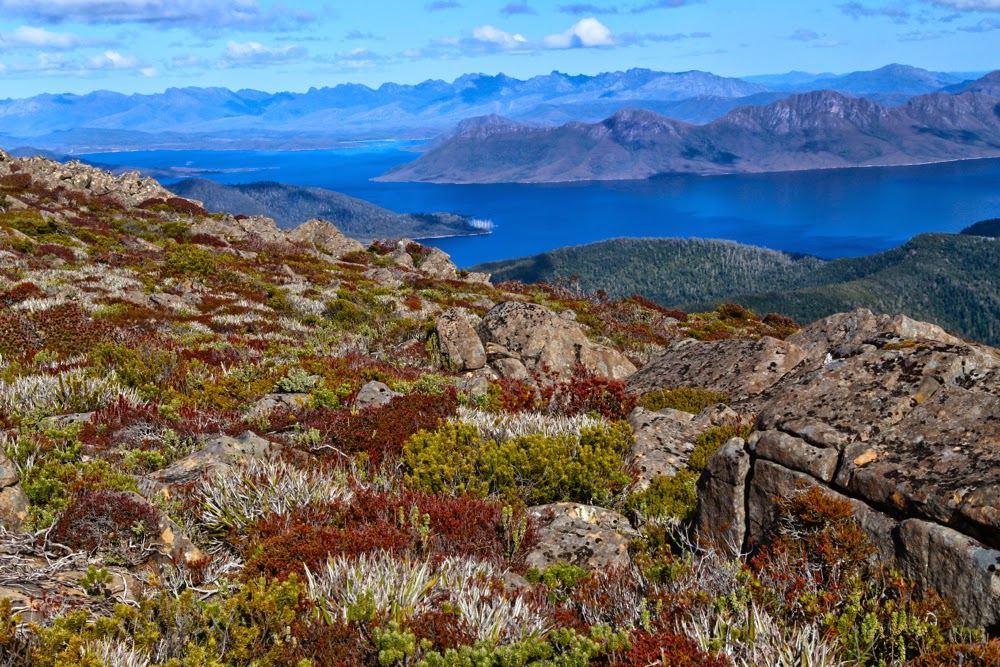
The real climb is good and steep. After 36 mins (for us) the forest type changed from being predominantly mixed myrtle to a congeries of melaleuca and rather skinny pandanis. That pleasant band only lasted 12 mins, so that after 48 mins of climbing from the road, we emerged out of the forest into very low scrub, and our first close-up view of some dolerite columns that marked the cap of the mountain we were climbing. We also got our first – very exciting – view of water below and of our surrounding mountains. It looked as if the summit was just perched there above the mini organ pipes, but it took me another 21 minutes to actually touch the trig from there. Bruce was tired by that stage, and it took him about double that. I realised as I gave way to the irresistible pull of the summit that although I adore being on mountains for the view and the sense of infinitude from the top, I also love the act of climbing, even on a day like today when I have been sick and am not able to push my absolute limits. I am still able to push my own available limits of that day, and even that is pleasurable.
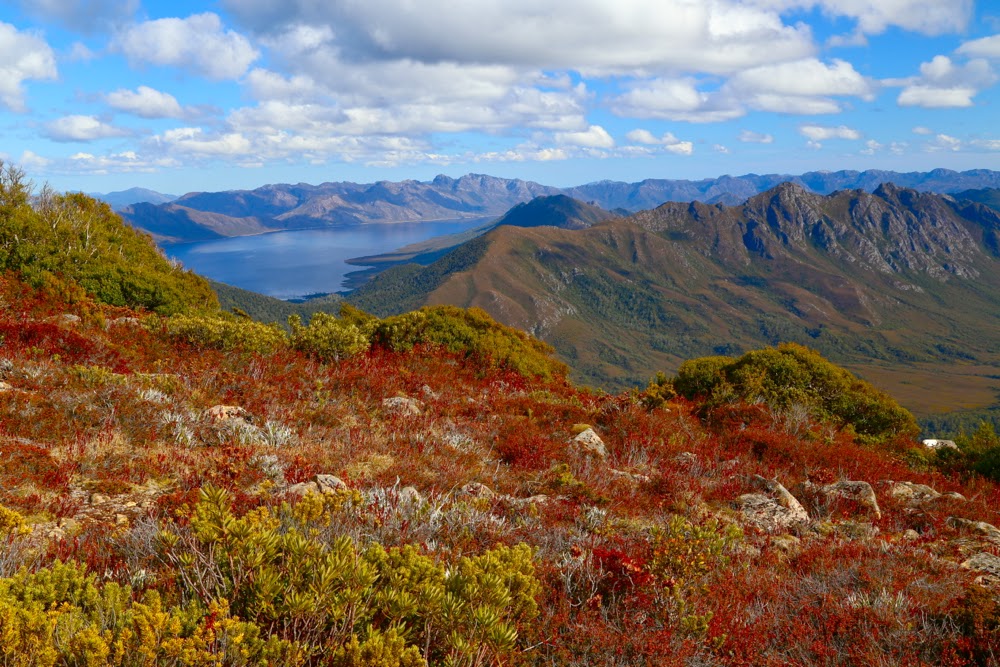
We descended a bit from the windy summit to perch on a rock and enjoy our lunch gazing out at the lakes far below us, and the shapely Sentinels which I adore, before a descent that was the same speed as our ascent, afternoon tea at one of our favourite little cafes in the world, viz. the Possum Shed at Westerway, with brilliant coffee and luscious cakes, and on to Launceston where we arrived in time for dinner. A goodly day.

Ben Lomond 2014 Aug Snow Walk

Ben Lomond on Crampons. August 2014

Carr Villa
It is my opinion that if you receive an email inviting you to come and play in the snow then you can count yourself amongst the Lucky. I thus consider myself to be a very fortunate person, as such an invitation is exactly what arrived in my inbox. I was the only invitee who could accept, so it was a party zu zweit.

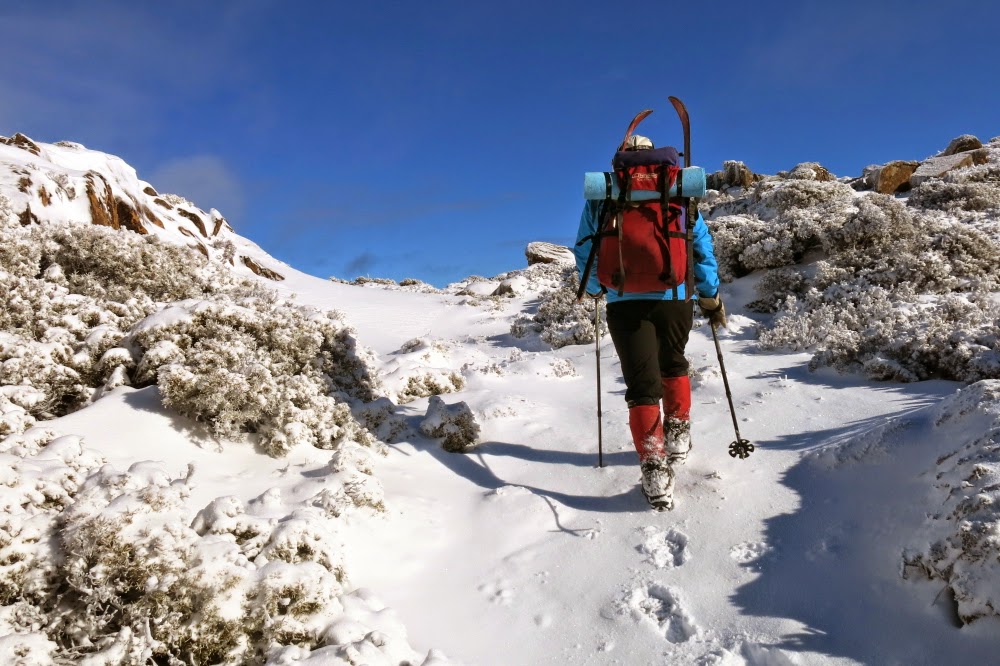
We had only half an idea of what conditions would be like on top of Ben Lomond, our destination, so each selected a variety of play tools. I took 6-point crampons and my Grivel spiders, as well as short XC skis and poles. Phil, the initiator of the expedition, took very short skis and walking poles for us both, and spiral-wire shoe chains as his chosen anti-slip device. Once we could see the vast amounts of ice around Carr Villa, it was obvious that walking without either crampons or pseudo ones was out of the question (I nearly went for a sixer just crossing a 2-metre band of ice before we’d begun). There was not enough snow for real XC skis, but we might have enough for the little ones up higher where we were climbing. We both took them in case.
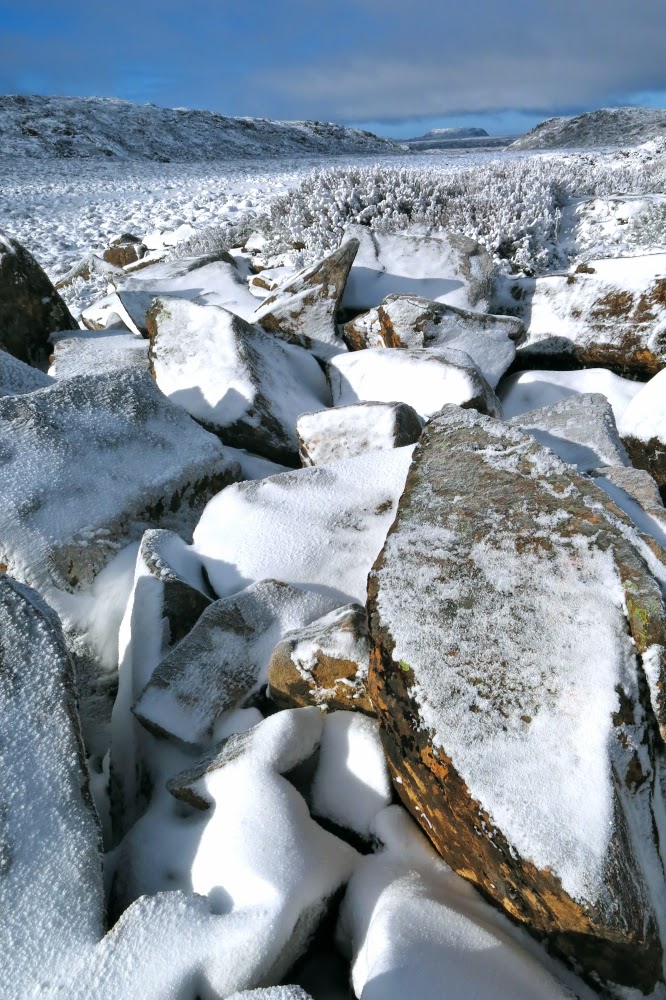
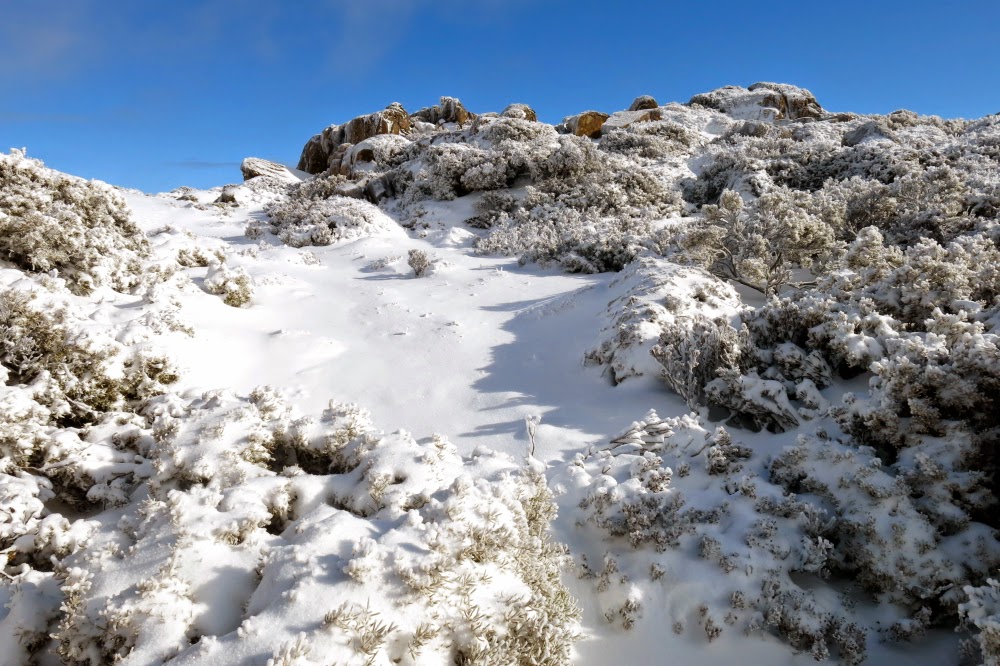
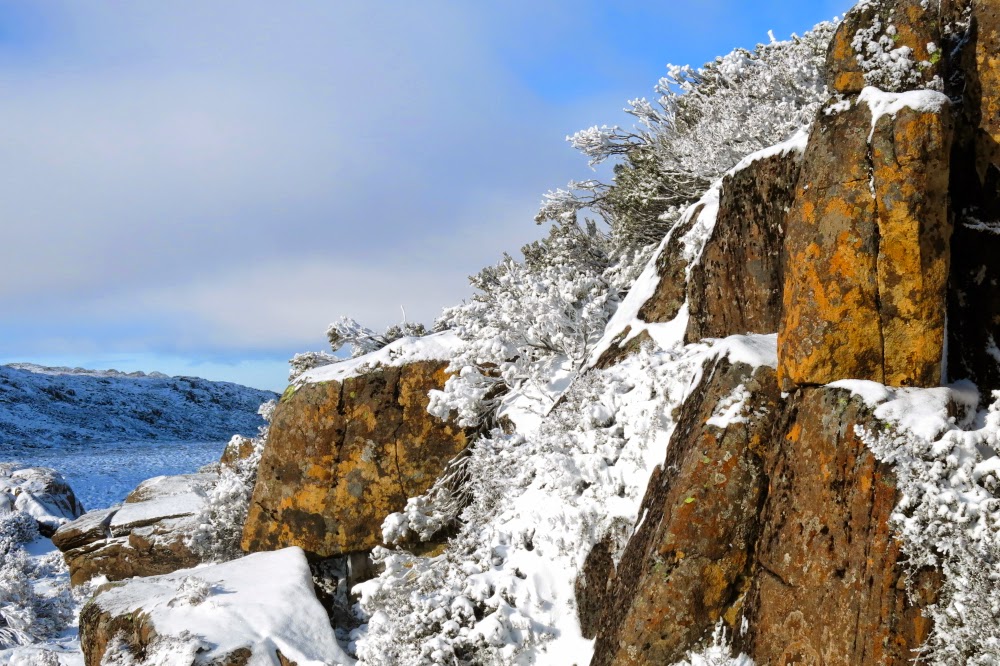
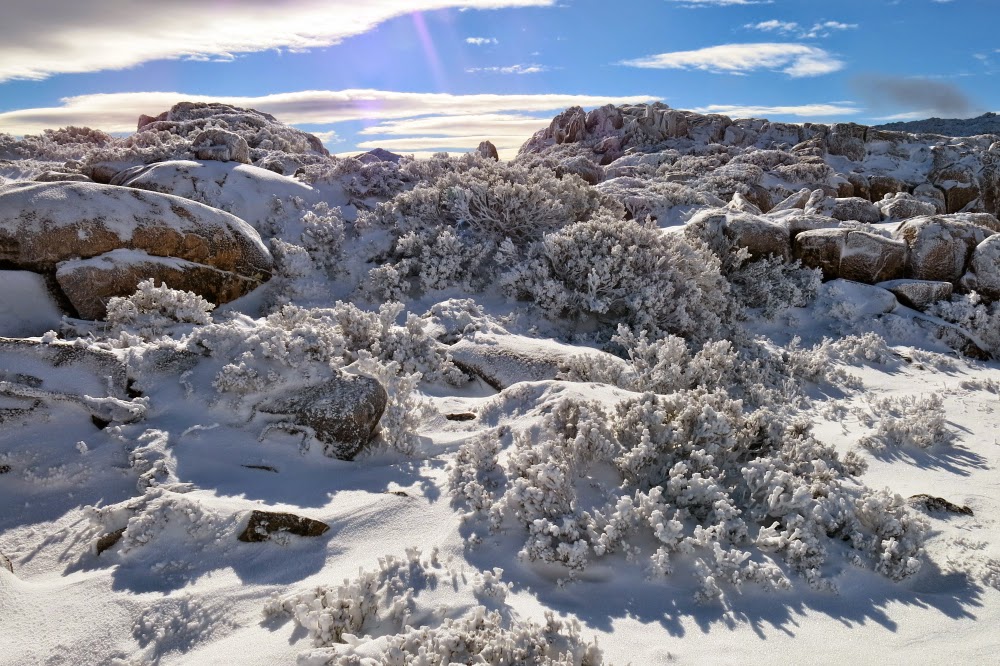
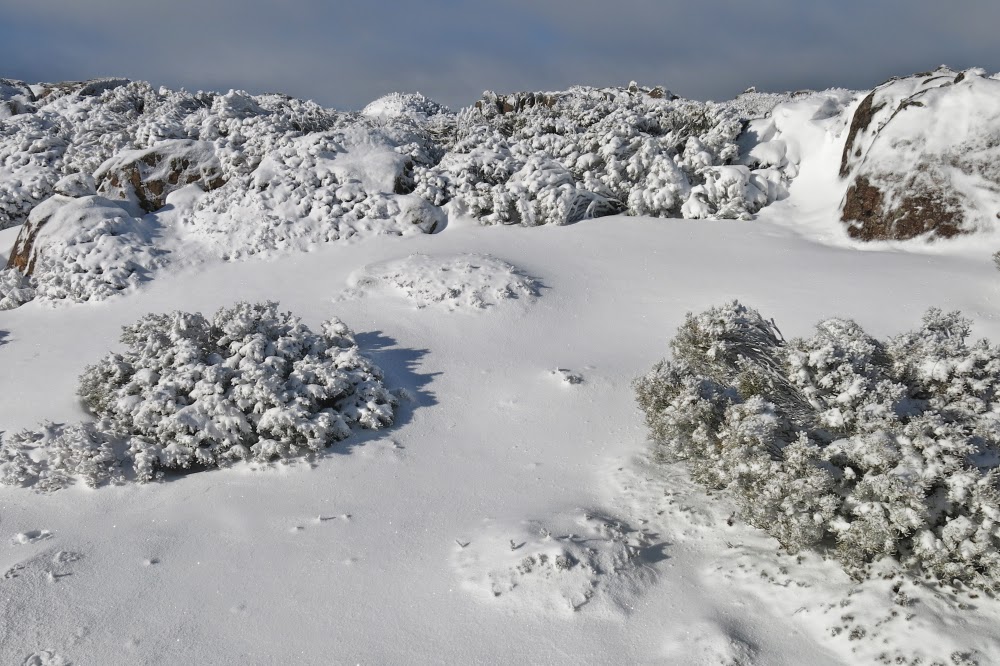
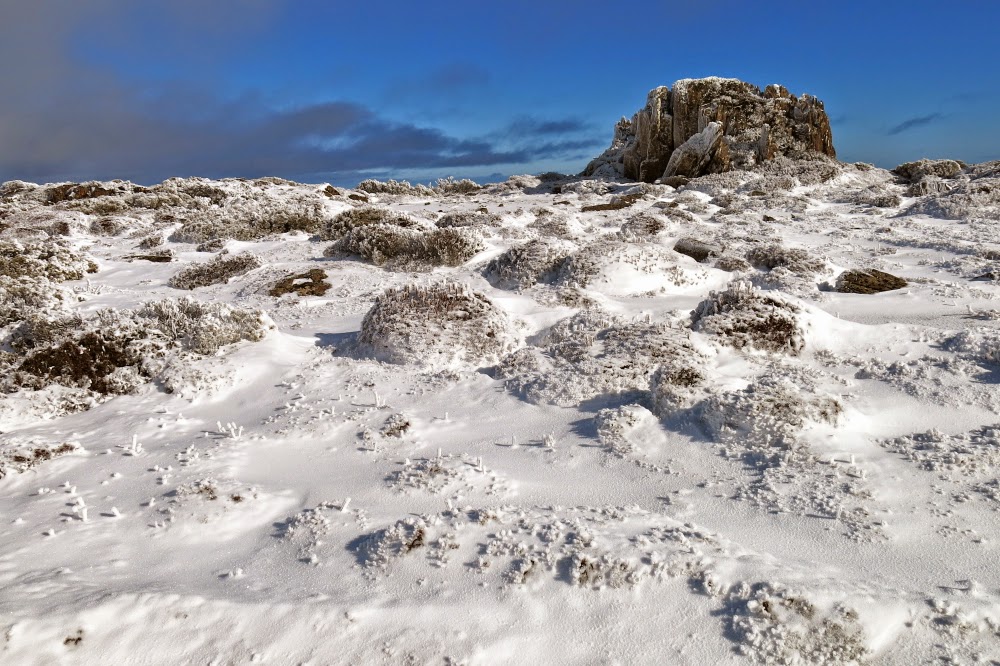
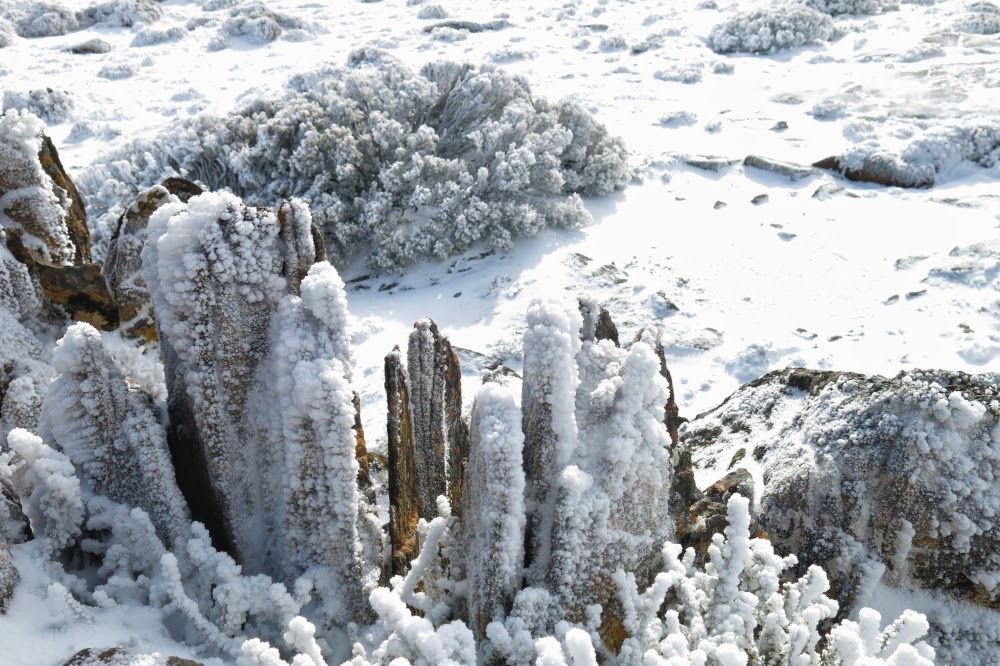
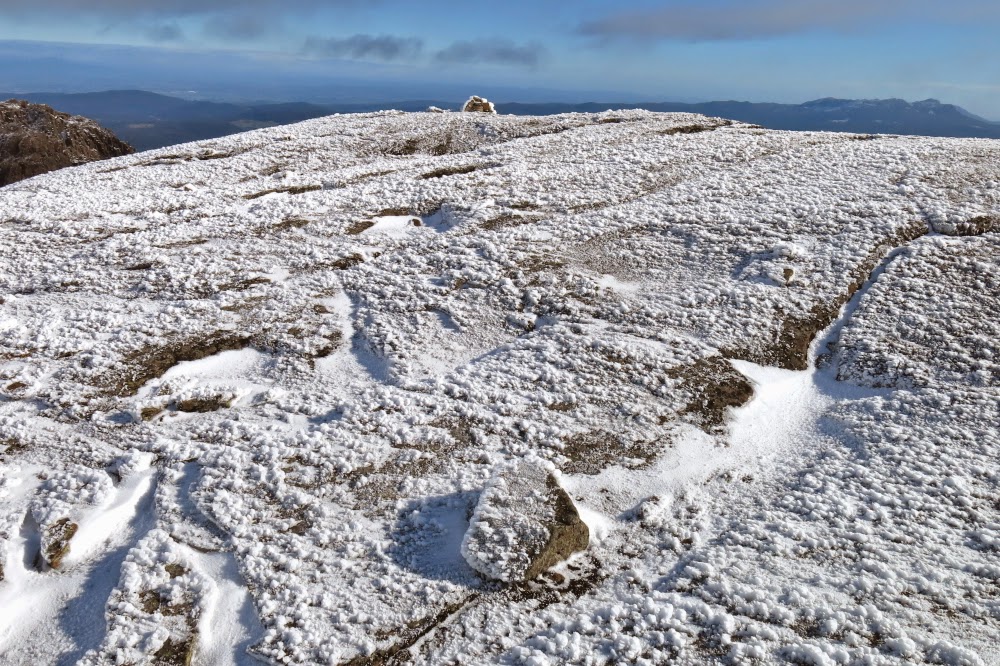
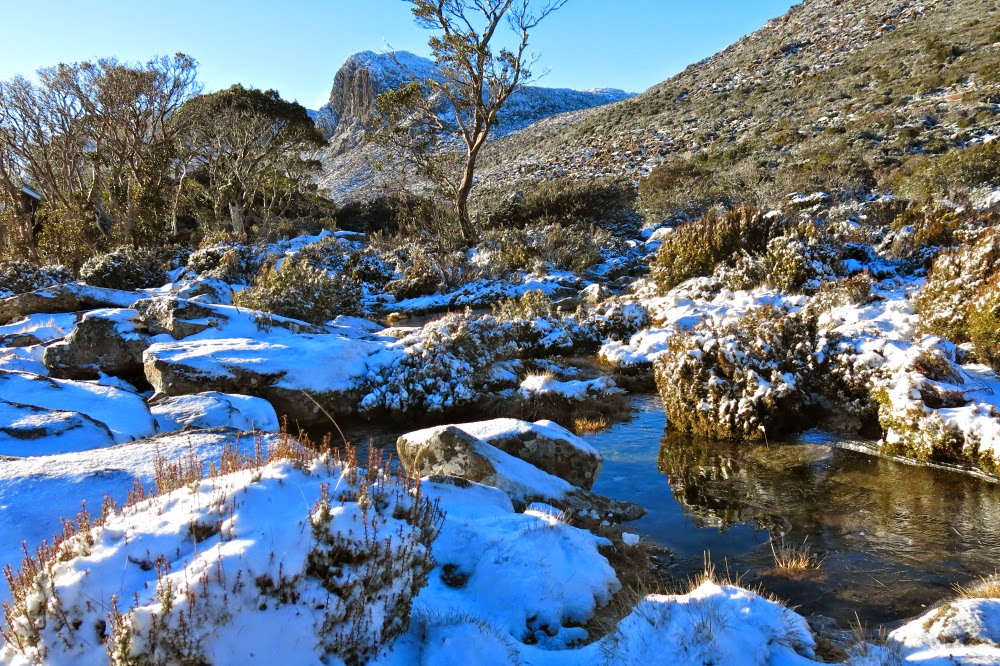
 I kept trying to work out what it is that makes rocks covered in a light dusting of white powder so very appealing, but never came up with an explanation that satisfied me: all I can do is talk of the observable outcome, viz., the fact that most of us find rocks with a soft, finely textured layer of white, delicately poised on the uppermost surface, to be a glorious sight. As often as possible, I zapped out my camera and took a few shots. In my haste (I didn’t want to delay things with too much photography) I barely had time to notice if my efforts resulted in a photo that would later please me, but the attempts were fun anyway. Up higher, the landscape was almost totally white, but it still retained moments of colour from the underside of bushes and twigs, or the sunny side of rocks. The scenery was spectacular, especially as we were lucky enough to have soft blue sky as a background, and sun to give lustre to the snow. Blue and white: the well-chosen colours of the Greek flag. These are also the colours of our east coast beaches that I love so much. It’s always a combination that pleases me.

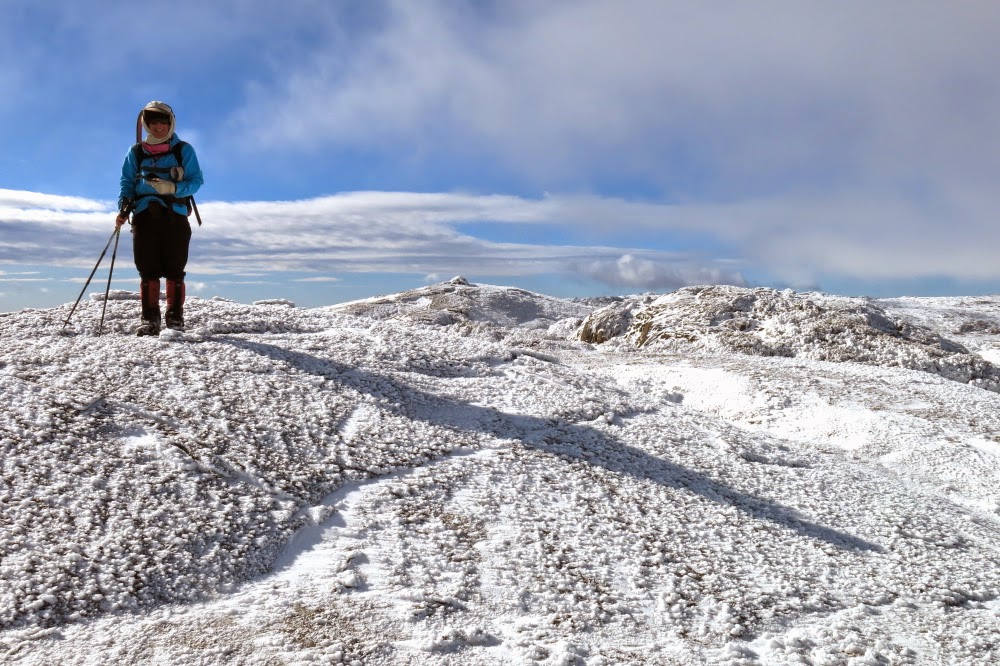
Phil going up a shallow gully

 At first we followed the path from Carr Villa up towards Legge’s Tor, but at some magical point hived off and headed to the right towards Borrowdale Valley and Old Bill’s Monument. I have never walked with poles before, but found the combination of spiders on my boots and poles to help propel me forwards felt like cross country skiing without the forward slide each step, and I enjoyed the exercise as well as the scenery.

Phil’s lump I

Once nearer to the monument, we climbed a few lumps on the terrain which were, I was told, nameless, so I christened them, at least momentarily, Phil’s lump 1 and II. As Phil is the first person to have climbed all the Abels and all the Abelettes, he deserves something named after him. We were basically just playing up there, enjoying the beautiful white scenery and the fun of movement in it. Phil’s lump II (which had two separate summit cairns) had a view way down into the green valley below, past the rocky organ pipes and piles of broken rock that formed chutes between the top and bottom. Phil indicated his chosen descent chute and we began our way down, keen at this stage to get out of the biting wind. That second lump was high enough to feel the brunt of the cold blast.

Nearly at the top of the lump.

The descent and the long traverse across the bottom to the car were much slower than the dance up onto, and then along, the plateau. We had to be very careful on all the jagged rocks that presented a line or point rather than a plane to the foot and that each harboured its own little ice-snow cap. I was too scared to risk jumping, and kept up four limb points of contact for two (or was it more?) hours of the traverse. Some people pay vast amounts of money to go to the gym. We had a mega full-body work out and paid nothing if you don’t count the foot gear that has served us often and will continue to do so in the future.

Phil’s lump II (one of the summit cairns)

Phil with the other cairn behind him
I returned home tired and with a good appetite for the delicious food Bruce had decided to cook in my absence. The only negative was that I now had to quickly dry my gear so I could have similar fun the next day down south with my Pandani friends. I was a going to do the long drive that night, but now opted for setting the alarm for 3.30 next morning instead. The hot shower felt very good.

Nevada Peak 2016, 2014

Nevada Peak, Second try. Feb 2016. (Attempt 1 is below).
Yesterday, I at last reached the summit of Nevada Peak, and, of course, was pleased to finish this (at the time) uncompleted business. The mountain is very beautiful, and I wish to return there with my husband, turning it into an overnight trip, and sleeping at Snowdrift Tarns. My photos, however, do not please me, as the lighting was tricky and I didn’t do a good job. At the end I have provided a jpeg image of the route in case that should help you. I would also like to offer a different opinion to the writer of the essay in the Abels book, as the writer made it sound rather arduous. I did not find it at all so, and was at the top in just over two hours, rather than the three said by the book – and that was at a very measured, happy-chatty pace.
My favourite images remain the snowy ones from my first, failed attempt, below.

Attempt 1, Aug 2014


The track at the start.

Not for the first time (see two other links below) one of my best walks in terms of beauty and fun has been a walk where we failed to reach the summit. I was going to write “our goal”, but isn’t the goal actually to have a wonderful day in the wilderness rather than necessarily to reach a summit? The summit will wait for me. I’ll get there some other time, but we had a beautiful day in the bush, that’s for sure.

There is a beautiful Pandani grove on the way up.

For me, the day began very, very early, as I had to get up at 3.30 in order to meet my friends at 6.30 at Kingston, and then drive some more with them. We all knew there had been a heavy, fresh dump of powder; we also knew that there was a possibility that we could not even reach the starting point of our walk due to deep snow or floods or a thick tree blocking our path, but we were all ready to give it a go anyway.

Pandani with hat

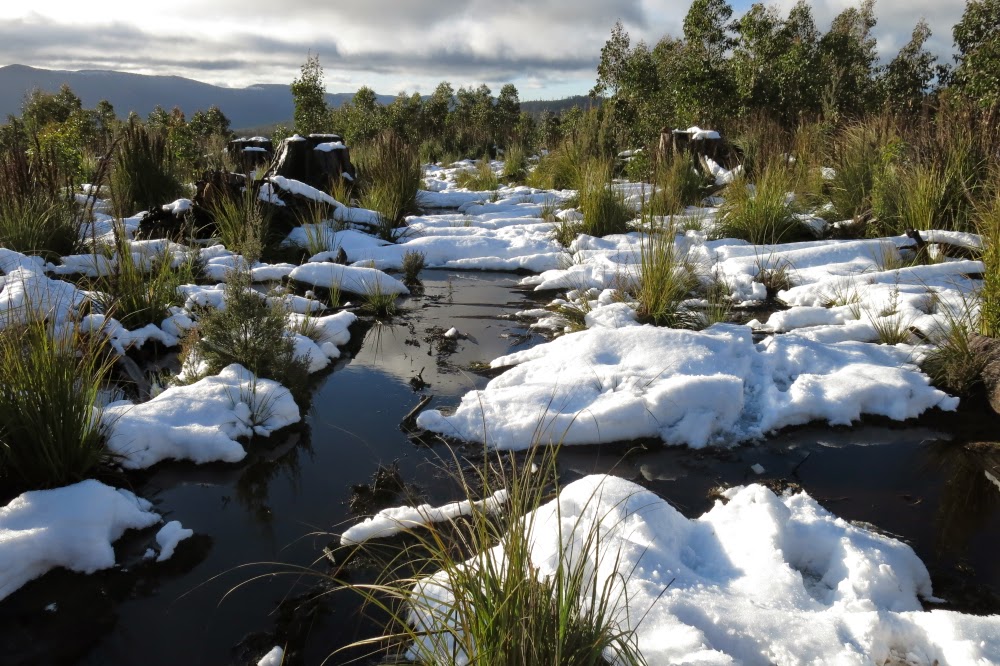
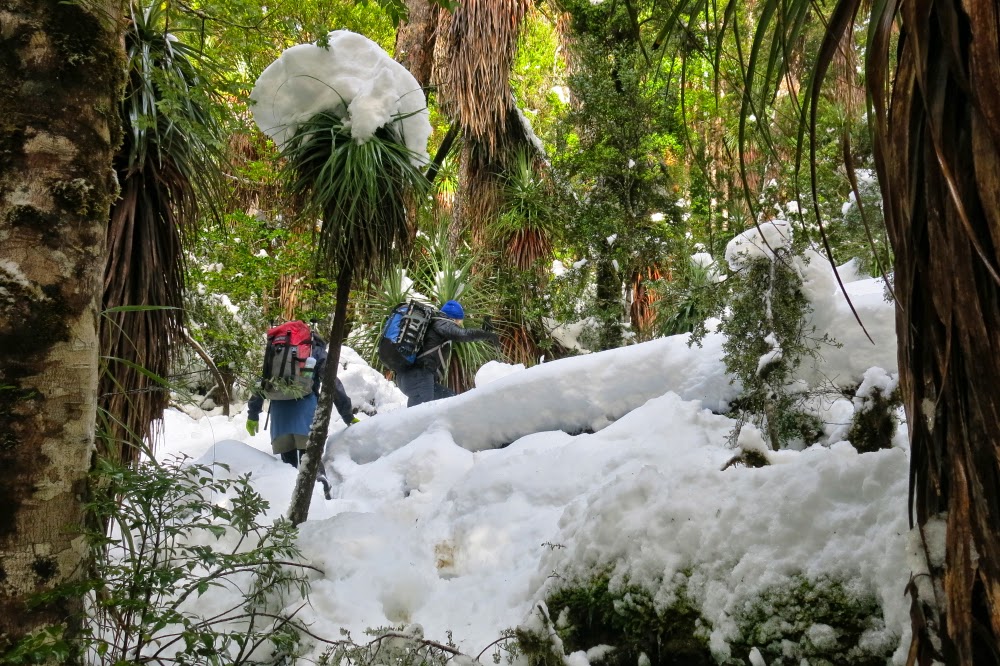
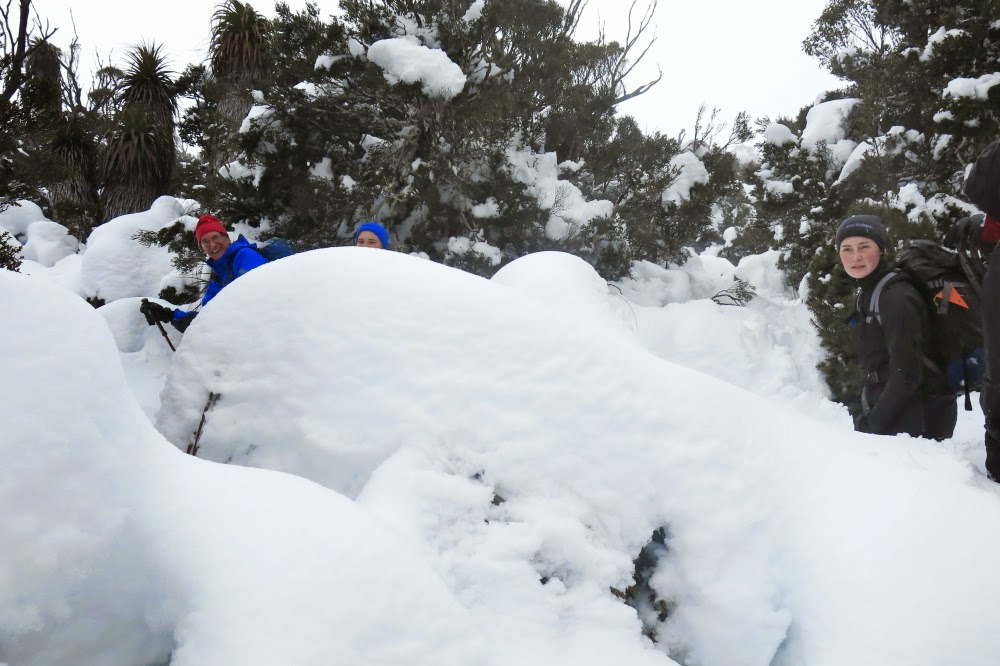
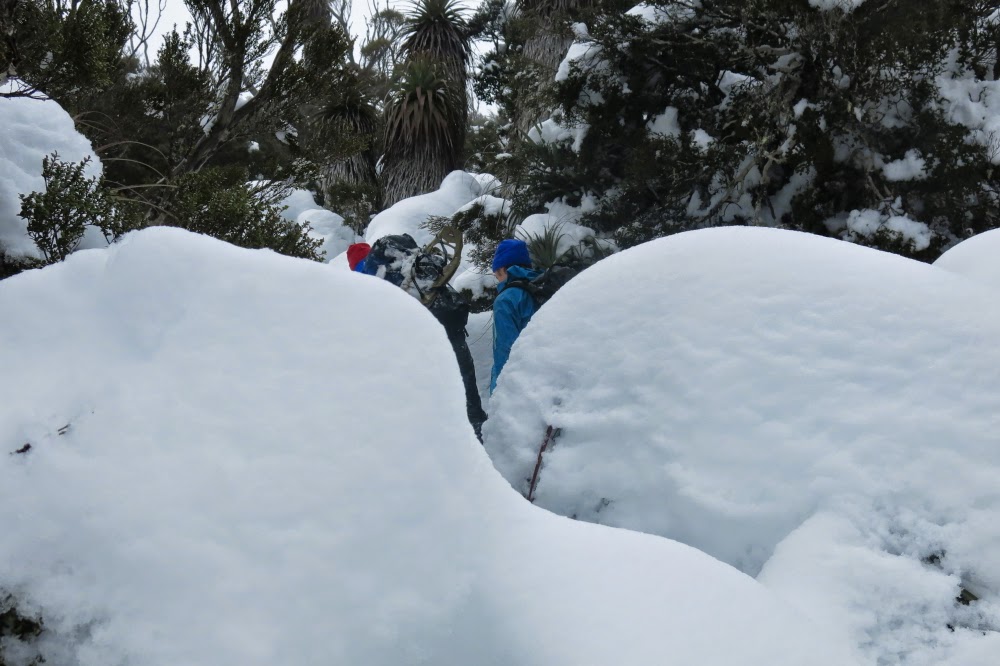
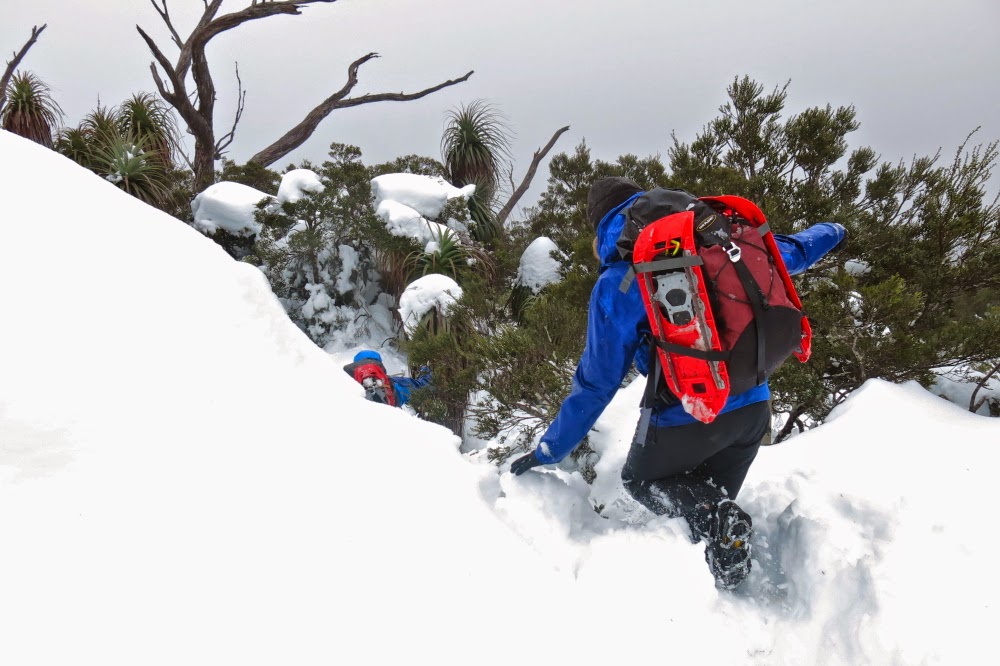
Tasmanian rainforest with a cover of snow is a very beautiful sight. We worked our way through the snowy fairyland, stopping to regroup, climbing steadily, but not speedily. My main impression of the day was just the joy of being there in such a fabulous environment. Towards our turnaround point, the snow was chest deep and it was becoming even slower, and extremely tiring for anyone in the lead to force a passage through. It didn’t matter. Nothing mattered. We were all enjoying the moment, and also all aware that we were starting to get pretty cold. It was time to head for home.

 Working the thick snow

As I enjoyed the downwards trip – made significantly easier by the fact that we just had to follow our own snow ditch – I pondered how good it is to be doing this with other like-minded people: people willing to get out of bed early and enjoy a couple of minor hardships (like being cold, carrying a pack, being fit enough to enable the project) in order to be in supreme beauty and have fun while being there: it would be much too dangerous (idiotic?) to go into an extreme environment like that solo.

Route taken for summer completion of the job.
Links to two other walks that are amongst my favourites even though we never made the summit due to snow:

Charles + Bee Hive 2014 Jun

Mt Charles and the Bee Hive 21 June 2014.

Given that my husband and I have made a snap decision to go to Europe next weekend, I feared that going off collecting mountains here in Tassie today sniffed suspiciously of irresponsibility and self-indulgence. I should be home mowing the lawn, tending the garden and getting ready to go away. But I really needed to get out and walk up mountains, sit on top and hear the sound of friendly voices. I signed up for the Pandani trip, set the alarm for an ungodly hour and once more found myself driving slowly through the thick fog and darkness of the low agricultural lands, wending my way towards our meeting point at the pub at Derwent Bridge near Lake St Clair.

King William I, Mulligan’s Peak, Mt Pitt and more (Slatter’s Peak I think) from Bee Hive.

After Poatina the beginnings of colour in the sky began to emerge and as the road zigzagged to gain height I got to watch the sunrise on the zigs. By the time I was passing the Great Lake on the tops, the sky had the dusky pink alpenglow that I love so much, and the fog was reduced to thin, attractive wisps here and there. It looked as if it was going to be a lovely day. It was great to be out in its wide spaces and to have the prospect of a new mountain fuelling my excitement while I drove.

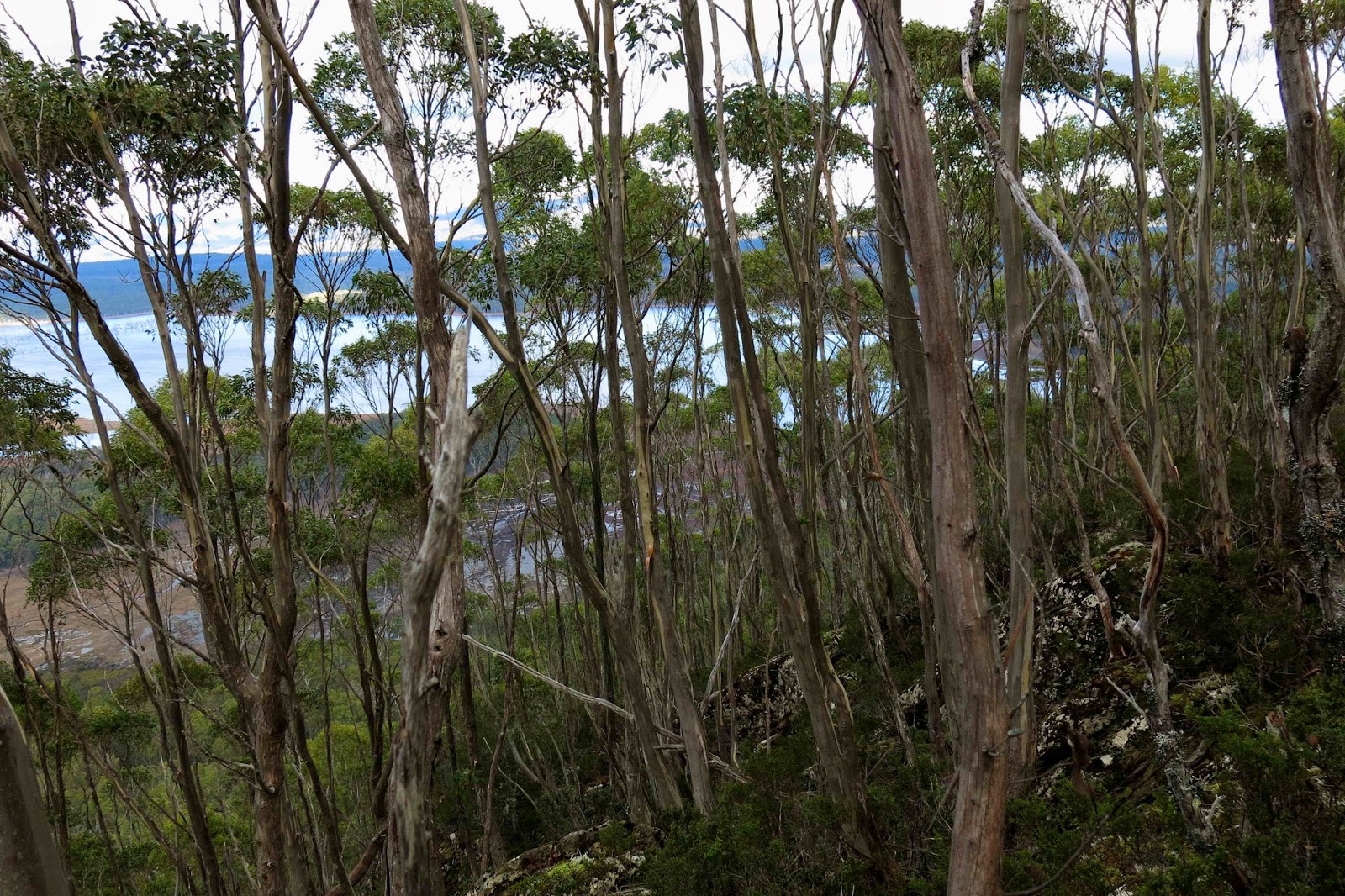
Lake King William, seen behind the striped blinds of skinny, underfed eucalypts on the summit of Mt Charles
It was also just what I needed to enter the pub and see friends again, most of them circled around the fire having coffee or hot chocolate before we set off on the business section of our outing. Hugs all round and we were soon away on our next adventure – a very little one at first, as the club had acquired a key to a magic gate, so we drove to an old flying fox apparatus that my gps says only left us 130 vertical and 550 horizontal metres to climb to the summit. This was pretty quickly dispensed with, even though we lingered for quite a while on the top, gazing at the unique view that Mt Charles offered of Lake King William far below.
We had not done enough, of course, so off we went to the next mountain, the Bee Hive, near two peaks that most of us did together less than a year ago (Calder’s Lookout and Mt Arrowsmith). This one was a much longer enterprise: 16 kms round trip with a scanty 240 ms climb, all done in a rush at the end.
Summit area, Mt Charles
Over 7 kms in each direction were along the Bee Hive canal dirt road (locked), beside the canal. We all proceeded fairly purposefully at a pace we never do in the bush. It made for quite an interesting change, almost marching rather than pushing and goose stepping, weaving and dodging, but chatting furiously the whole way. On the way back, Bec and I saw the most humungous paw print: we assume that of a grandpa wombat. He must have been a mighty specimen to make a print that big! We also saw, at the other extreme of the size spectrum, a tiny little antechinus. The fact that it was dead was sad, but it gave us all a chance to have a really close inspection. It was a darling little thing. Apparently the male of this species manages a record-breaking,  twelve-hour-long copulation, after which he dies of exhaustion. The female bears, raises and weans the resulting litter, and then usually also dies, similarly effete. They’re the smallest marsupials, and look somewhat like a mouse, a little like a miniature hedgehog from the distance.
Bec has just finished her exams for this semester. She, too, was very happy to be out here with her friends.
The lighting on top thrilled me, with patches of sun set against brooding and ominous coal-grey cumulus clouds in a moody scene. The quartzite rocks lit up when they caught the sun, already sinking in its short, low, winter arc across the sky.
Becca on Bee Hive
I was not well, so was in survival mode (and I was carrying my heavy 6D camera plus another one, so did not fancy falling); I therefore enjoyed being a spectator rather than participator of the game of button grass bounding that took place on our descent. It is quite hilarious seeing a man in a kilt (which Graham had chosen for the day) bouncing like a bunny rabbit from tuft to tuft. Graham was rather evasive when questioned about how traditional he was apropos of undergarments and kilts. He was obviously pretty confident about not toppling too badly. Mounds of button grass are not the most predictable of landing places that this earth has to offer.
Coralie climbing an extra little bump we did on the way back

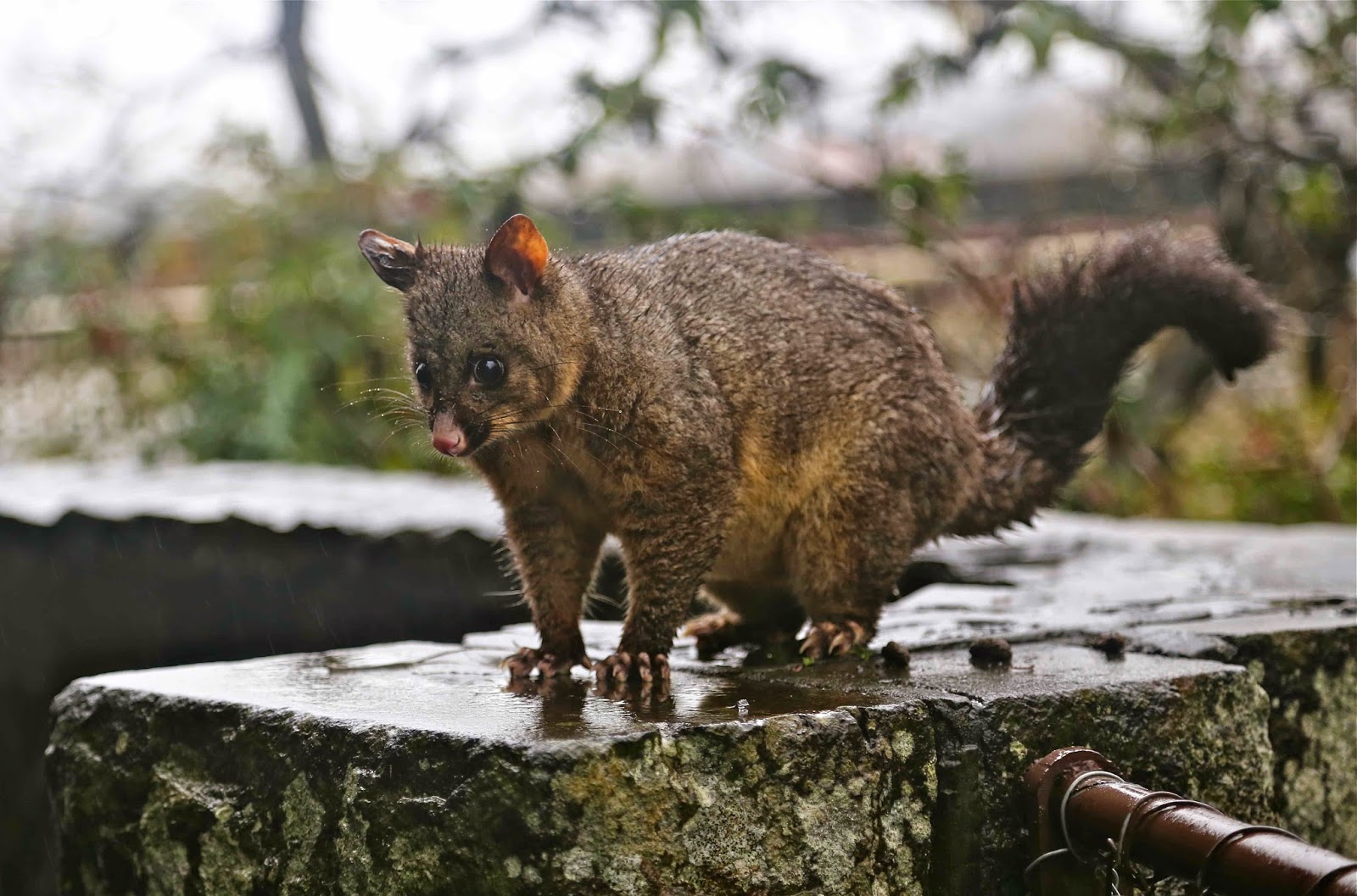
Soon enough it was time for the long haul back across the central highlands, dodging wallabies, paddymelons and possums, and trying to stay awake as I headed for home, starving.

Beautiful Mt Gell with a spotlight on her southern flank

Cataract Gorge, Launceston 2014

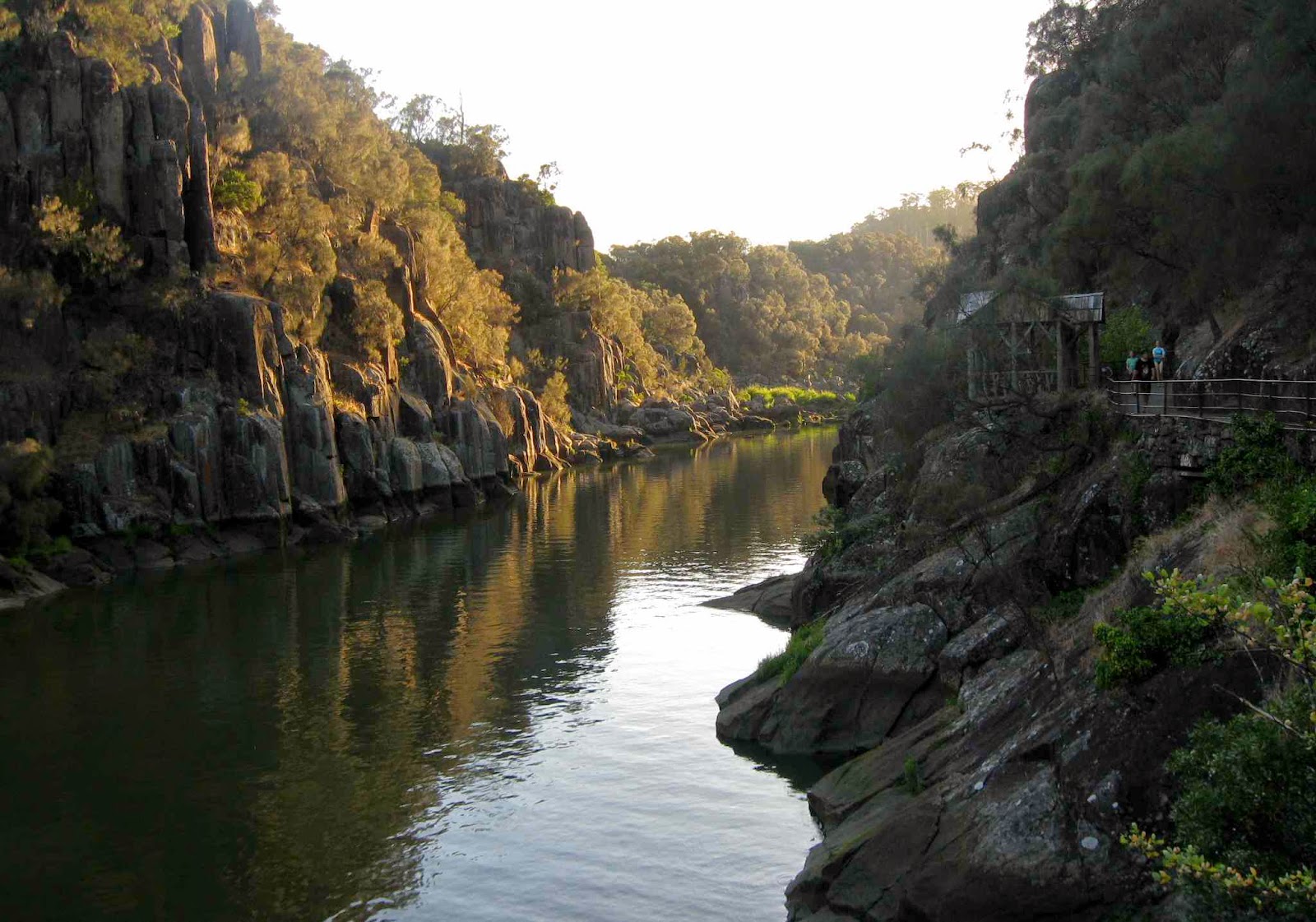
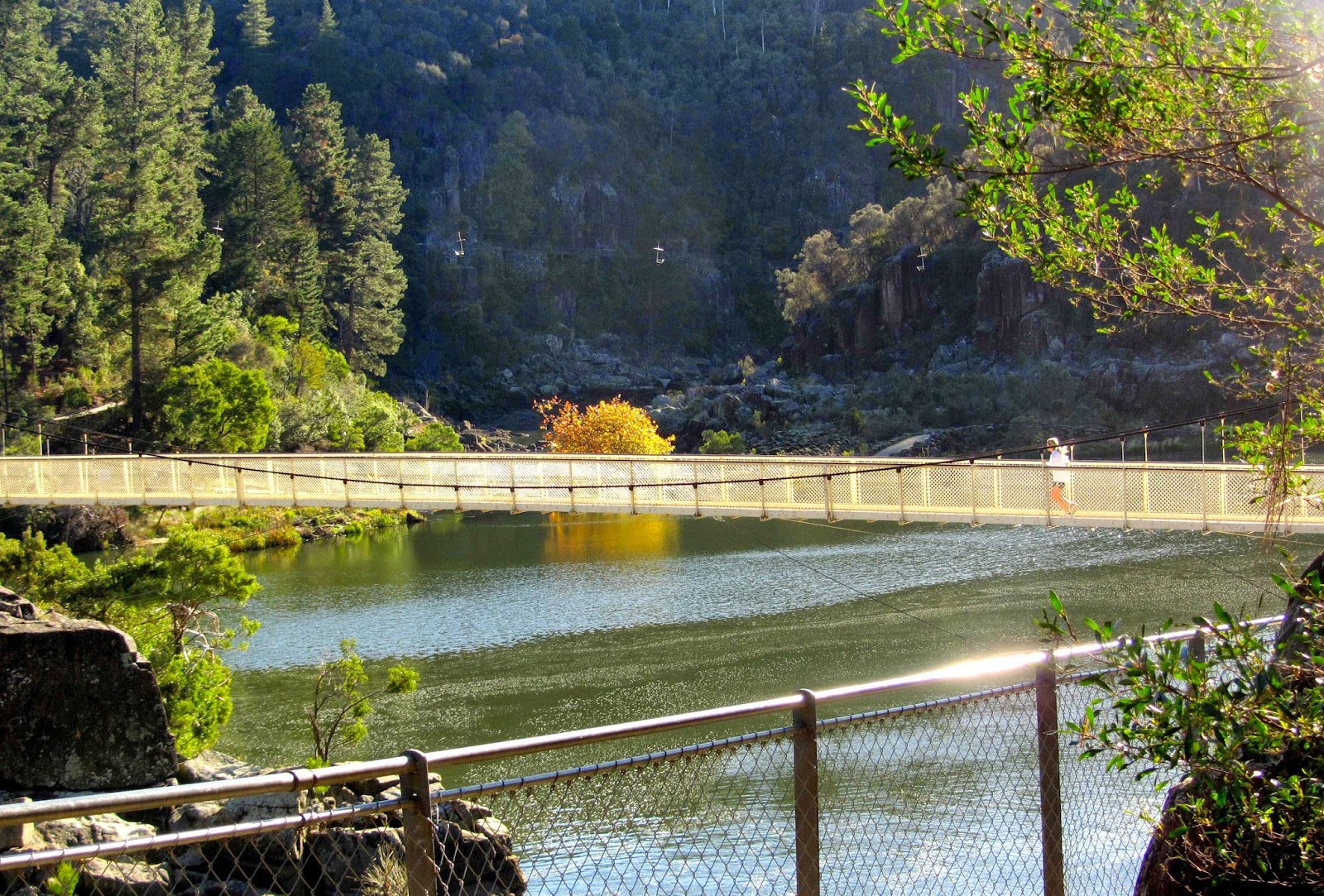
The gorge in tranquil mood

My mouth has been in pain all week, so much so that I – a loather and normal refuser of painkillers – have consented to dulling my sensory receptors so I can eat. I’ve been out of sorts and feverish: it must be a good weekend to play in the garden and with the dogs, have a break from driving and go running in the Launceston Gorge instead of walking.

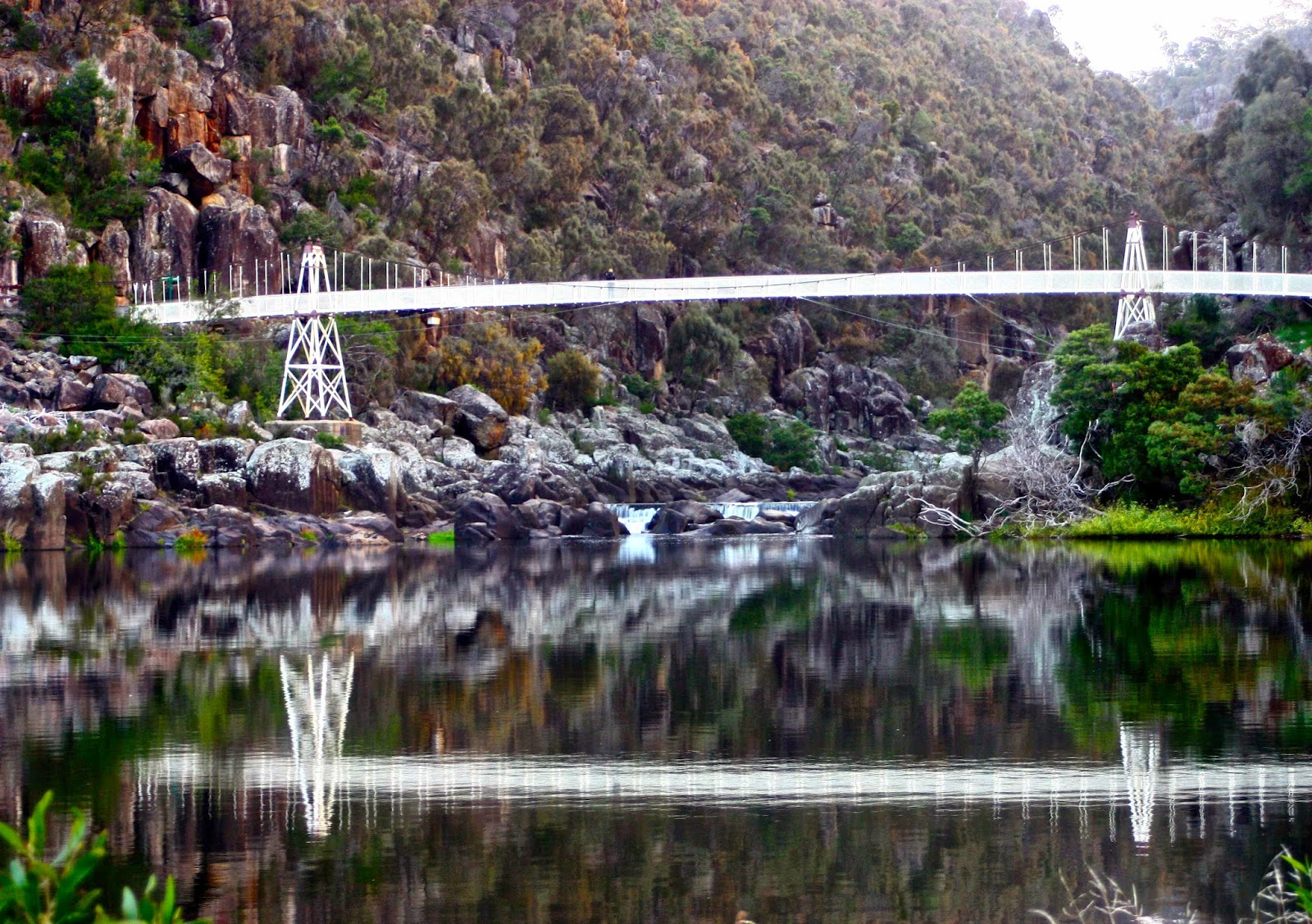
The suspension bridge at the Basin

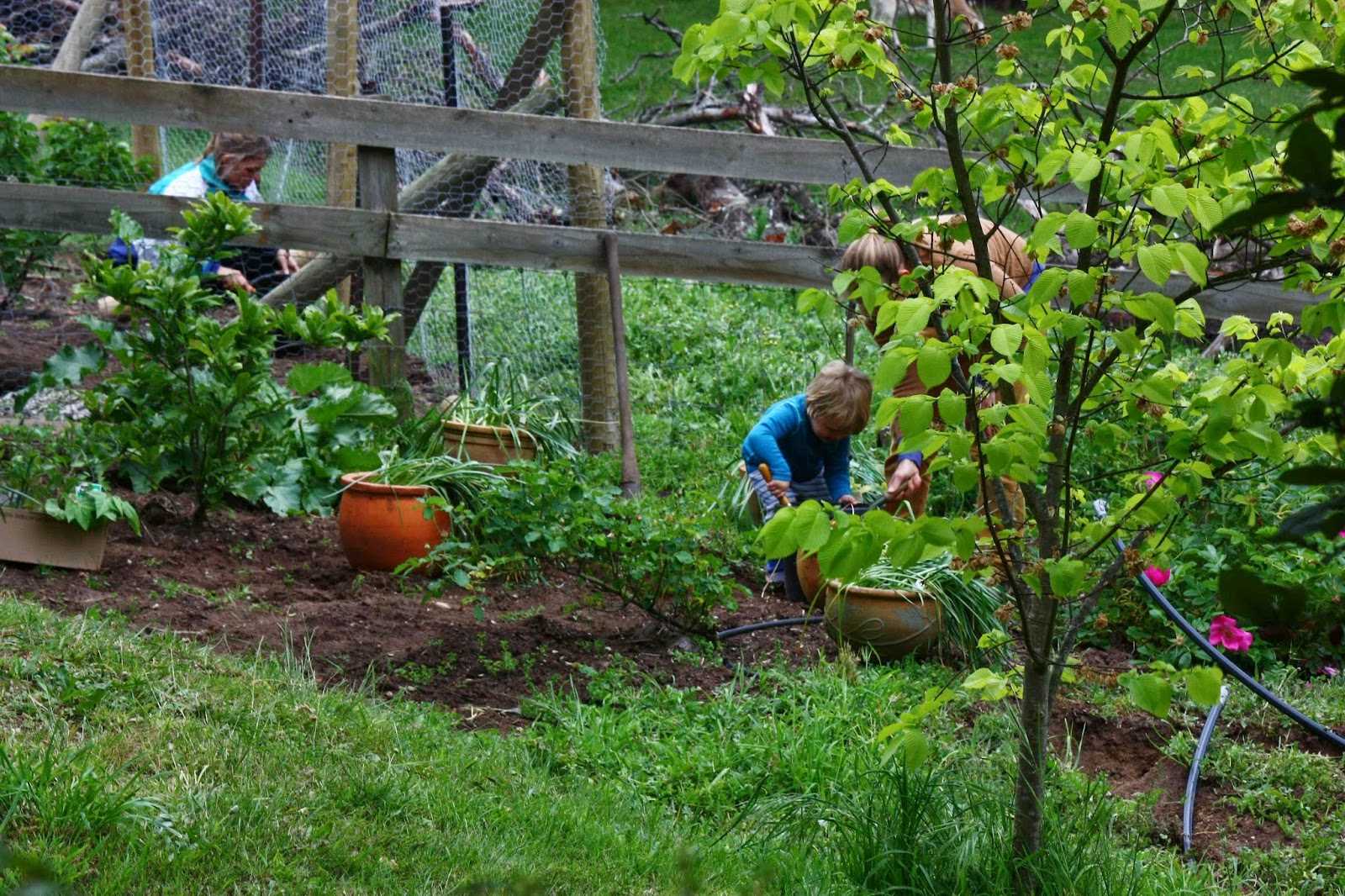
We pulled and tugged at weeds; I tilled the soil with my trident and combed it with my fingers so I could feel its texture and have proper skin-soil contact. I searched for worms and found too few, said “hello” to myriad narcissus shoots searching for the sky, delighted in the sight and smell of roses that have survived the recent heavy frosts, and spread huge mounds of leaves I’d raked onto the garden beds to help enrich the soil whilst keeping weeds at bay: earthy, elemental jobs that keep me in touch with nature and the fabric of life. I also mulched with branches we’d chipped – fallen or pruned from our trees – and with manure gathered from Harriet, Hilda and Sir Galahad’s contributions: we give our scraps to them, they scratch some and eat some and give us eggs and manure in return that we give to the plants to make new veggies, the scraps of which return to the chooks. Round and round goes the cycle of life.

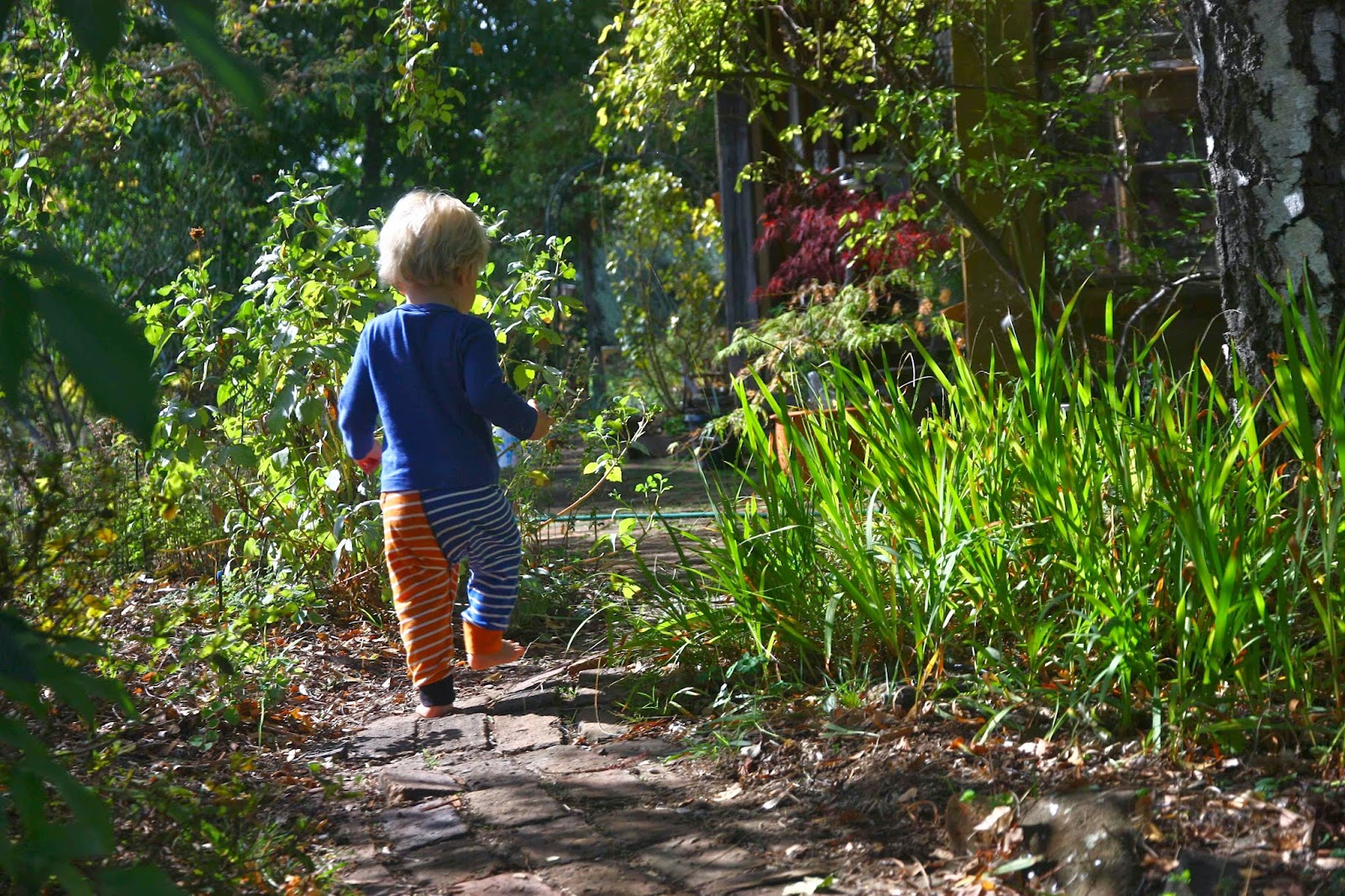
Toddler Gussy participates in the cycle of life while Elin, our Swedish visitor, gathers manure from the chook pen. (Photo taken November last year)

Gus marches an egg to the house

And we ran in the gorge – the beautiful Launceston Gorge with its emerald waters – past the bridge that, in the right weather, perfectly reflects the rocks that frame it. These rocks are always interesting, blotched with patches of lichen in browns, creams, olives and rusts, and often topped with rich green mosses, oozing life and zest. Ducks and swans cruise around here. In summer, we even see seals playing or sun baking.

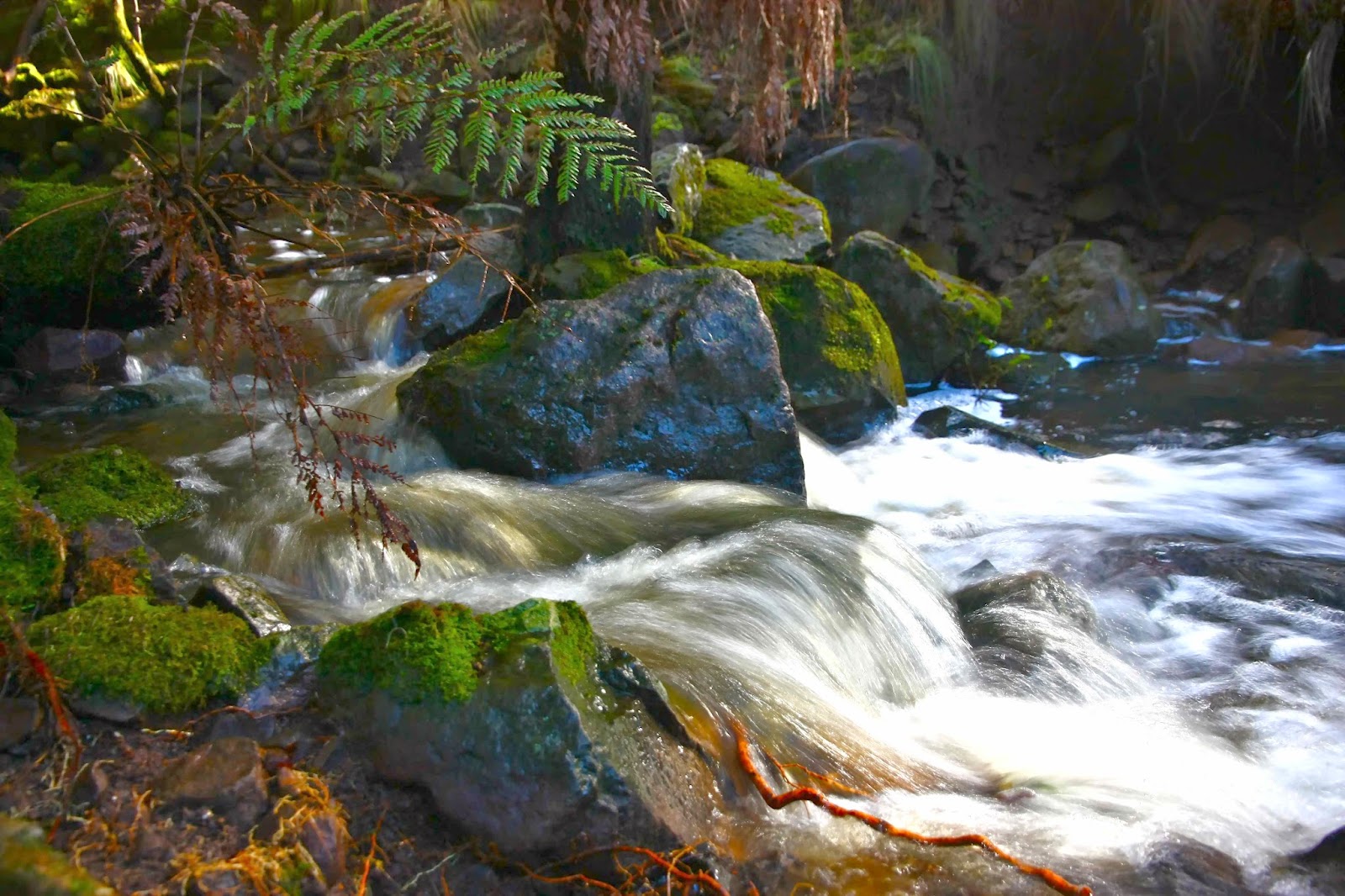
As you run higher, the river narrows and becomes a series of white ribbons of light, cascading over the taupe grey rocks, the water funnelled and directed by the shape of the rocks in its path. Eventually, if you run even higher, you reach an open area called ‘The Basin” – where rocks and bush form an amphitheatre around a luxurious expanse of water, where we all used to gather on warm evenings or hot weekends to swim in a natural setting, light shafting in between the rocky towers. Teenagers jumped off dolerite columns; we all rode logs of driftwood like horses, trying to balance on them; there was an atmosphere of community health and enjoyment … and then our council sold its soul to profit, failed to control the big business that should deal properly with our sewerage, and now no one swims in those polluted waters except uninformed tourists who must wonder why they swim alone.

My favourite tree, a linden.

After the Basin, the path swings away, continuing upstream. In fact, one can choose from a variety of paths, but my favourite pursues a course that has the stream down below me to my right, but still audible and visible at all times. I run until I reach a second suspension bridge, higher up, and then have a variety of tracks to choose from that bring me back to the Basin a different way, through appealing place names like Dead Man’s Knoll or Snake Gully Head, possibly intended to keep tourists in the nice safe manicured section, out of harm.

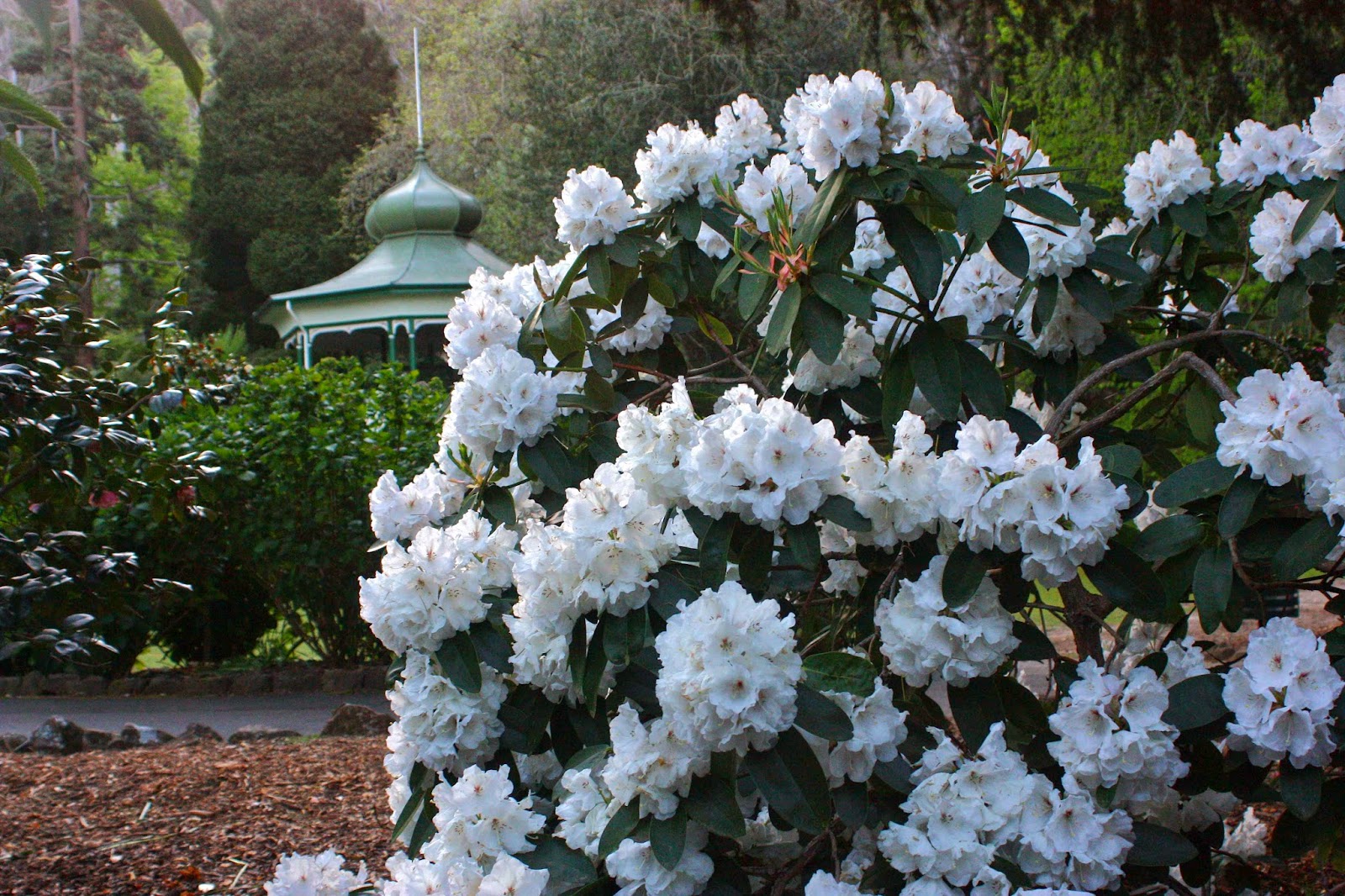
The gorge is a riot of colour in spring, with huge rhododendrons the size of houses catching the sun’s rays

Sometimes when I run, I am amazed to see people walking or running, completely zoned out. You smile and nod, but they stare into space as they go past, not noticing that another human has tried to interact. As they can’t hear words like “hello”, or “Excuse me” when you try to get past them (they’re often hard to get around), and can’t see a smile on a face, then I can only assume they also fail to hear and see the sounds or sights of the gorge. What they’re missing! The sound of the river trickling or of it rushing furiously in flood, the sound of the little birds playing or of the wind in the trees.  Nature’s music will always sing to my heart above metallic noise.

My daughter running at the gorge

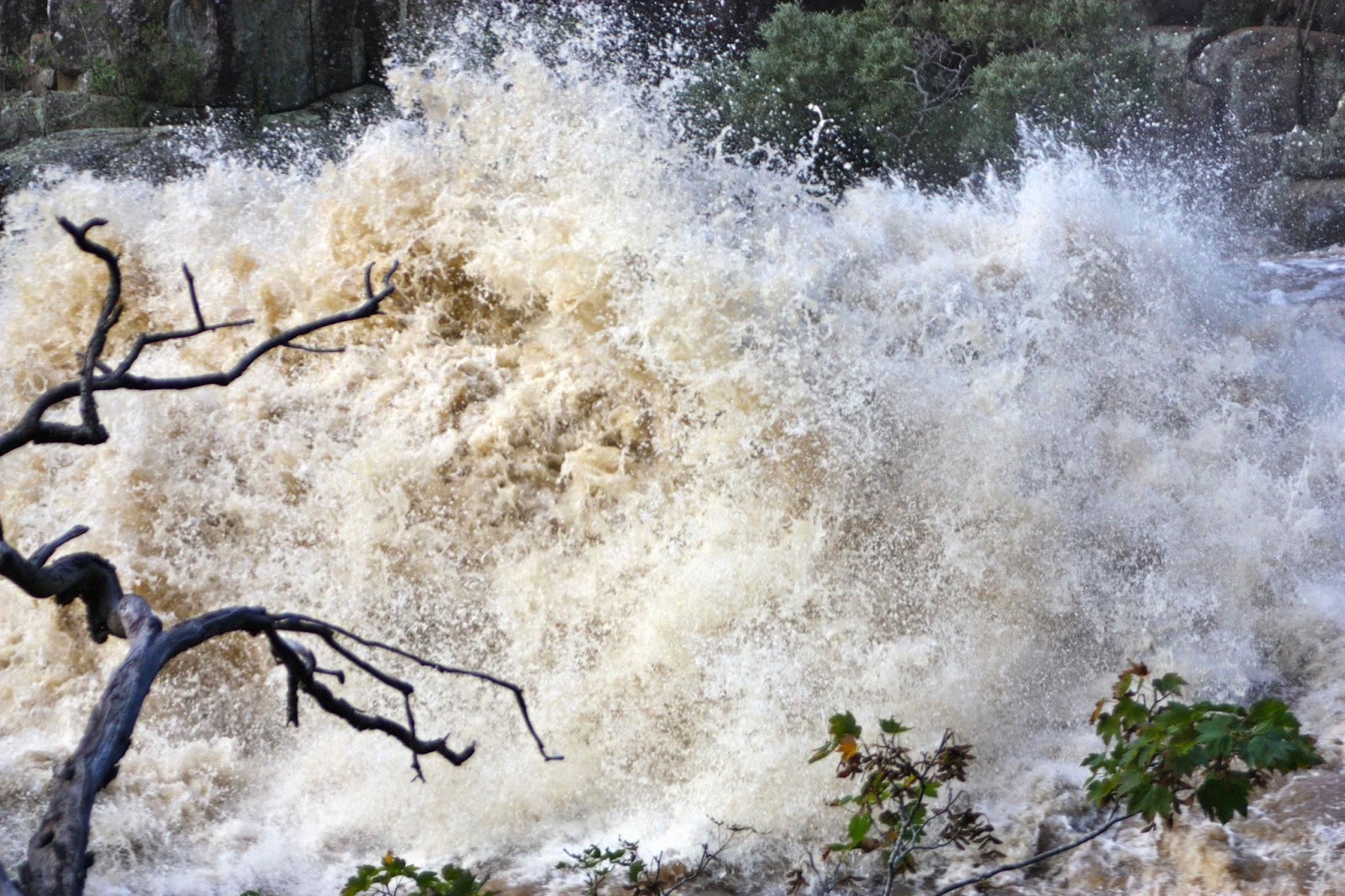
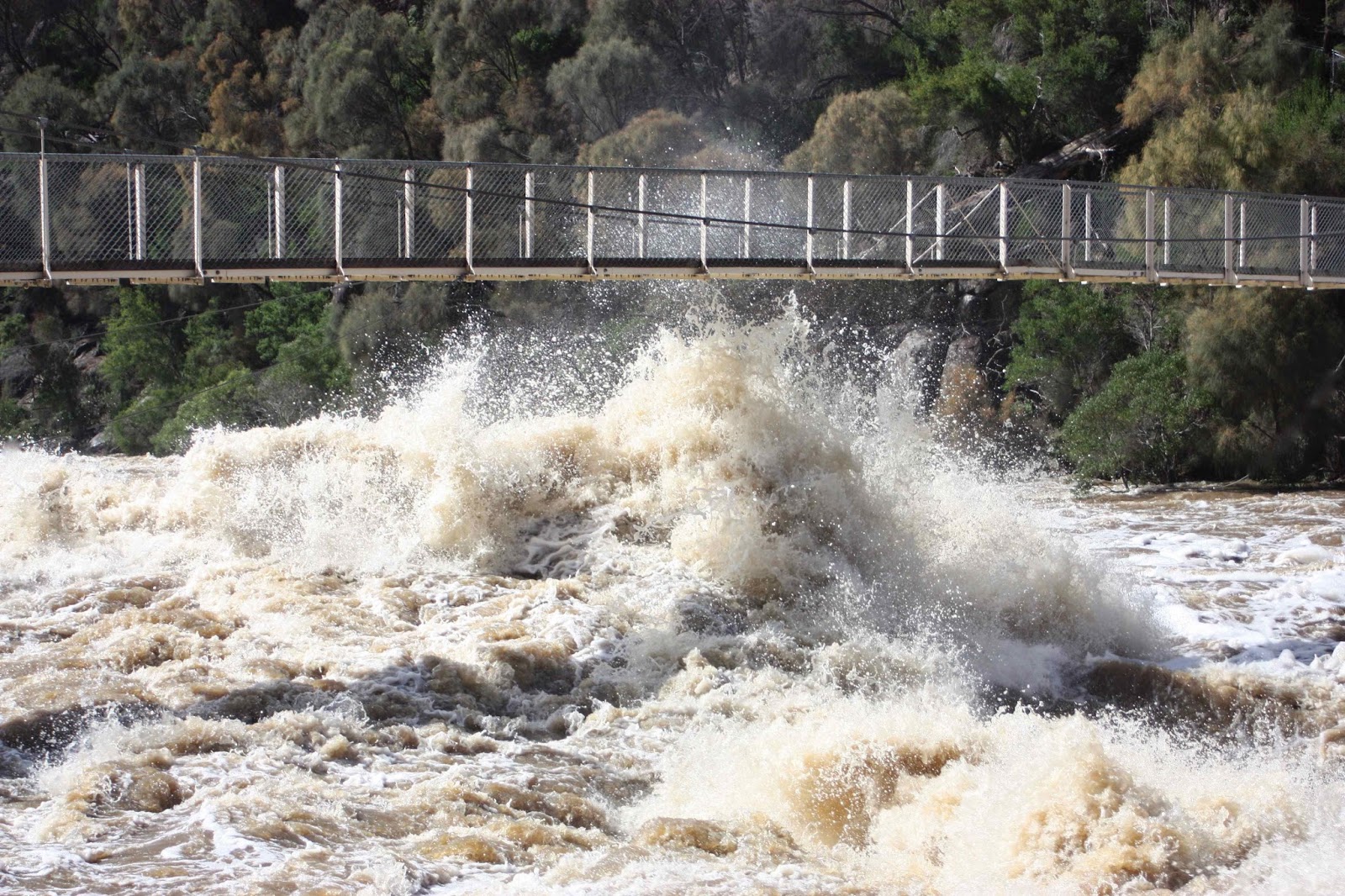
Sometimes the waters of the gorge are the merest trickle, quietly seeking the larger junction of two rivers that combine to form the main harbour of our town, but other times the waters are a torrent to rival any mighty flood as unbelievable quantities of it rush down the narrow space between the two walls of rock flanking it, in unchecked, wild fury. Leaning over the railing, I can stand mesmerised for ages taking in my own small size in the presence of that natural force. In 2016 there was a tremendous ands wonderful flood, but instead of allowing the denizens of our town to witness this spectacle, and to perhaps learn a  little of humanity’s place in the presence of vast nature, our timorous council locked us all away lest people get their toes wet and moronic judges allow them to sue council and get away with it. A society that fails to think beyond litigation denies its members a full experience of life, and thus reduces the possibility that its younger citizens will ever learn their place in the natural scheme of things.

Paddymelons, wallabies, possums and peacocks play here, mostly undeterred by admiring visitors (and regulars). I love to see the first two hopping across my path, and enjoy the sight of mama peacocks attending to their young, teaching them how to forage under the rhododendrons.

Today was winter, crisp with sunshine, and the glean today came from the turbulent water catching the angled sun as it forked over the rocks below. The gorge just happens to be positioned such that the early and late rays light the water but leave the sides in shade, making for maximum contrast effect of the play of light on the waters. Everything sparkled today (but, as usual, I ran without a camera).

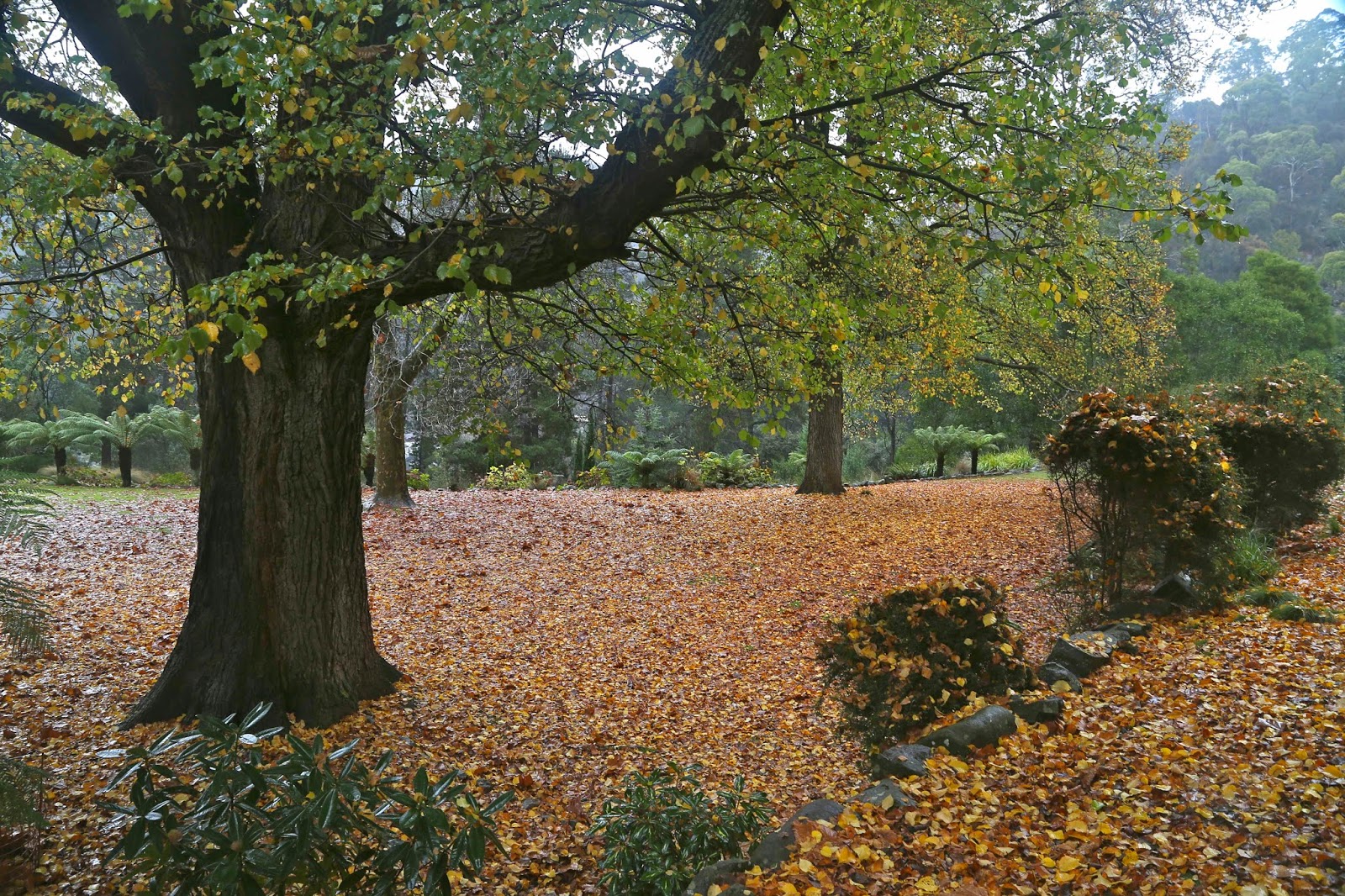
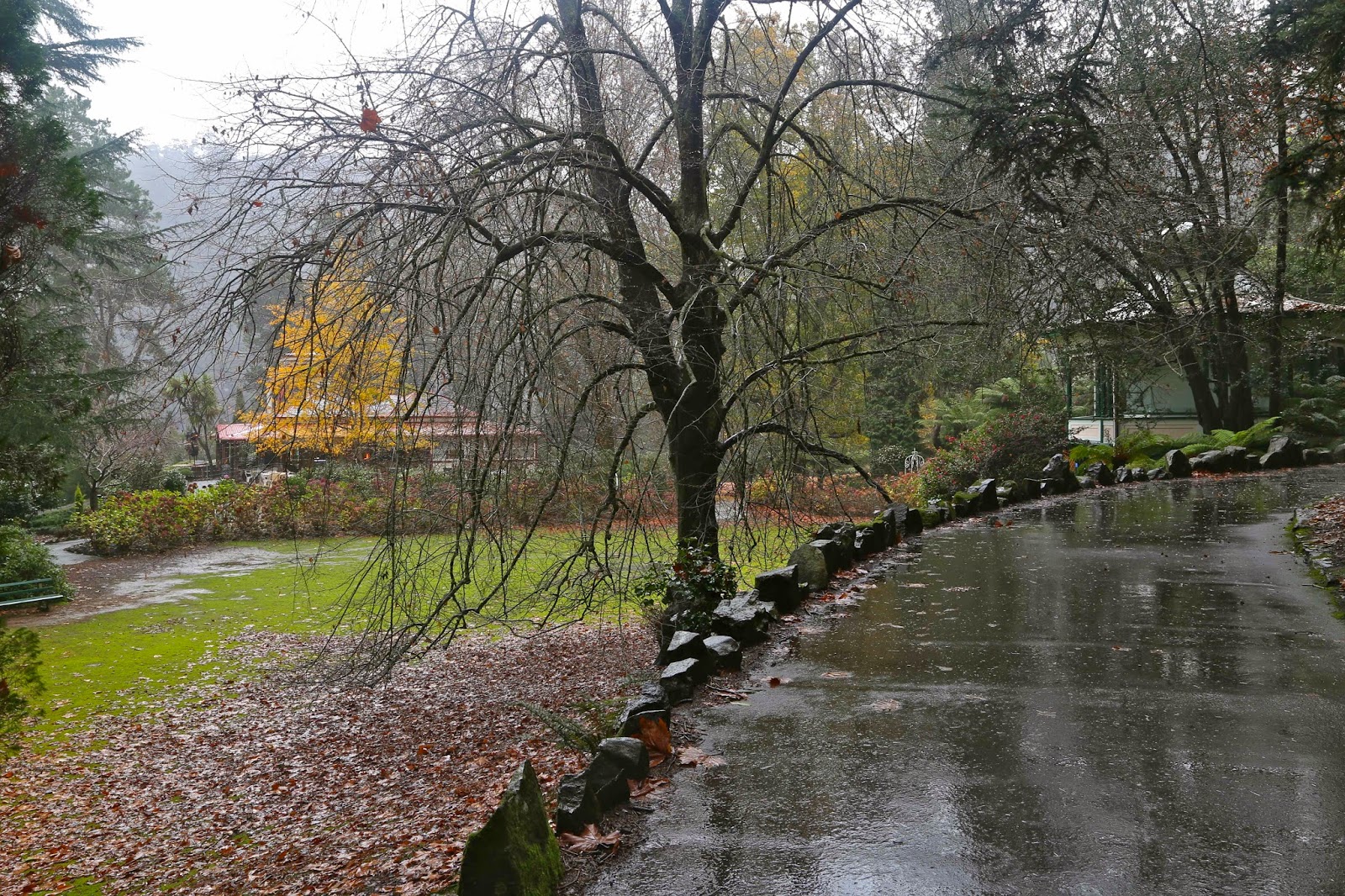
Last week, the gorge was in autumnal mood, all misty moisty and glistening. Here are some photos of that – I returned at lunchtime with my camera to record it.

It’s easier to count the days I don’t run in the gorge than the ones I do: I don’t if I’m off bushwalking or travelling. If I’m sick, I run slower and / or shorter. If I’m dying, I walk, but I’m still there, daily imprinting the beauty on my mind, noting each pool and rock and cascade, the tunnels of trees and all the other shapes and colours I love there – and smiling hello to the few people who still register another human as they go by; those ones smile back.