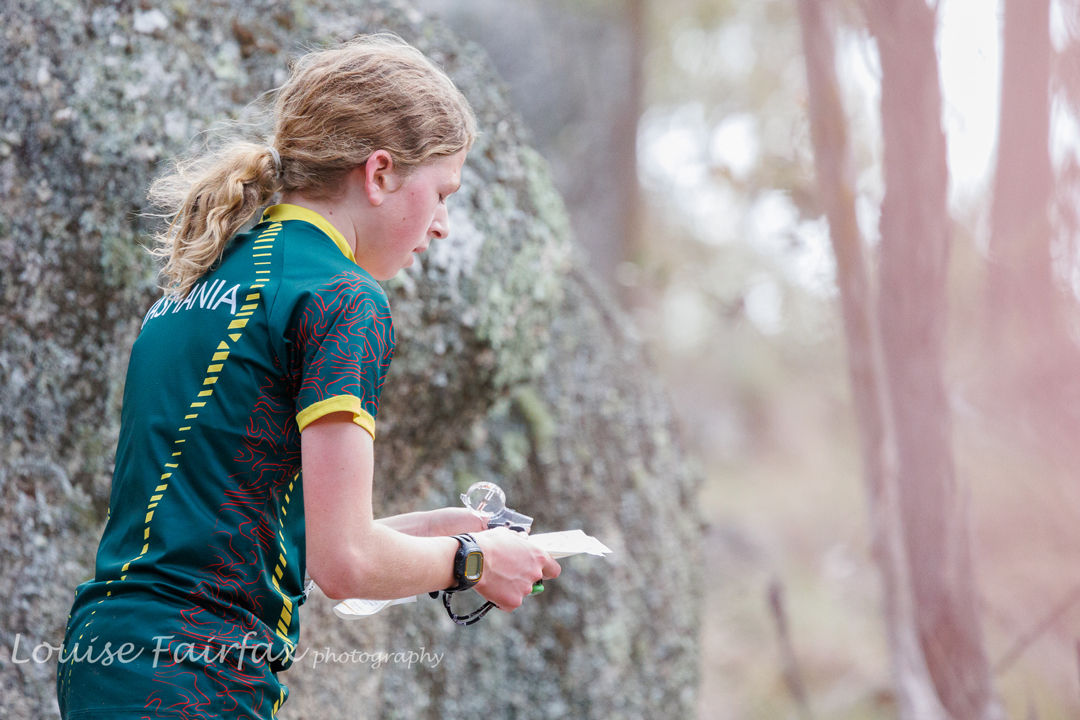
Orienteering Aus Champs NSW 2024

Running, reading and sorting things out

From the moment I heard that the nationals were in Armidale,  I was excited. We lived there for five years, and both our children were born there. Of course I wanted to go – but also, of course, I wanted to compete in the nationals anyway. The Australian Championships and the Australian 3-Days are the two big events of each year, and the two events that determine your national ranking. Quite apart from having the best races and competition, giving great excitement to those of us who love this sport, they are also the best chance to catch up with old friends from across the years, as they cast the biggest and best net.

Eastern rosella. I managed to shoot quite a few birds in between racing
Eastern rosella

I had been careless in two of the three days last Easter, and had paid a big price, being excessively lucky to finish on the podium. I was thus pretty focussed with regard to the nationals, wanting to redeem my lost self-esteem and prove to myself that I could do nice, clean races again. Winning would be nice. However, right at the last minute w.r.t entires, my old friend-but-competition-foe from the 1980s, with whom I have had countless exciting experiences, fun shared times on national squads, teams and training camps, and endless races, Jenny Bourne, entered our age class. Jenny is a force to be reckoned with. She has won four Australian elite titles, and four Australian 3-day elite titles, as well as at least one (if not more – I can’t find out in google) World Masters title in orienteering. I have won many World Masters titles, but they are in sports other than orienteering, and that’s what we were to race in.
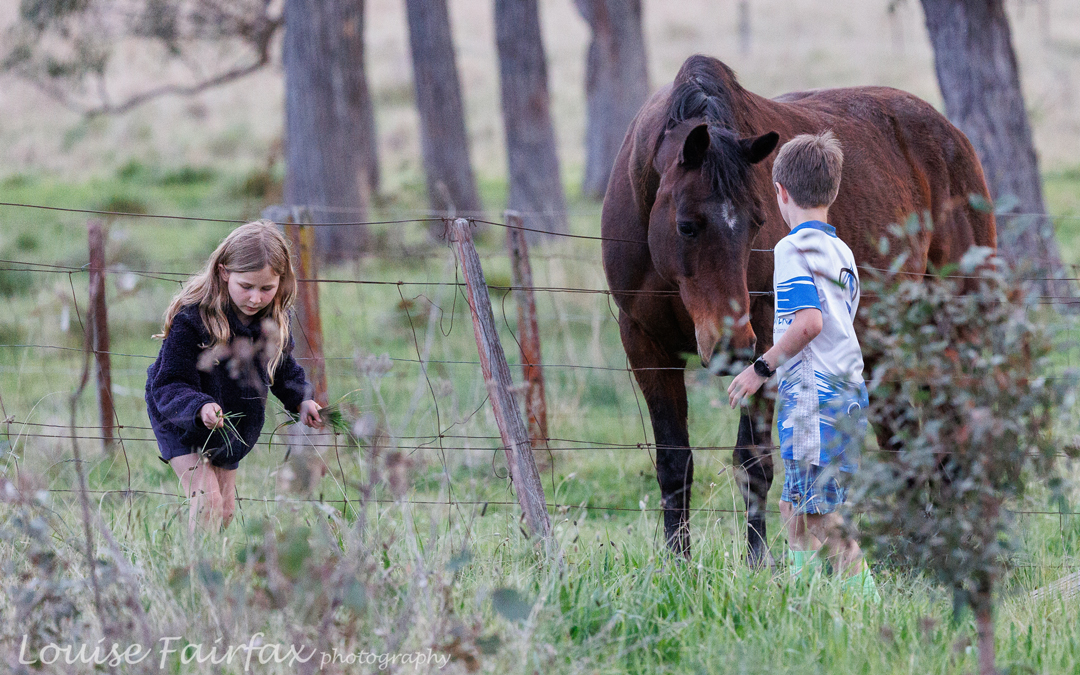
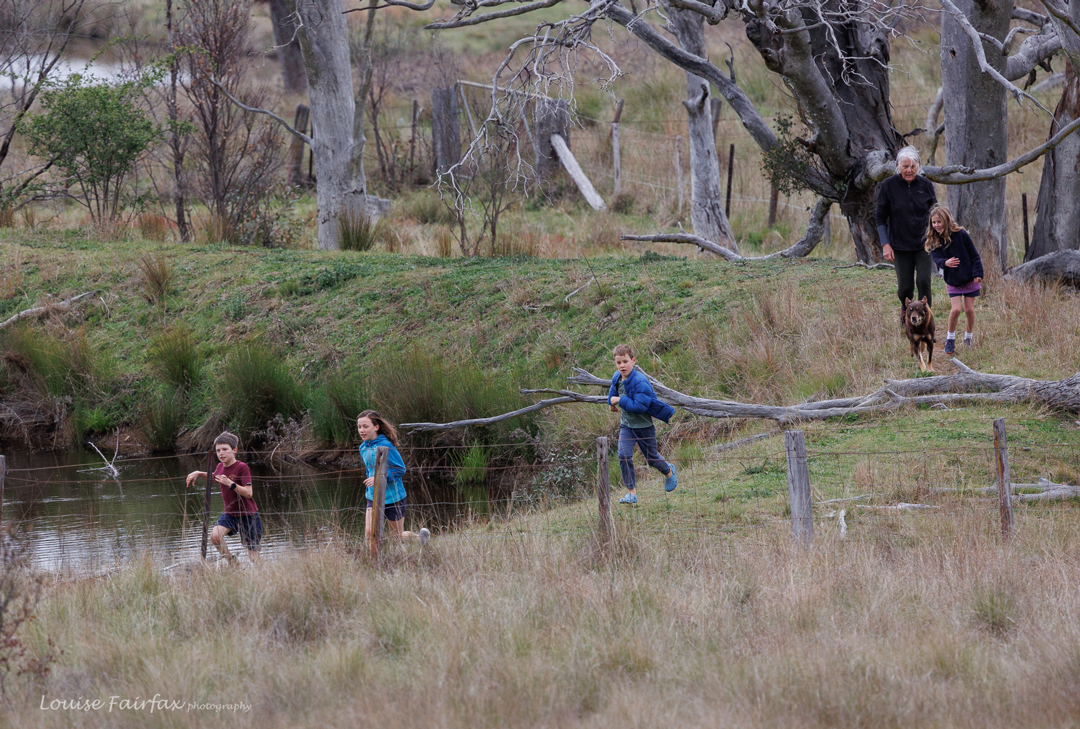
After racing, it was fun to spend time on my friends’ farm
Farm fun. The kids are obviously exhausted after racing.

Given that I thought winning would be nice, I thought I’d have a much easier time of it if I ran an age class younger than my own (yes, that’s how good she is; and yes, my inkling was correct when I compare times). I toyed with that idea for a few seconds, but decided that was the coward’s way out. So, I stayed where I was. It was gong to be a battle royal, and I would only do well if I ran my very, very best race, and even then, Jenny would probably beat me. Also in our age class was another friend from competitions in the 80’s, Sue Key, just back from getting in the A-finals of the World Masters. (The Key family is the “Jess Fox” family of orienteering.) Yes, the same old three that battled it out forty years ago were to repeat the encounter this year. Not surprisingly, we rather dominated the podium when medals were being handed out. I find it absolutely wonderful that three of the top elites from the 1980s are still competing, albeit now in age class. (Others from teams of that era are also competing, but in younger age classes). Thus I caught up with heaps of these friends. It’s such fun to see them again. Very, very few of us have dropped out.
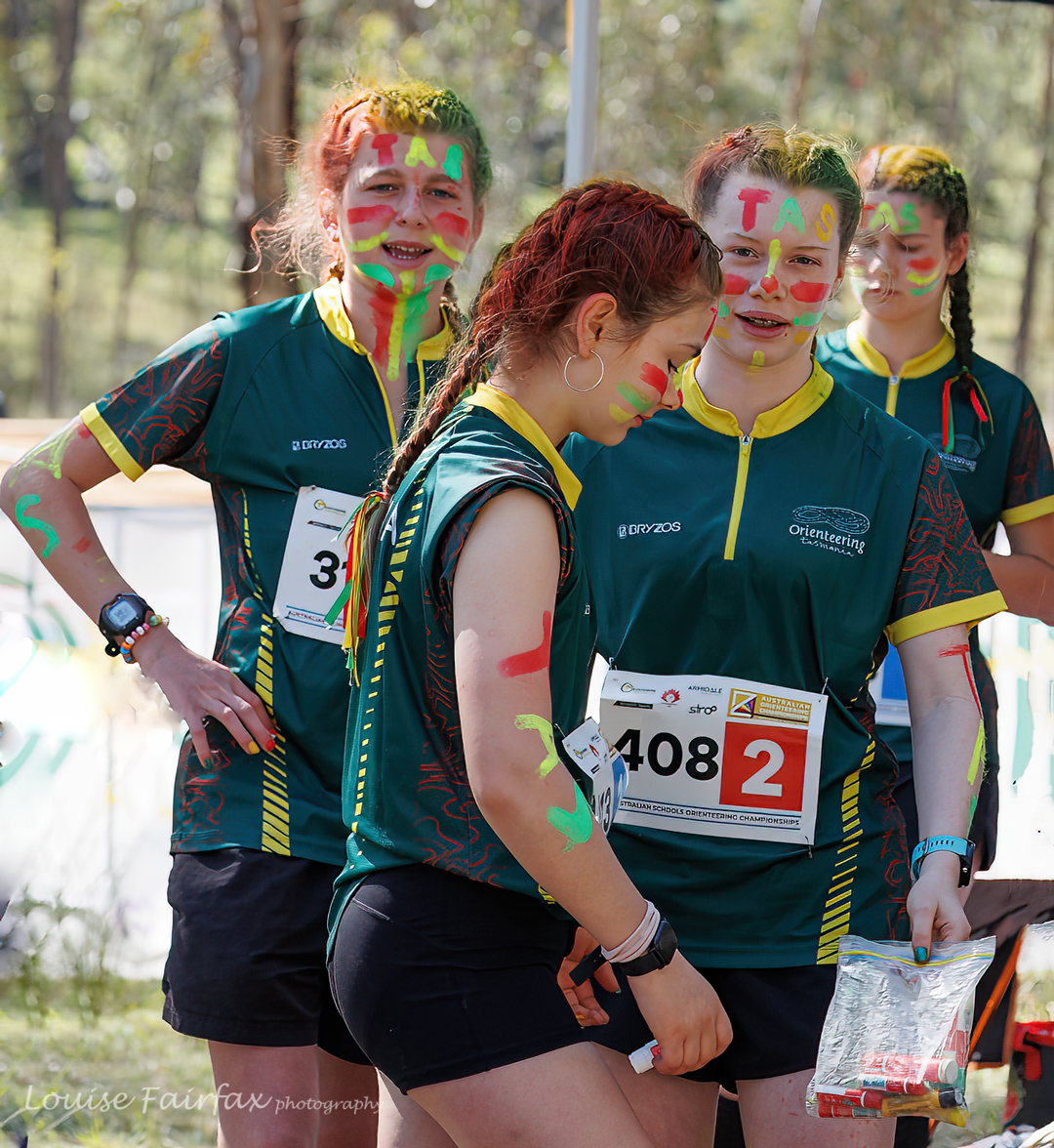
Getting painted up for the highlight of ASOC: the relays.

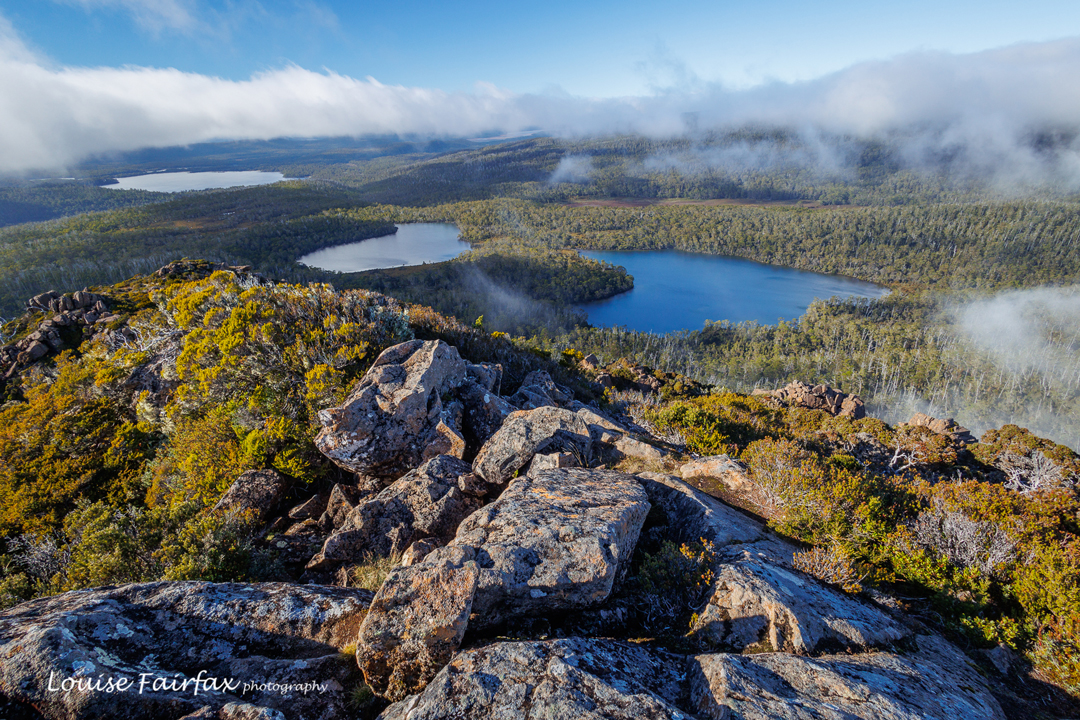
Sprints were conducted on campuses in Armidale (TAS and UNE). The main bush races were on a private property called Glenburnie. This setting was magical in extremis, especially for a granite freak like me. I don’t quite know why, but I have a real love affair with huge granite boulders. Looking at the tiny tots (1-10 year olds) crawling up and down boulders twenty times their height, I can see other granite freaks in the making. Controls tended to be hiding behind these boulders. After the race we all stood or sat around, eating, chatting, waiting for other family members to finish, and just enjoying the scene of open eucalypt forest littered with shapely giants of soft grey.
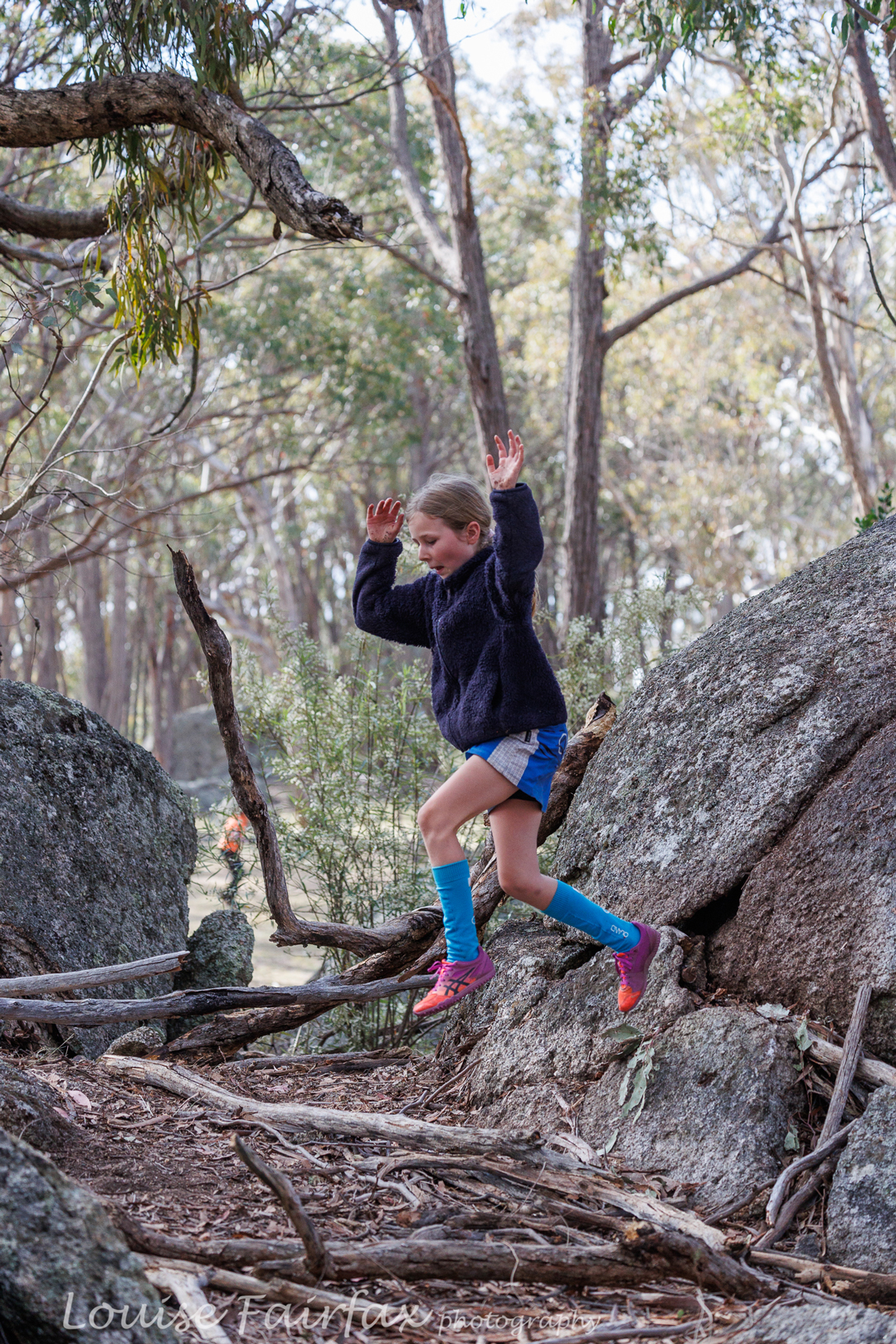
Having fun on the boulders after racing

As with other big events in Orienteering, the purpose of doing races is only part of the story. Nonetheless, with the nationals, if you do all the events, you complete seven long-distance races, four of which you really care about, in nine days. Somehow, it gets done.
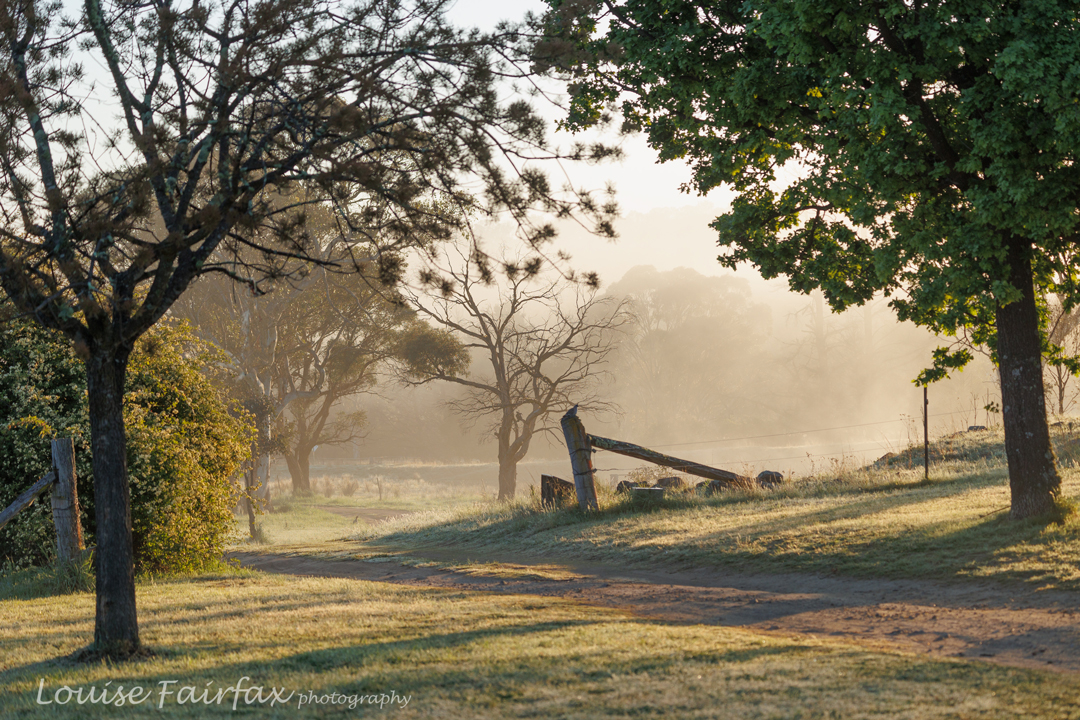
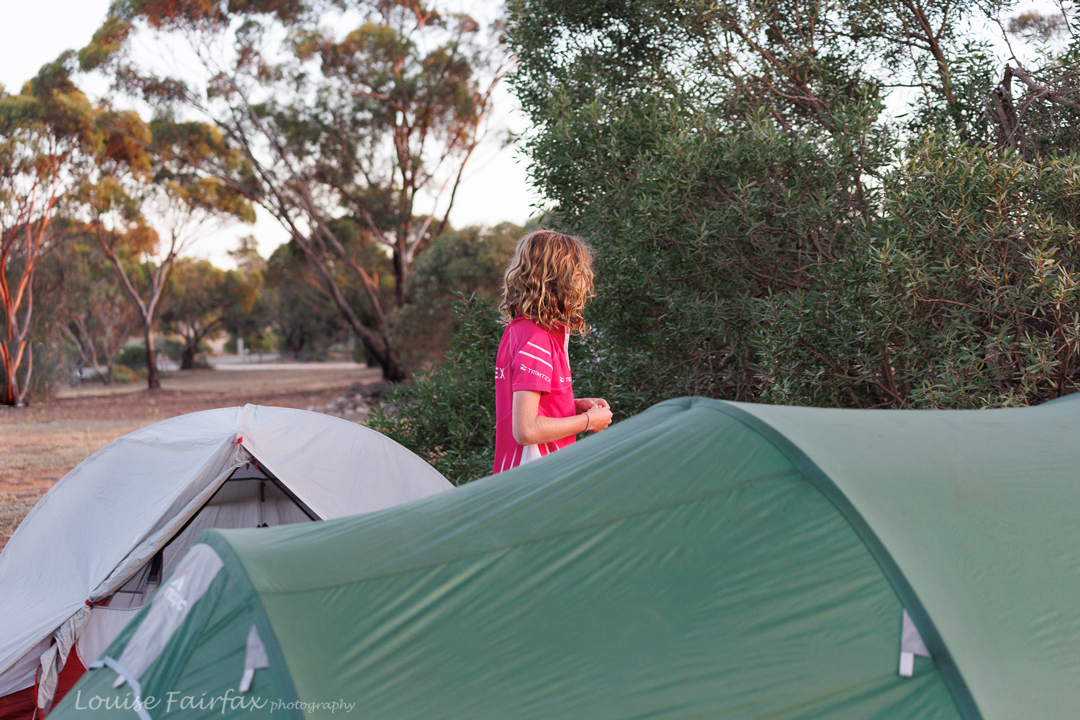
Mornings were often misty. I had fun photographing while the others slept.
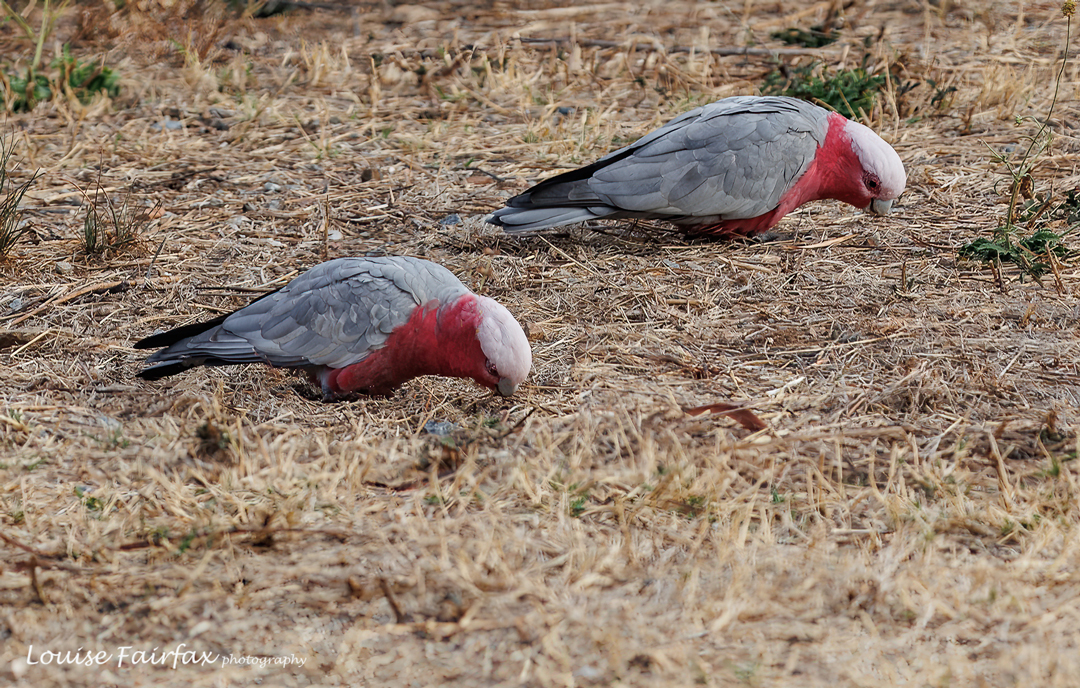
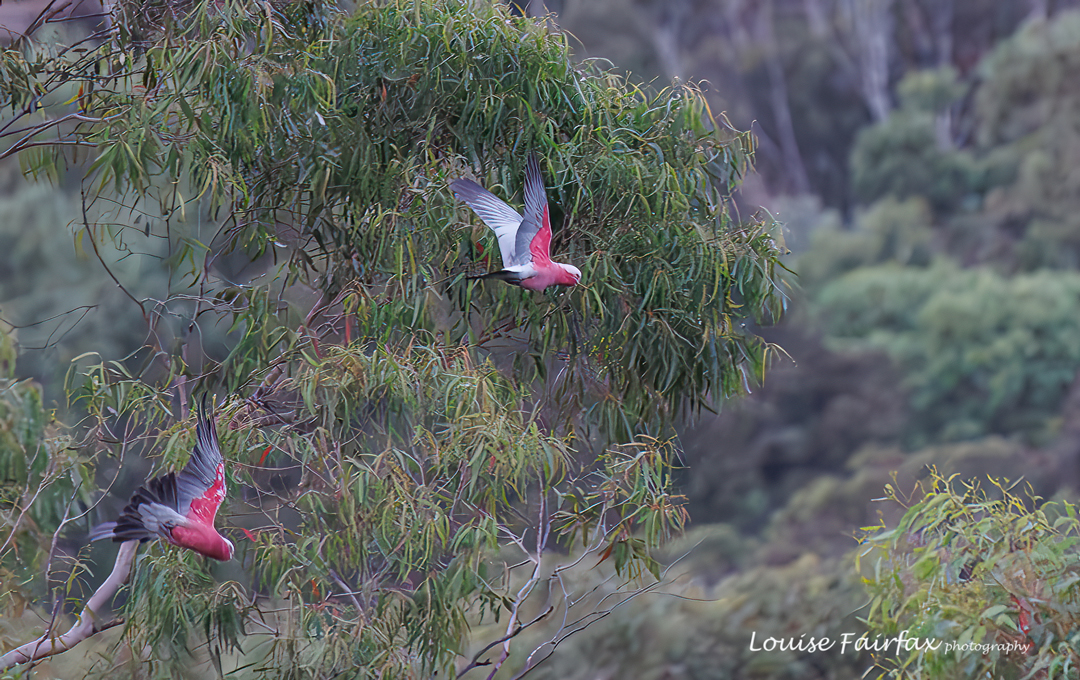
I never tire of seeing galahs

There were over 800 competitors, not all of whom did that many races, but most did, so that’s a mighty number of fit people in this sport. (Competitors’ ages range from those in W10, the youngest of which are usually 7 or 8, to the oldest, the cluster of people racing M or W85. They are aged between 85 and 90. Veritable gangs of M/W10N also go around courses, but with their parents to guide them; N stands for Novice. They still have their L-plates on, and some seem only recently to have left nappies behind. This category is not competitive, and everybody gets a prize [but not a prized medal].) The main races take part on the two bookend weekends. The three mid-week races comprise the ASOC (Australian Schools Orienteering Championships) and, for those of us not young enough to be on our state school team (or not old enough in other cases), there is a different event, this year called the Thunderbolt Classic. I always treat the mid-week races as training runs. The weekend races are what count. However, even so, all are distance races.
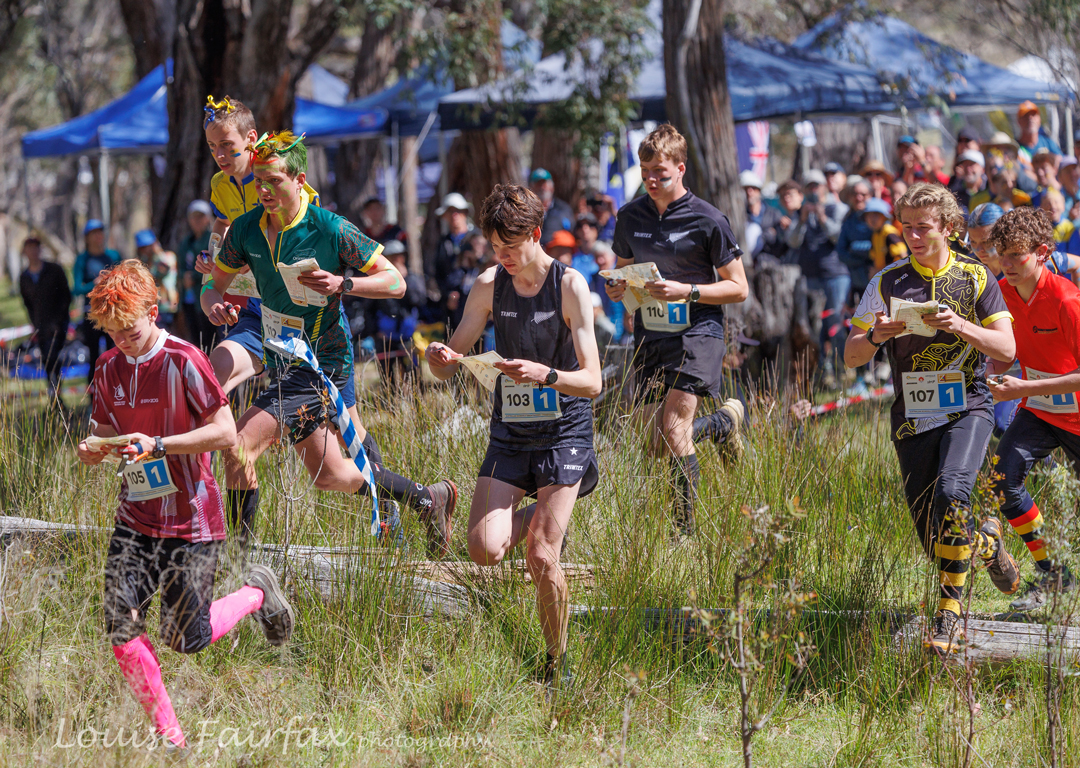
ASOC relays. They’re off. No, they can’t just follow. Nobody knows who is on their course … and then the courses divide anyway.

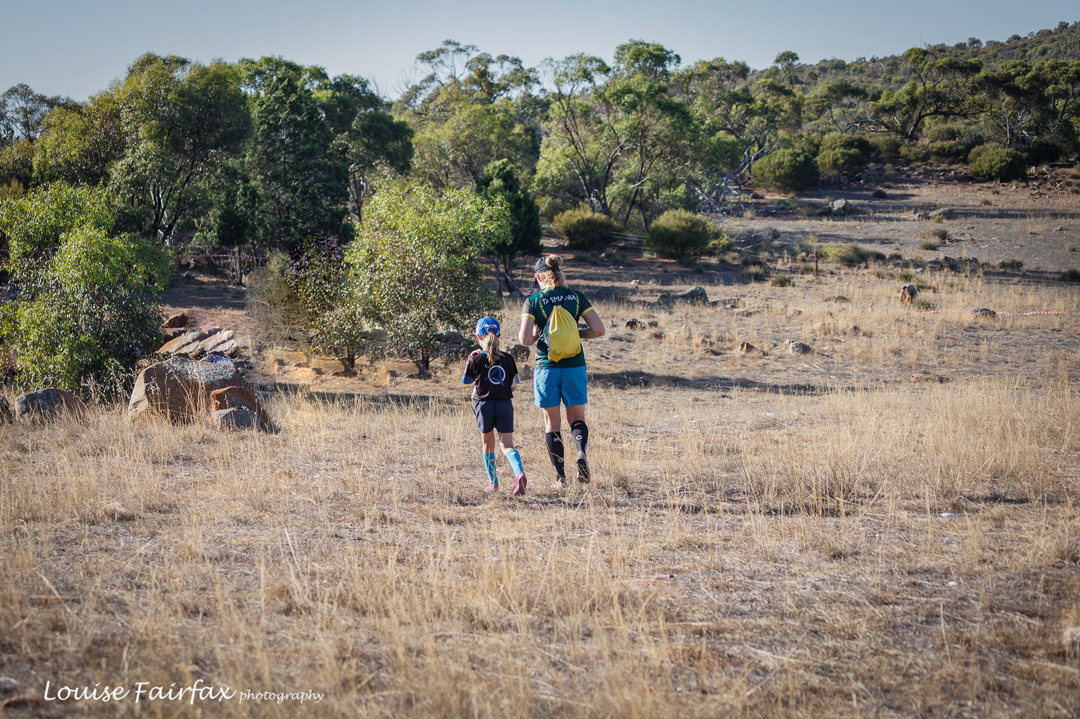
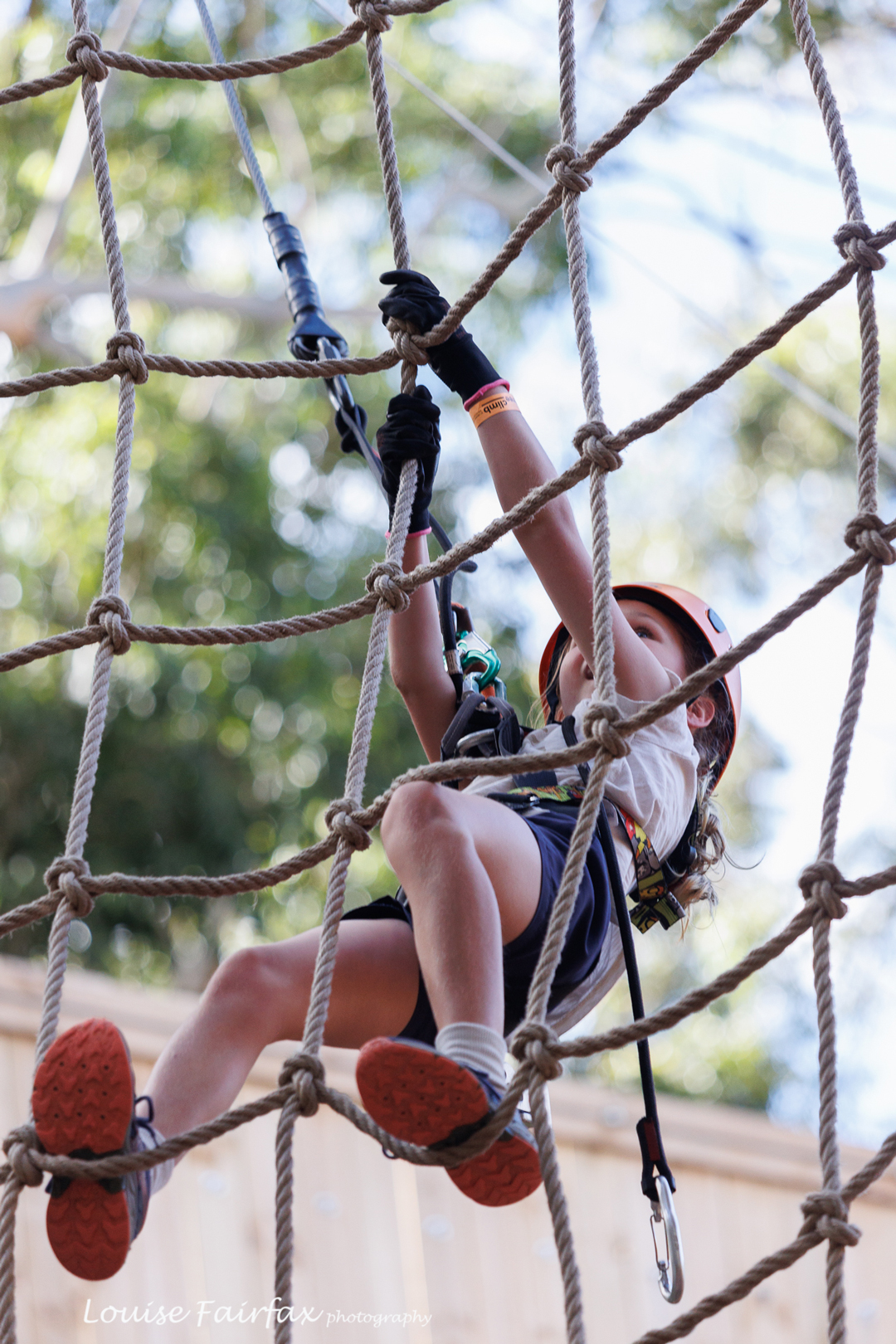
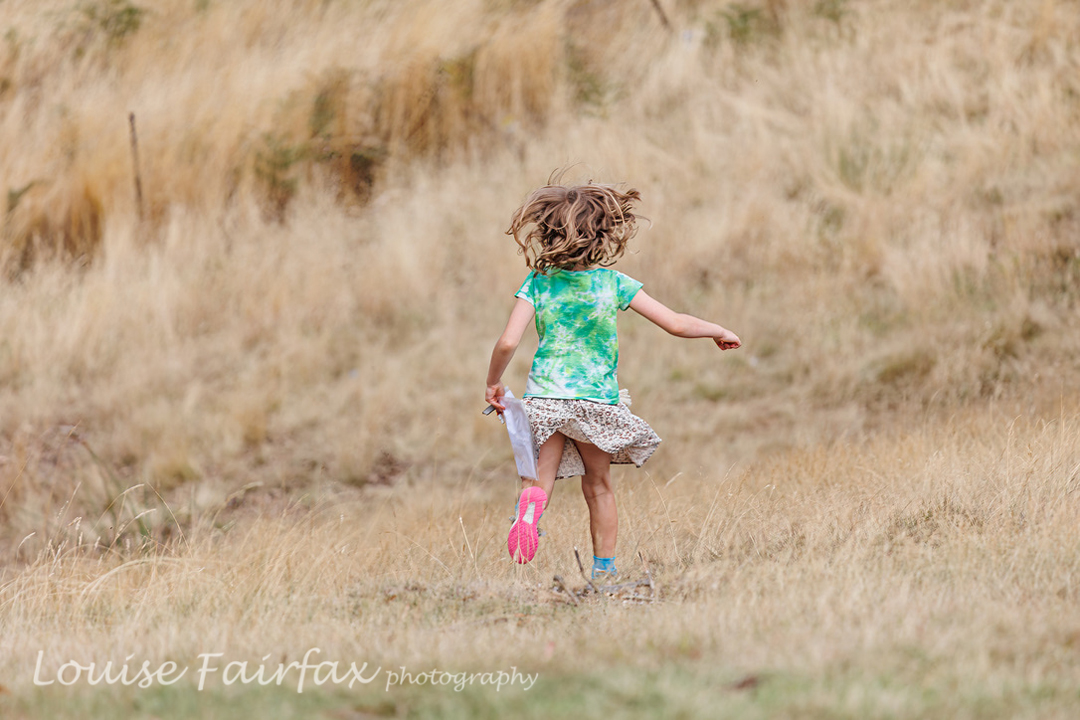
This year was little Abby’s first experience of the nationals, and it was Gus’s first year on the state team. How would eight-year-old Abby cope (a) without her mum, and (b) racing that often? She was perfect on both counts. All the kids were. The four in our group ( 3 x 8-year olds and 1 x 9) all raced each event and raced well. And for après-O they more than often ran up boulders or ran around paddocks. We visited a few watery places, but we also had times doing quieter craft work, playing cards or reading books.
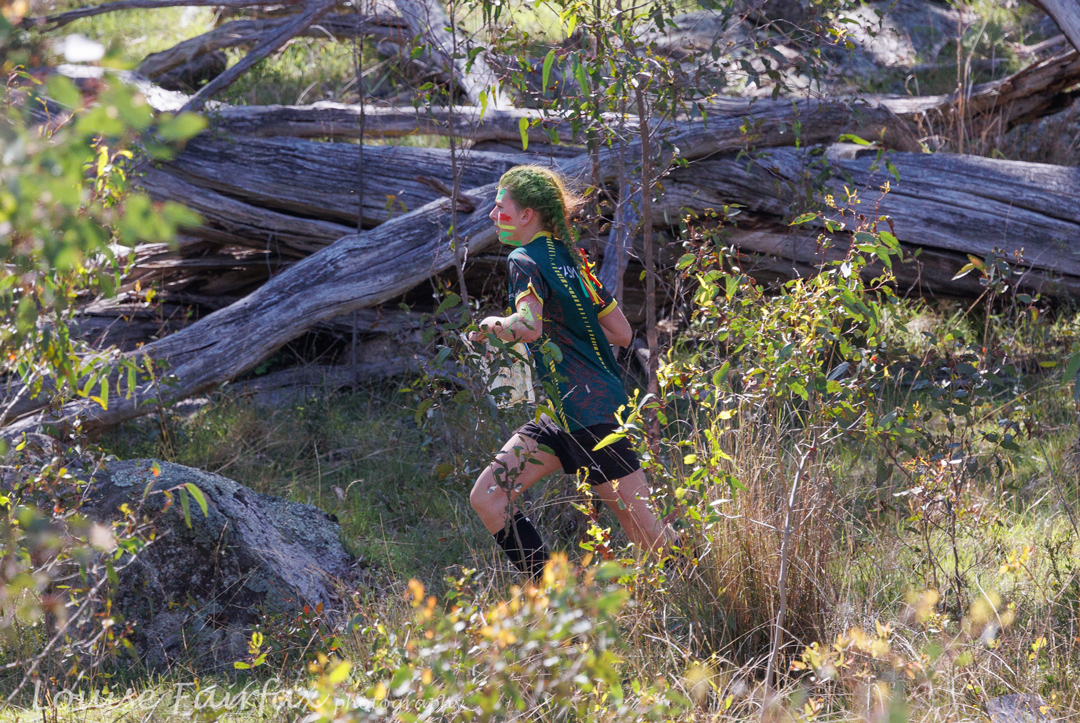
Competing.
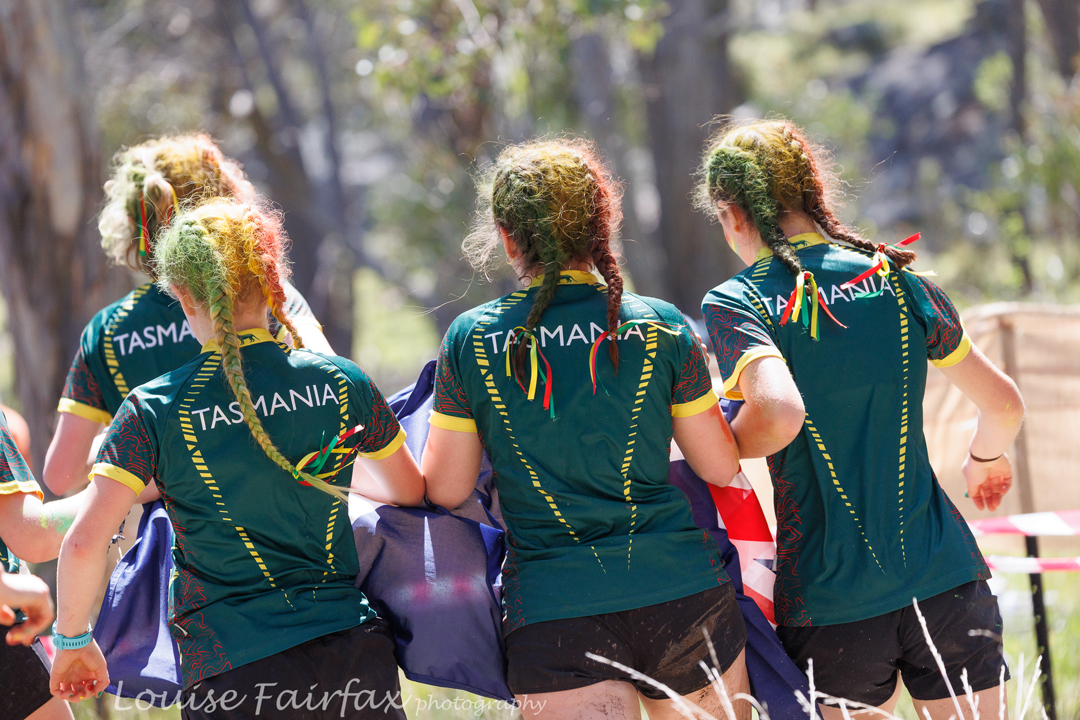
The last runner heads for the finish of the junior girls’ relay, followed by the state flag and her delighted team mates.

Gus was thrilled to make the team, and he told me he had a very happy time. The teams consist mostly of high-school students in two divisions: under 16, and over, and they do all the sorts of things that over-excited clusters of teenagers do (eg, seeing which state can fit the most team members into a telephone booth). A big highlight seems to be painting their faces with their state colours on the relay day – warriors preparing for war.

My first ever sighting of a Red-rumped parrot
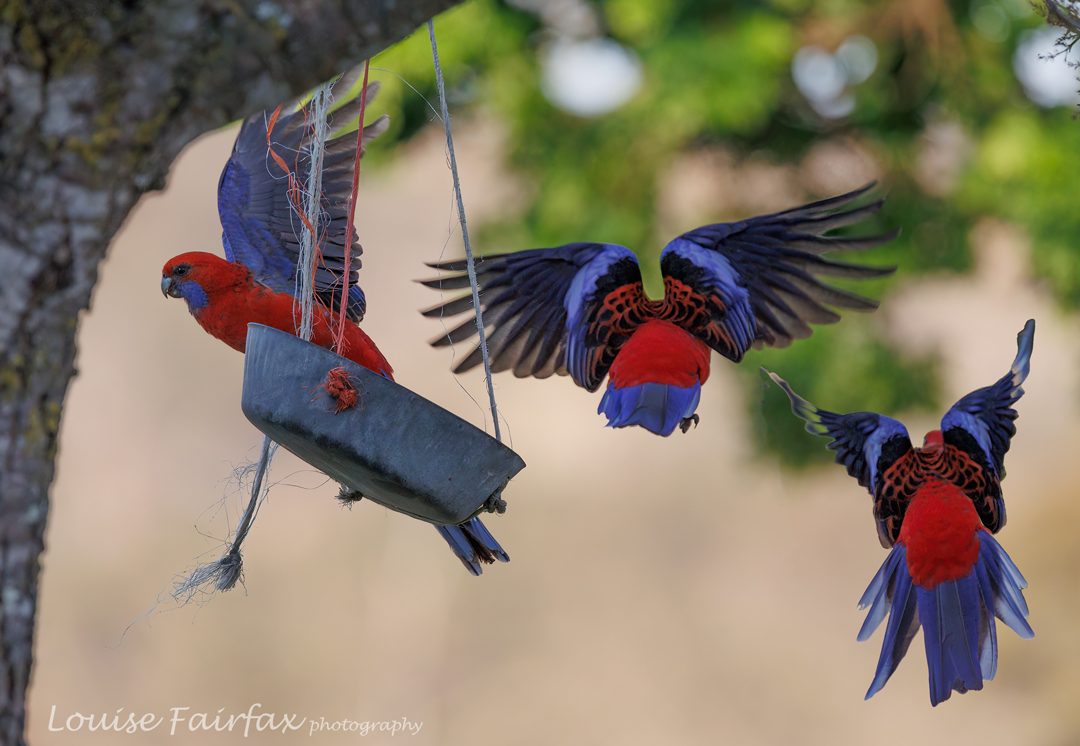
Enthusiastic Crimson rosellas around the feed dish

And now it is all over. I had 930 photos to process, and am relieved to have finished. I have almost an equal number of birdie shots as of orienteering. Many competitors report having post-O depression once the party is over. Little kids and big ones wave to their friends: “Bye; see you at Easter”, and they start preparing and training for the next important event. My legs are still pretty flat, but after two days’ rest, I am back, training for Easter, waiting for the next exciting battle with Jenny. Jenny, Sue and I will in all probability be the Aus team for our age group in the coming Oceania Championships. We are looking forward to that!

Hugel 2024 Apr

Every time somebody says they want to go walking with me, I feel so fortunate. This weekend was a family one: a three-generation special, and our chosen mountain (at Kirsten’s choosing) was Hugel. Great choice. I haven’t been there since my early days of Abelling, when I climbed it in glary conditions with a bad camera.  This time, we slept up high, nice and close, so we could linger on top until the light gave us glorious conditions for our descent.

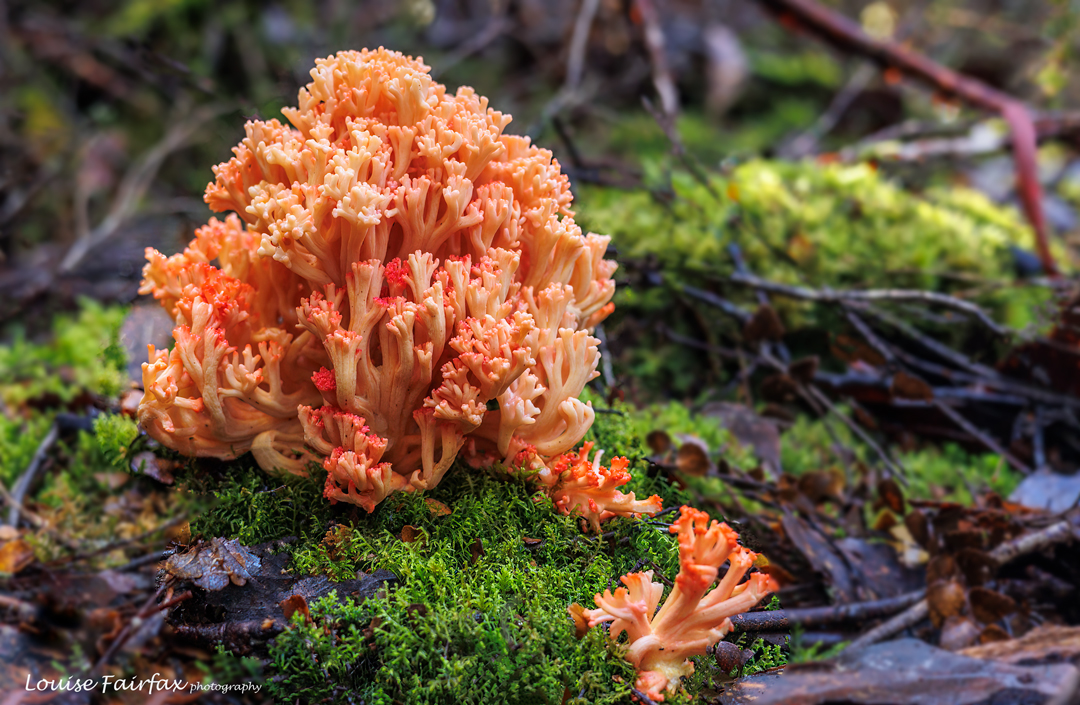
Ramaria botrytoides

We wanted beautiful light and plenty of time for our plans, so drove down the night before to Derwent Bridge. I had no idea that we would be the last guests checked in before the Hotel closed the next day. We felt very sad about this!!! That Hotel is a Tassie icon for bushwalkers. I fear for its character at the hands of NRMA who will doll it up for tourists’ dubious tastes.
Hygrocybe reesiae

Thus at 8.45, which is early for my family if not for me, we took our first steps along the track to Shadow Lake. The fungi were superb; the track, mossy and lush. We all greatly enjoyed it. That section took 1 hr 15, so I was very hungry by the time we arrived at the beach Kirsten had in mind. Time for a snack, a drink and a shoulder break.

Climbing up to little Hugel

Refreshed, on we went past Forgotten Lake, where the steep climb up the escarpment begins. Steep climbs are fun, even if we did take it pretty slowly. Our packs were heavy. I had my tripod and camera equipment aboard as I was hoping to photograph an aurora, and like the tripod for dawn and dusk at all times. Kirsten was carrying a lot to make sure Gus enjoyed it.

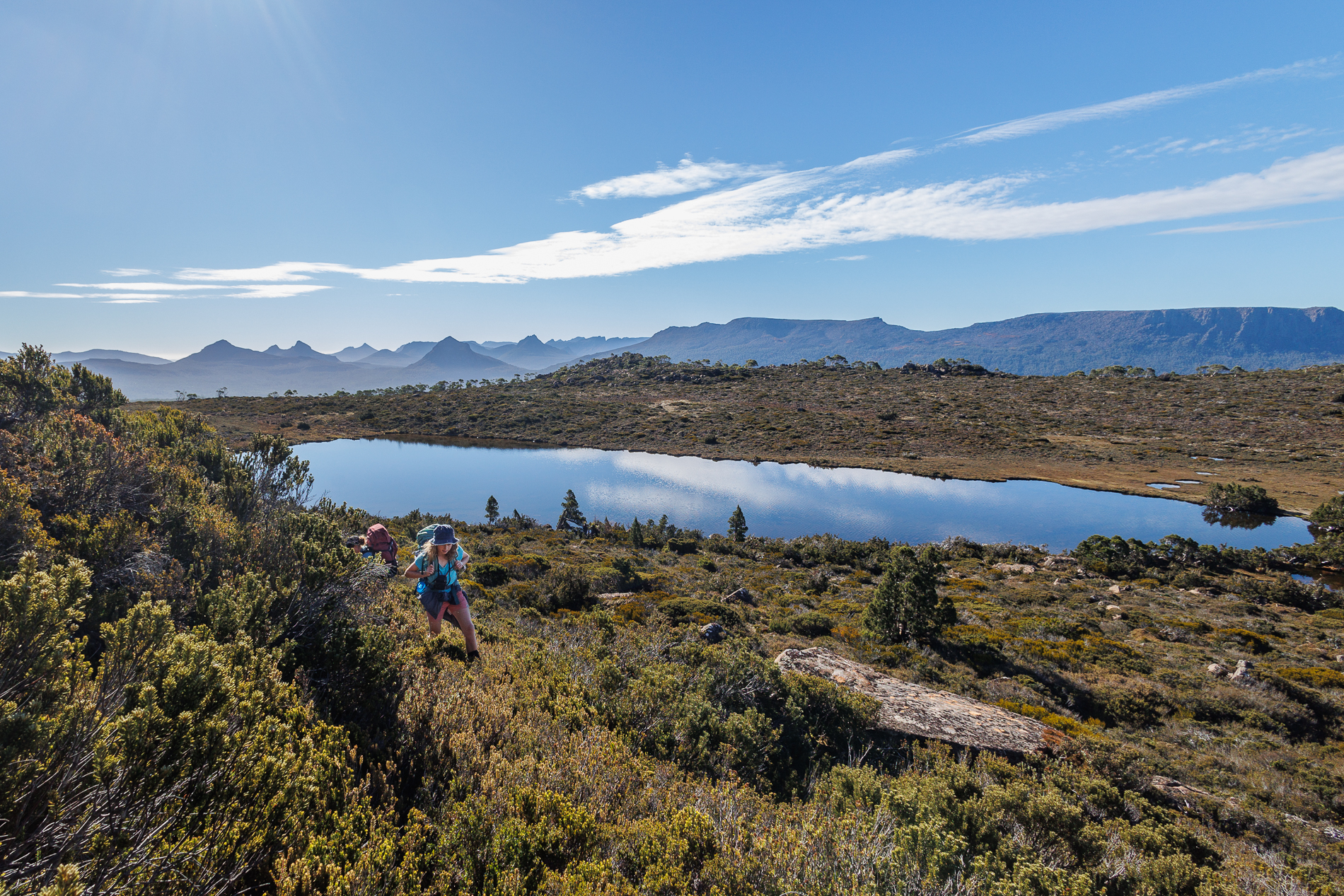
The last part of the climb, above Dip Lake (a nameless tarn).

We bypassed Little Hugel, saving it for the next day, and continued on to a nameless tarn, where, despite freezing temperatures, Kirsten and Gus swam while I tried to photograph the occasion. Neither of them lasted more than a second, and I was still trying to get a good angle when they had already bounced with astonishing eagerness out of the gelid water. We declared it an early lunch, and they tried to warm back up in the sun while we ate.

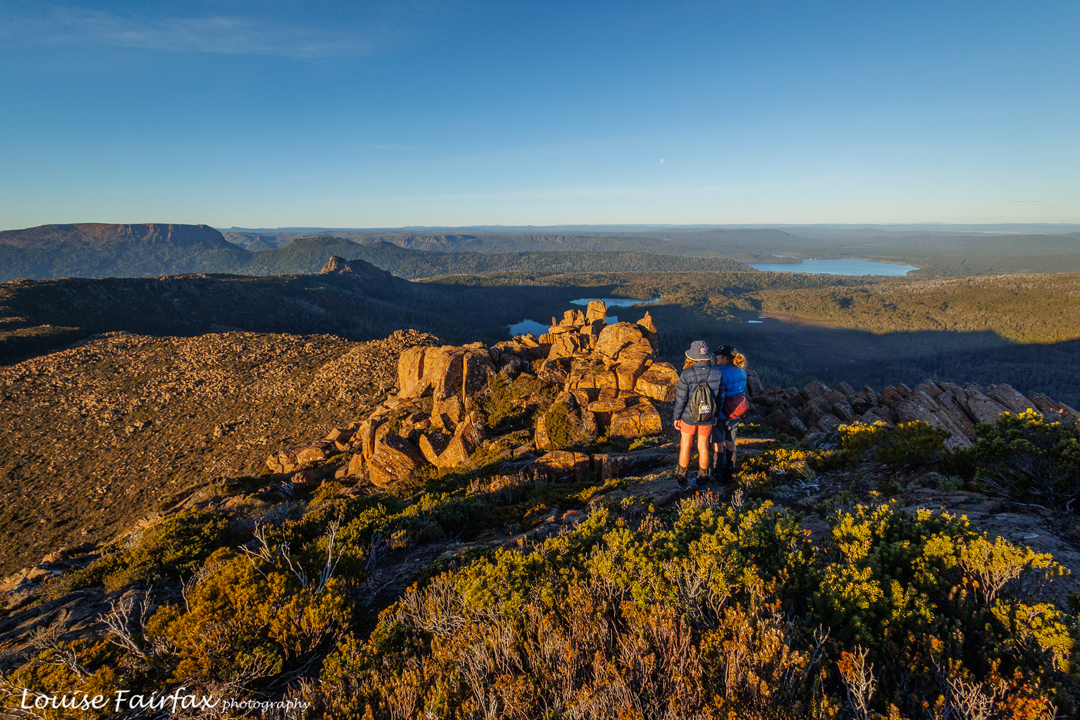
Hugel summit

The next section did not last long, so soon enough we were selecting our real estate for the night, a decision not based on anything mildly practical like water availability, but rather, on view. It so happened there was a little water nearby, but I was prepared to go back to wherever water might have been in order to enable a good view.

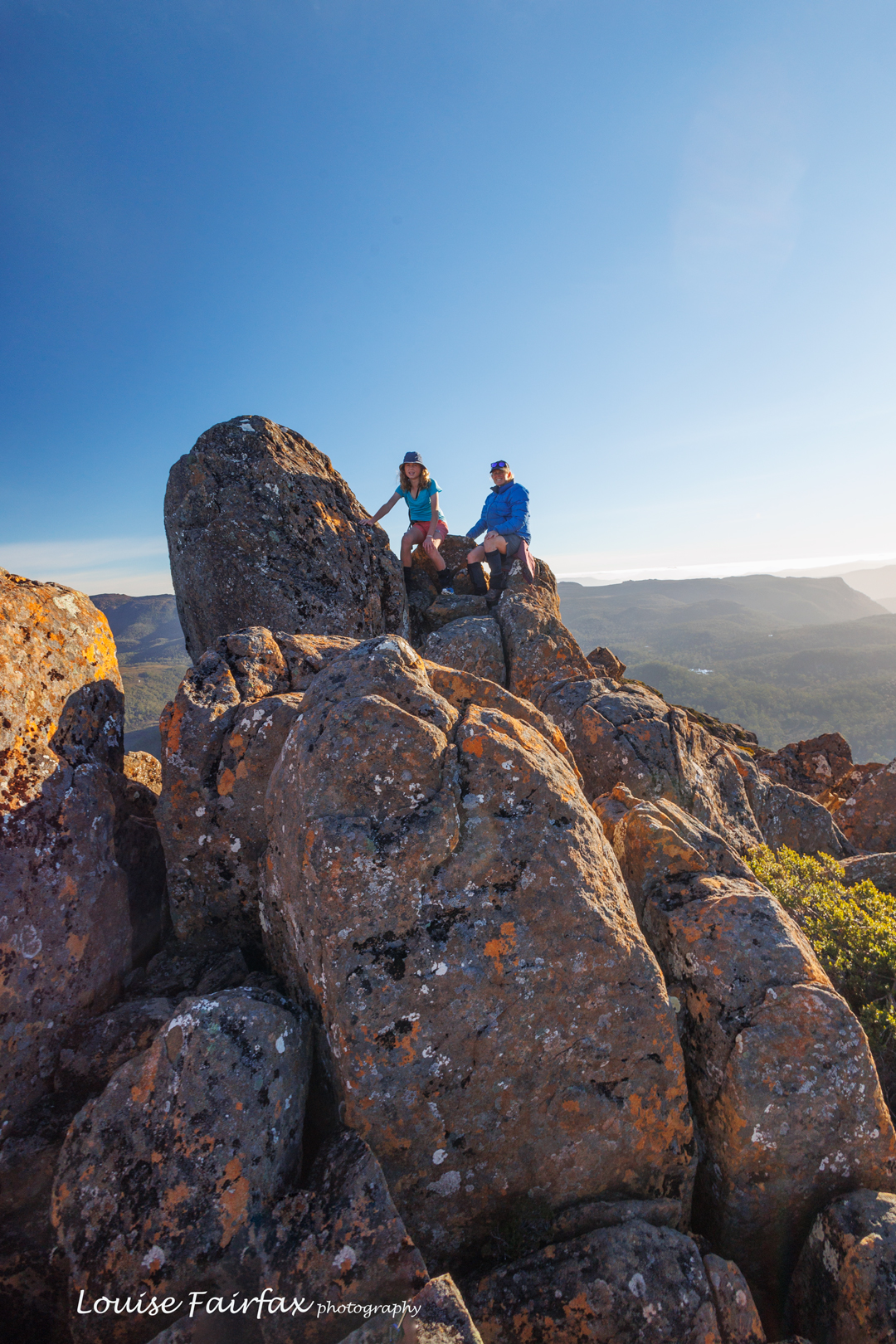
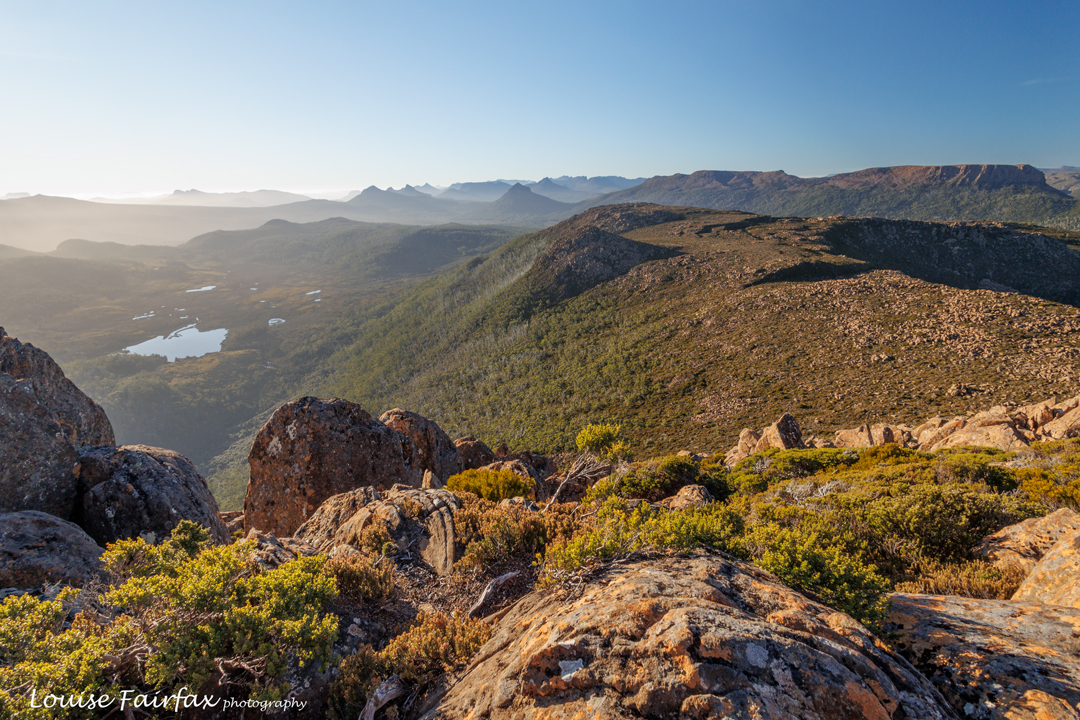
One of many fabulous summit views

Site chosen, tents up, a snack had and it was time to set out. Gus was still going well. He had done his first ever bushbashing with a heavy (for him) pack. Hugel looked nice and close, but we knew that could be deceptive, especially with a pre-teen on board.

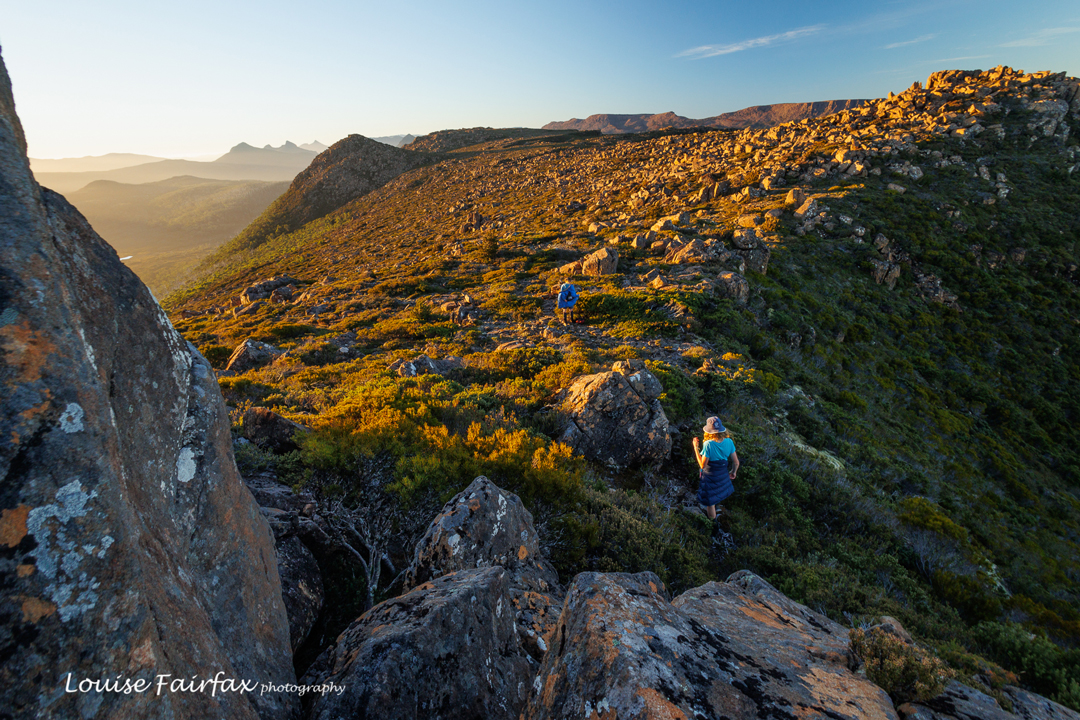
Surveying the view during the descent

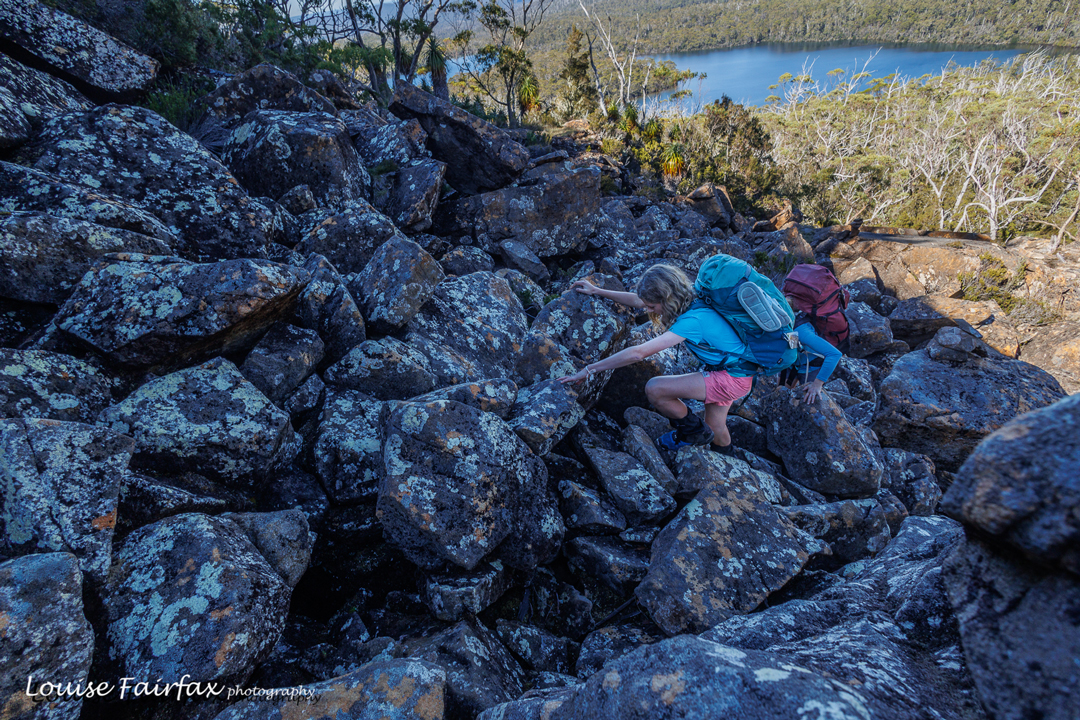
We walked along the ridge, and then attacked the rocks. We all felt the cairns were perfectly placed: not so near each other that you felt like a puppet or a robot, but often enough so that you had feedback that your route was the one intended. There was room for error and experimentation, which we appreciated.

This is what I came for

We stayed a nice long time on top: we had plenty of time for the descent and we wanted to enjoy the low light to come, so stayed there until it began to happen.

Perfect conditions.

I was thrilled to see young Gus getting out his camera and photographing aspects of the scenery that appealed to him. People who are sensitive to the beauty around them are usually people who are keen to protect and preserve it. He also chose to photograph quite a lot of fungi.

Having fun on the rocks

The day cooled down very quickly. I tested for an aurora before I turned in for the night, but nothing was happening. The other two slept in our old Macpac Olympus, a beautifully comfortable tent, albeit a heavy one. My tent, on the  other hand, allowed far too much cold mist to circulate around me, and the wind to brush my face far too often. Bad choice of tent. I was not surprised when I tested conditions later to find the mist had closed in. I did a few checks, but ascertained it wasn’t even worth getting up for dawn, which is not a bad thing, as that wet, cold air was not to my liking, and the wind was pretty stiff by dawn.

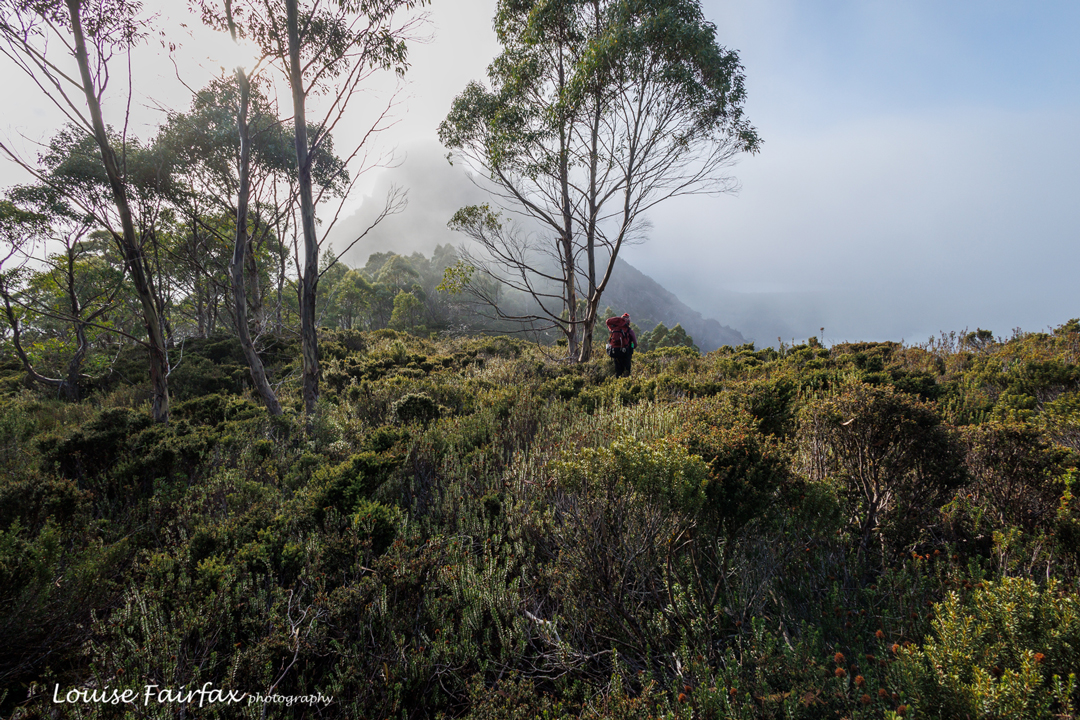
Day 2. Approaching Little Hugel

Breakfast was a cosy affair in their tent, but packing up was pretty miserable. I even had trouble separating the pole segments in order to dismantle my tent. I was relieved to be setting out, knowing that the exercise would warm me up.

Summit view

We liked the mist surrounding Little Hugel, so knew we would enjoy that small climb, and we were right.

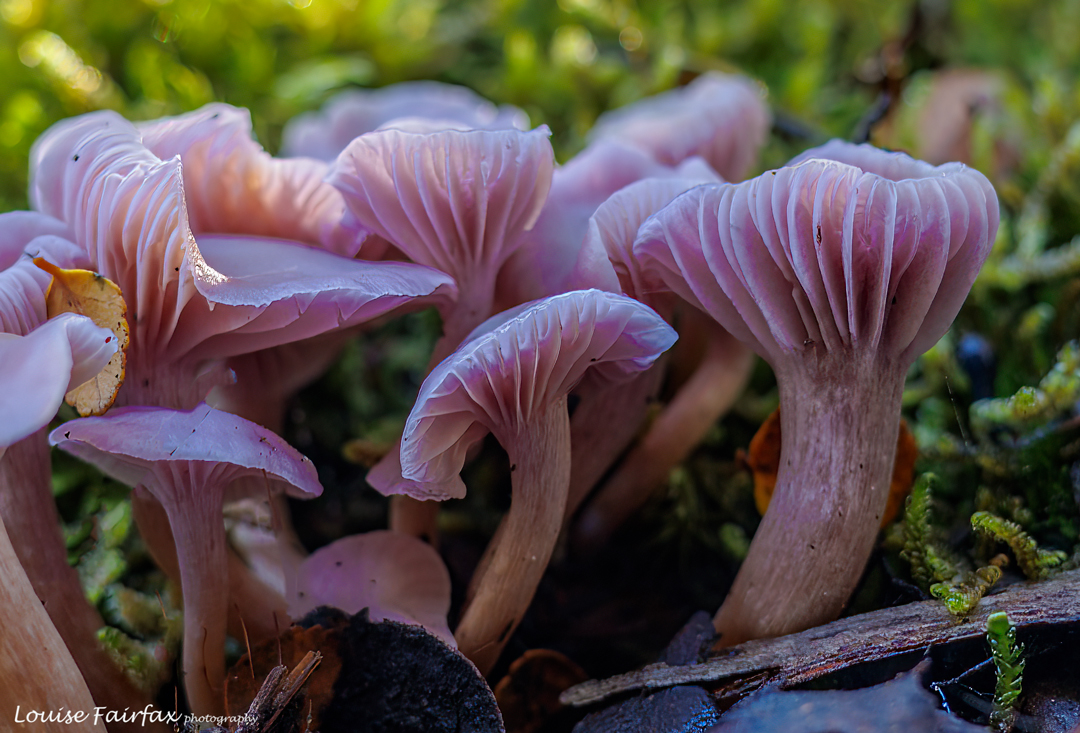
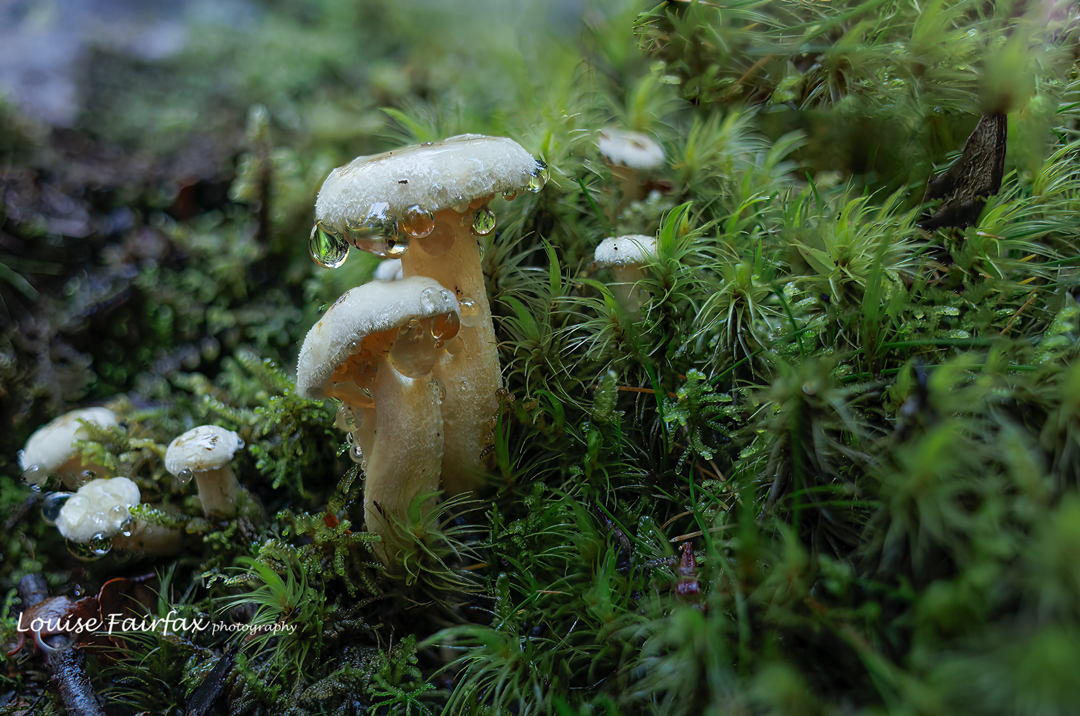
Beautiful little fungi with guttation

There were lots of fungi in the forest to make the return journey exciting. We spent time with the best of them, but made sure we were fast enough for a nice big hamburger at the Hungry Wombat. Kirsten was excited to discover they could even do a gluten-free version for her. Not every such place is so accommodating.

Orienteering SA 2024

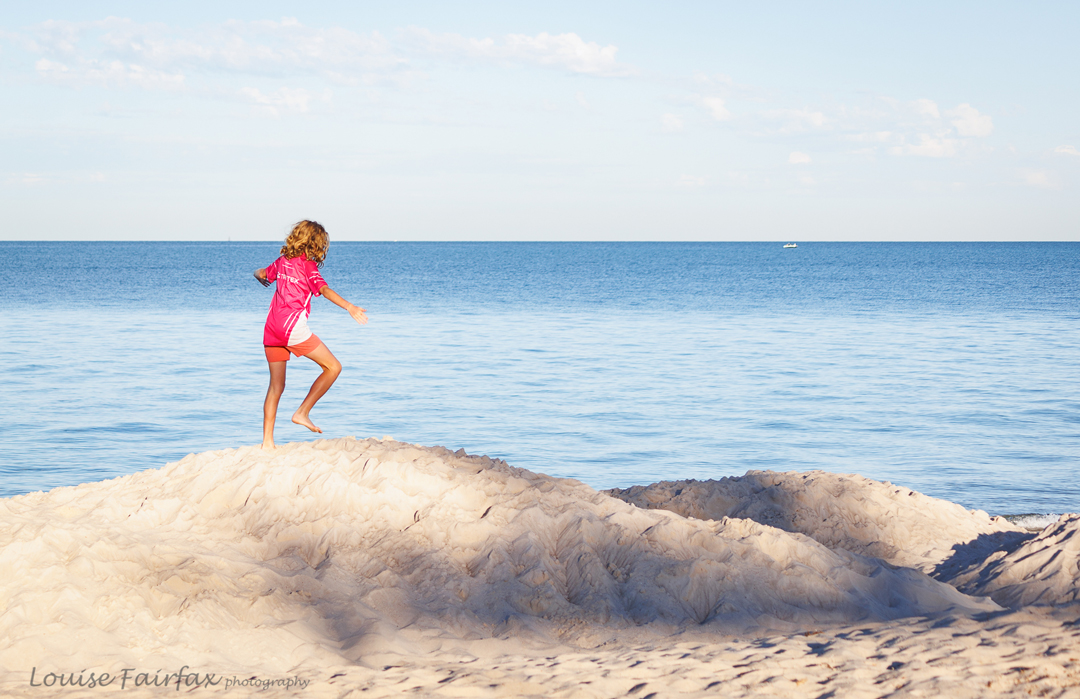
Playing on sand dunes along the coast prior to race 1.

Unfortunately (for photography), my focus this trip was on Orienteering, and, perhaps equally unfortunately, the weather was very hot for Taswegians (probably for everybody). Thus, on competition days, instead of having fun shooting other people, I was getting ready to run, or recovering from having done so (which basically means drinking large quantities and eating even larger ones, looking out for the children and cheering them in, or lazily chatting to friends whilst ridding my body of disgusting, sweaty gear. Once everybody from our family had finished and friends temporarily farewelled, it was off to the local (Murray Bridge) pool for hours spent slipping down slides or swimming, of course with some other competitors.  I took a few iPhone shots of that, but nothing serious: record shots, not actual photography.

Camping
On the way to the start. SA farmland.

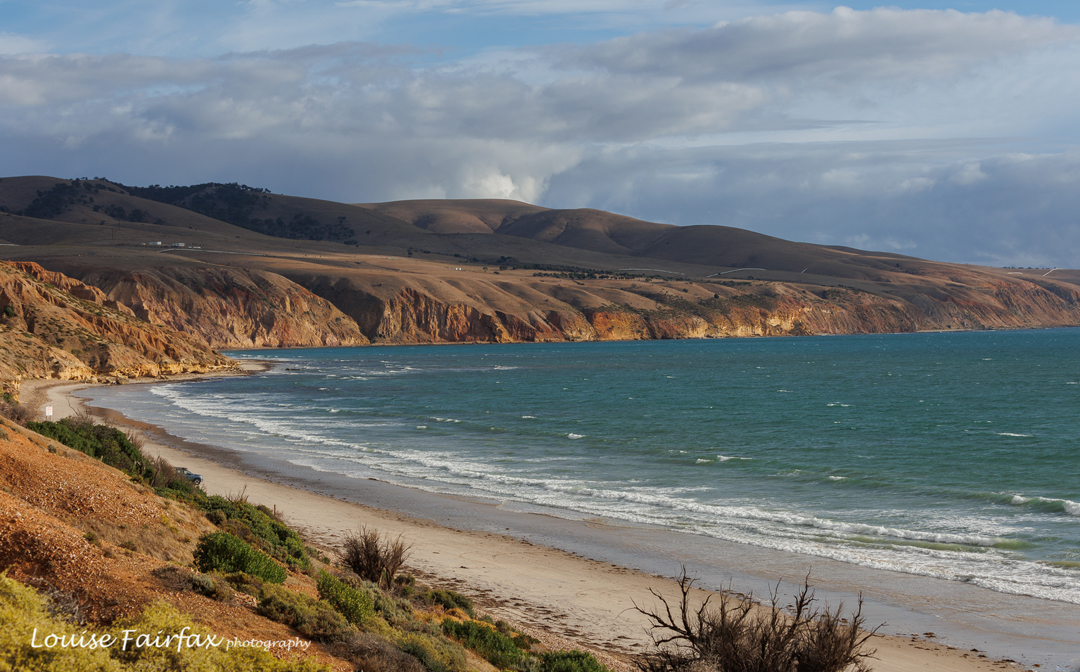
Thus the only shots I took in which I tried to capture mood or beauty, were mostly done on days before or after the competitions. I was a prisoner of place, given that proximity to events and a reduction in travel for the children were prioritised. We landed in Adelaide, stayed near the coast, retreated to the Adelaide Hills for the four days of competition, and afterwards, travelled down the nearby Fleurieu Peninsula, exploring some of its beaches.

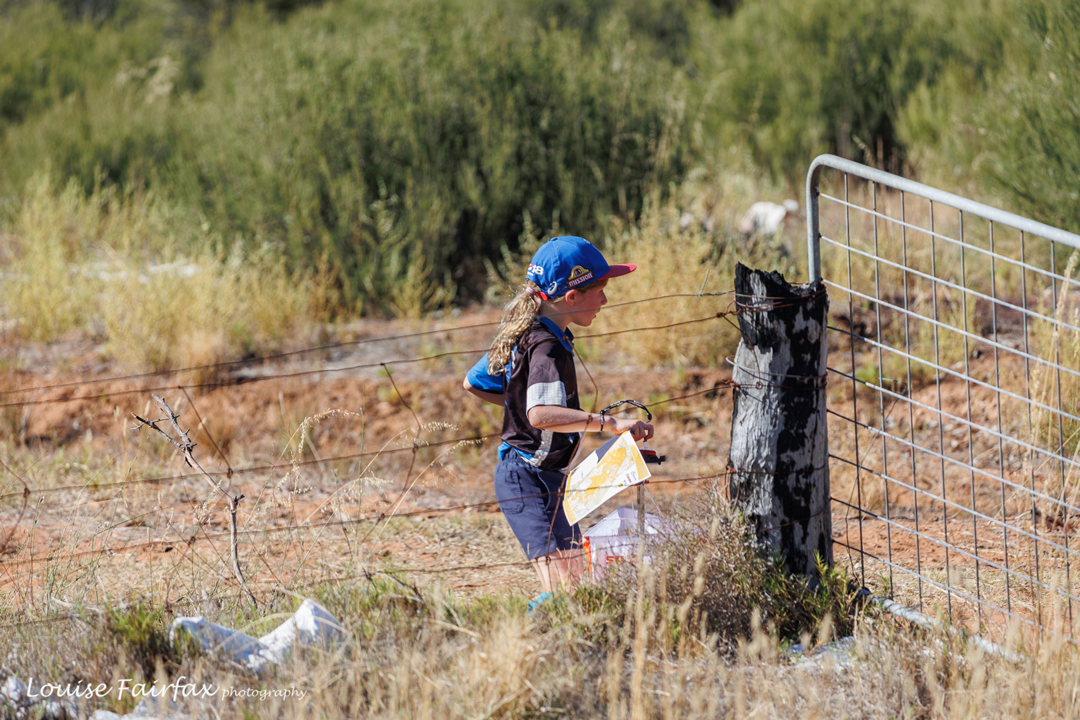
Tiny competitor at her last control.

The weather post competition was grey to drizzling, and we all felt like a rest after racing in extreme heat on the previous days. It was time to read books and play games.

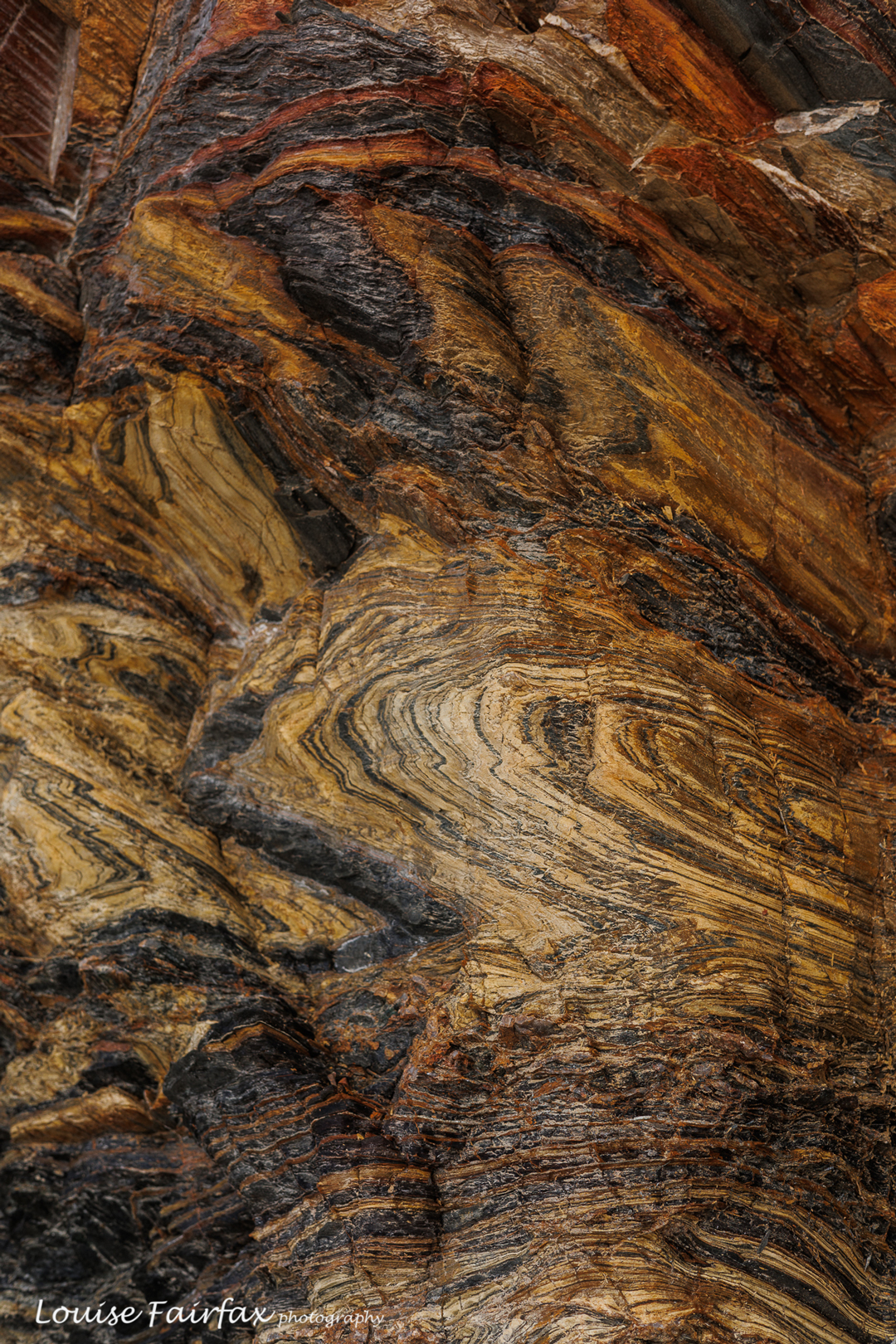
Rock detail

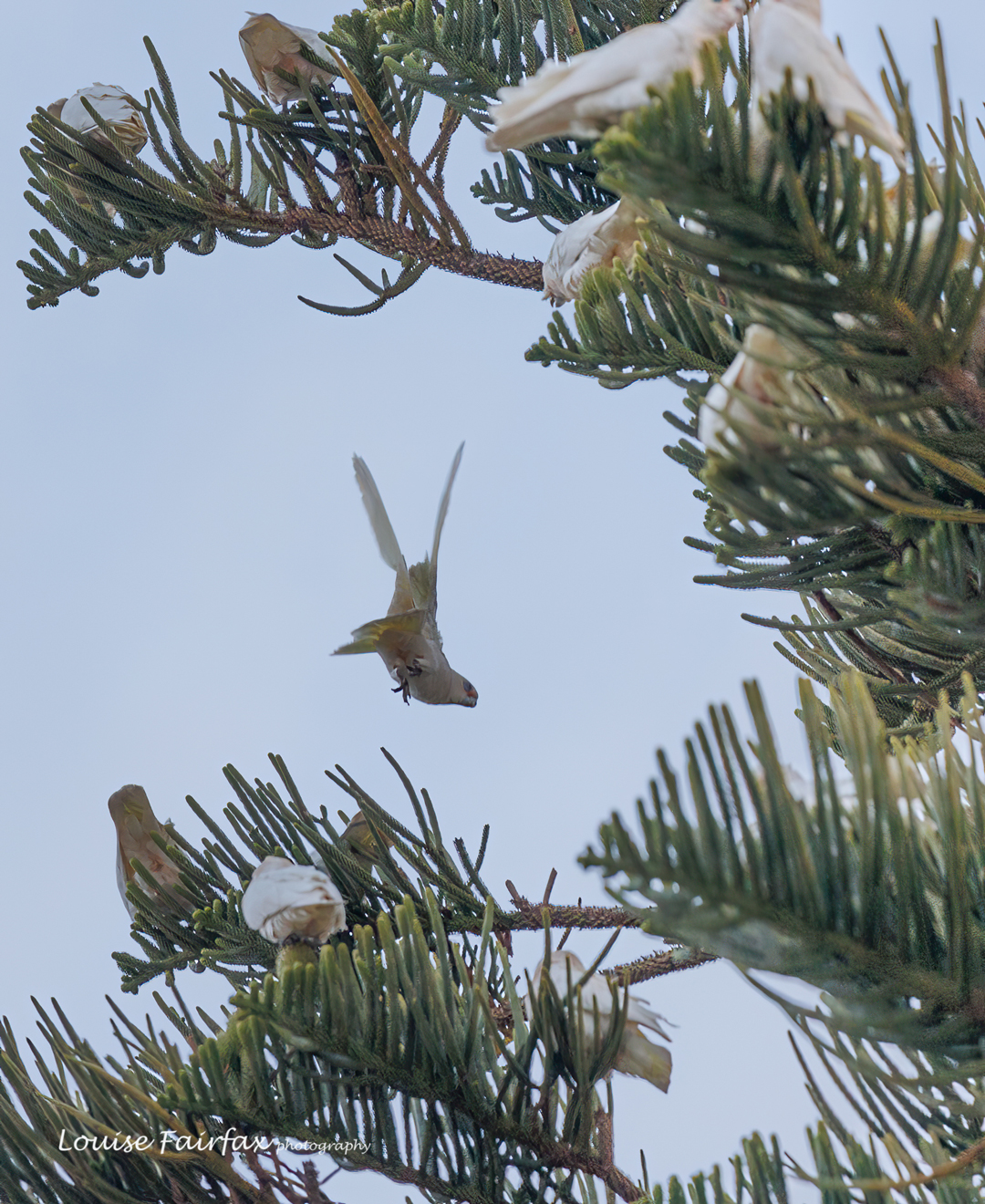
Despite all those brilliant excuses, I did get a chance to do some photography. I wanted some BiF photos (Birds in Flight), and the children and I had a hilarious time in which they tried to make perched birds fly, and I tried to capitalise on their efforts. Much stomping and shouting ‘Boo’ resulted, but not much good photography. The attempt was great fun, and surely that’s the point of it all.

Après-O using different muscles.

One of my favourite moments of the trip was the first morning of our camping (an orienteers-only venue in the middle of nowhere). To the east a glorious sunrise was unfolding. I just didn’t feel like setting up. I took an iPhone shot or two to record it, and then went out and stood under a huge gum tree, its branches laden with choraling magpies. The sights and sounds filled me with peace and joy. There was one other person out under the same tree, doing exactly what I was doing and soaking it all in sans camera. We made a brief exchange and then I realised I was chatting to a guy I’d met while we were both in the forest shooting at a previous O event: someone whose photos I admire, Kelvin Meng. Ho ho. The only two photographers in the joint were the only two to be up watching the sunrise, but both of us were too absorbed in it to want to take a shot. We stood admiring together in combined worship, unsullied by words (or camera gear).

BiF Galahs
Fleurieu Peninsula

It was, as ever, terrific to catch up with old friends, to reconnect with people I’d been on teams with in yesteryear, or competed against, or with, here or abroad, and to see the kids making firm friends with other kids, many of whom turned out to be the children of people either Kirsten or I or both competed against, or with, decades ago.

Suicide-bombing Corella

The other aspect of the trip I loved is the way Orienteering leads its competitors to explore new and different parts of Australia, to see and feel and smell not-yet-experienced parts of this amazing land of ours. I love staying at tiny towns I’d never heard of before; driving from there to the events and absorbing that slice of the world; and getting ready for the race imbibing all the smells and sights and sounds of this new location. Every race smells different.

Inglis Escarpment 2024 Apr

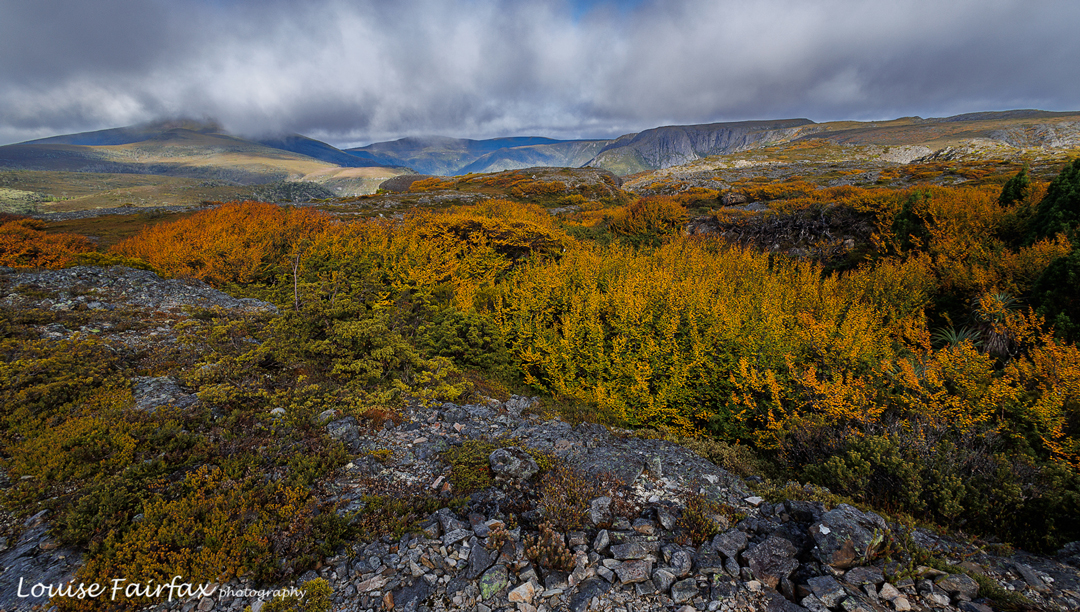
Inglis escarpment is not a name on the map, but where we went has no name, and I had to call this blog something, so I settled on Inglis Escarpment: after all, Mt Inglis was up behind us and we were on a wonderful escarpment with grandstand views, so hence I have given the area that blog name so I can refer to it.

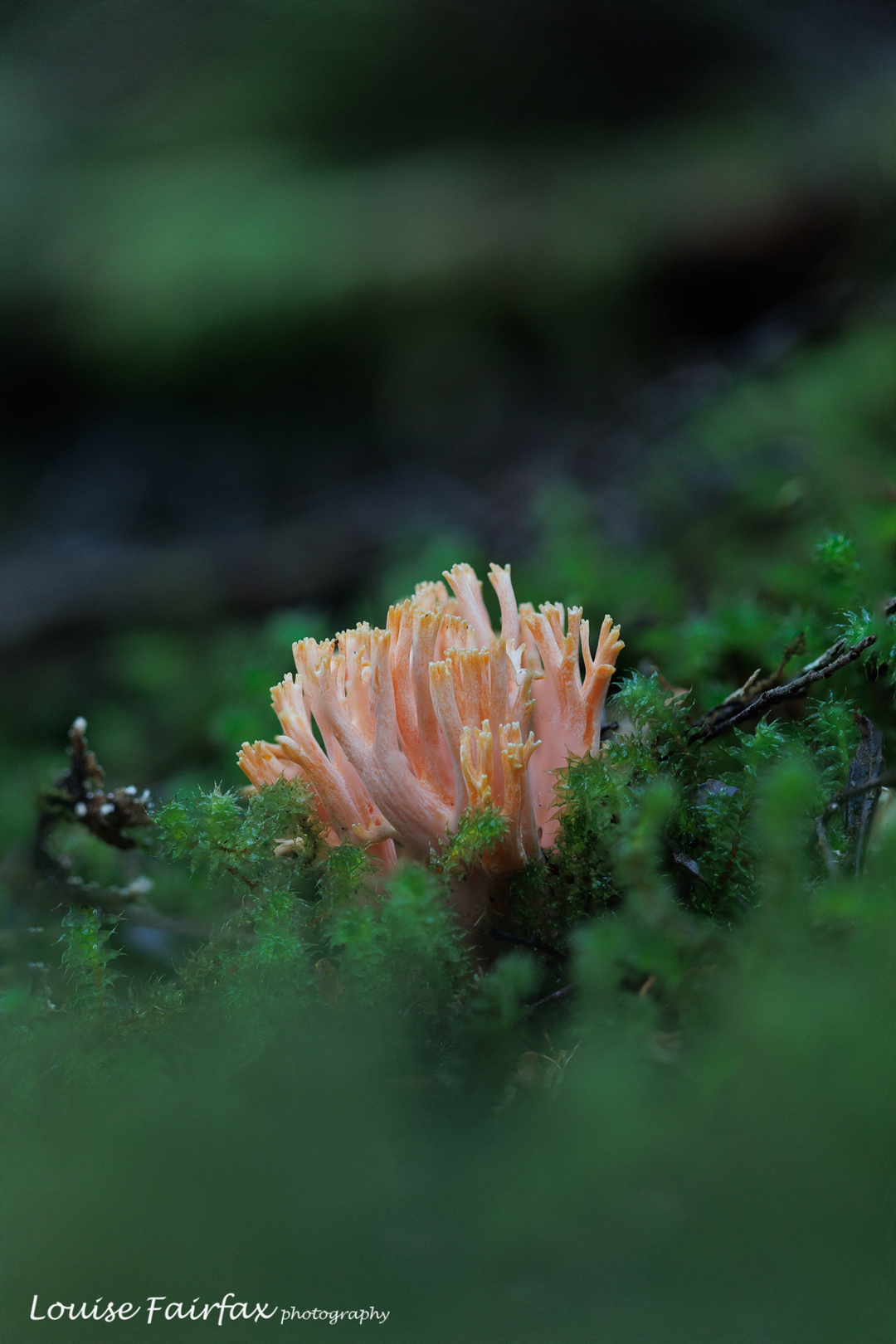
Ramaria samuelsii. Not too many fungi, but at least we got some.
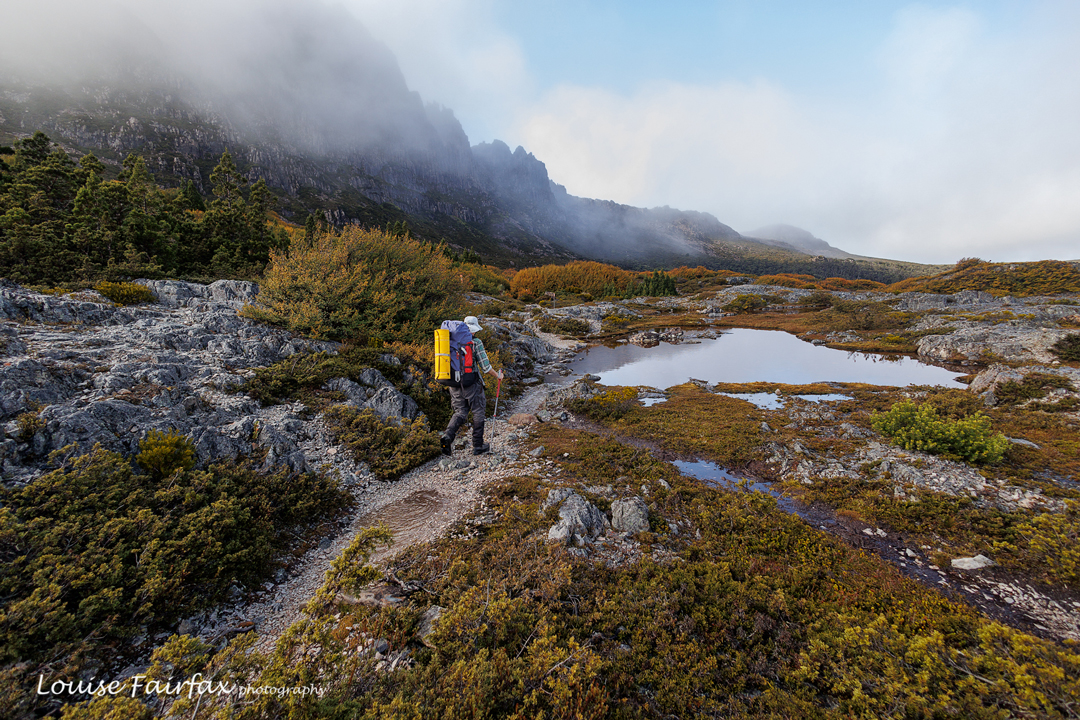
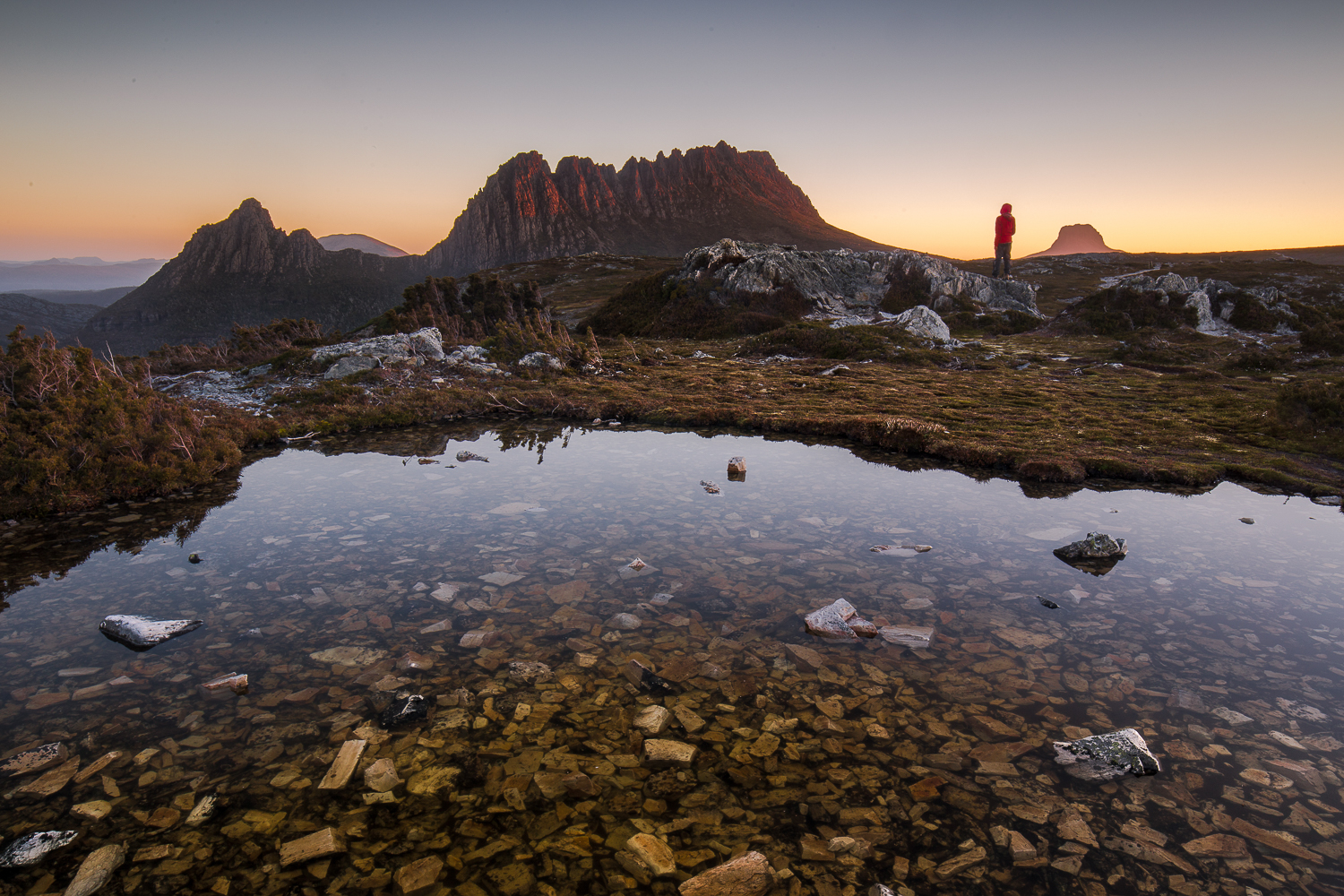
Adrian out the back of Cradle
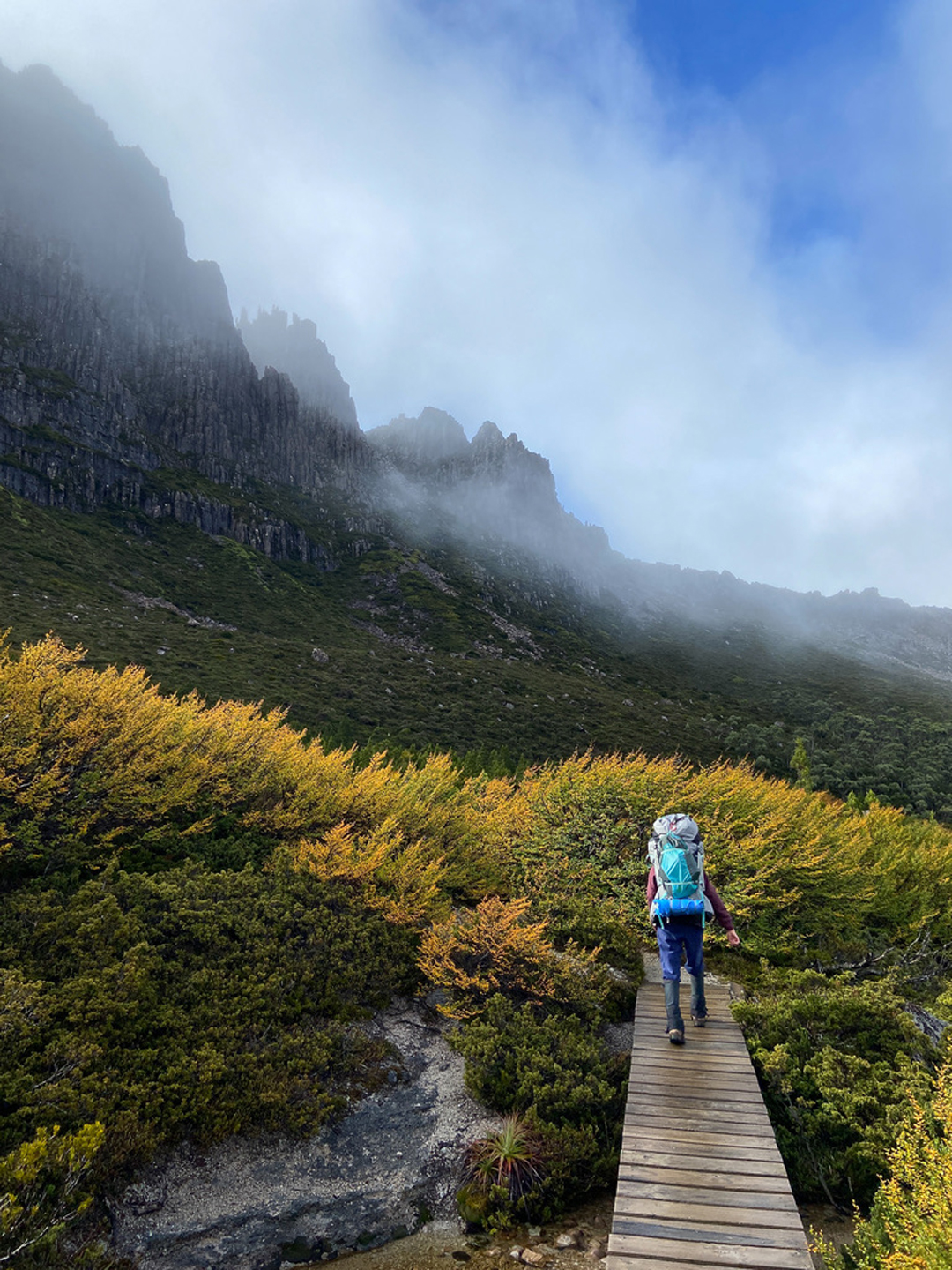
Me. Thanks Adrian

I went with my waterfall bagging friend, Adrian. As with our last trip, we had hoped all four of our group could come, but Caedence is off playing cricket in England (congratulations) , and Leandra had other commitments, so the group was whittled down to two.

Nothofagus gunnii doing its thing.
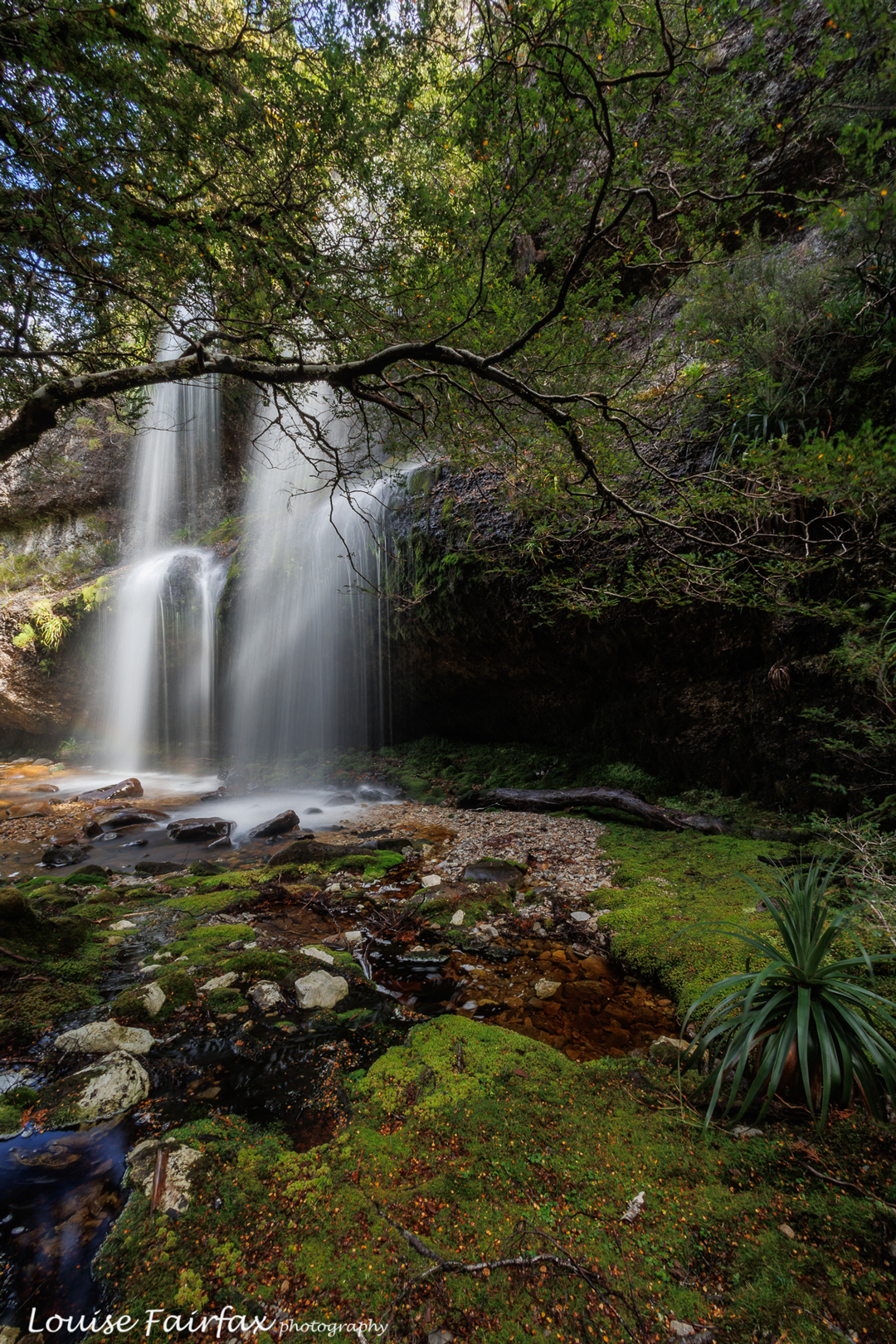
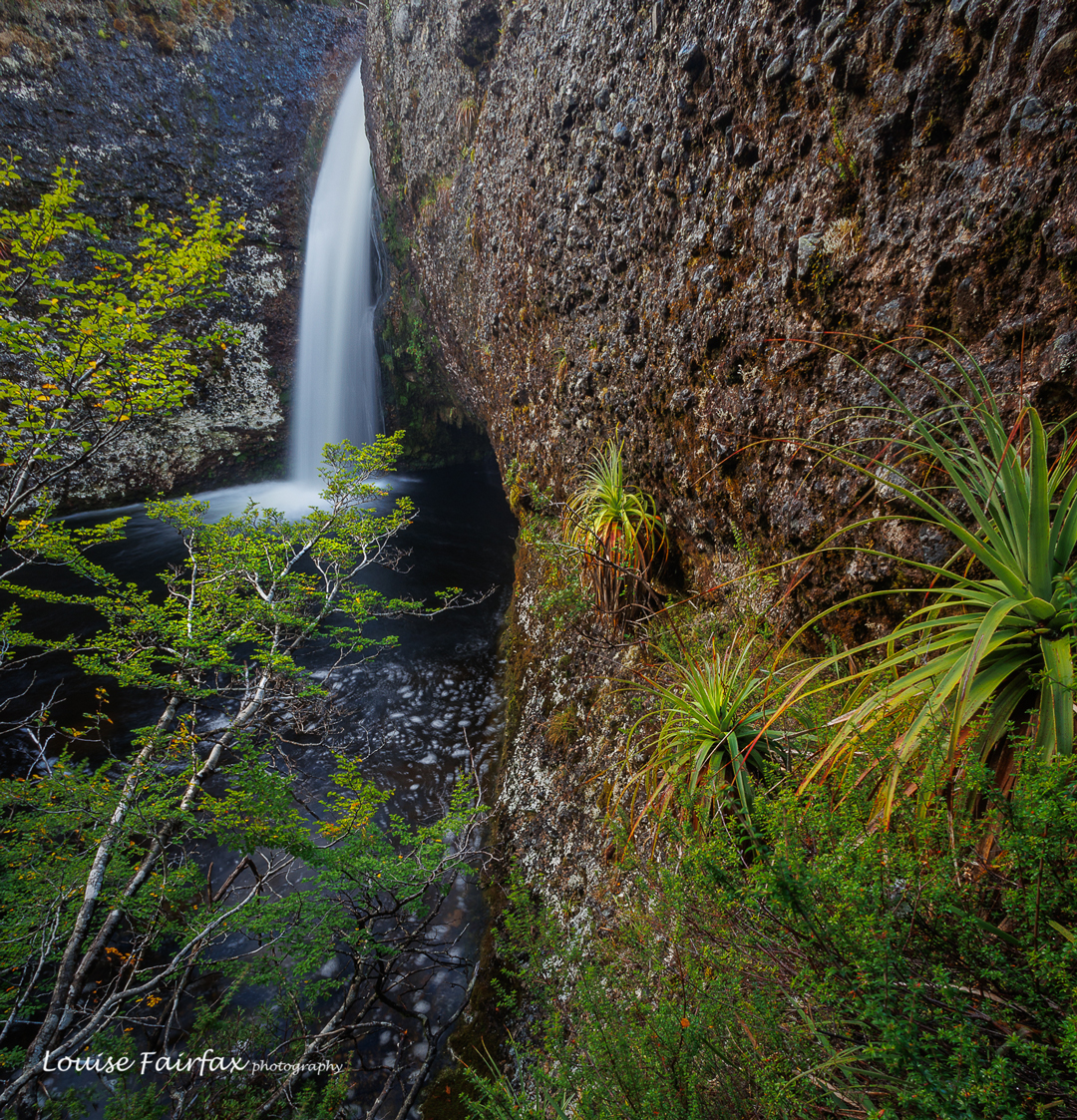
Pretty waterfall

Our basic plan was to spend more time in the beautiful Bluff River Valley, and revisit Tomahawk Falls. That was the reason given, but really, we both just love spending time in off-track wilderness, imbibing new views and enjoying new vistas on the grand scale, and delighting in the minutiae of nature closer up.

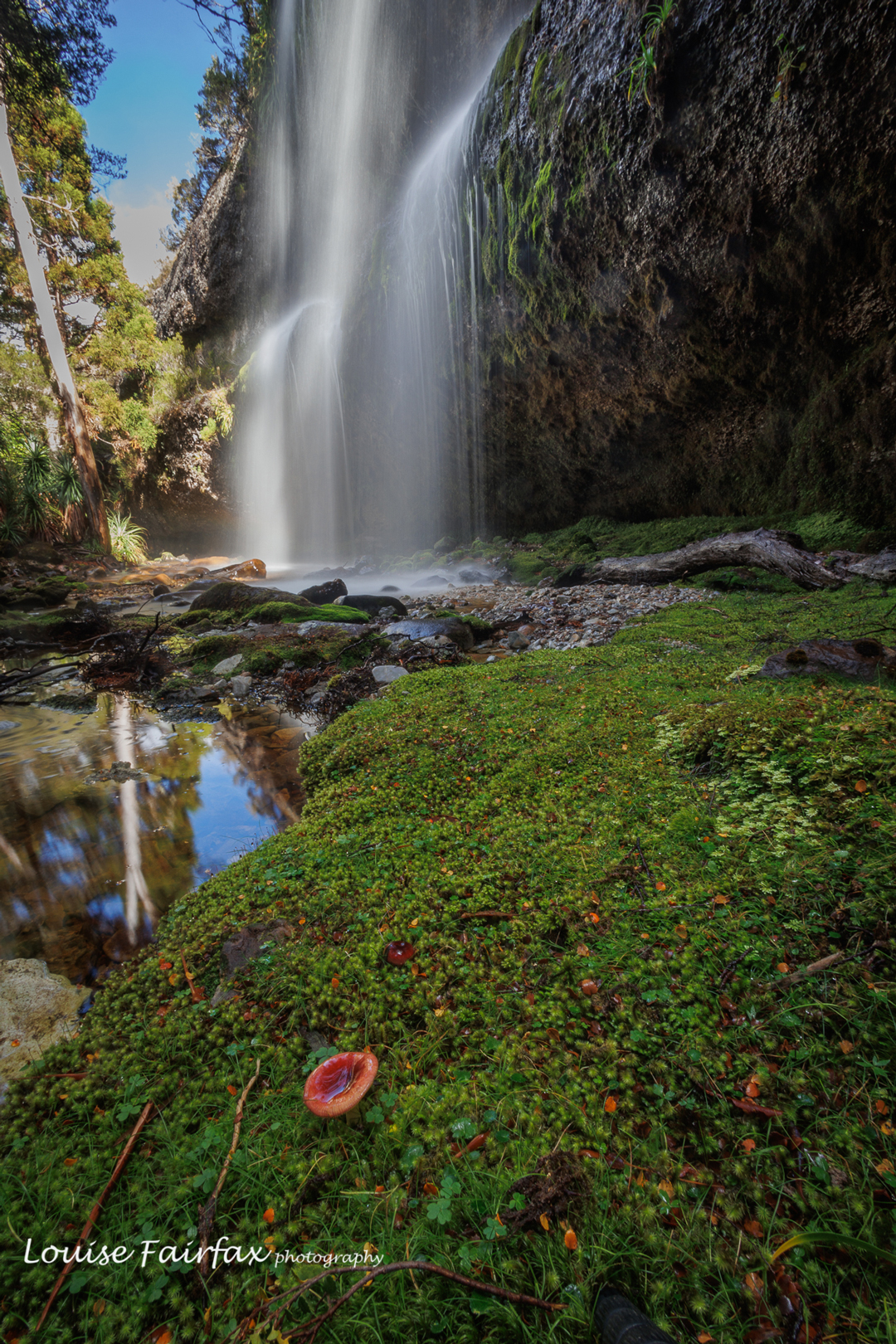
Russula persanguinea plus a waterfall. does it get better than that?
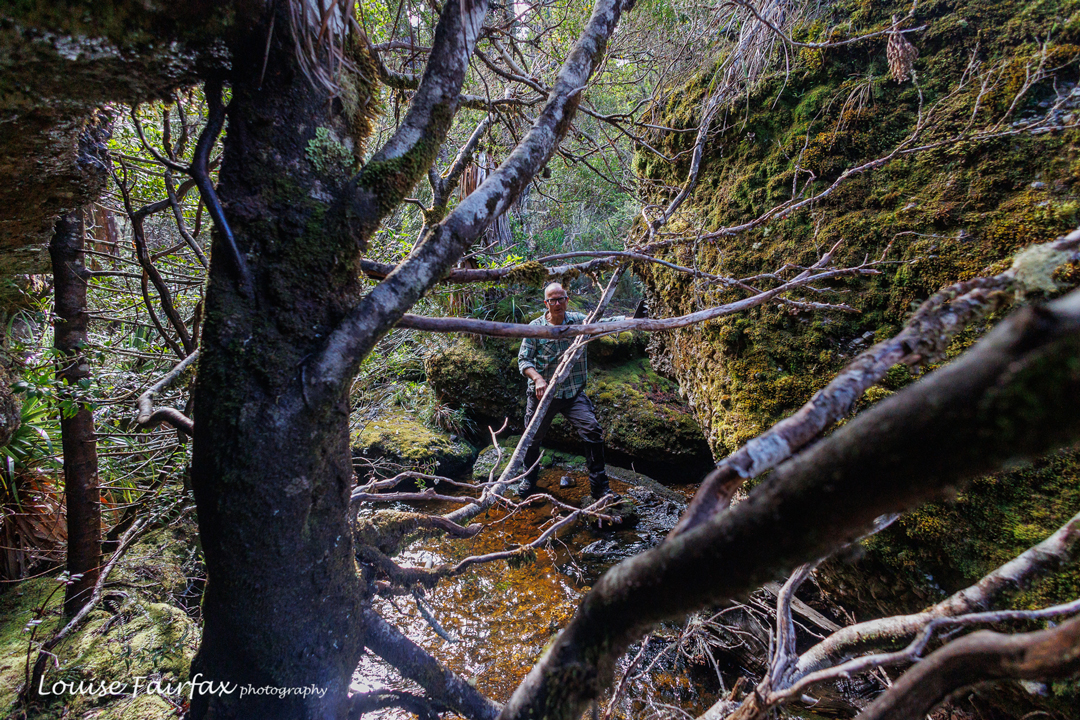
Bit of water bashing, bit of scrub bashing … our idea of fun.

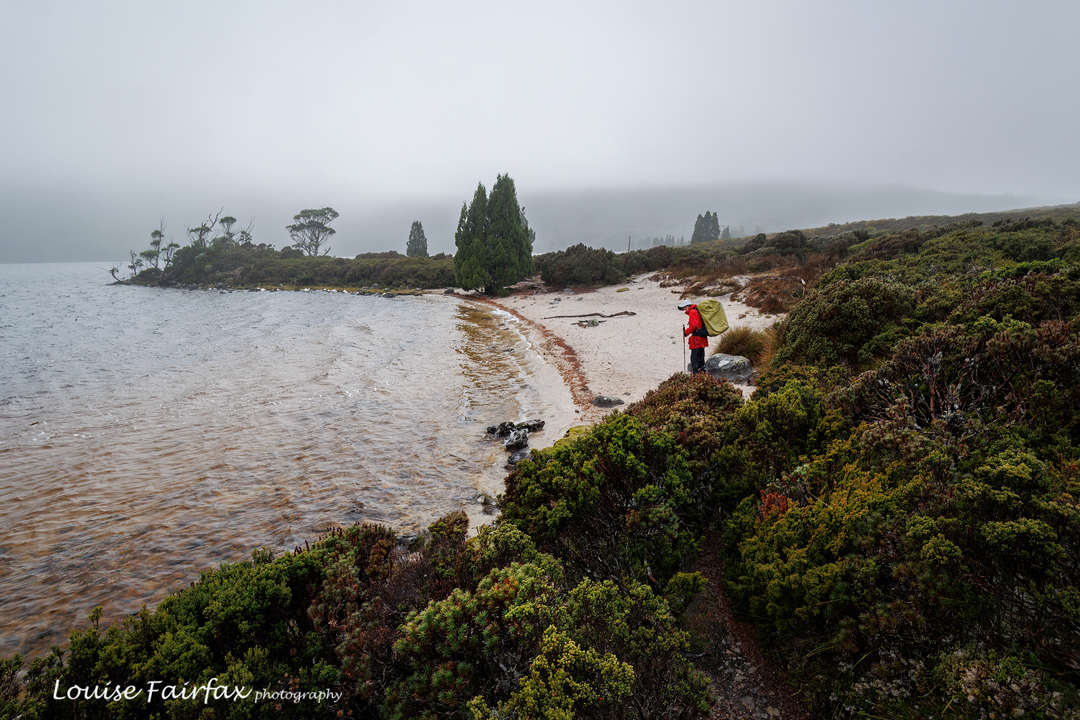
To get off track there, you have to first swallow a fair bit of the Overland Track with its necessary boards and stonework, but we dealt with that pretty efficiently. It hurts the feet, but at least you move through it fairly quickly, and the scenery is still lovely. We had our first short break at Kitchen Hut, another even shorter at the Igloo, and an early lunch somewhat near the Lake Will turnoff, before heading off in that direction to begin other wanderings.

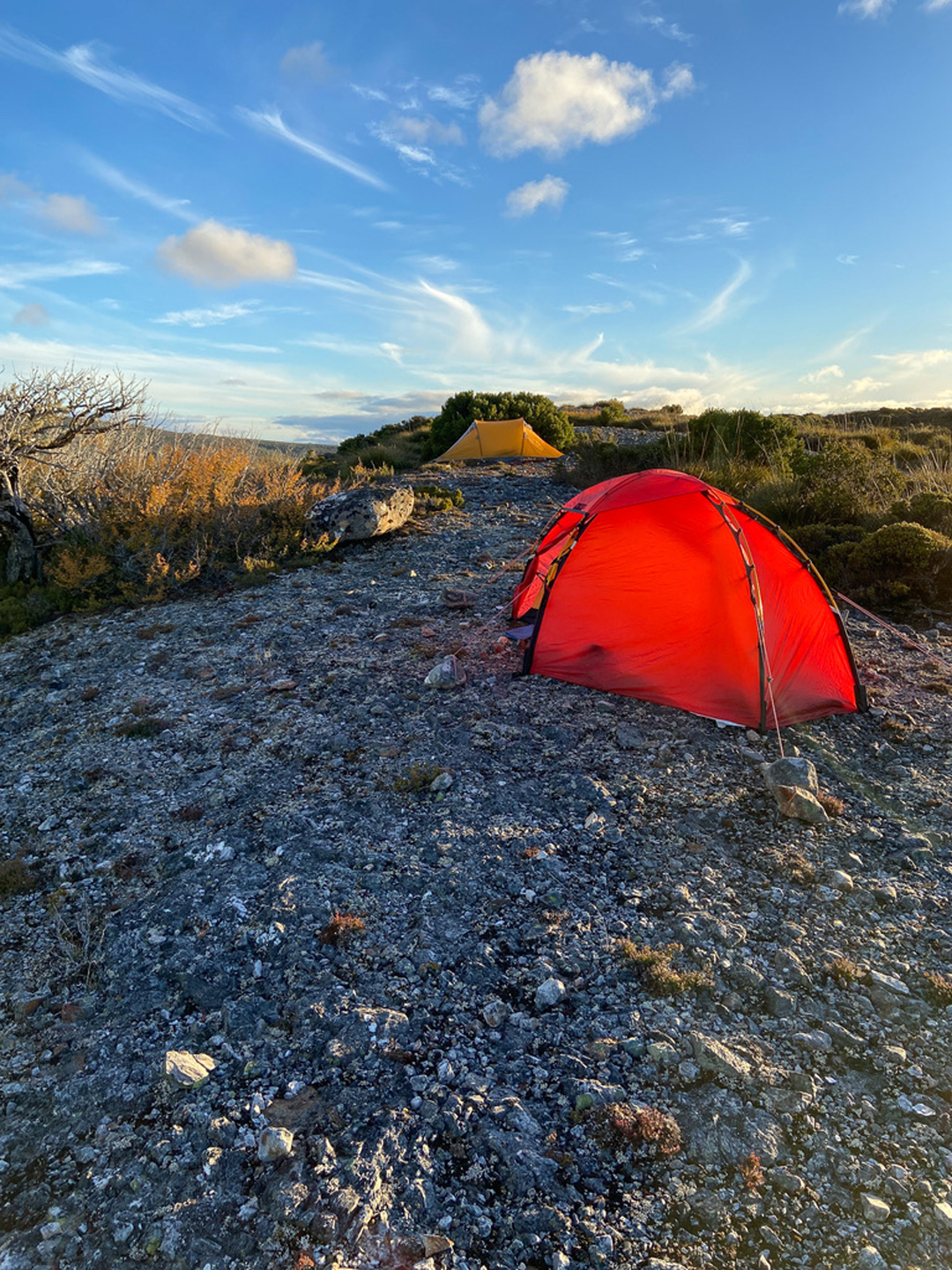
The wise girl pitched her tent upon the rock??? And the wiser man pitched his near a protective bush. No problems: no wind was forecast and no wind came. Thanks for the lovely shot Adrian.
Taken from my tent. Talk about lazy.

As you can see from the photos, we visited pretty waterfalls, and got a marvellous sunset. I have to confess that several photos were taken from inside my tent, as it was starting to get pretty cold after the sun had set. We were so busy exploring nearer falls that we didn’t have time to get to Tomahawk on day 1.

Innes Falls
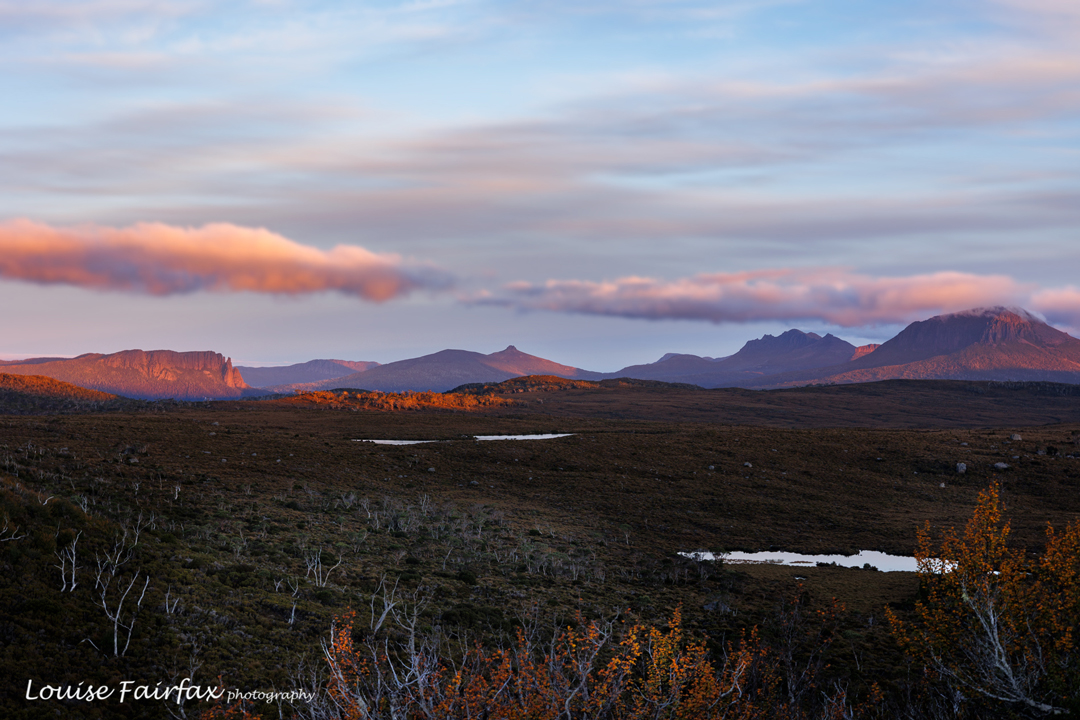
Sunset. Inglis Escarpment. Sigh. This is also taken from my tent, as it was now getting very cold.

This was intended to be a four-day trip, but when we awoke to rain on day two, and saw the latest forecast was for rain for all the rest of the trip, we decided that we didn’t want to photograph in the rain, and neither did we want to hang around in our tents doing nothing. Walking out in the wet is much nicer than sitting being inactive, so we packed up our gear and returned home, saving Tomahawk for another trip.

Time for man to go home. Lake Will.

Adrian’s stats say we walked 60,000 steps in the two days. My watch says we did 10 hours 40 mins pack-carrying walking (not including any breaks or non-pack exercise), the time pretty much divided evenly between the two days. This was a nice amount of exercise. The rain wasn’t too heavy; the world is good. We both felt perfectly content that the trip had been worth it.

Orienteering 2024 Feb, Mar

Several orienteering friends wanted to see the astro shots I took in the middle of the night while everyone else was sleeping, so I decided to do another post depicting “the other side of orienteering”, only this time, as well as including some of the scenery around our event, I will also include some action shots taken mostly last month, just in case you are tuning in for a different reason and would like to know what Orienteering looks like. I couldn’t take shots of competing this weekend, as our start times were all in a smaller cluster, so I was busy competing myself. I had more time at the event (Hobart O-Fest) in February.

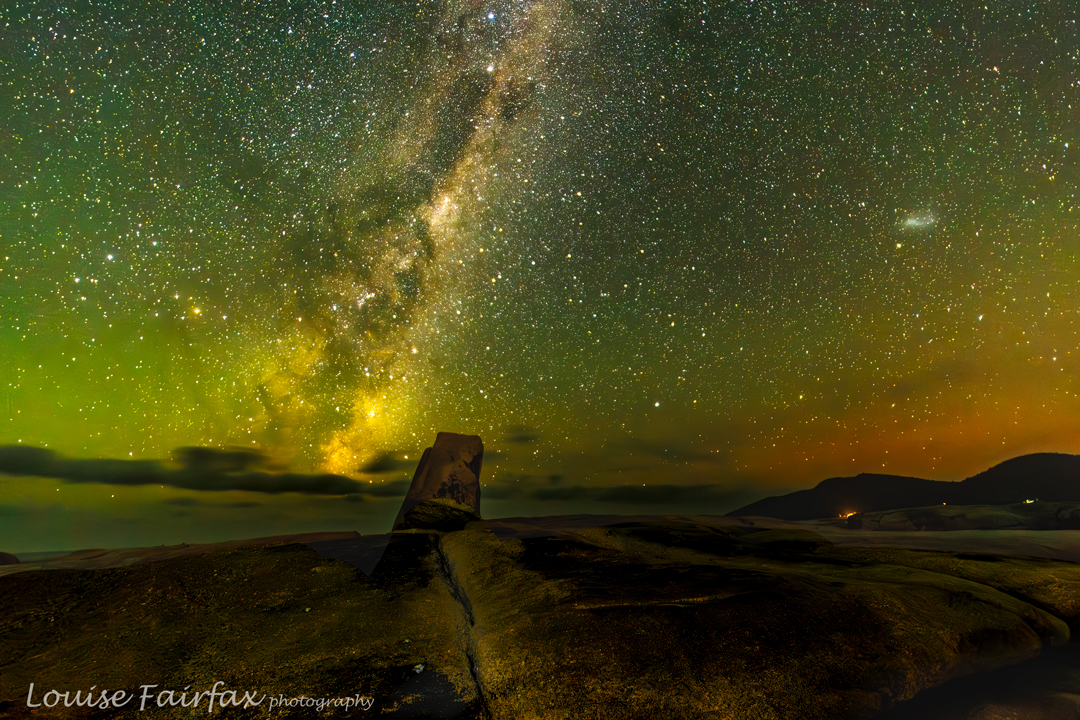
Rising core of the Milky Way with a slight aurora 12.56 a.m.
Milky Way + slight aurora, different angle

I would have loved to have taken more scenery shots, but the weather didn’t cooperate. While I was shooting the astro, the clouds rolled in, and stayed for the rest of the weekend. Considering the fact that it was after 1 a.m. when I stopped, and that I was competing later that day, it was possibly not such a bad thing.

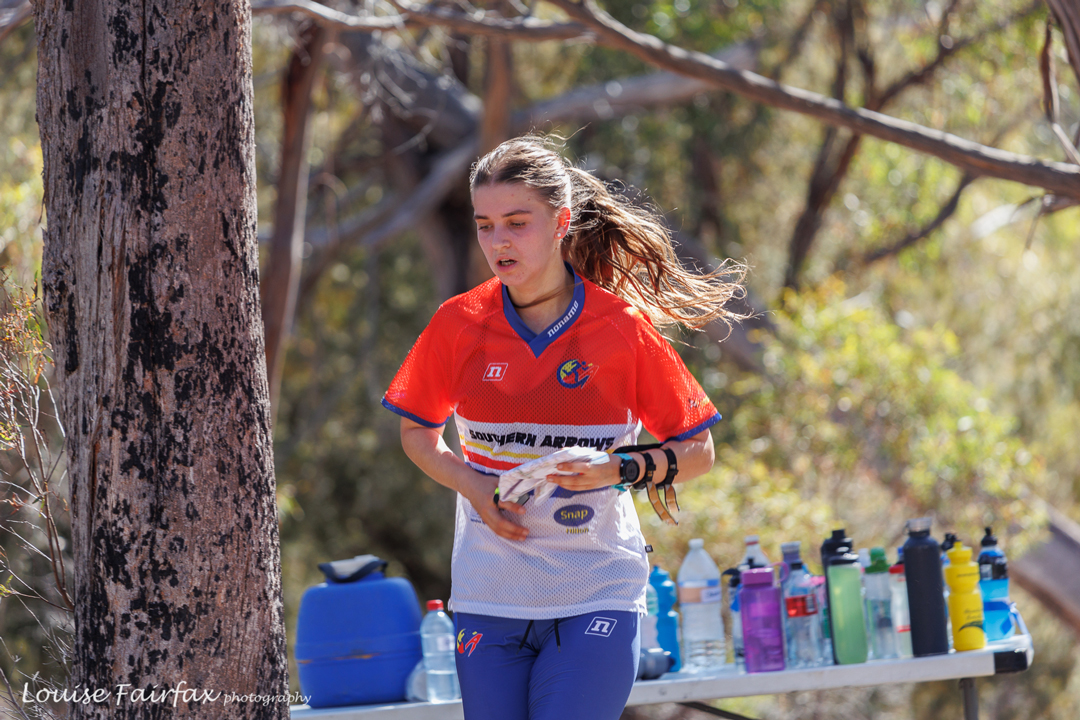
Three highly accomplished orienteers hit the drinks control together: Milla Key, Natasha Key (VIC) and Eszter Kocsik (NSW).
NSW Competitor
South Australia

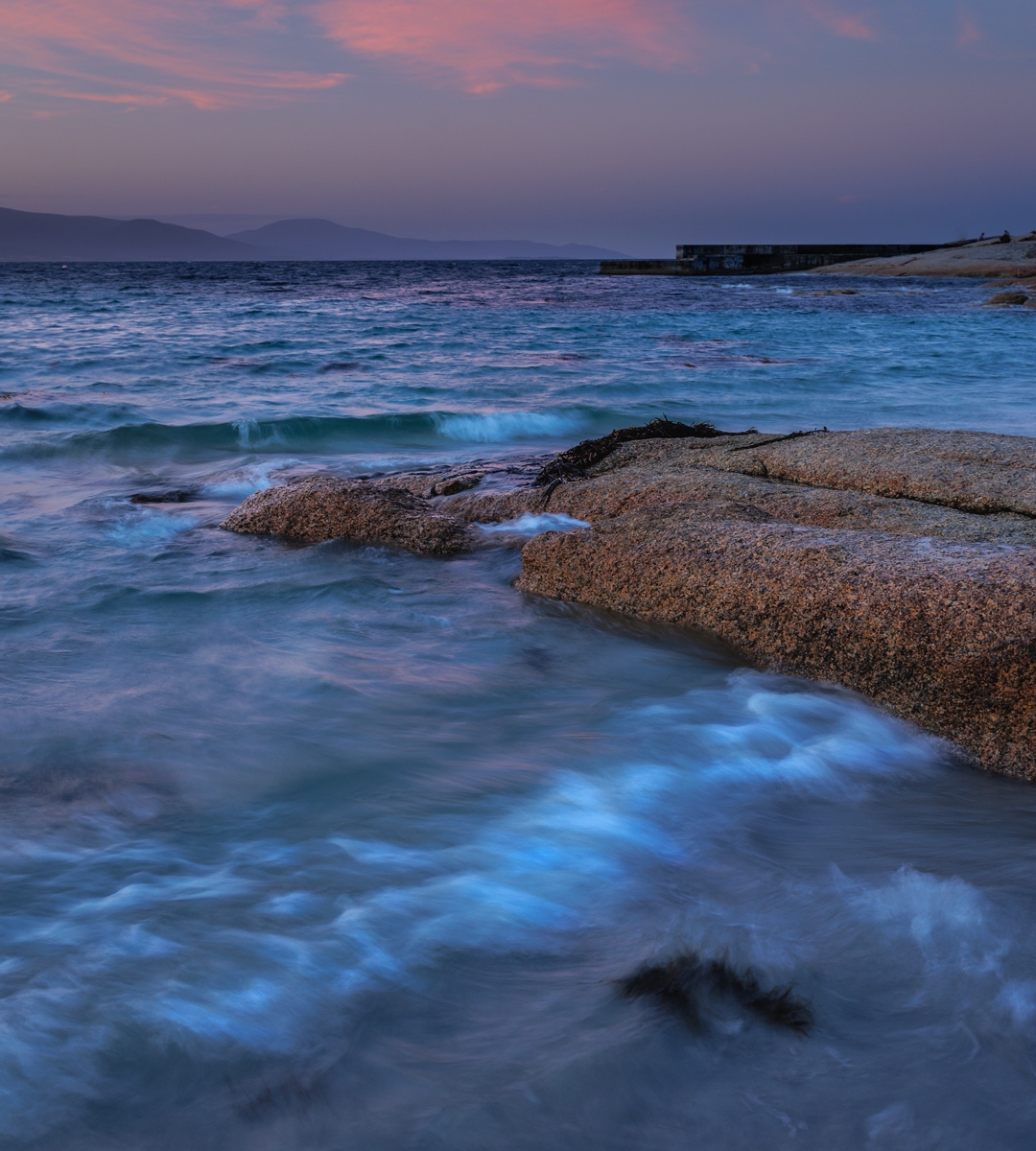
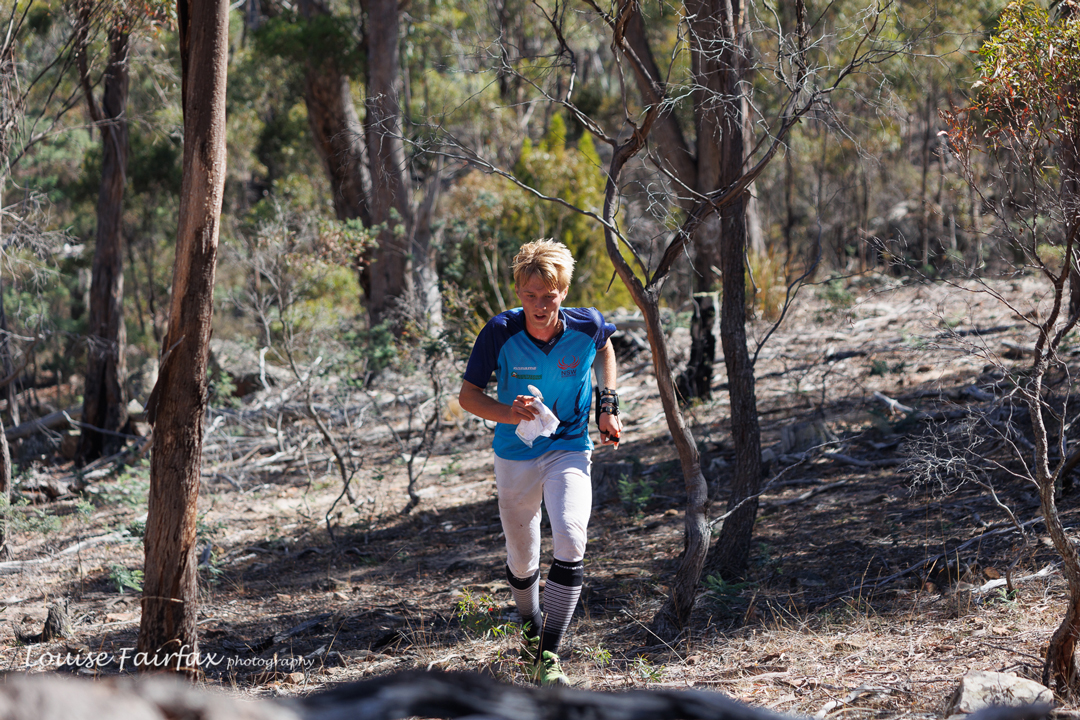
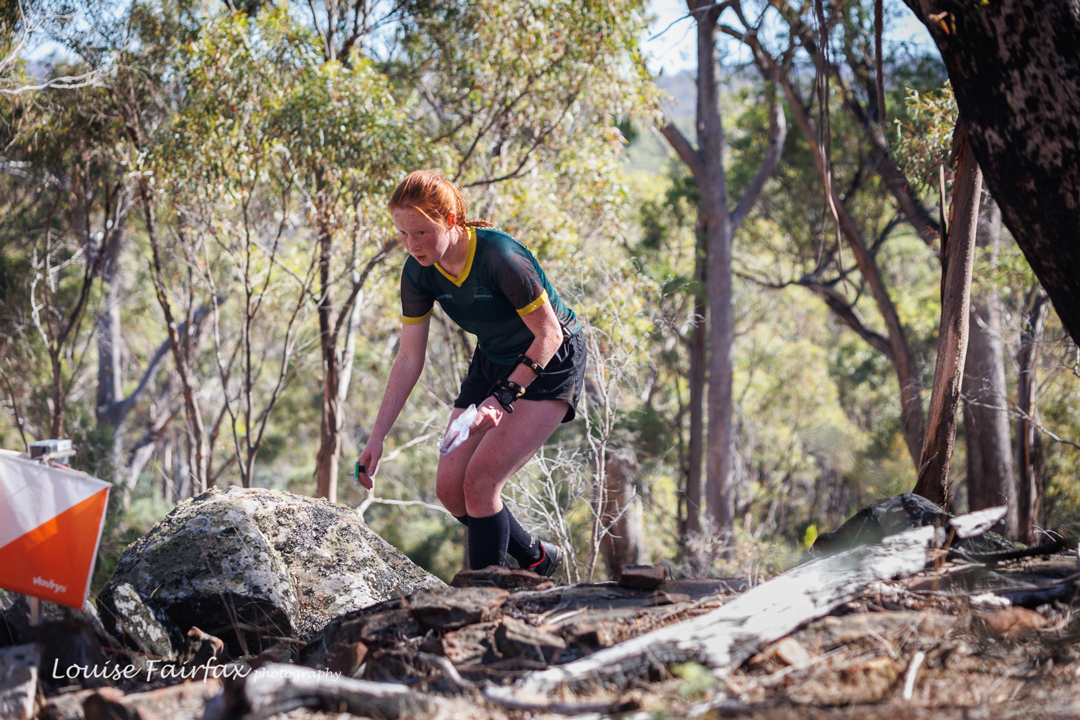
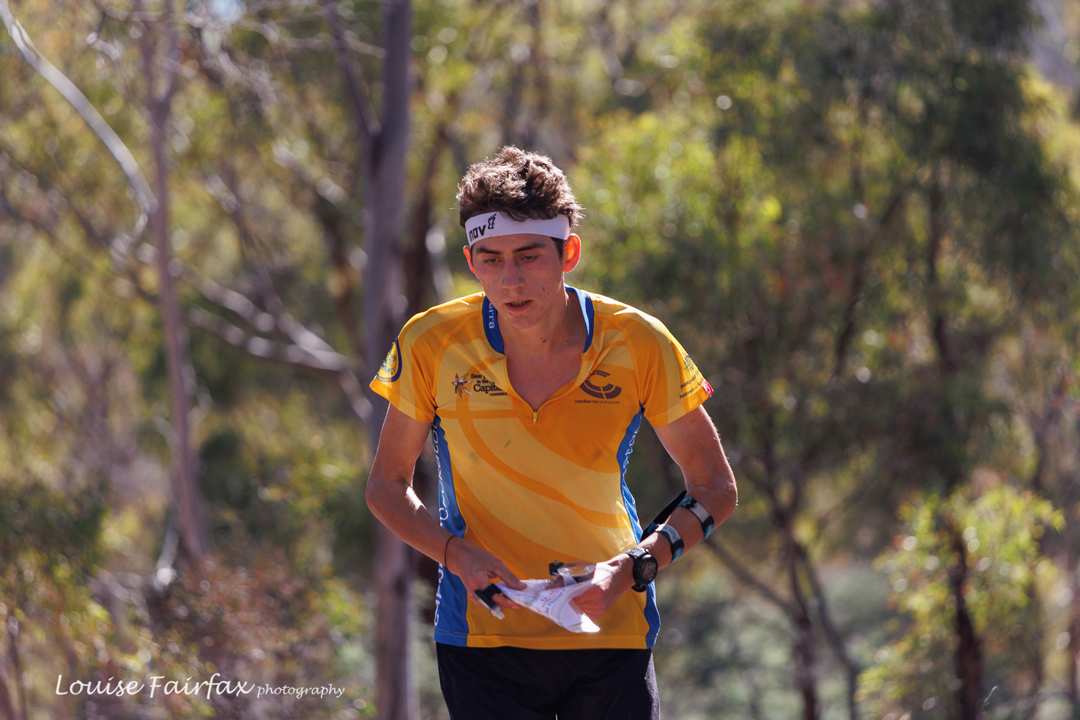
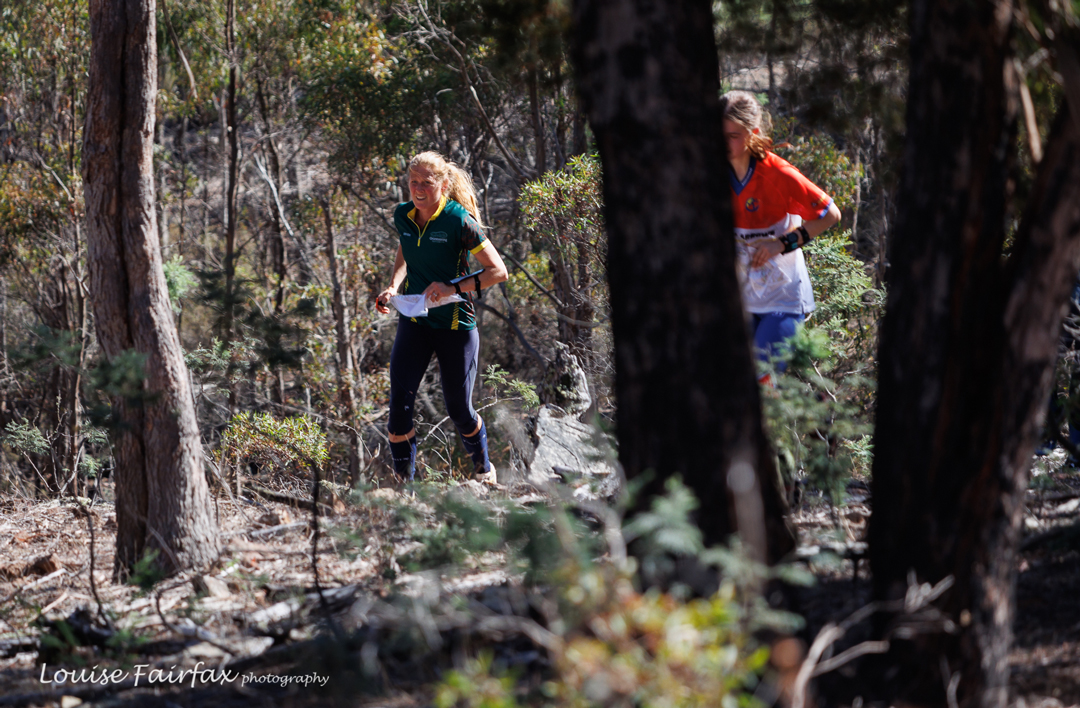
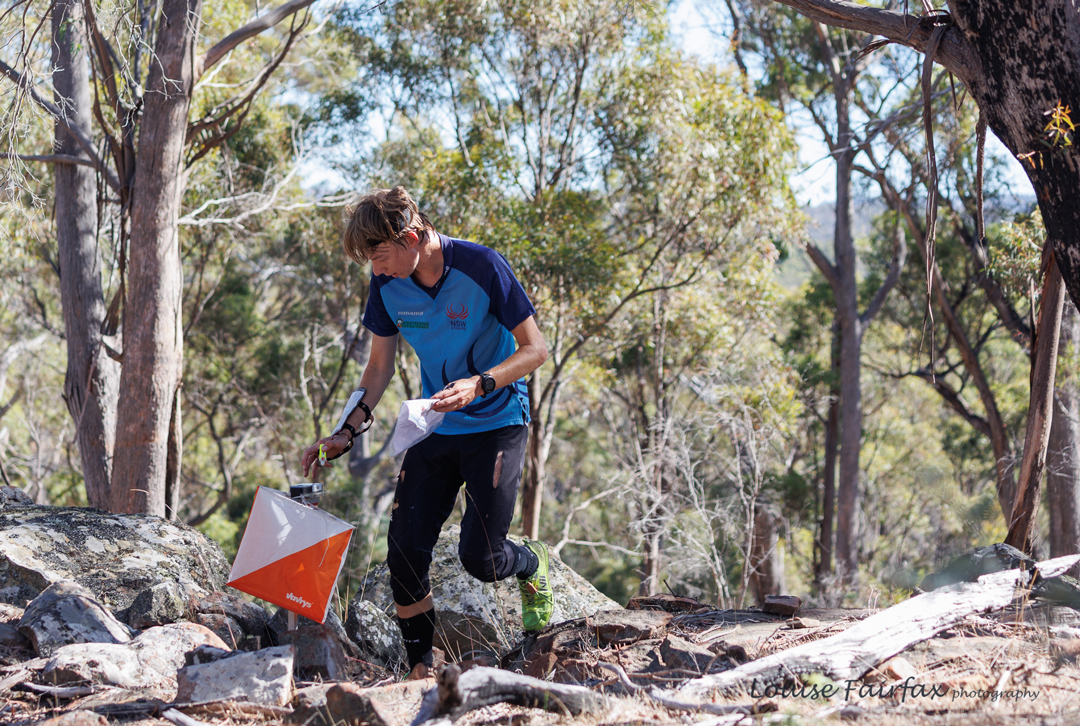
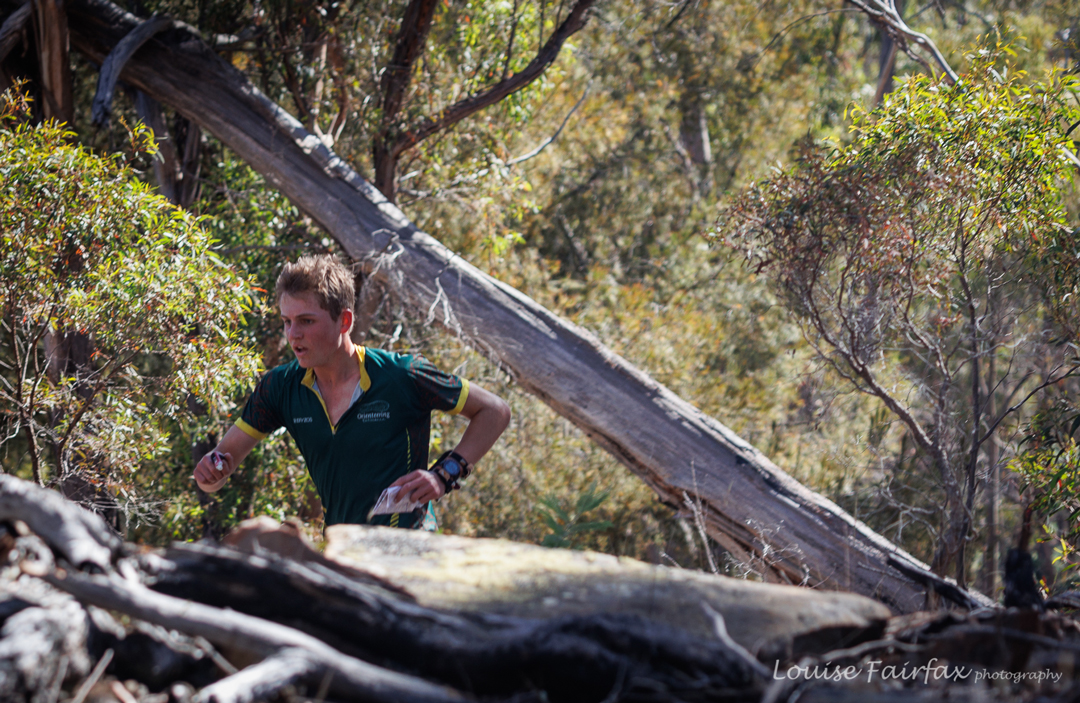
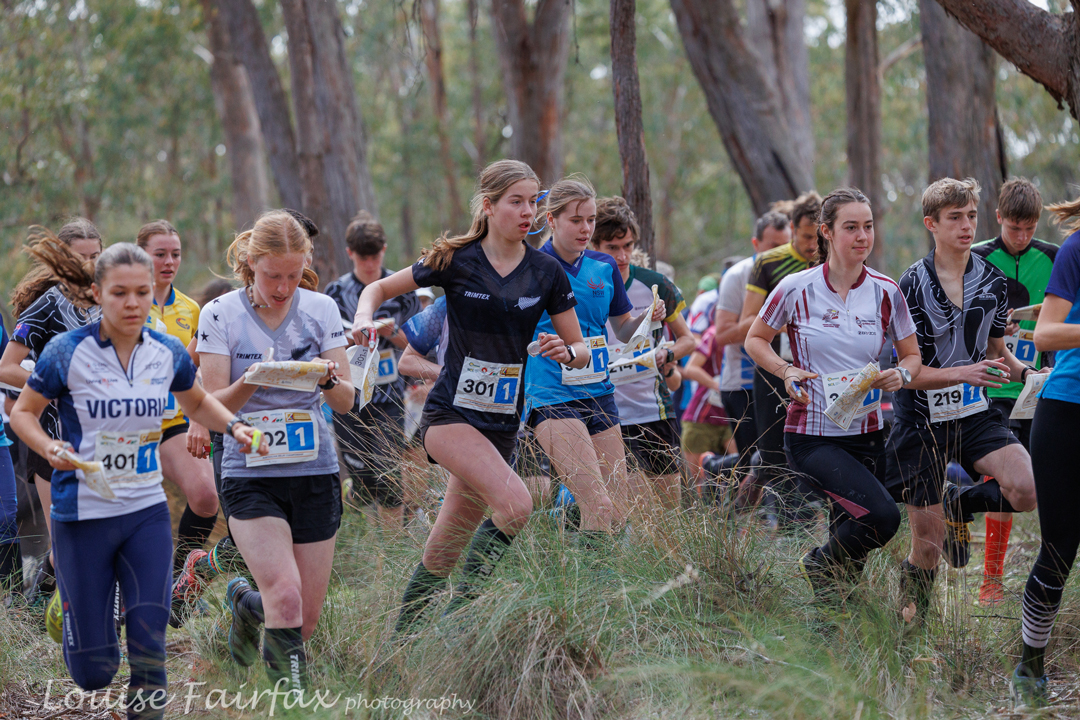
The remaining photos capture some of the action of Orienteering. The first race this long weekend was a sprint around Bicheno, sometimes amongst the rocks of the headland, interweaving that complexity with dashing around the buildings of the local primary school. It was exciting and intense, with people rushing urgently in all directions, concentrating on their maps. Amazingly, nobody accidentally crashed into anyone else. There were eight courses on offer, and hence the large number of directions being taken at the same time.  It looked very busy; and it happens to be very stimulating to compete: you are in a tunnel of concentration the whole time, solving control finding with route choice problems whilst reading your map running as fast as you can.

Liana Stubbs TAS
ACT

The next day we went bush at Coles Bay, in a “Medium” length course, that most people found to be very long, as the hills were steep, the bush thick, obstacles plenty and the weather hot. Times were not slick, but the challenge was worth it. This day determined the official State Middle Distance Champions in the various age divisions.

Tassie doing battle with SA
NSW
Euan Best TAS, reigning Oceania M16 Champion, competing here in M20 elite.

The final day had us move further south, to open rocky terrain near Spiky Beach. The designation was “Long Course”, but my time was about half that  of the day before, and I don’t think I was alone. The three different courses gave us lots of technical practice. Many of us are honing our skills to prepare for the Australian Three Day Championships at Easter, to be held near Adelaide. Tasmania does extremely well at the national level.

Some orienteers come in very small sizes. Runnable farmland.
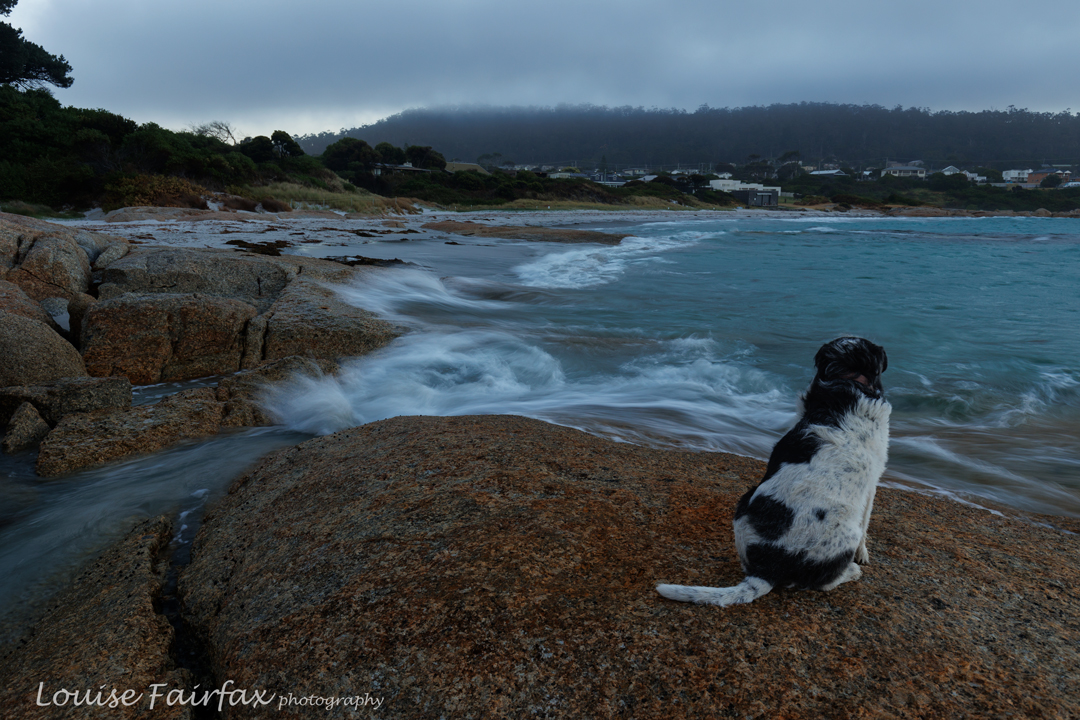
My fat friend