Bastion Bluff 2018 Nov

Bastion Bluff Nov 2018
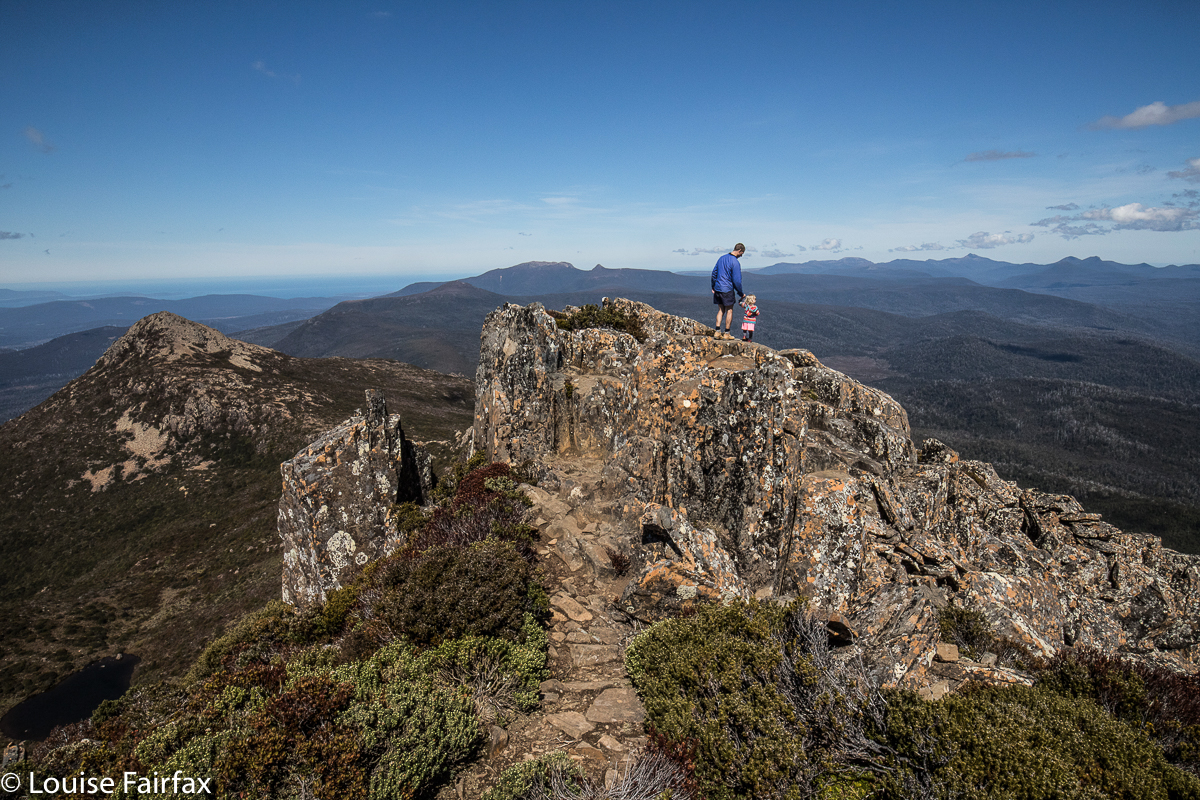
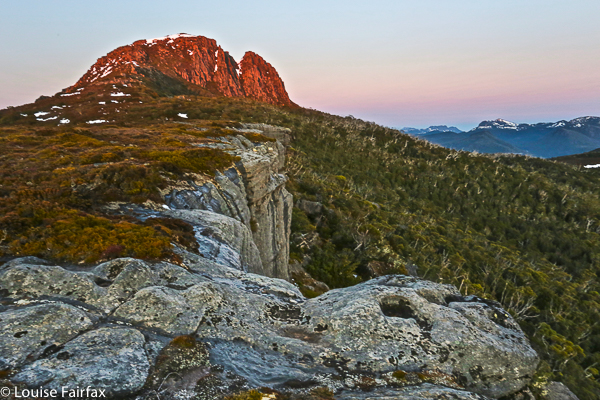
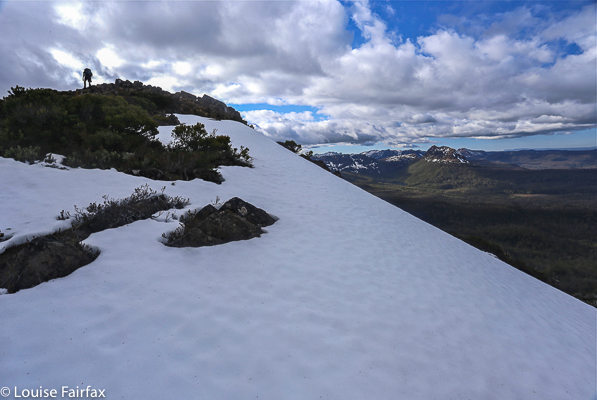
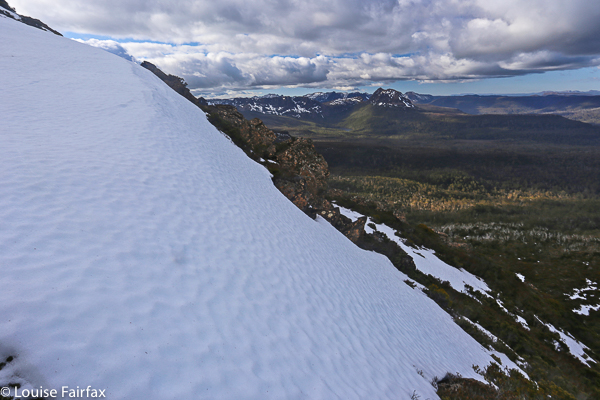
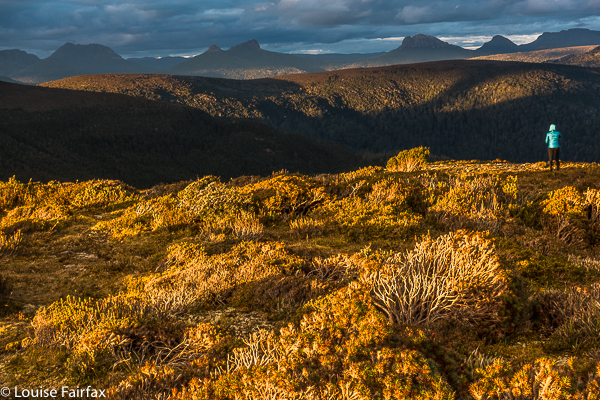
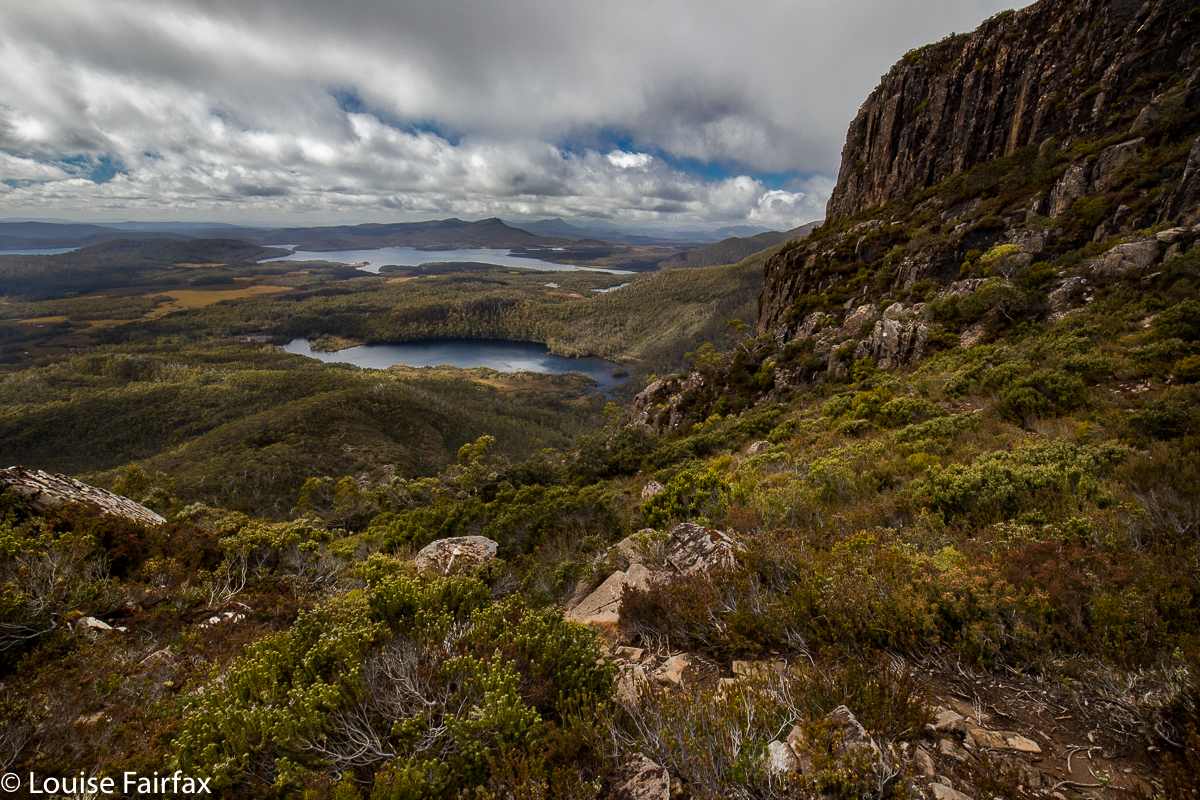
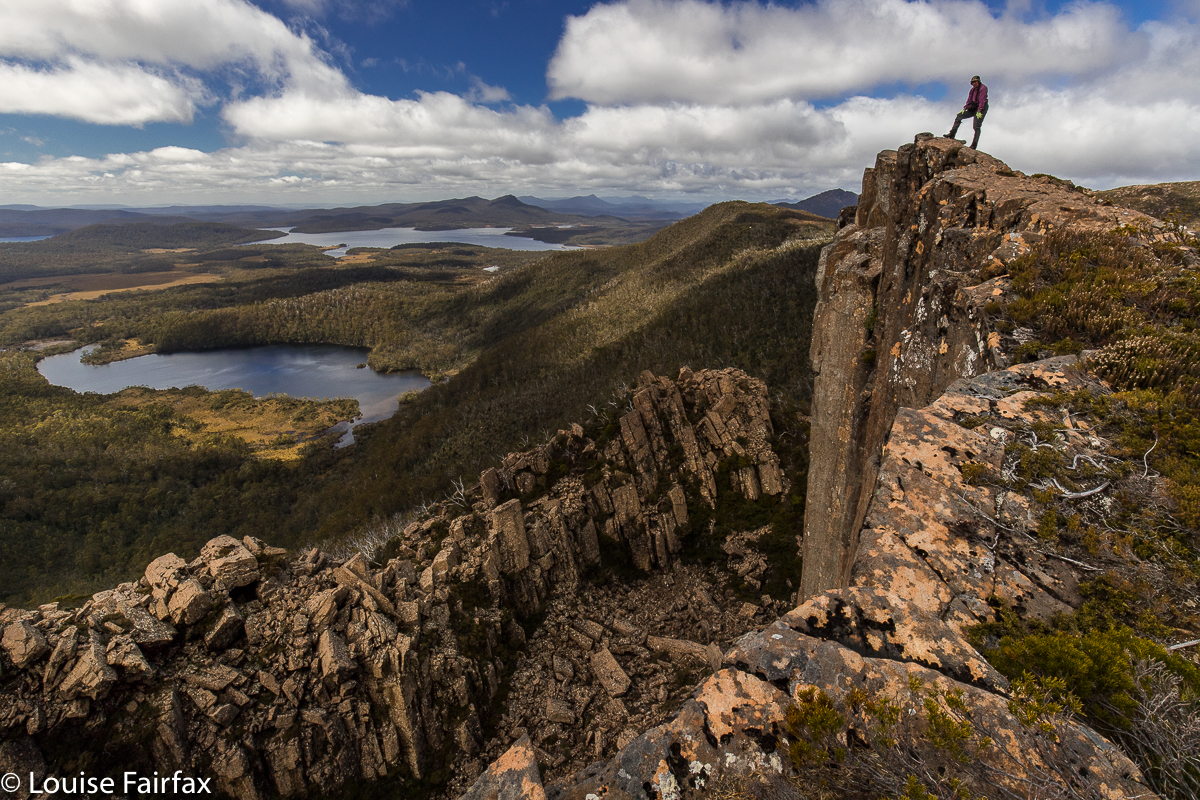
Sue and I sat together on the rocks just over the edge of Bastion Bluff, looking out at the world beyond – a world that encompassed Quamby Bluff and Mother Cummings Peak, although not contained merely by those two peaks; rather, we gazed at infinity. We both felt extremely contented: she had hurt herself crossing a swollen creek and was in pain; I was in a different kind of pain, still mourning the death of my husband, and yet we both felt an inner peace and happiness arising from being in an infinite place. “You know”, she said, ” there’s nowhere else on earth that I would rather be right now.” I knew exactly what she meant.
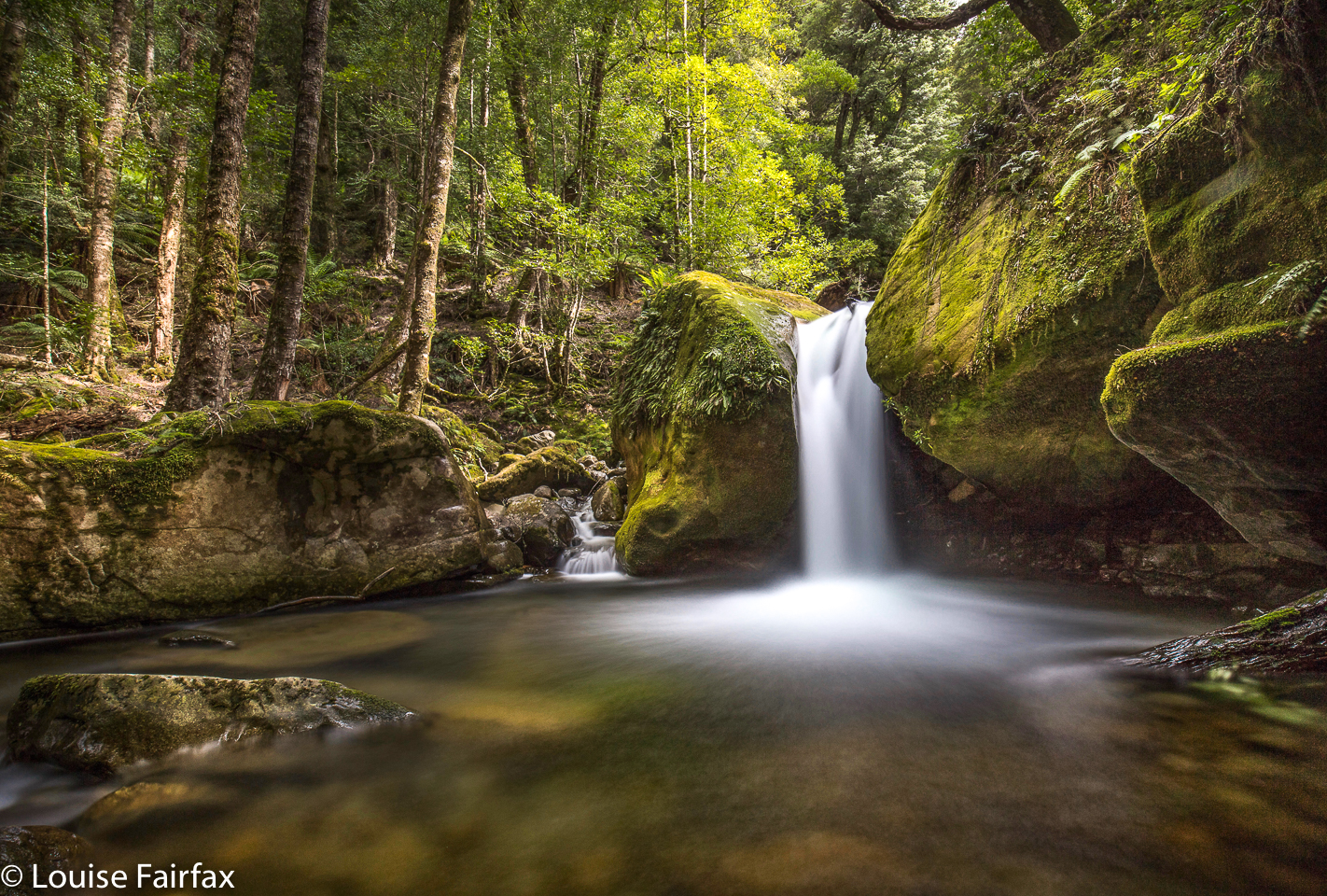
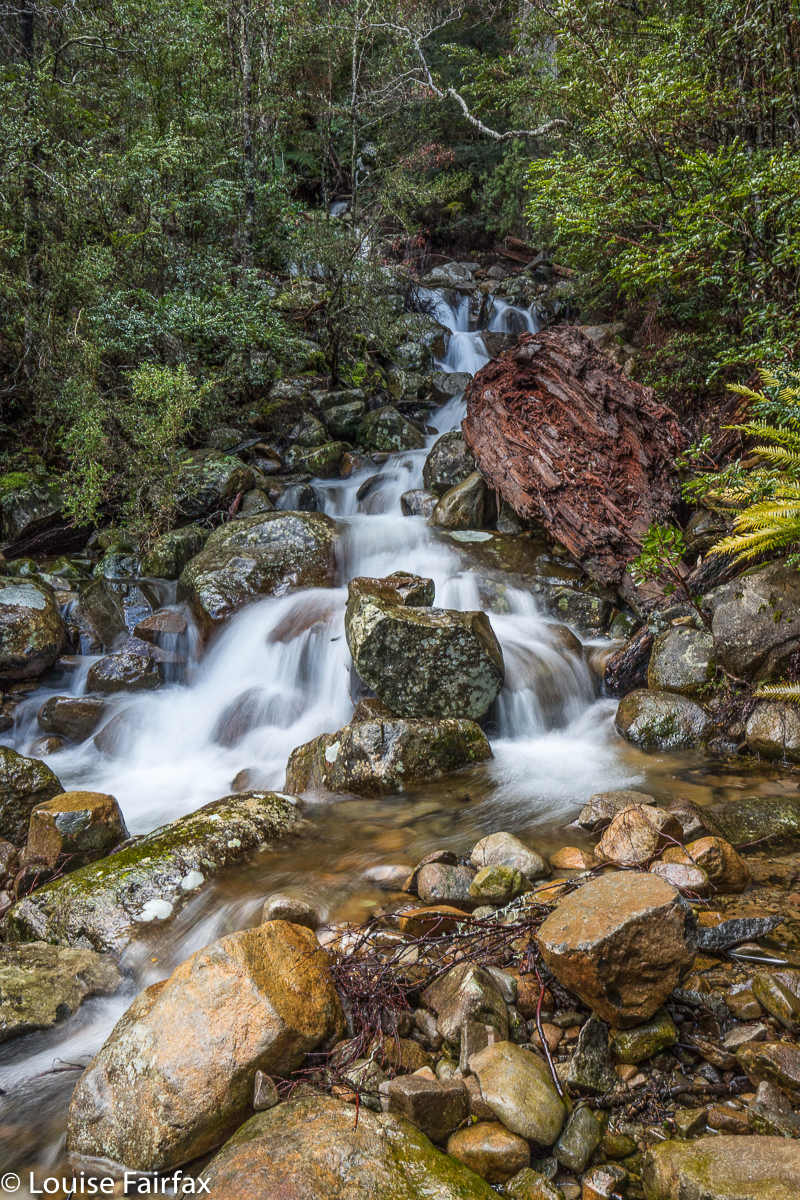
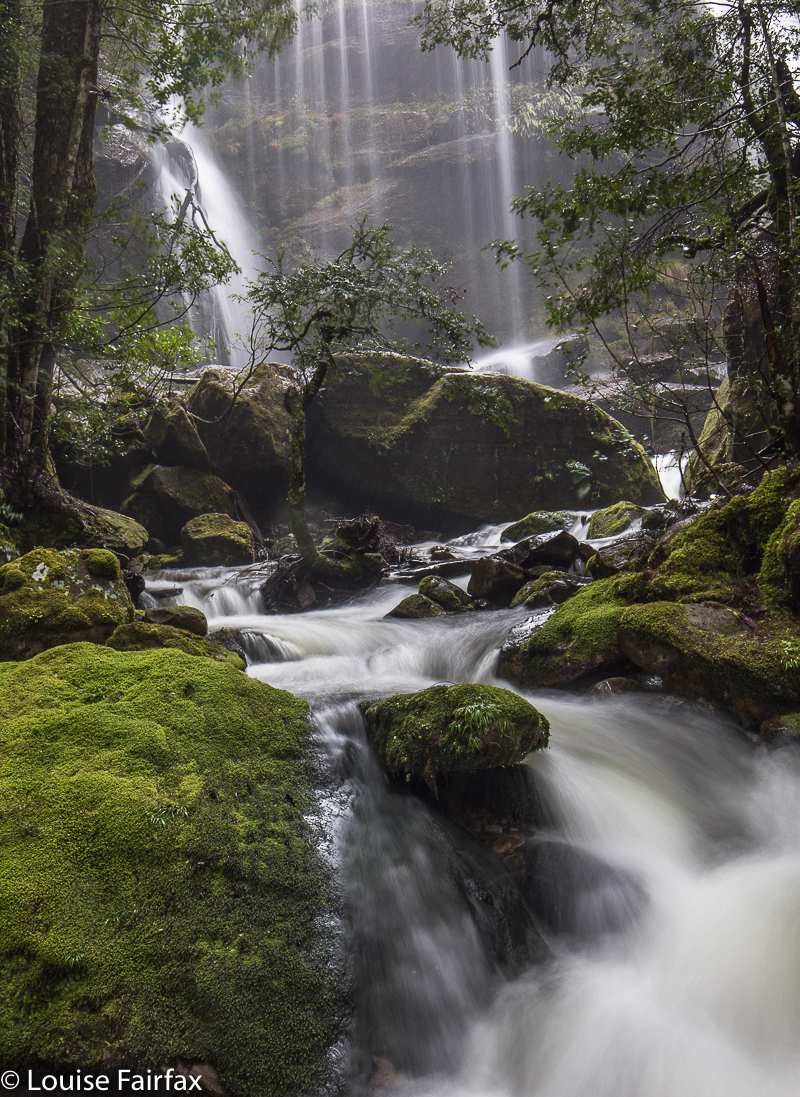
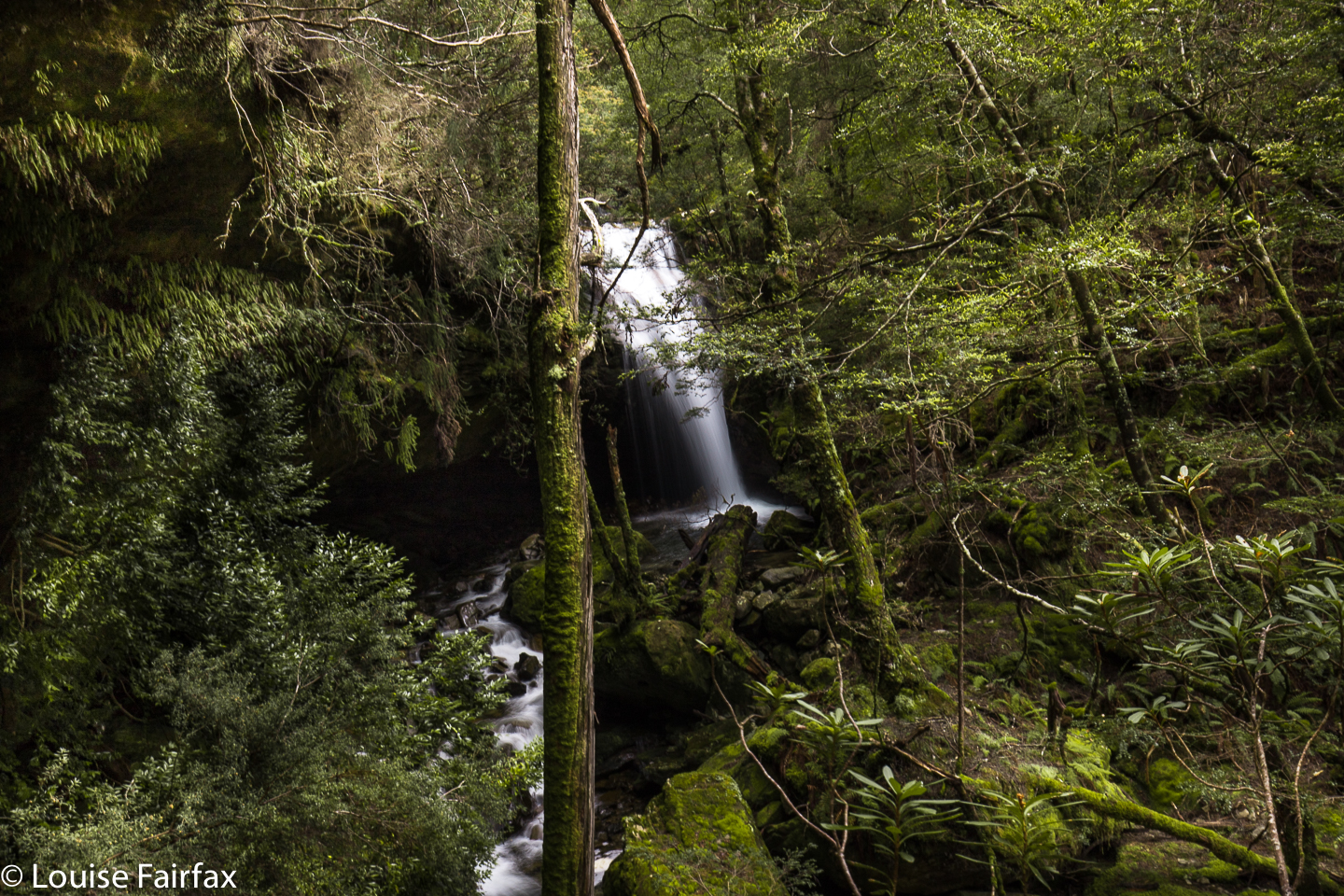
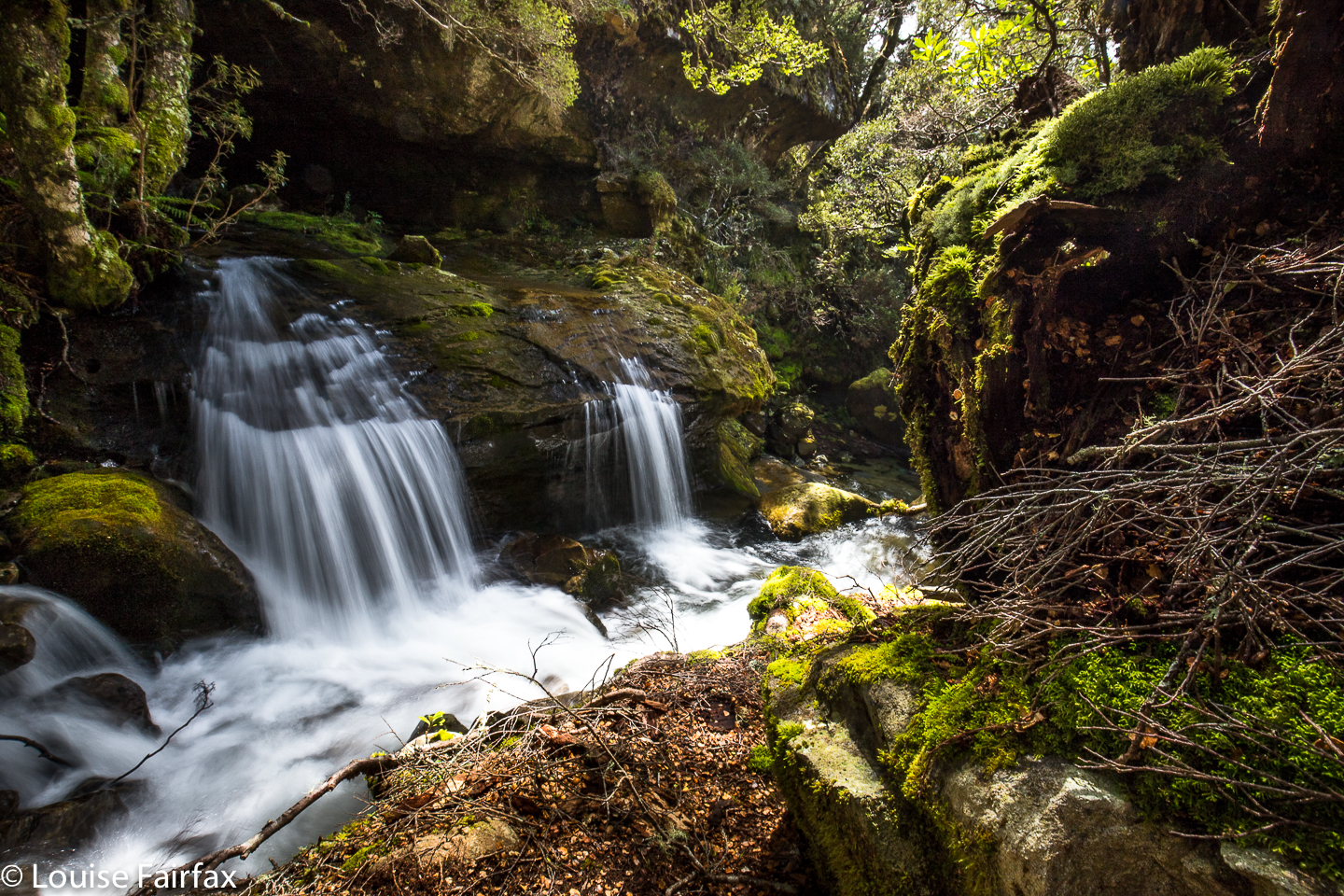
We had had a good day, full of adventure and beauty: a day marked – as is so often the case in Tasmania – by the presence of all four seasons in the space of about ten minutes, repeated several times over. We had crossed very full rivers, witnessed countless cascades and waterfalls, traversed areas of lush moss, myrtles and King Billy pines, emerged into the open to be hit by a snow squall that developed into a blizzard, enjoyed intermittent sunshine, climbed up and down a mountain over 1400 metres in height, and enjoyed the fellowship and companionship of likeminded bushies.
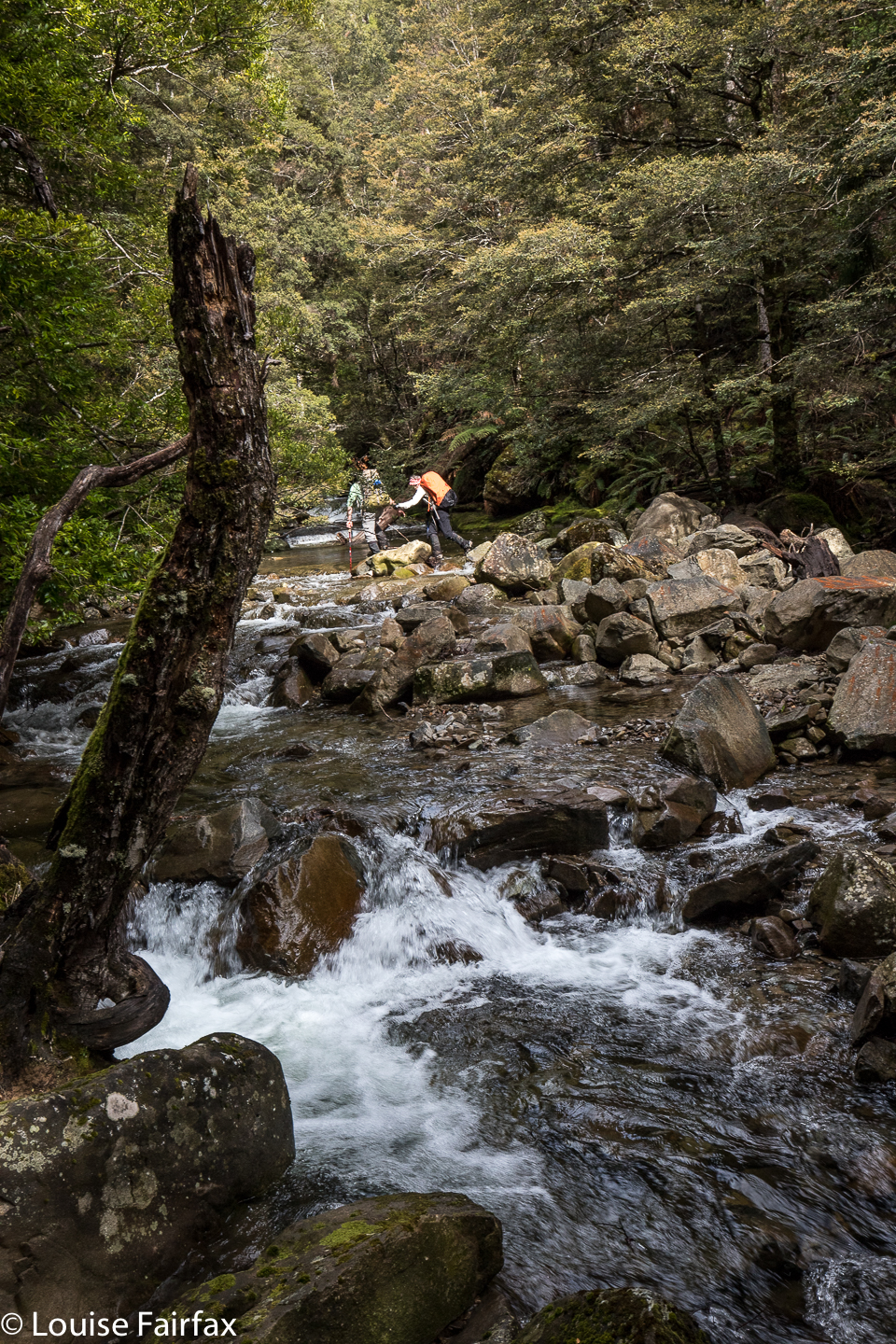
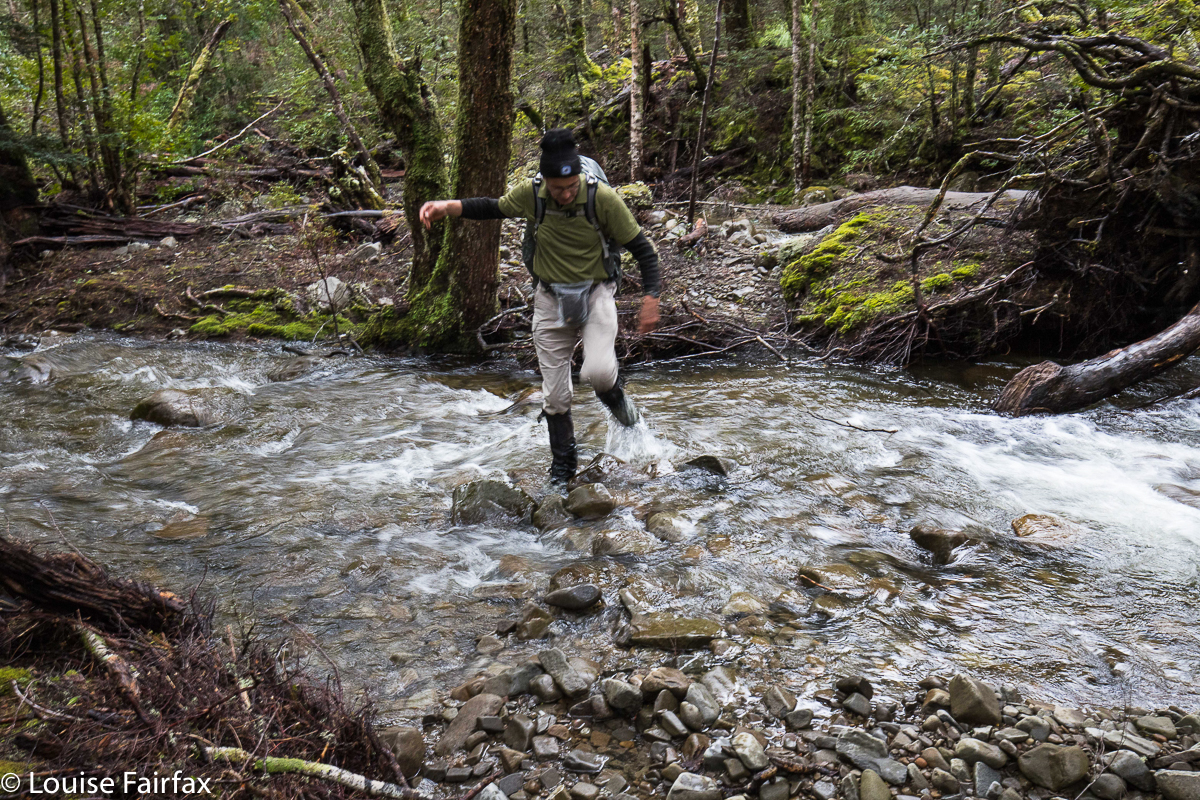
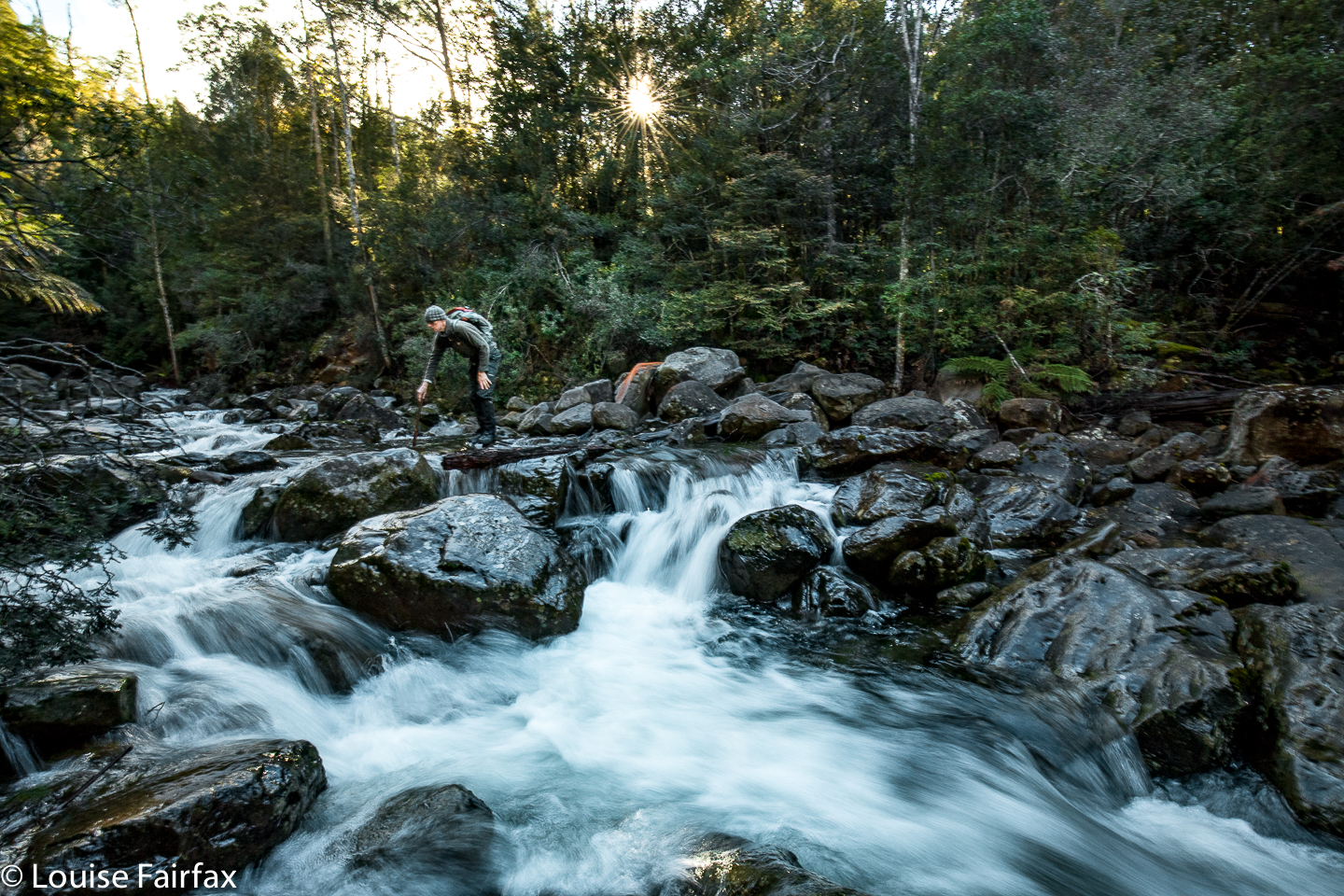
Our route began with a crossing of a disturbingly effervescent Mother Cummings Rivulet, which had all of us assessing pretty exactly which of the shining, most likely slippery, rocks in jumping distance from the last one we were going to commit to. Lucky, we all got across unscathed: a dunking at that early hour of a long day would have been rather tragic.
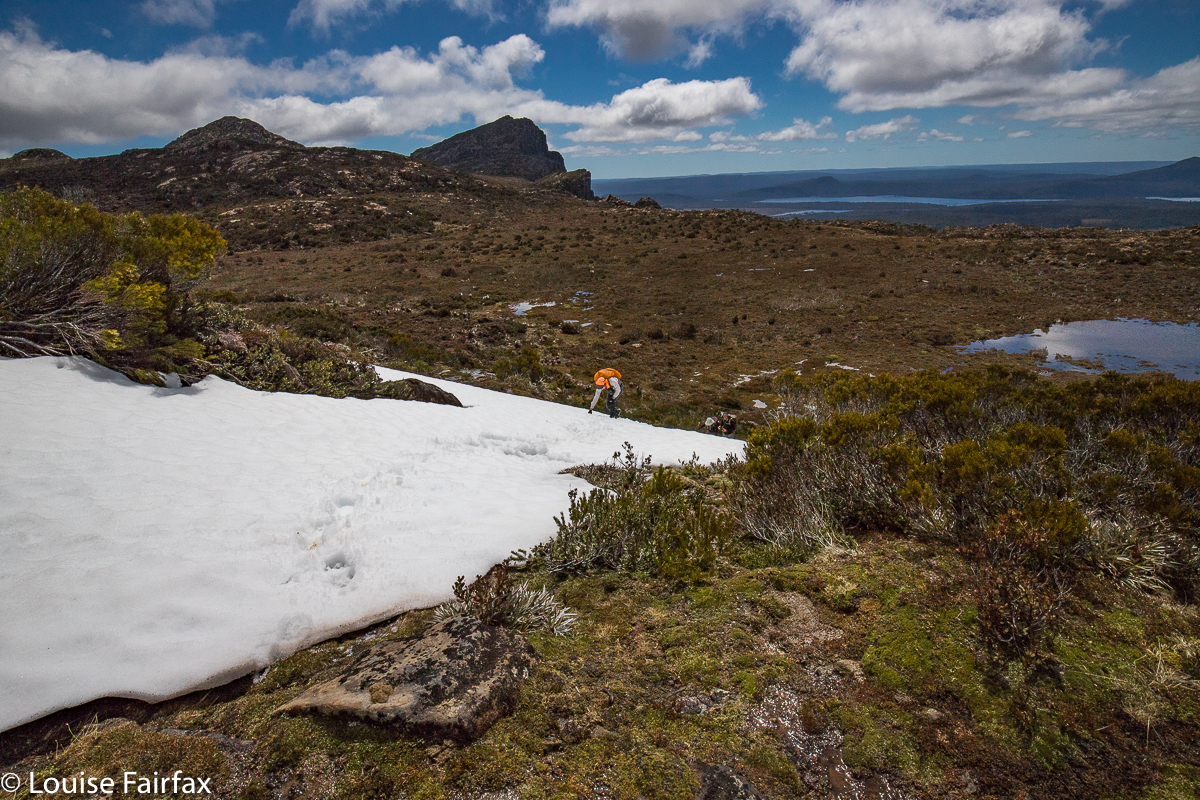
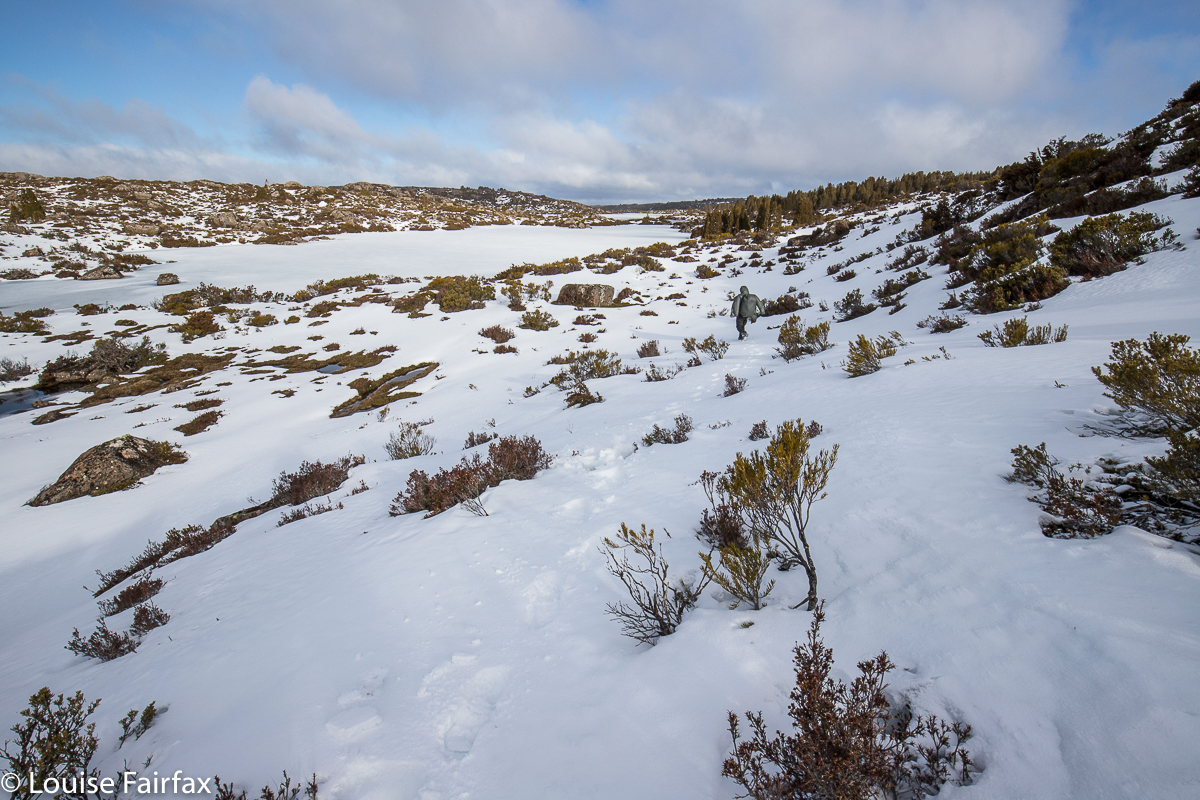
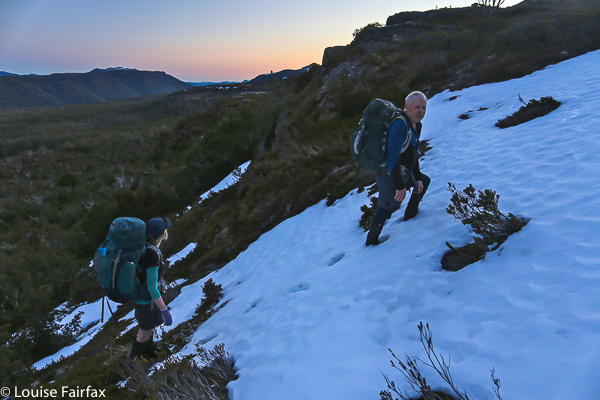
When I exercise, I seem to burn through all my supplies of blood sugar rather rapidly, and found I was very hungry by 10.30; positively ravenous by 11.30. Luckily for me, lunch number one of two was called as we emerged from the wonderful rainforest and found a sheltered spot in the now gently falling snow in the saddle before the rocky scramble up Bastion Bluff itself. Beautiful, thick, delicate flakes tickled our noses while we ate, but grew more intense once we began the climb proper and we came into the stronger winds. Now they were horizontally scurrying flakes. We turned our backs to them like a group of penguins any time we had to wait. Be that as it may, the conditions were very tolerable, and I felt snug in my gear, despite wind and snow. Later, when my feet got wet in the very soggy ground on top, I got much colder.
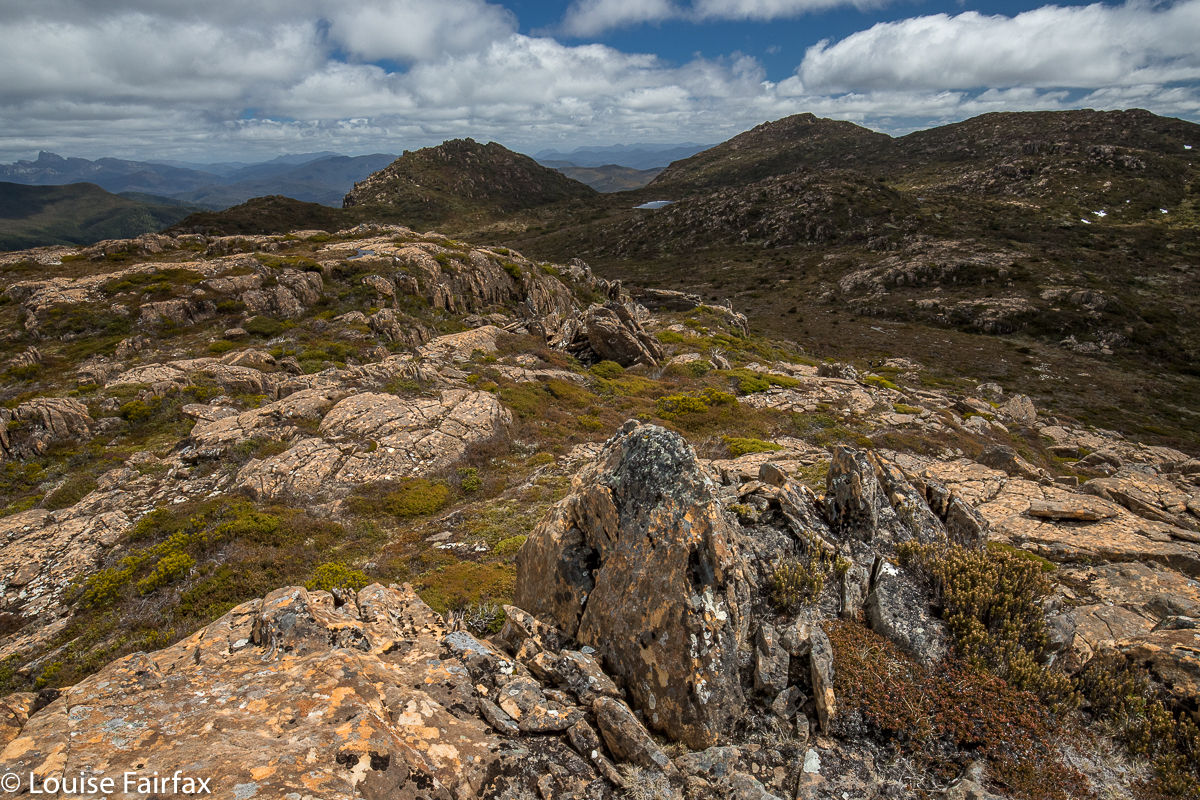
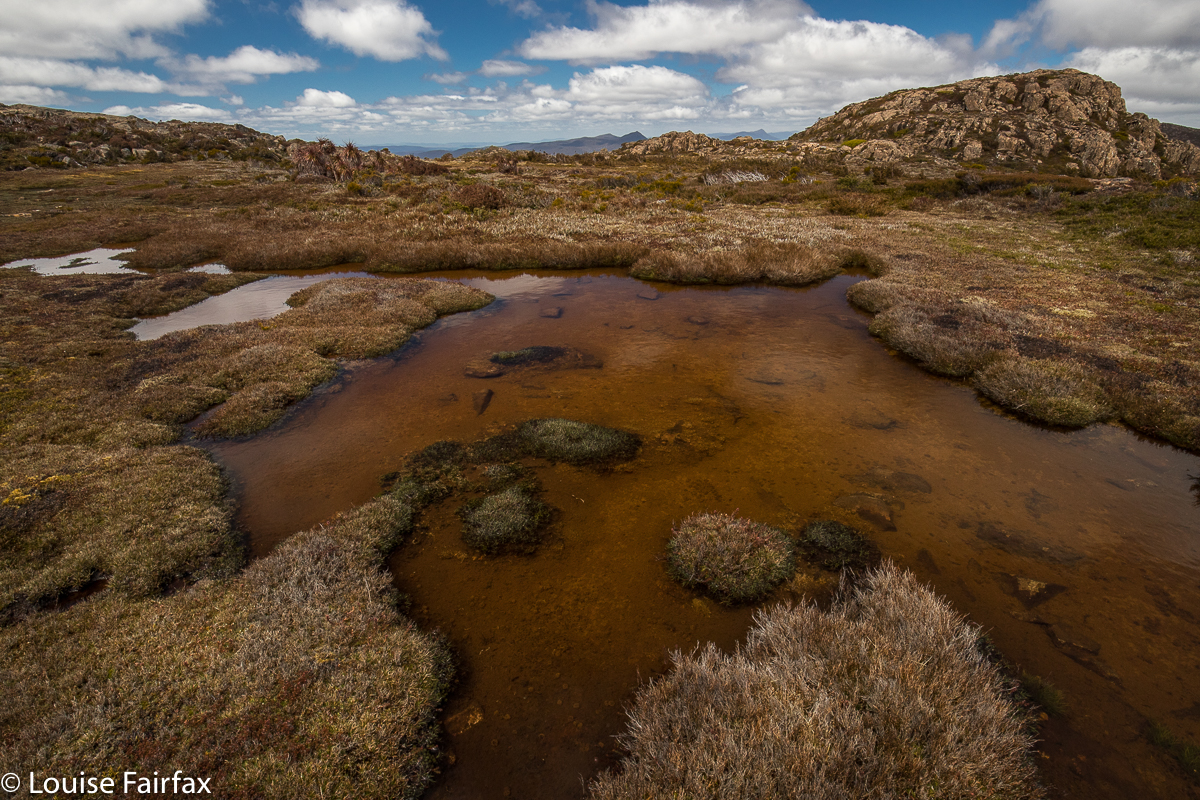
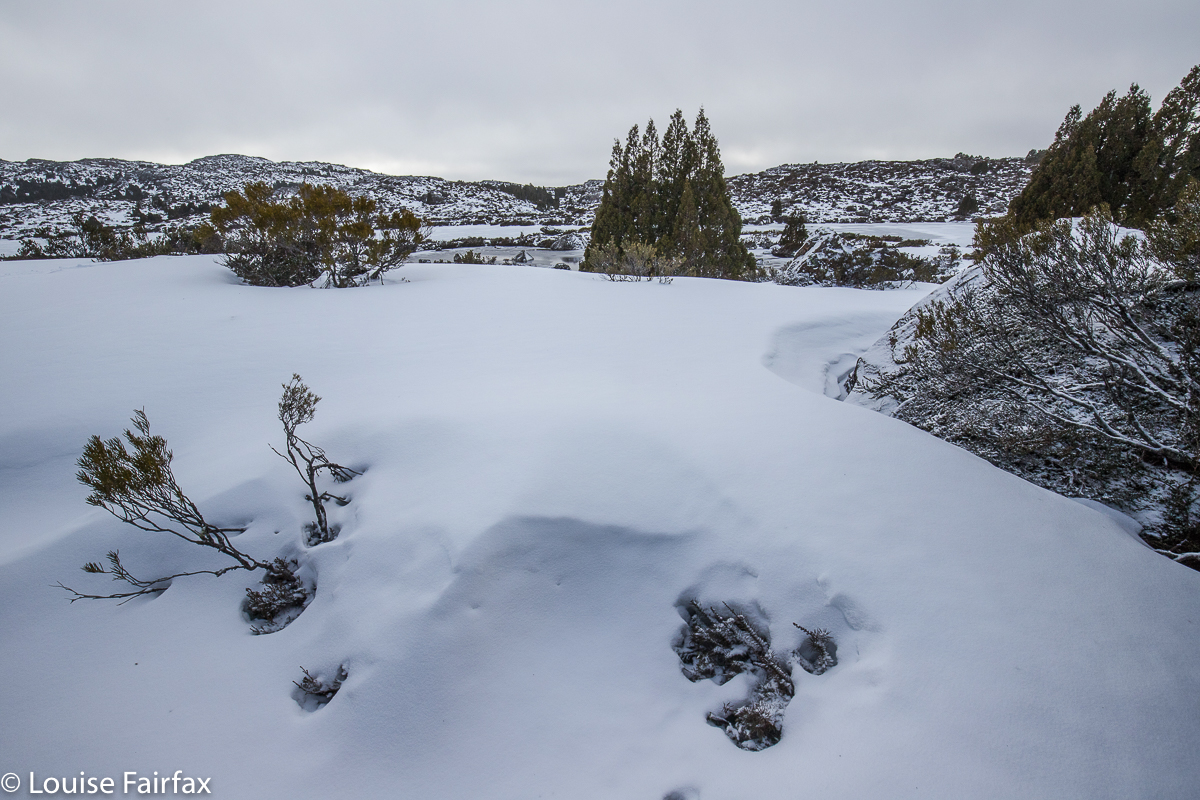
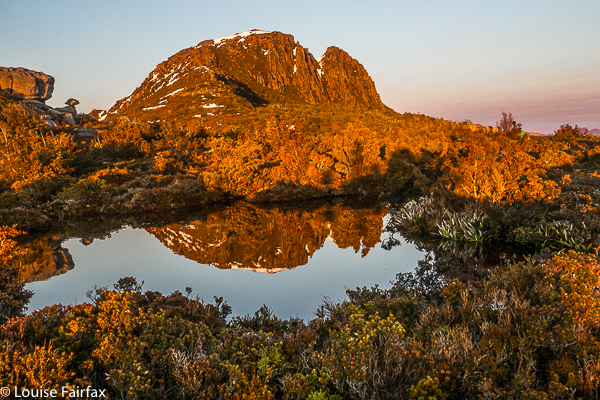
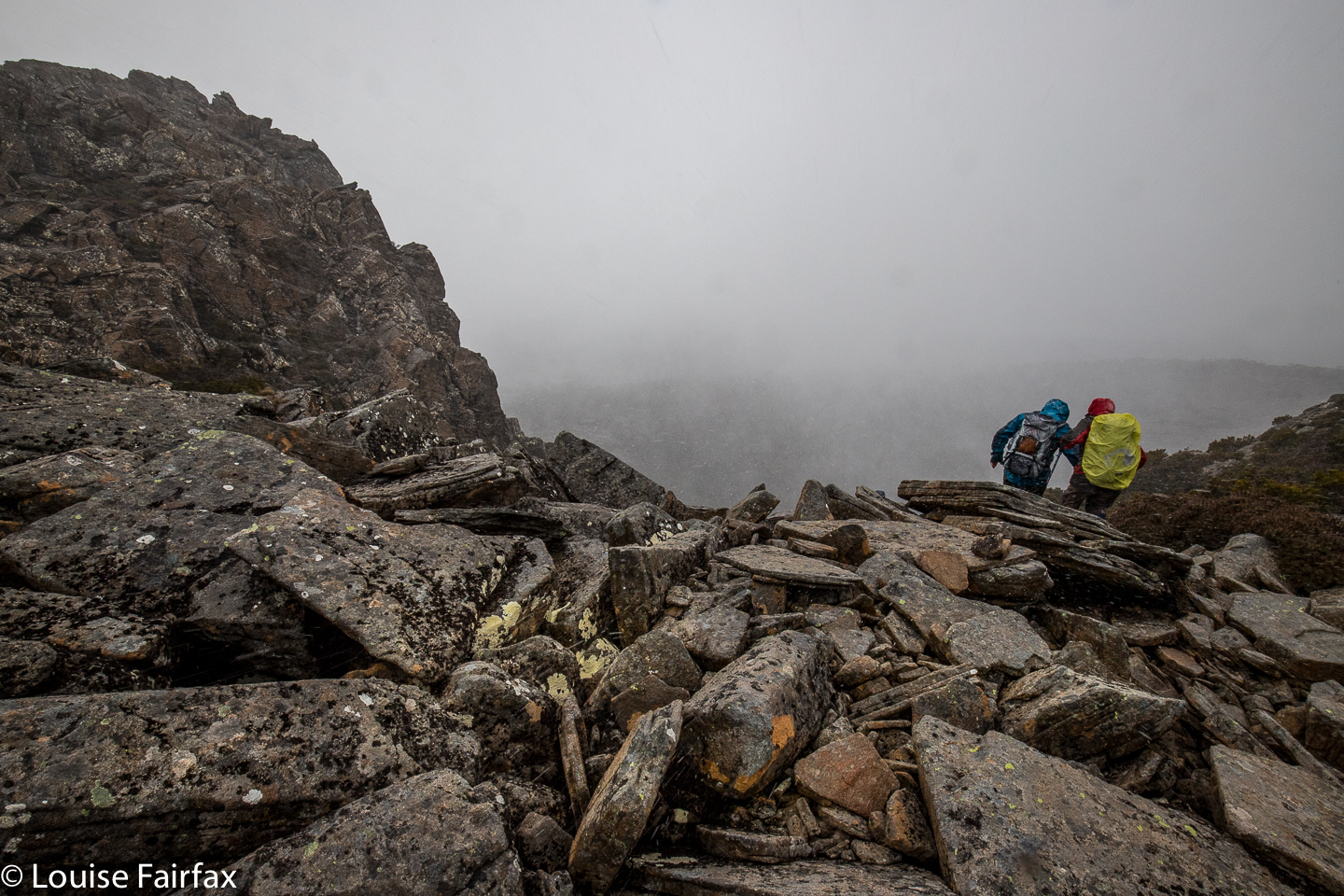
On the plateau on top, you would certainly not die of thirst. An army could have camped up there, and each tent had its own private pond. Slosh, slosh we went, heading for the summit area and the opening to the descent route, being intermittently gusted by driving snow, and then, suddenly and unexpectedly, walking in sunshine. Repeat many times over. Surrounding mountains appeared and vanished as the mist played its games.
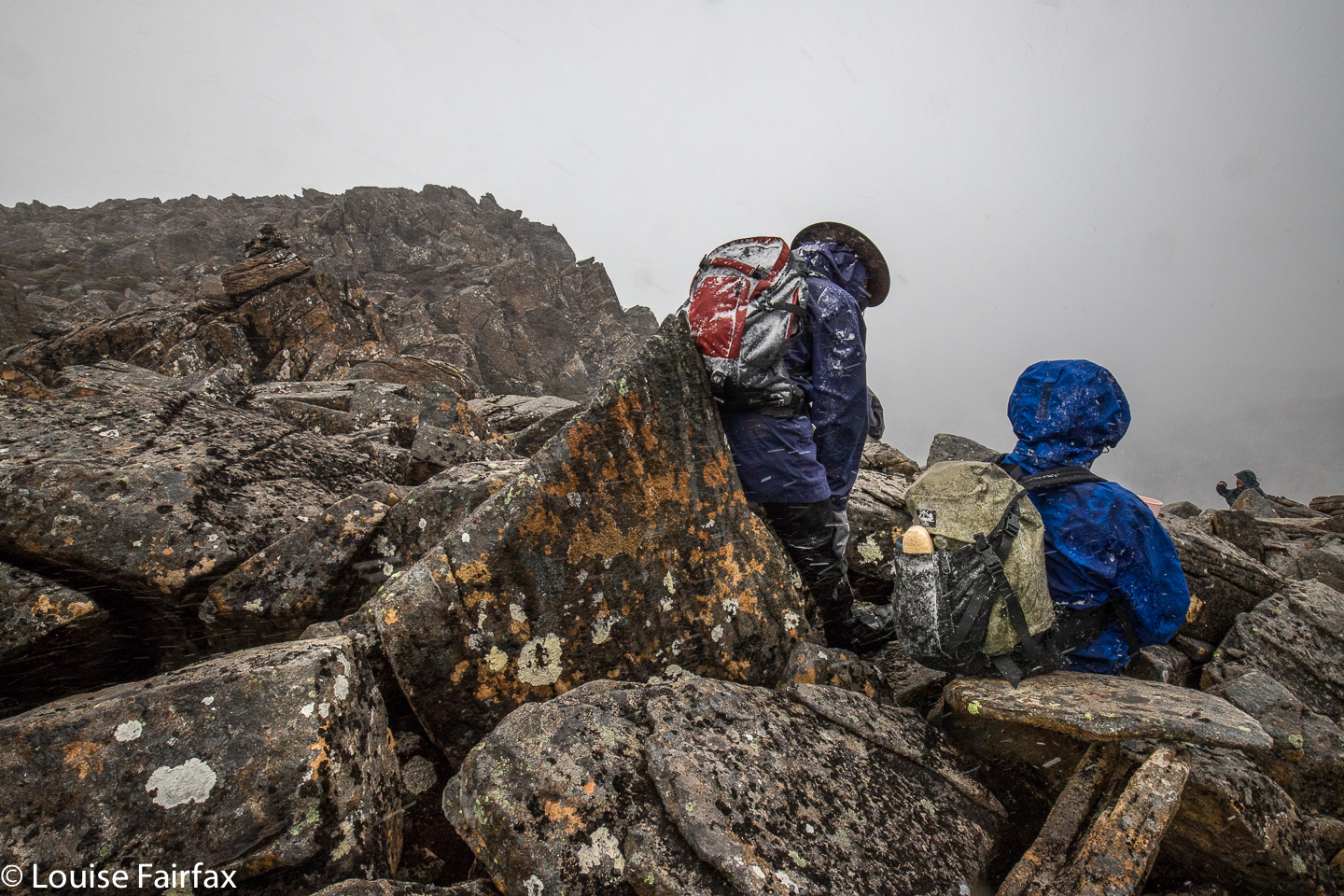
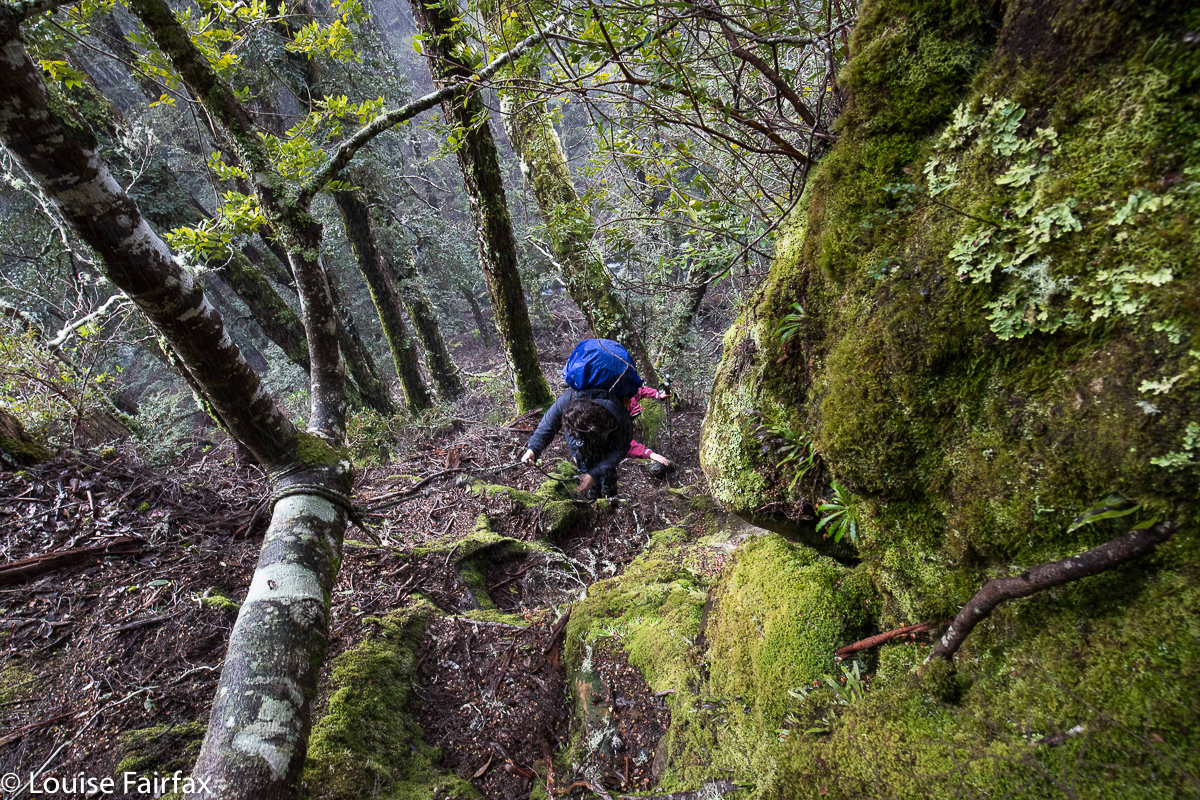
See the snow on the backpack?
Back down in the rainforest, I received a shock. I had been in this area only a couple of weeks ago when Carrie and I went to Bastion Cascades and walked the Bastion circuit. This time, however, there were countless huge trees, freshly blown over (I suspect in Thursday night’s storm),  lying across the track and obliterating all signs of the previous track. Each giant had caused an amazing amount of collateral damage as it tumbled. Rubble abounded.
My dismay has nothing to do with the obstacle course that has replaced the track: rather, it is because these fallings have already allowed a large amount of extra light into the forest. This will damage many fungi, mosses and lichens, and will allow weeds to colonise. The open spaces will also allow winds to build up more momentum next storm, which means even more damage will take place. I fear this marks the beginning of this section of the forest’s decay. However, the forest has been compromised, not destroyed. We finished our day with a sense of how extremely privileged we are to live in a place where such beauty and adventures are so easily obtained. They keep me sane and balanced; they refresh me in a way that non-natural things cannot.
Norman Bluff 2018 Oct

Norman Bluff 31 Oct 2018


Norman Bluff is a pretty perfect daywalk if you are relatively fit and know how to navigate. It involves glorious off-track, yet easy, alpine walking over the tops of Battle Ridge past Mt King William I. Even with the drive from Launceston (as we had) or Hobart, it is attainable. I am lucky enough to have a group of friends who are sensible enough to clear Wednesdays from their work schedules to go to places like Norman Bluff in the middle of the week. Off we set.
Above: King William I view from near the top to Lake George and the Guelph Basin

Guelph Lump, Phil, to Lake George, Guelph Basin, Norman Bluff
Our route took us over Mt King William I (steep climb) and “Guelph Lump” (what else are you supposed to call an interesting looking lump that is just before the beginnings of the Guelph River?) to a lump that I dubbed Deposit Lump (as we “deposited” several from our party there, to be picked up on the rebound) and on to our lunch spot, some delightful alpine tarns just before the climb (minimal) to our goal for the day, Norman Bluff itself.

Climbing to Deposit Bluff, Diane (King William I and Mt Pitt behind)
Norman Bluff was actually, truth be told, a bit of an anticlimax. Das Gehen war das Ziel (The ‘going’ was the goal). Not only was Norman Bluff not the ‘enjoyment highpoint’ of the day, it was also not the physical highpoint. Both King William I and the Battle Ridge Highpoint (visited on the rebound) were higher.

Deposit Bluff to Mt Harold and Milligans Peak. Frenchmans Cap behind left
I am not a lake or tarn bagger. There are just too many in Tasmania, but if I were, I could have ticked off Wessex Tarn, Odo Tarn, Lake George, Lake Vincent, Lake Eva, Lakes Adella and Arlet and the Guelph Basin of Lake King William. I could see Mt Ida, but I don’t think I got a glimpse of Lake St Clair – it was a bit hazy in that direction, or perhaps I wasn’t high enough. I am a waterfall bagger, and Saxon Creek Falls were very clearly visible, but that was not a first-time bag. I nearly died at the hands of that waterfall on our first encounter (2012), when the rock I was standing on shot out from underneath me as I scaled the falls, and I was left dangling uselessly from a tree root with a three-day pack on my back, drenching wet but with nothing for my feet to use, and arms losing their strength with each passing second. Luckily I had just written my will before I left home. The drop below did not bear contemplation. Fortunately, a fast-reacting Rod got my arms and somehow disconnected pack from girl so that I could pull up my own body weight. Phew. I will not forget Saxon Creek Falls in a hurry. Please do not try to tell me they are insignificant just because they don’t have a little blue line over the creek on the map. These matters are utterly arbitrary, and dependent on the will of a bureaucrat in an office somewhere. The drop would have killed me. The climbers below were too small for comfort, with horror written in their bulging eyes. How odd that I had time to notice that detail in what might have been my last few seconds. But this trip was a happier one. I could just wave a jaunty “Hi” across the valley and greet them from a safe distance.

Lunchspot tarns. Norman shelf
The day was a little hazy, but mountain views of the many, many Tassie peaks in our purview were also enjoyable, as was the alpine walking around tiny tarns and intricate pools of pure, clear water, with flowering cushion plants and fruiting pineapple grass at our feet. How lucky we are to live in a place where such thrills are there for a day walk.

Hartz Peak 2018 Oct

Hartz Peak 2018 Oct

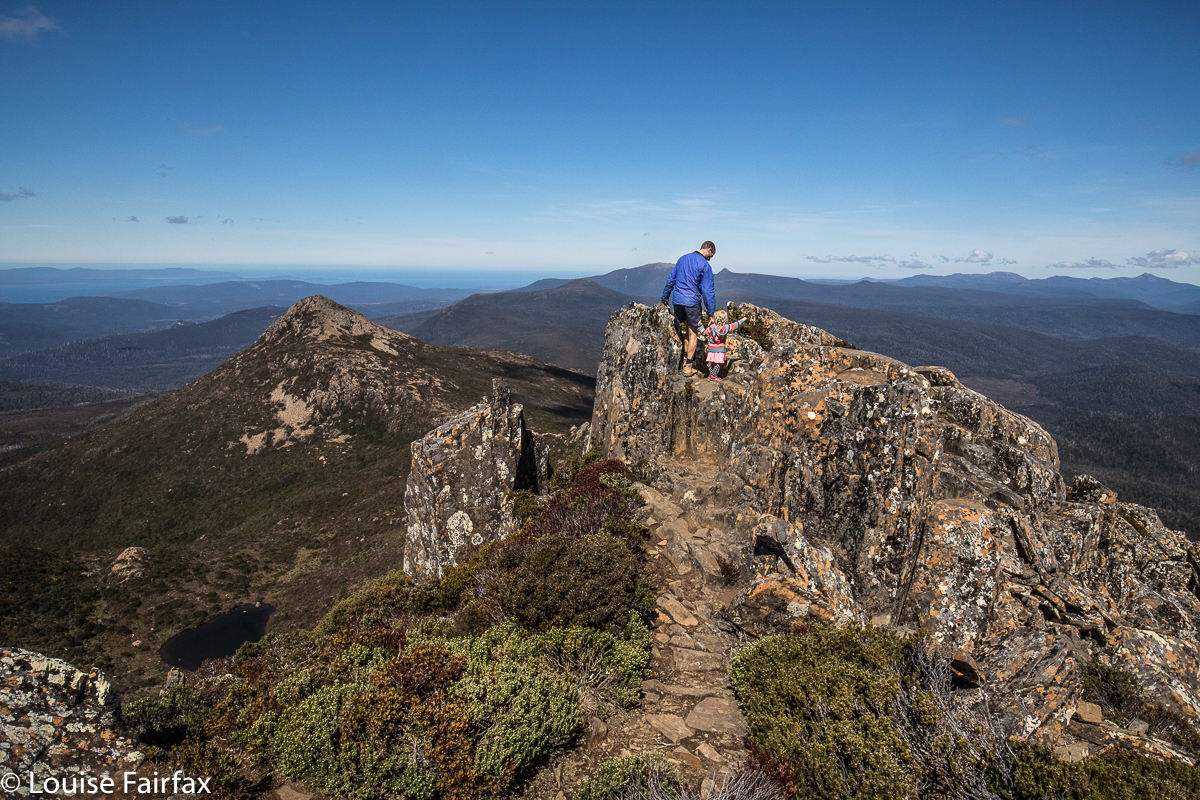
Abby surveys the view from Hartz Mountain.
It has been six years since I last climbed Hartz Peak: certainly time for a revisit, and what fun to be able to share it with the family. This would be Abby’s first Abel, Gussy’s second.

Hartz summit in view
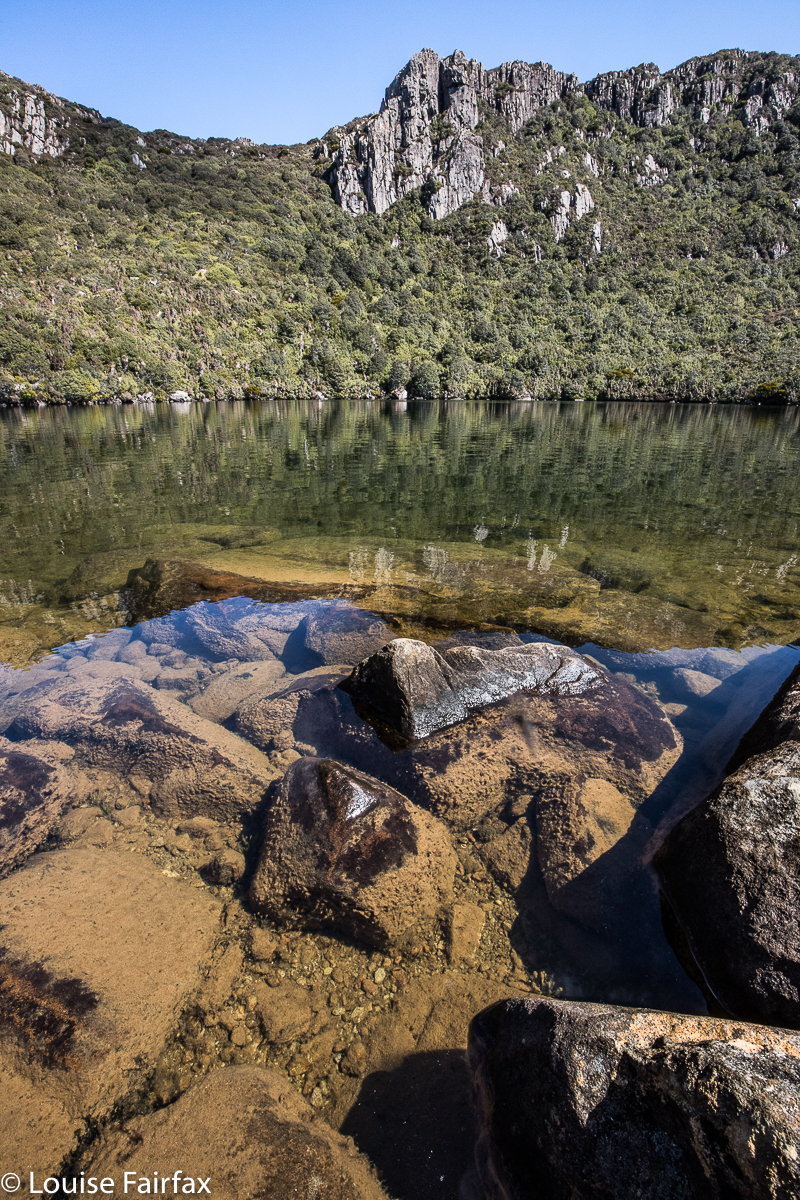
Of course, with young children, the going is slower, and most unusually, our ascent was punctuated with a swim in Ladies Tarn. In fact, some of us swam there in both directions. Even Abby got brave enough to strip off all her clothes, but changed her mind about immersion once her toes felt the gelid water.  I didn’t even think about it.


Ladies Tarn
Hartz Peak has a track the whole way, so is very easy for fit children to accomplish. Gussy, aged seven, fair bounced up the mount. Abby, aged two, took longer, and had to hitch a ride for part of the way. Porters and children needed a break at the tarn.

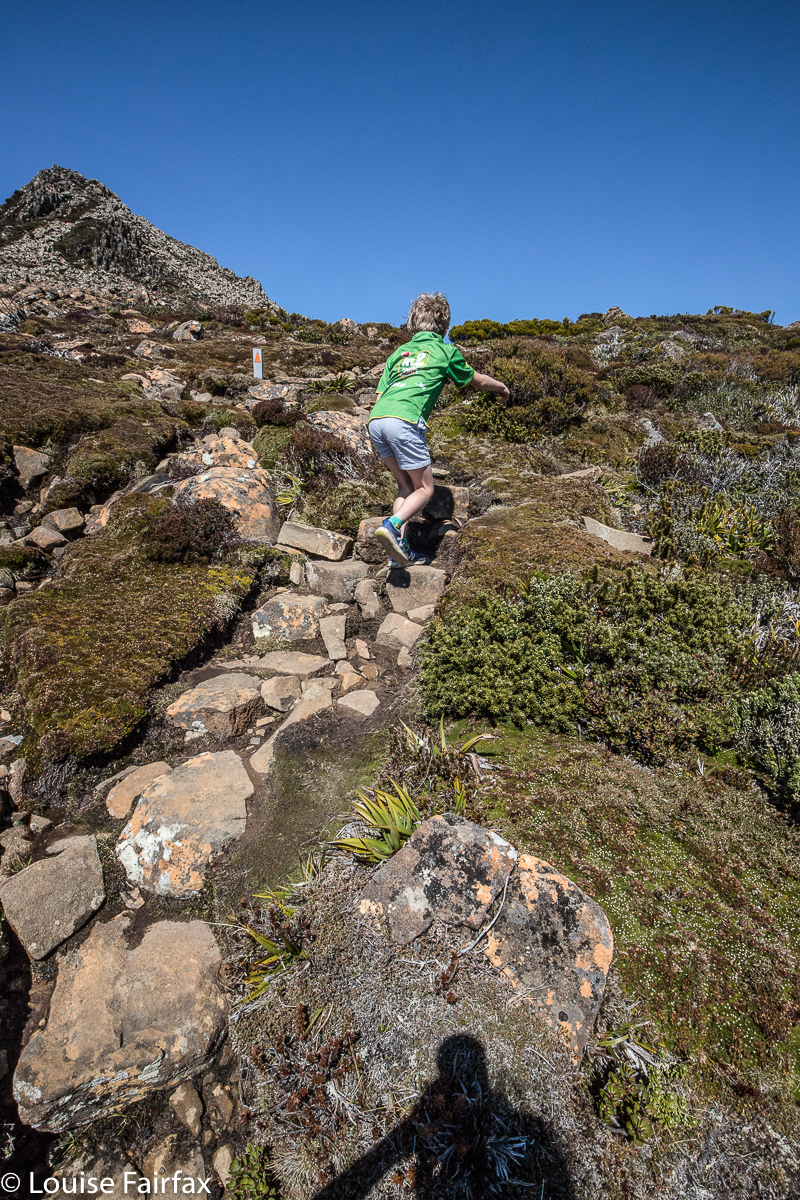
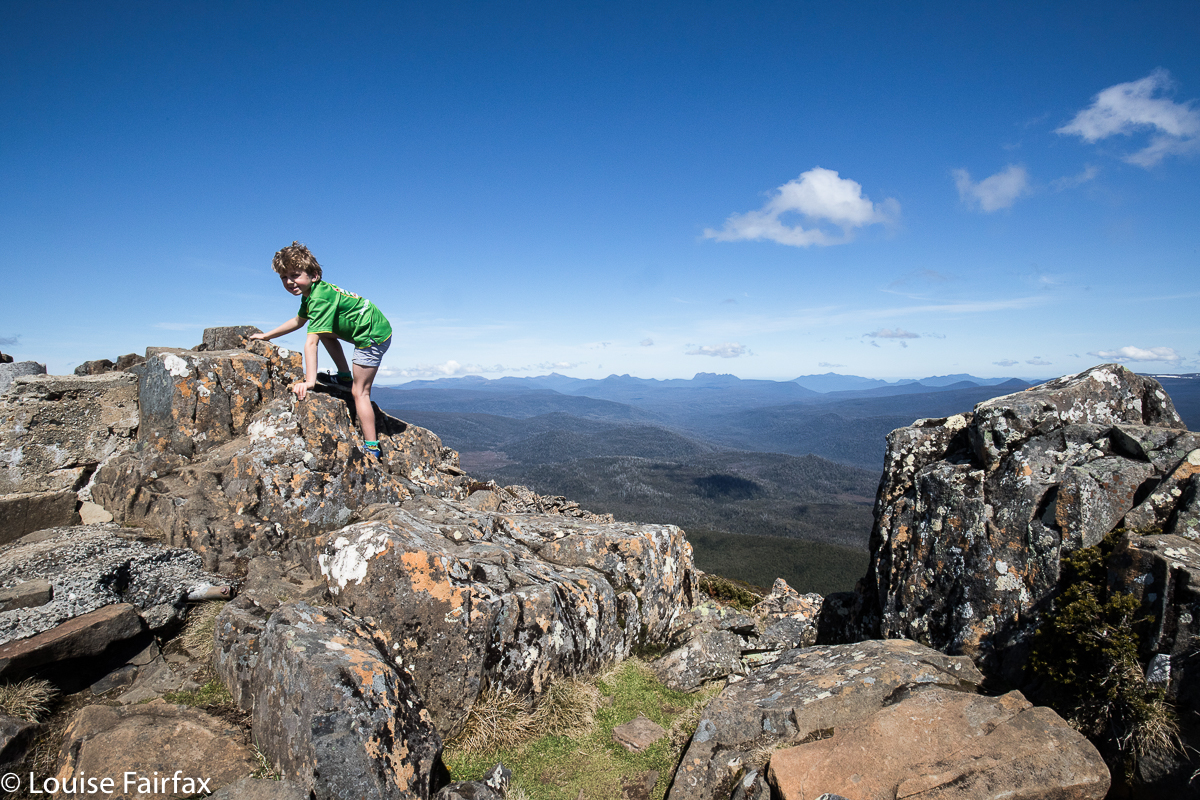
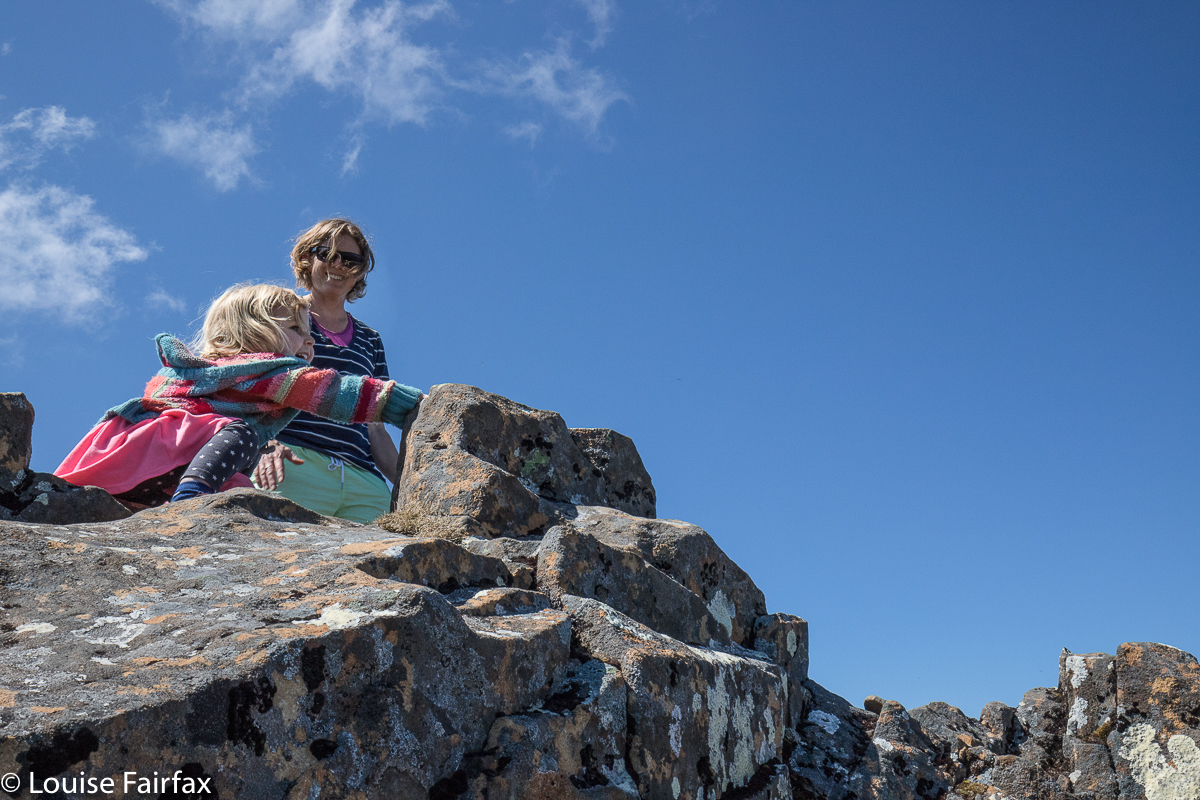
Both children took great pleasure in touching the summit cairn, and in having lunch on top of a mountain. Here are some photos of the journey to the top to give you an idea of what it’s like if you haven’t yet had the pleasure of doing this one. The actual walking time was about half an hour to the tarn, and a further half to the top (Gussy times, not Abby ones). The return was actually a little slower than the ascent. Gussy shares his nan’s summit fever (the two of us went on ahead of the others together) and is cautious on the downhill. I actually went on ahead on the rebound in order to check out Keoghs Falls – but they were a huge disappointment, and I didn’t even bother photographing them.


Hartz Peak summit area Gussy


Hartz Peak summit area Abby

Long Lake 2018 Snow Camping. Sept

Snow Camping at Long Lake, Central Plateau. Sept 2018.


As I walked up the road leading to the old carpark – a walk we are not supposed to like, but one idles up a tunnel of pure myrtle with its delicate little leaves and mossy trunks; walking, in fact, on moss and looking out at rich, open rainforest – I became suddenly aware of how fundamentally content I was doing this act of walking in the wilderness with my pack on my back in the implicit company of a few friends, who were not actually with me at that current point in time, but were somewhere up ahead, or behind; we were together, even if not crowding each other out.

One stops, sheds something, catches up … there are moments of solitude and times of company, as one chooses.  I possibly should not have been surprised at my contentment – I am, after all,  “naturelover” – and yet it arrived unexpectedly, as I wasn’t seeking or explicitly anticipating it. It was just a feeling that overtook me as I wandered, and I realised that there was nothing else I needed at that particular moment, and that, although my darling Bruce has gone, there is a wonderful life to be lead, nonetheless. Perhaps this awareness was nudged into existence by a text I had had from my little grandson during the week, saying: “Don’t go, nanny”.  Go where? I had already gone from his house. I read it as a deeper statement of love and the expression of a desire to have me around.

The Little Fisher River is one of my favourite rivers in the whole world. It gurgles with just the right amount of pure, clear water, cascading picturesquely through open myrtle forest of green and brown, both colours rich in intensity. Every now and then monster tree trunks enter my purview, stately curving their way up to the light, covered in soft moss.  It took us 1 hr 13 to the carpark, and another 8 minutes to the first river crossing, which I was not anticipating with glee, having heard it was slippery and dangerous these days. I was keen to get it over and done with, as I don’t like carrying all my expensive camera gear over slippery terrain where it might get damaged, and I certainly did not want to land in the river. The temperature was not much above zero. In fact, light snow fell for most of the day.

From the bridge to the glorious Rinadena Falls was another hour’s walk. I love these falls, but we got there a bit too late for the best photographic conditions, and the fact that it was snowing and truly freezing did not have me leaping around with ecstasy. We crouched under branches to eat our lunch, with me hoping the frozen precipitation might slow down enough to warrant setting up my tripod. I did set up, but did a pretty rushed job, as the others were keen to move on, having already taken a few snaps.

On we went. I was looking forward to the climby bit, as I had chilled off somewhat over the inevitable stasis of lunch-munching. The section between Rinadeena and the valley above – Little Fisher Valley? – is rather steep, with two sections having fixed rope to aid climbing the slippery face.

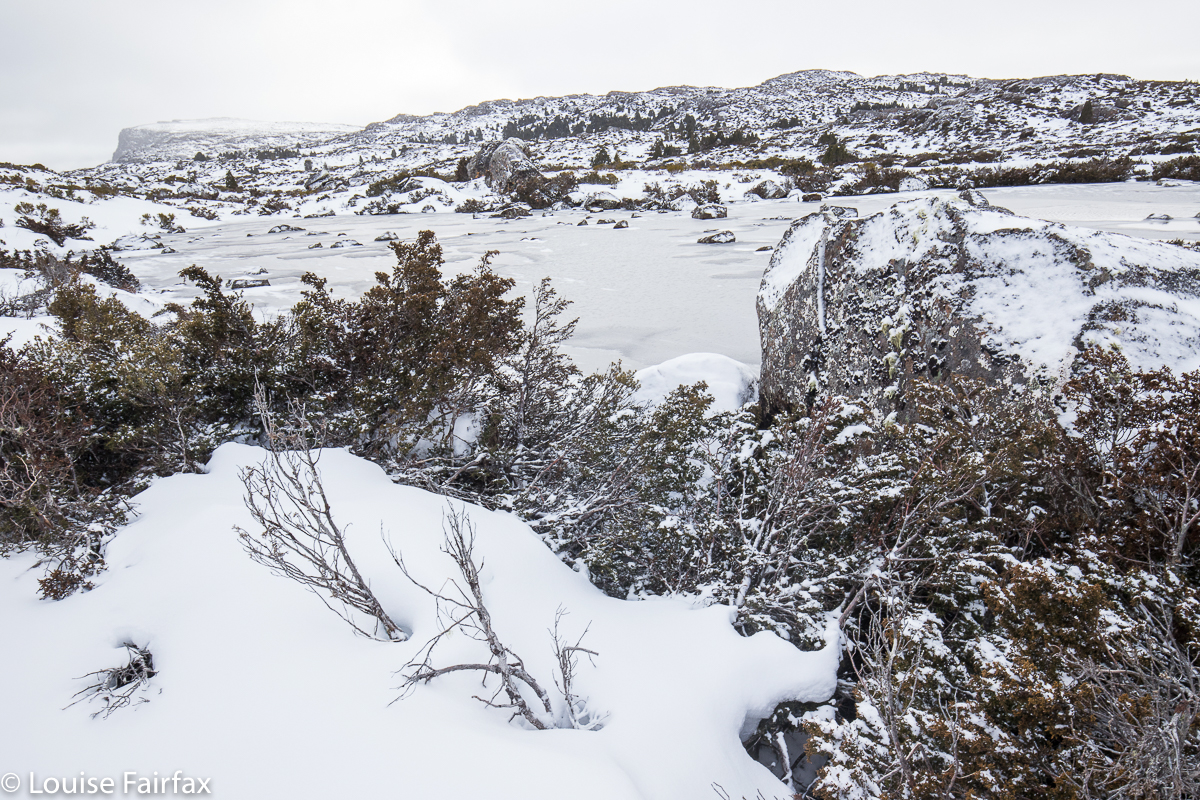
Once we entered that high valley, with its flattish area in between Turrana Bluff and Mersey Crag, the patches of snow multiplied rapidly. We also struck our first icy tarns. We still had one final climb – only a hundred metres’ height gain – to reach Long Tarn now. And once up that, everything was pure white and a fairyland of beauty. One of our party wasn’t handling the snow well, which gave us plenty of time to appreciate the various vignettes of magical scenery as we quietly wended our unhurried way towards the pencil-pine goal.  The slower person apologised; as a joke, one pointed out she had a train to catch; I said I had a doctor’s appointment at 3.16. Rolfe made a bet that the doctor would give up on me and go home. It seems he was right. I was late for the appointment, and there was no doctor waiting. Luckily I wasn’t sick anyway. Pure nature healed anything that might have been wrong.

Long Lake with Turrana Bluff behind.
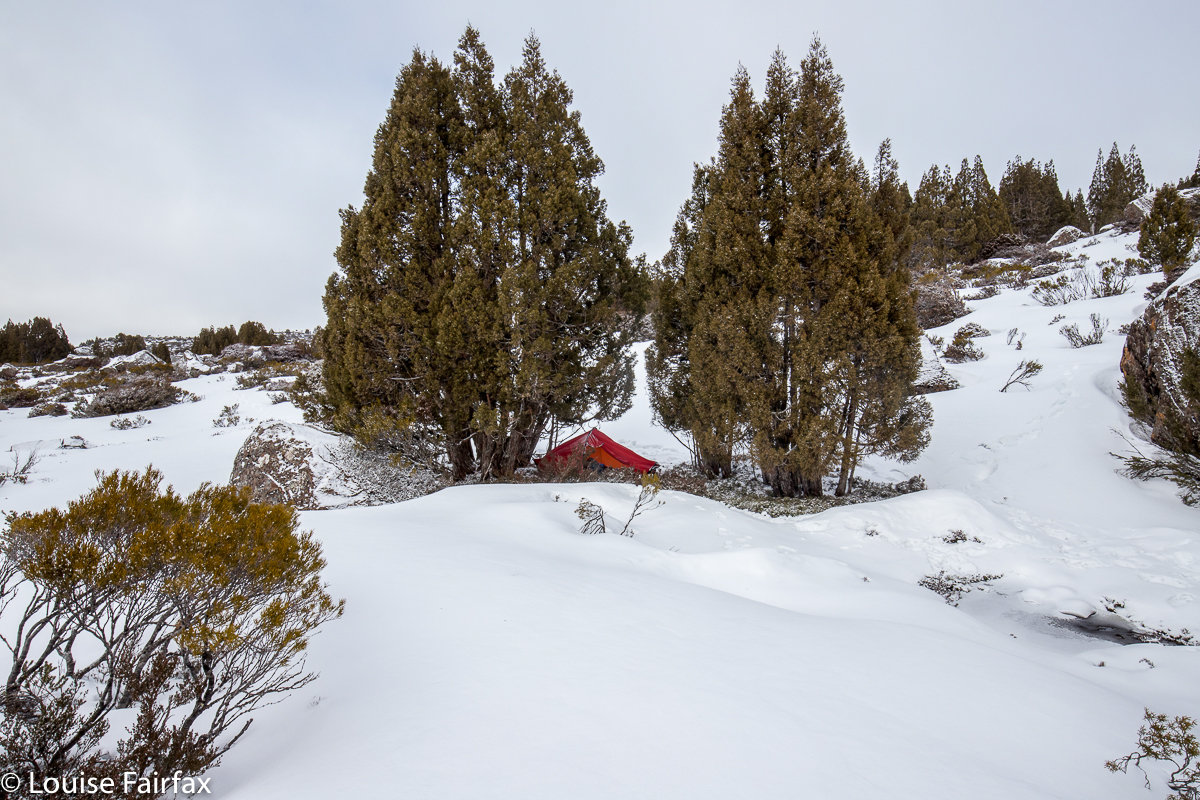
Pitching the tent was a pretty cold business, as it is a very static job, so I had chilled right down by the time my accommodation for the night was established. Rolfe suggested we walk up to the ridge to see Mt Jerusalem and Daisy Lake, and I was all for it. A bit of a climb might warm me up again, and if there was going to be any colour at sunset, we would be well positioned to photograph it. There wasn’t … but I did warm up. The cup of water I had left just outside the vestibule, however, was frozen solid. I banged out the ice so I could drink later, wondering how the other water I had gathered would hold out.

I always worry in snow camping about my ability to warm up the tent space. I am a lot more confident if with my daughters, sharing a tent (or with Bruce, but that is no longer a possibility). Two people definitely warm up a tent with no problems. The fact that I can do it alone comes as a relief and a confidence booster. My boots froze overnight (as did the laces, of course); my water bladder did likewise, but I was pretty warm with what I had brought, so was happy with the outcome. This was my first snowcamp for 2018, and it’s surprising how out of practice one can feel doing it for the first time in any given winter. I warmed the tent alone and coped alone, but I sure did appreciate the knowledge that in that pine grove over there were three others, and just down the slope a ways, two more, so that if I felt dangerously hypothermic, or if my tent collapsed overnight or if some other unplanned catastrophe overtook me, I could yell for help and someone would come to aid me, is a huge relief. This is one of the many massive benefits of being in a club.


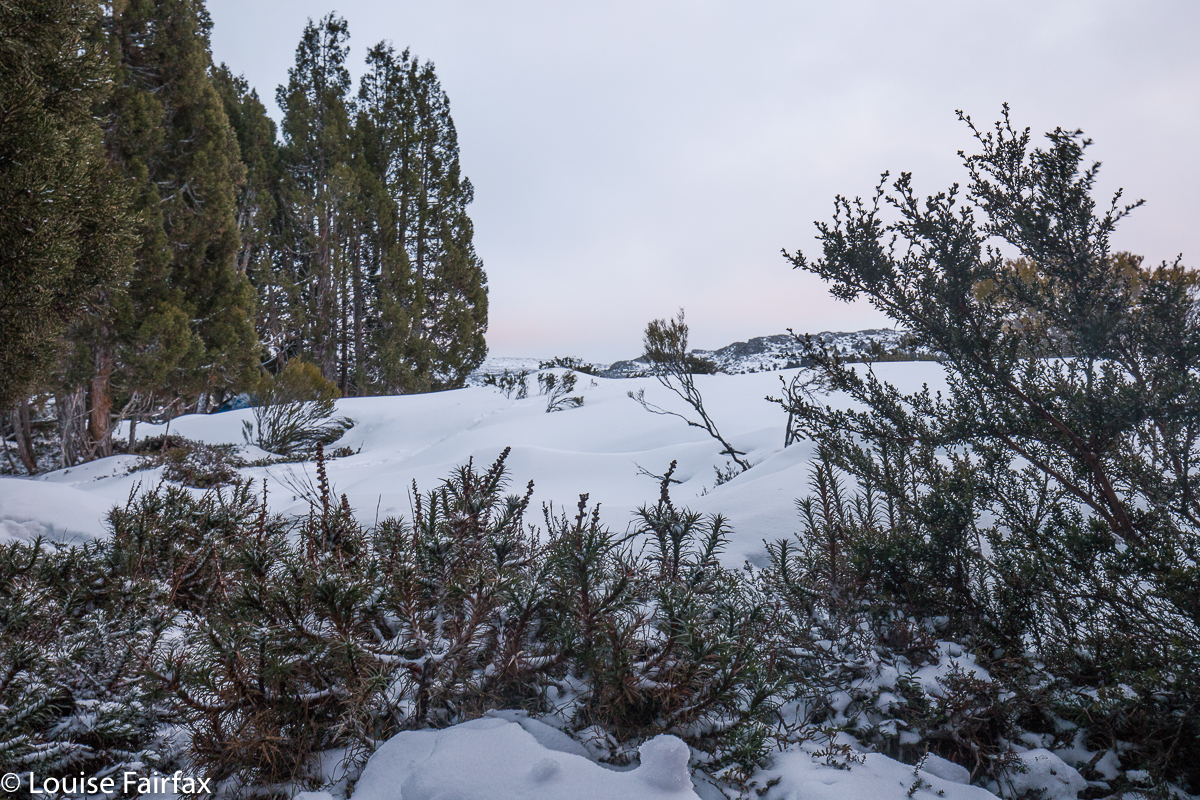
Dawn light

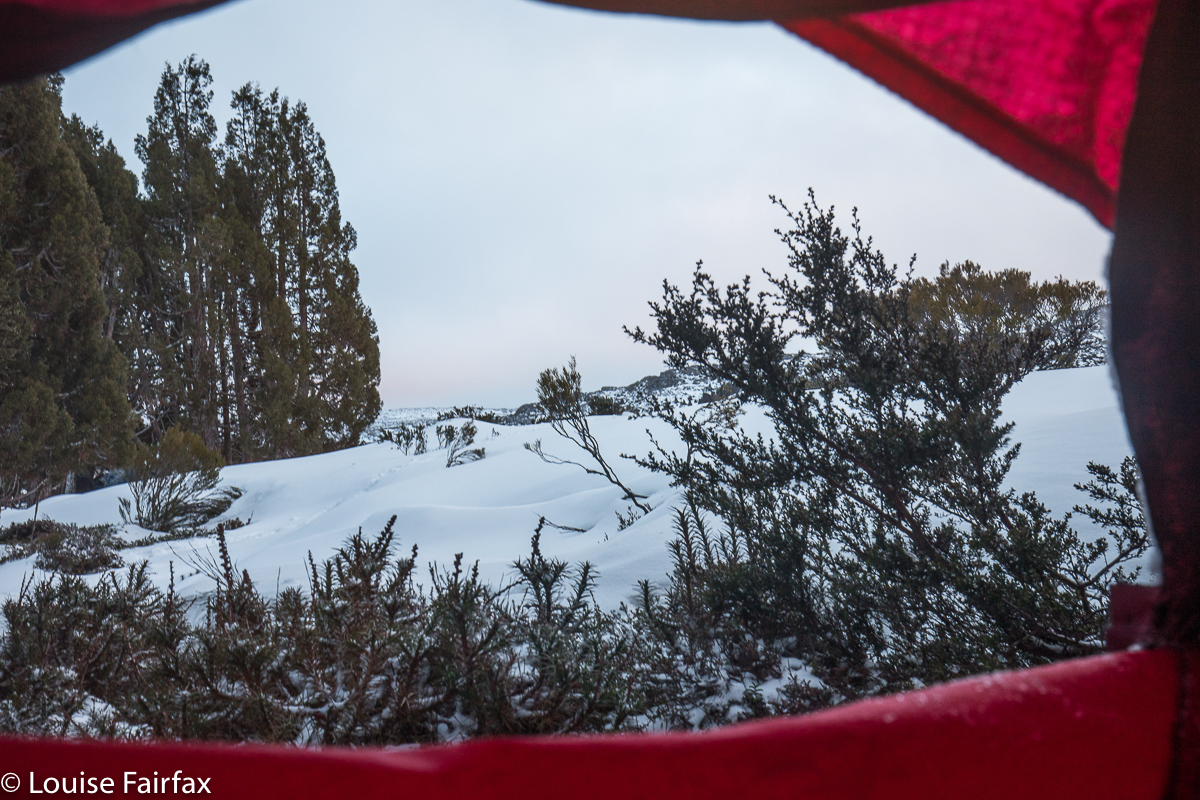
Breakfast was served in bed – in my sleeping bag, in fact – to a view of a slightly pink-tinged dawn, with light snow falling. Having my tent fly pulled right back was not calculated to keep me warm, but with beauty like that I didn’t care. I popped on an extra coat and slowly imbibed my porridge while watching the light flakes make their way to the ground. This is what one comes for. I loved it. We were all elated by the beauty as we set out for home an hour or so later. The forest was covered in a new coat of white powder, as the snow had been falling on and off all night, just a light hint of a thud against the tent. Peace.

Cuvier 2014, 2015

Mt Cuvier 2014, 2015


Arriving at dusk
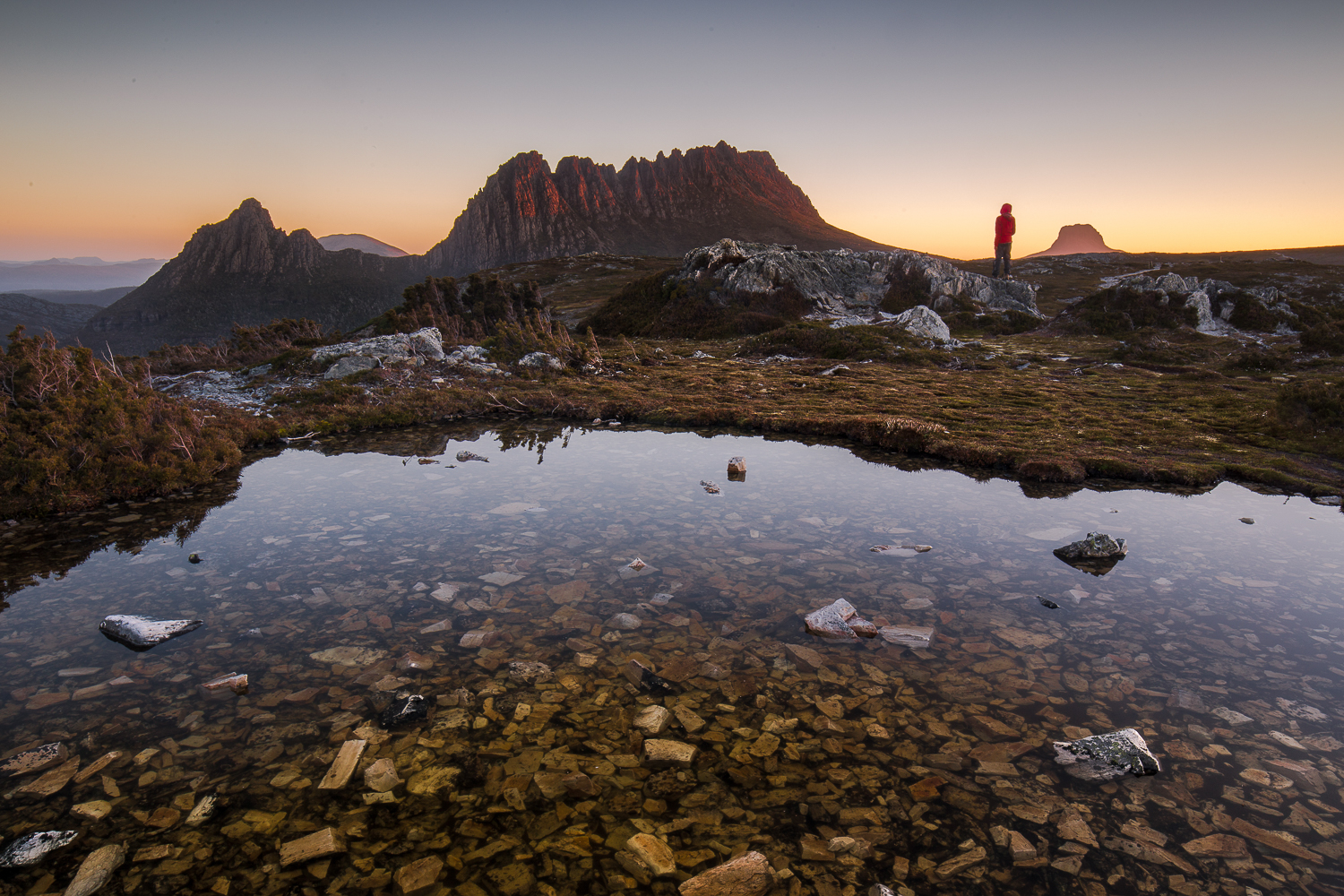
Mt Cuvier is so remote that it is usually climbed in conjunction with other peaks, I have climbed it twice: once on the way to Tramontane, and once on the way back from Goulds Sugarloaf. Both times I slept on its shelf. I love it there so much I will go back just to sleep in that spot again, even if I don’t climb anything else. Probably the worst part of getting there is just before you enter the saddle between Byron and Cuvier on the Byron side of things. This saddle is watched over by a highly protective band of scoparia. It poses a mild delaying factor while one searches for a route through. It is not by any means the worst patch of this darling bush that one will find on any trip. The 2015 trip was in partial snow, and that made it really special.


Summitting at the end of a long day in which we climbed many mountains, the furthest peak being Goulds Sugarloaf.


This is from a different trip, when Angela and I climbed Pyramid Mountain. Here Angela is looking at Mt Cuvier from way out west in even more remote wilderness: from Rocky Hill in the Eldons. When I look at a photo like this, I realise with an almost overwhelming emotion what an incredibly privileged person I am to have been to these remote places while they are still wild. What will be left for the next generation? It seems no government cares.
Yet the need to be in truly remote places and lose ourselves in the grandeur of the natural world, to expose ourselves to the infinite nature of a realm beyond our tiny concerns is healthy for our souls and for the way we relate to other people and our planet. The ones who will cause harm are the ones who don’t understand our place in the wider scheme of things. If you listen to the Liberal government, you’d think there is no greater goal for a human than a full pocket at the expense of every other human on the planet, present or future. The only language spoken is that of economics. They know no higher goals or deeper meaning. Intangibles like beauty or sublimity – or goodness – are beyond their grasp. Honesty never was in their dictionary. Responsibility is a word for others. The problem is that Labor is no better, and the greens have decided to keep their battles tiny so as to claim a few minor skirmishes, and they seem to have lost sight of how they got their colour.