Mueller 2014 Aug

Mt Mueller, 2014 August.

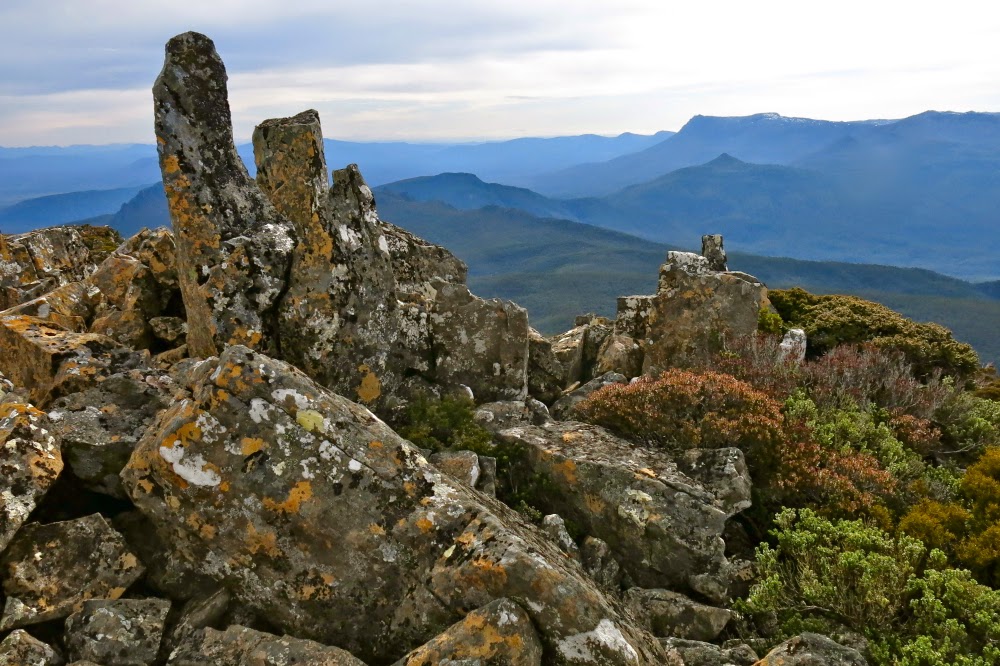
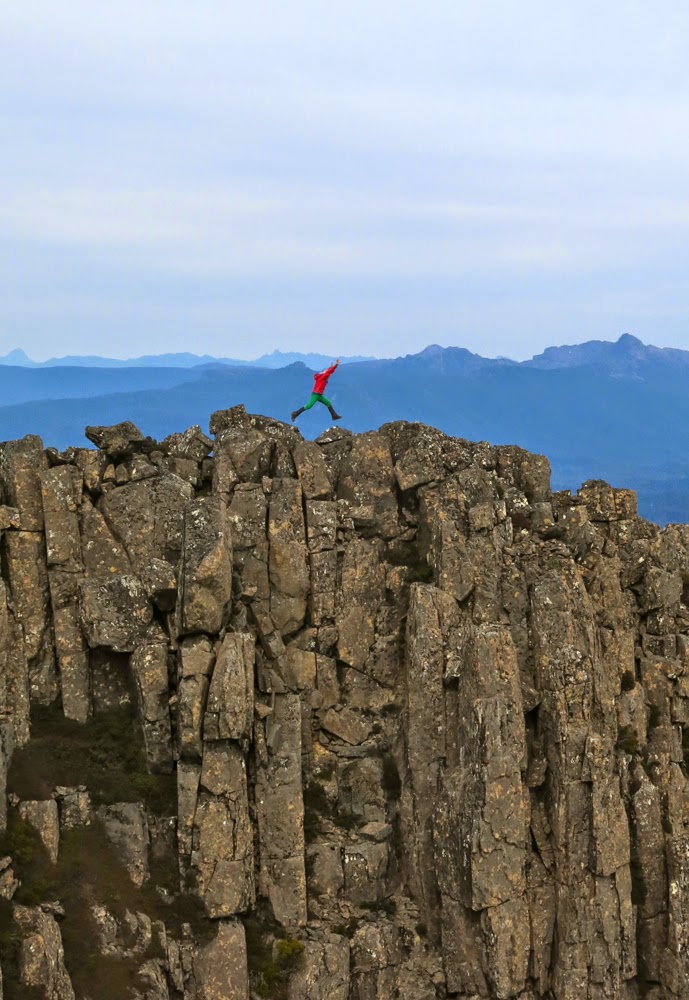
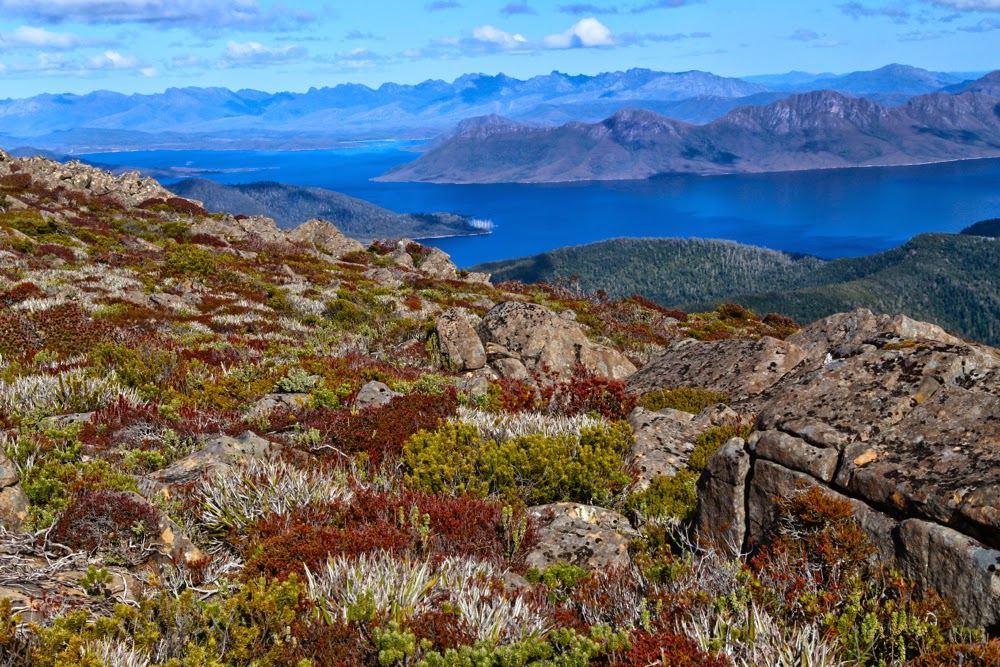
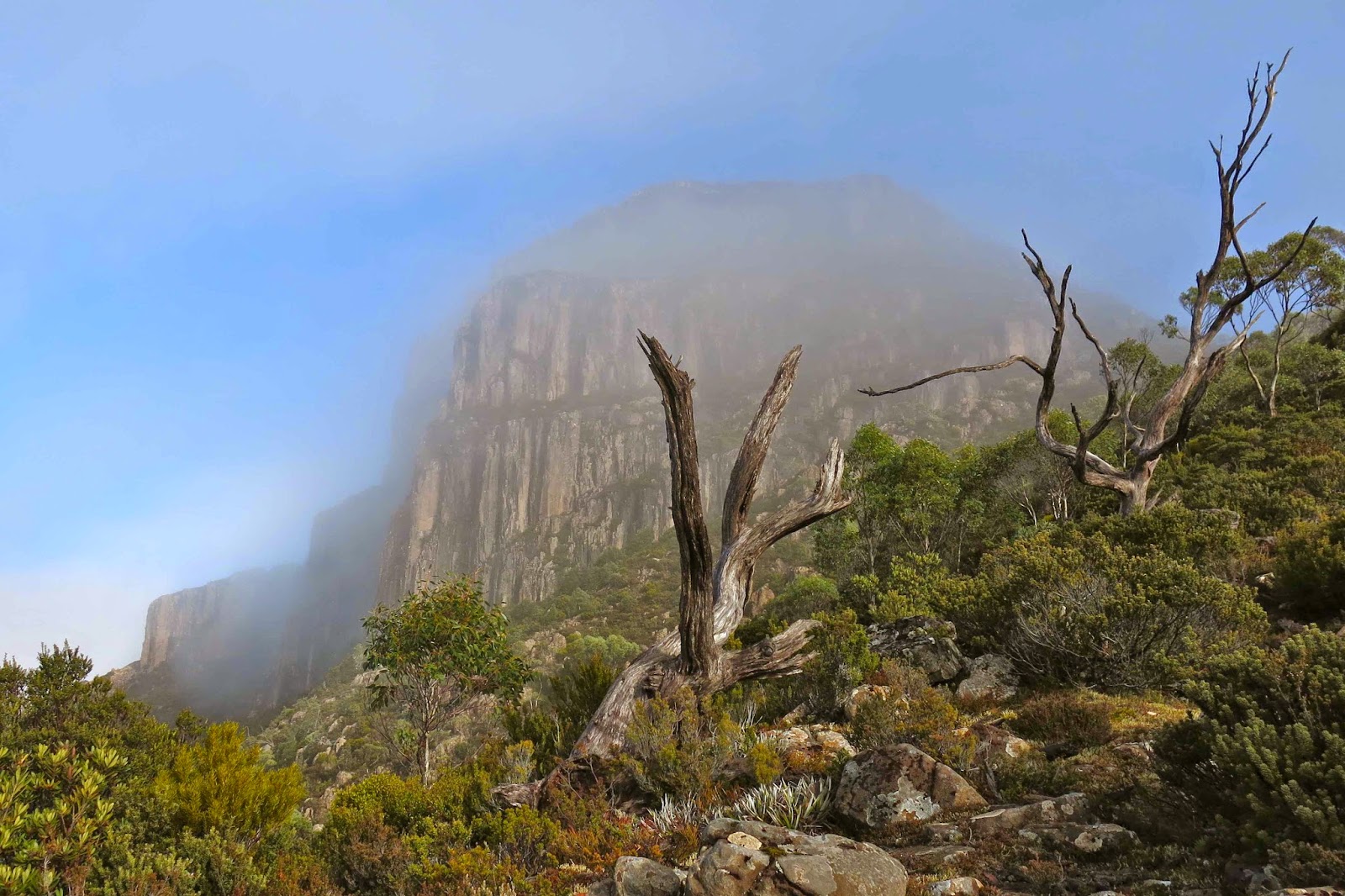
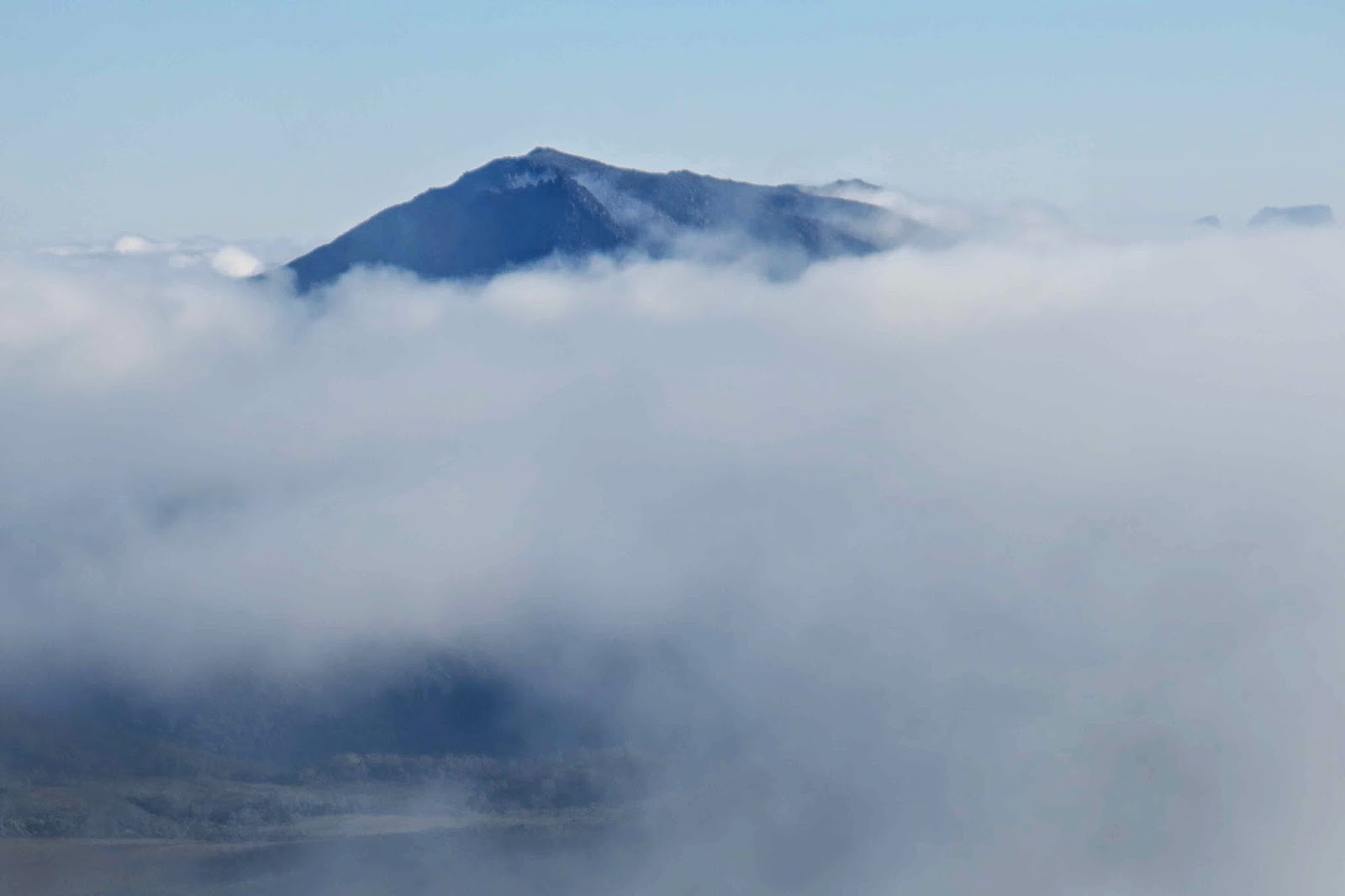
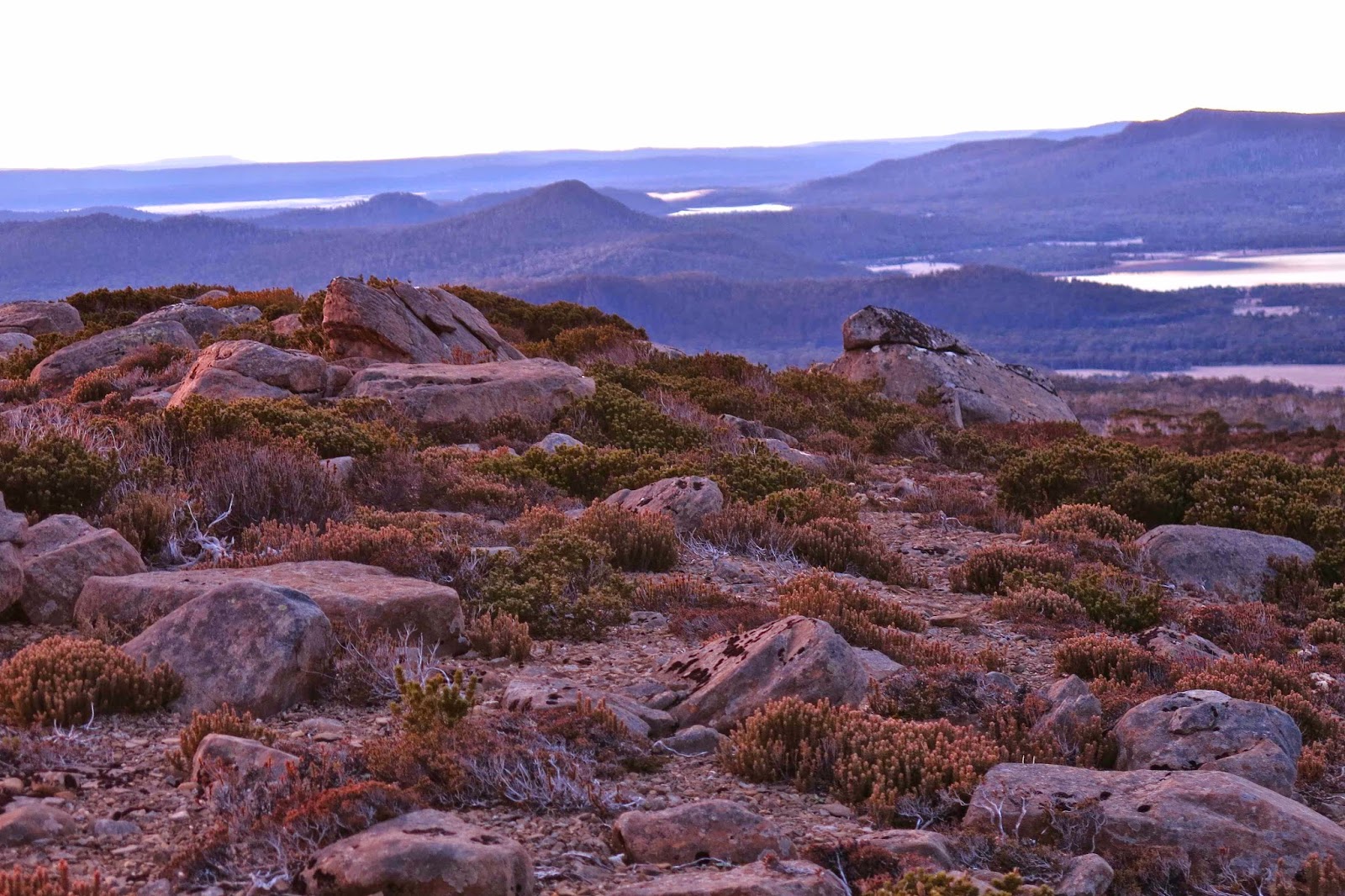
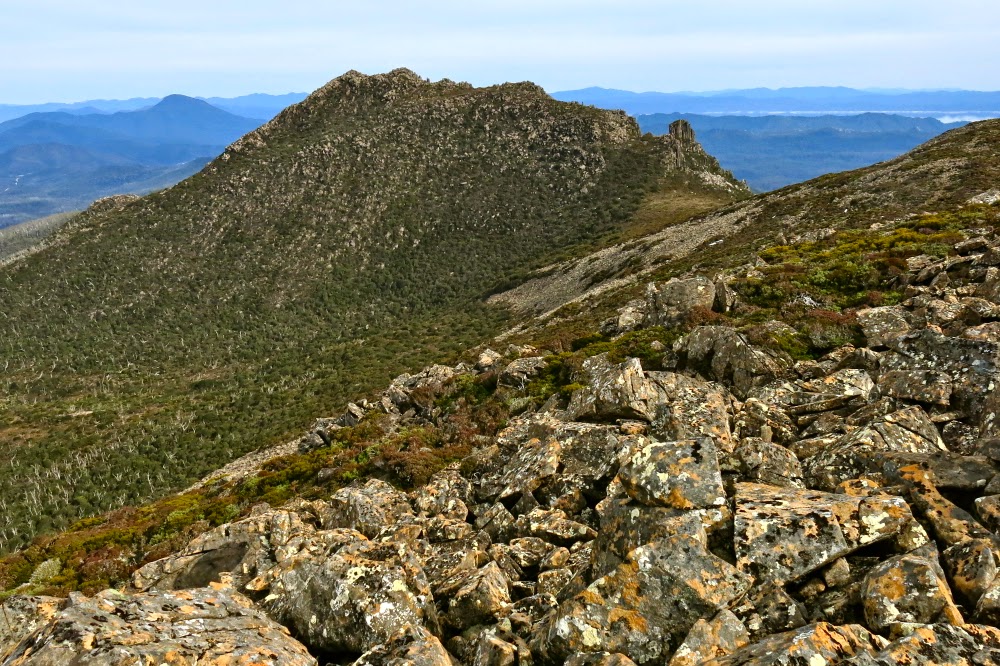
The real Mt Mueller summit from the ever-so-slightly lower eastern one.
In the 1800s, Baron Ferdinand von Mueller was a spokesperson who helped change and shape public opinion towards Australian native flora and thus has a role in the history of the development of National Parks. Von Mueller, as Government Botanist for 43 years, was listened to when he spoke about matters arboreal. In an age when those with power were ripping out Australian trees in areas that we now know as national parks, and were allowing grazing of cattle, sheep and goats – and even releasing rabbits into the area (to force it into “a proper state of culture”) – von Mueller called for the protection of native forests.

In a public lecture in 1861, he went so far as to declare that trees have rights (echoing, for me, the words of Goethe who wrote about “die Rechte der Natur” [the rights of nature] and Blake who opined that “everything that lives is Holy”). Further, he argued that trees are “a gift entrusted to us” during our short stay on earth and that we have a responsibility to pass them on to the next generation “as an unimpaired property”.

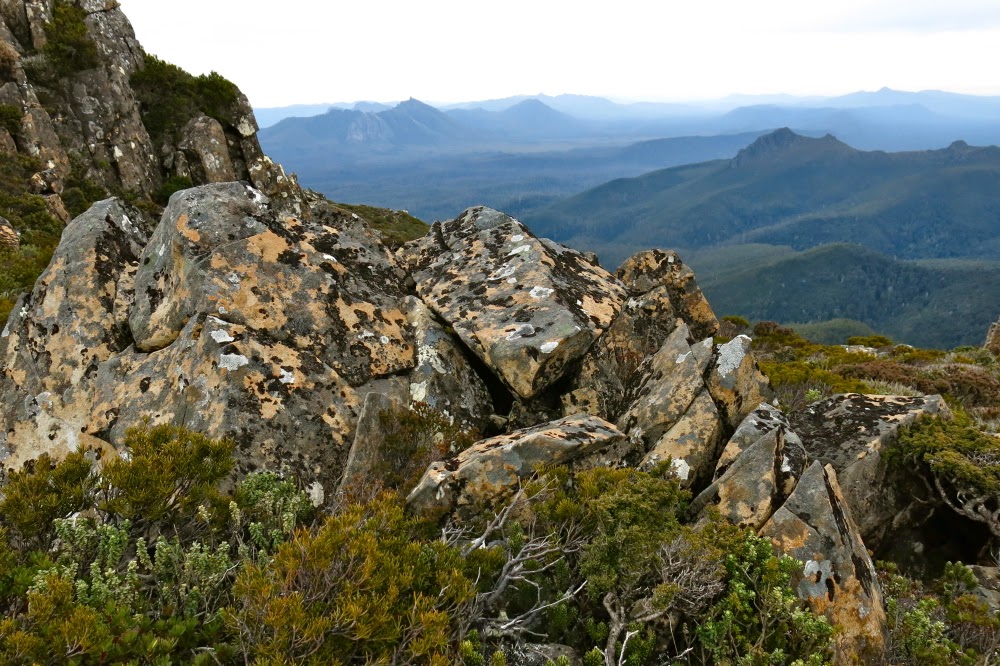
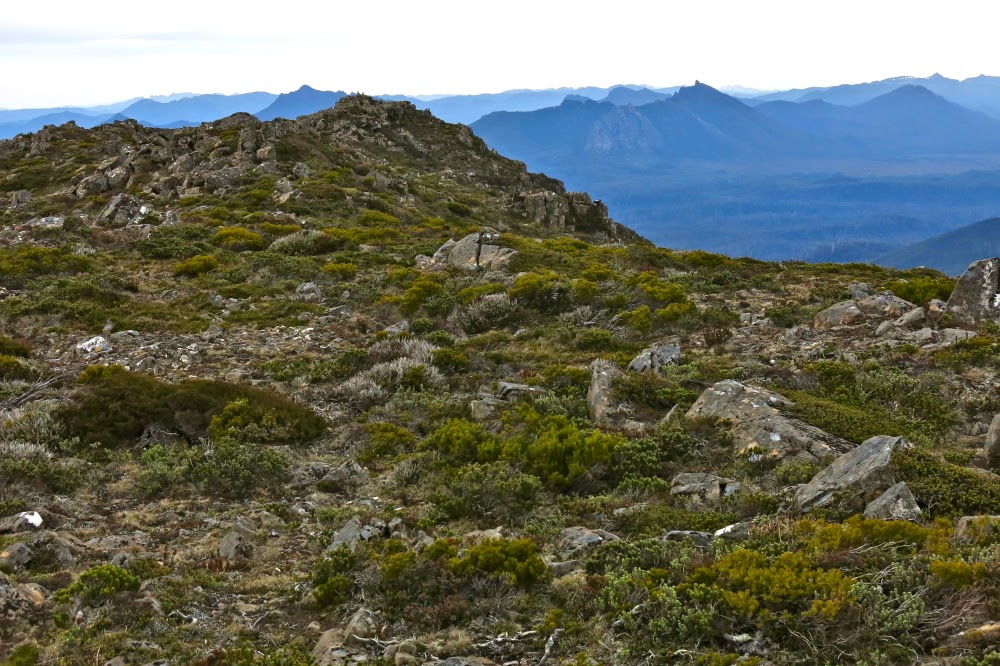
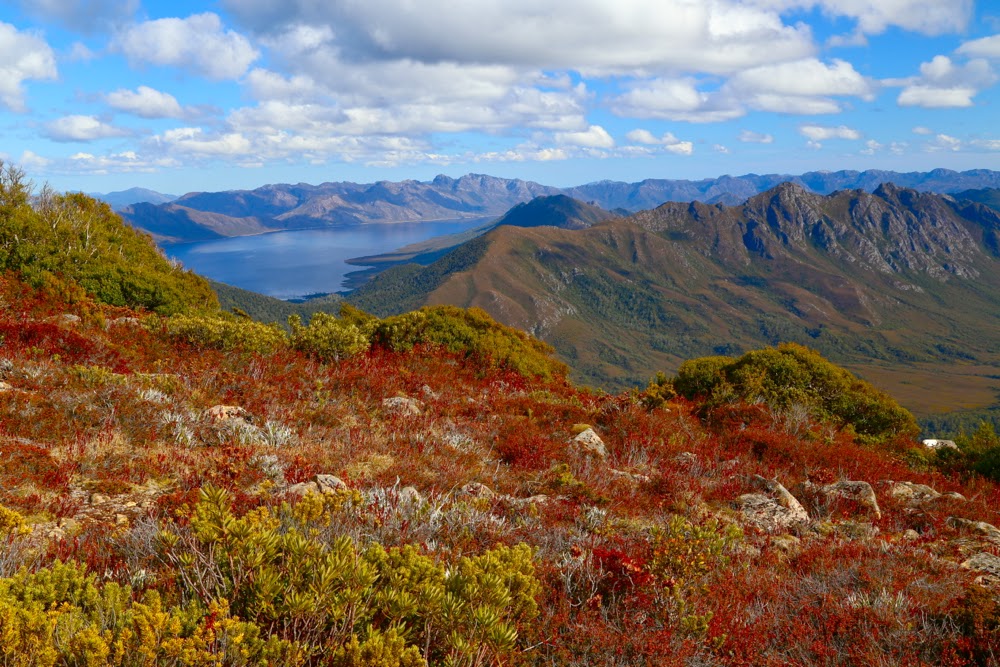
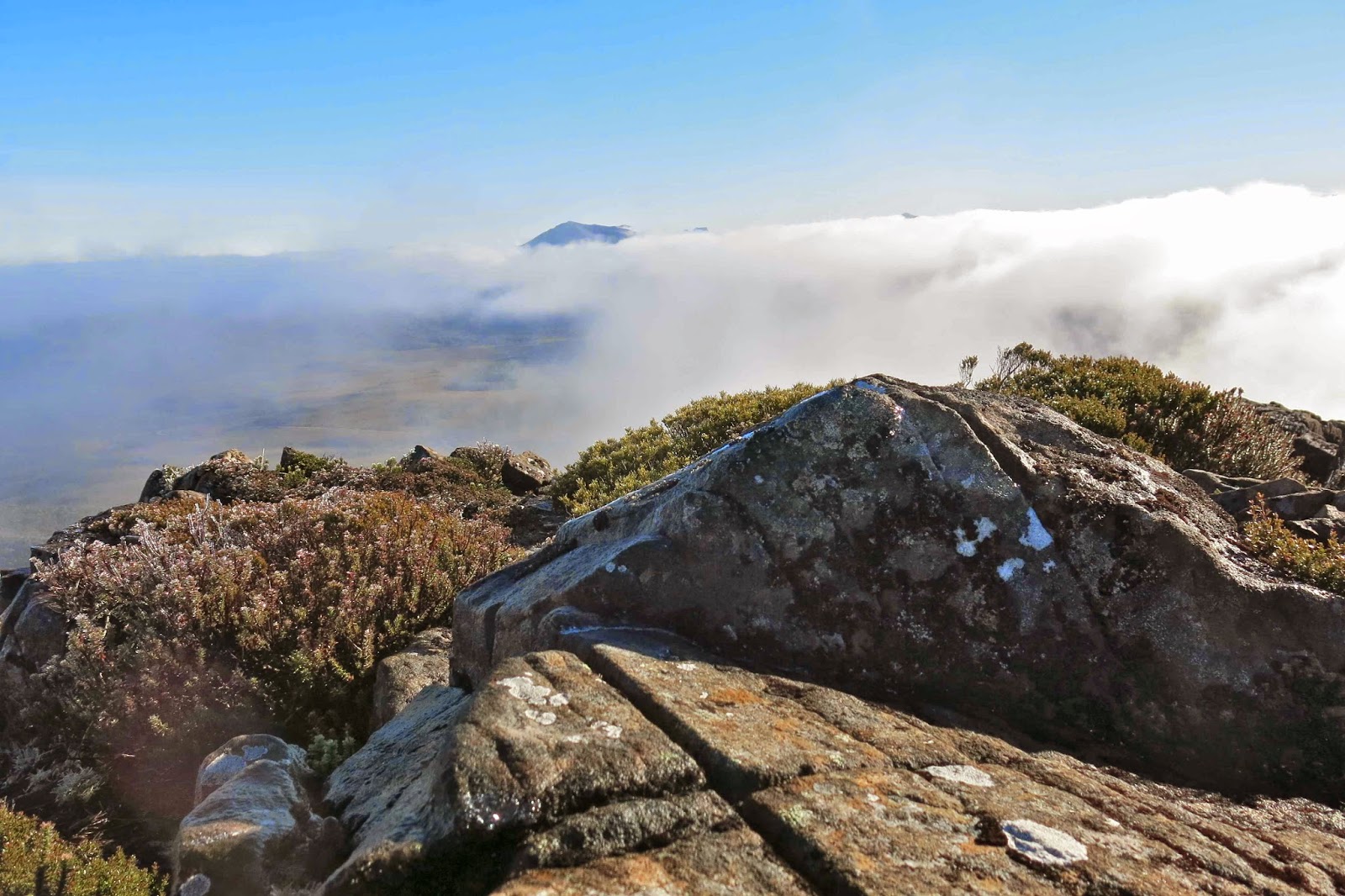
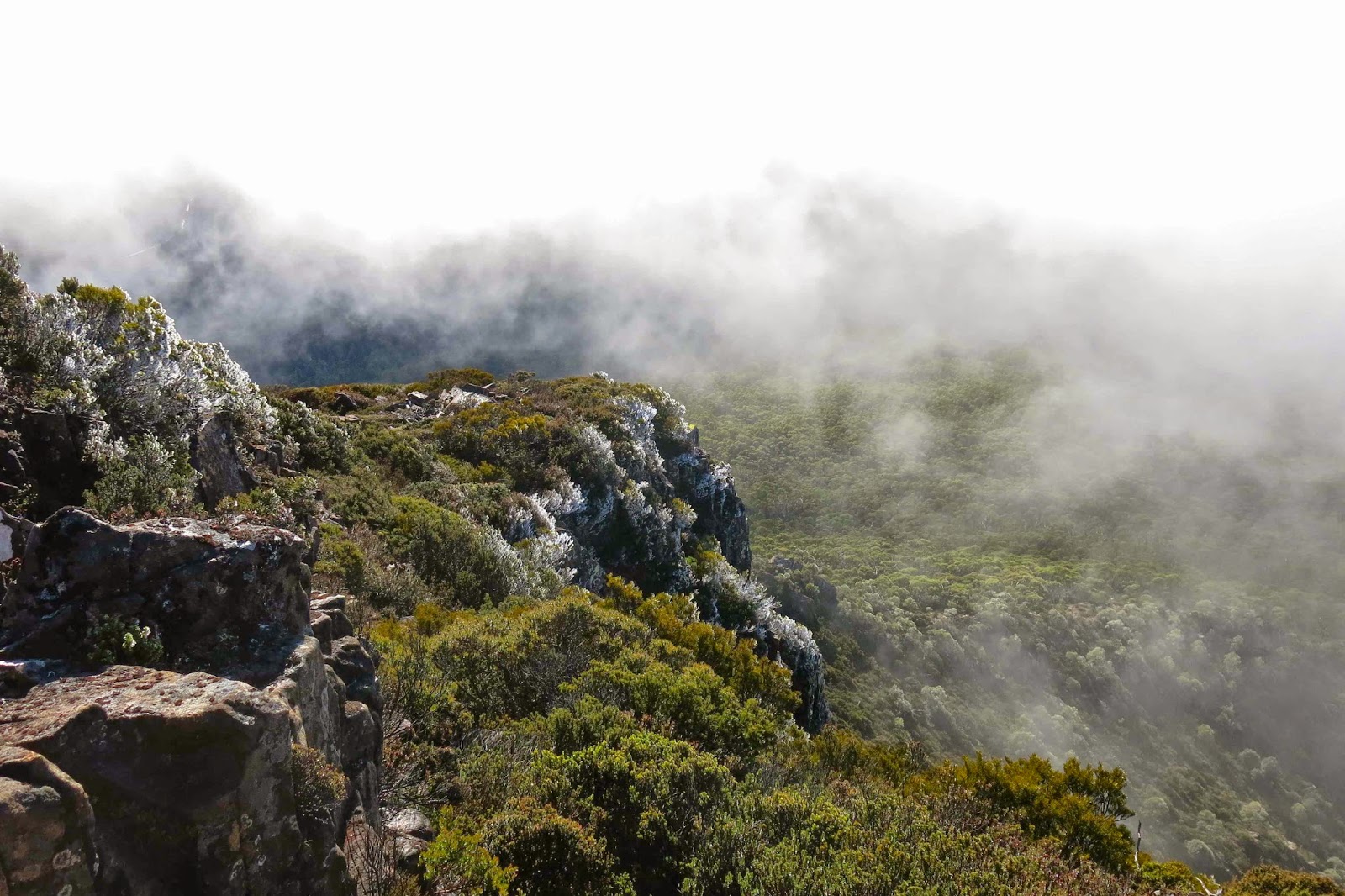
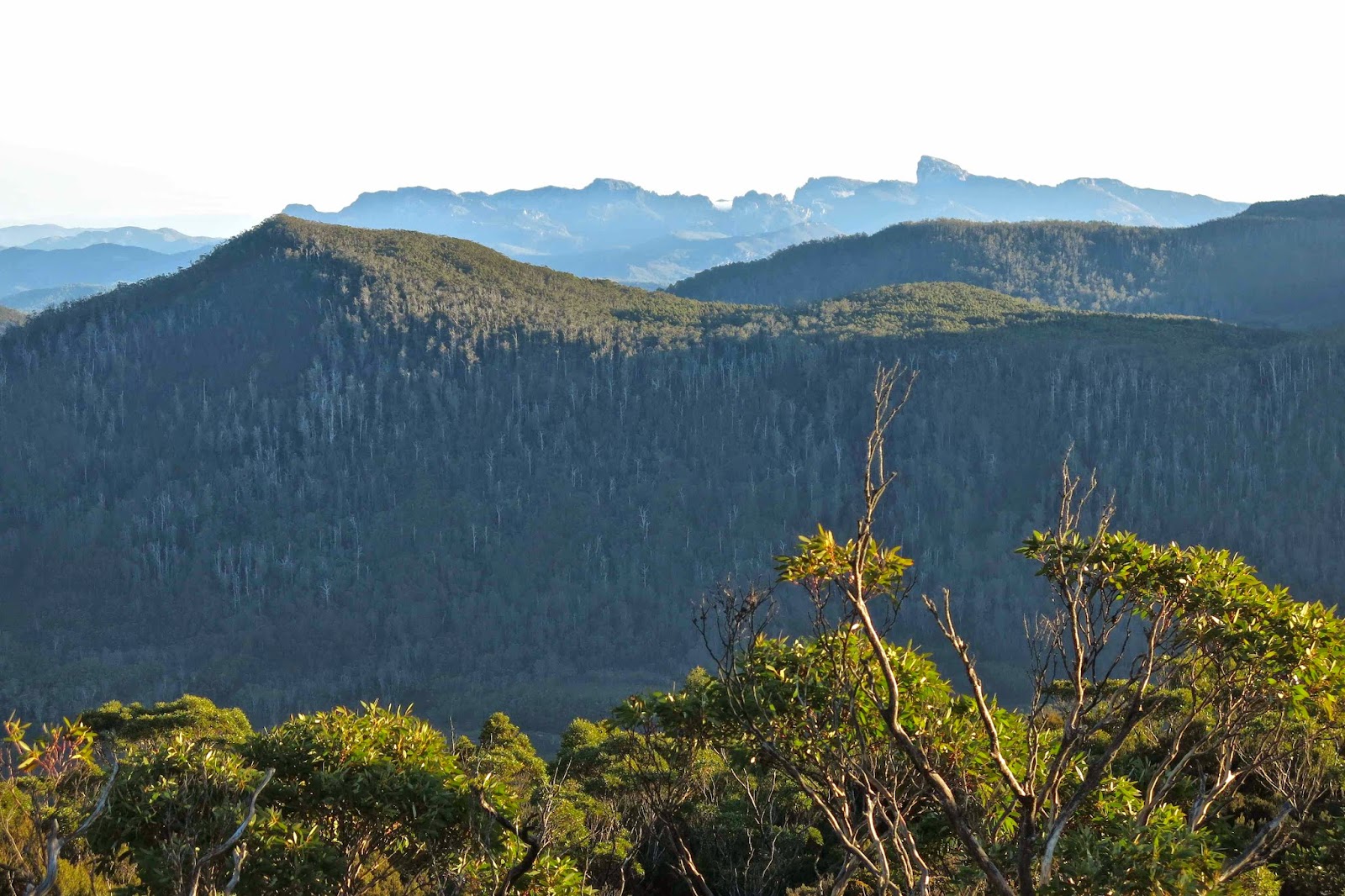
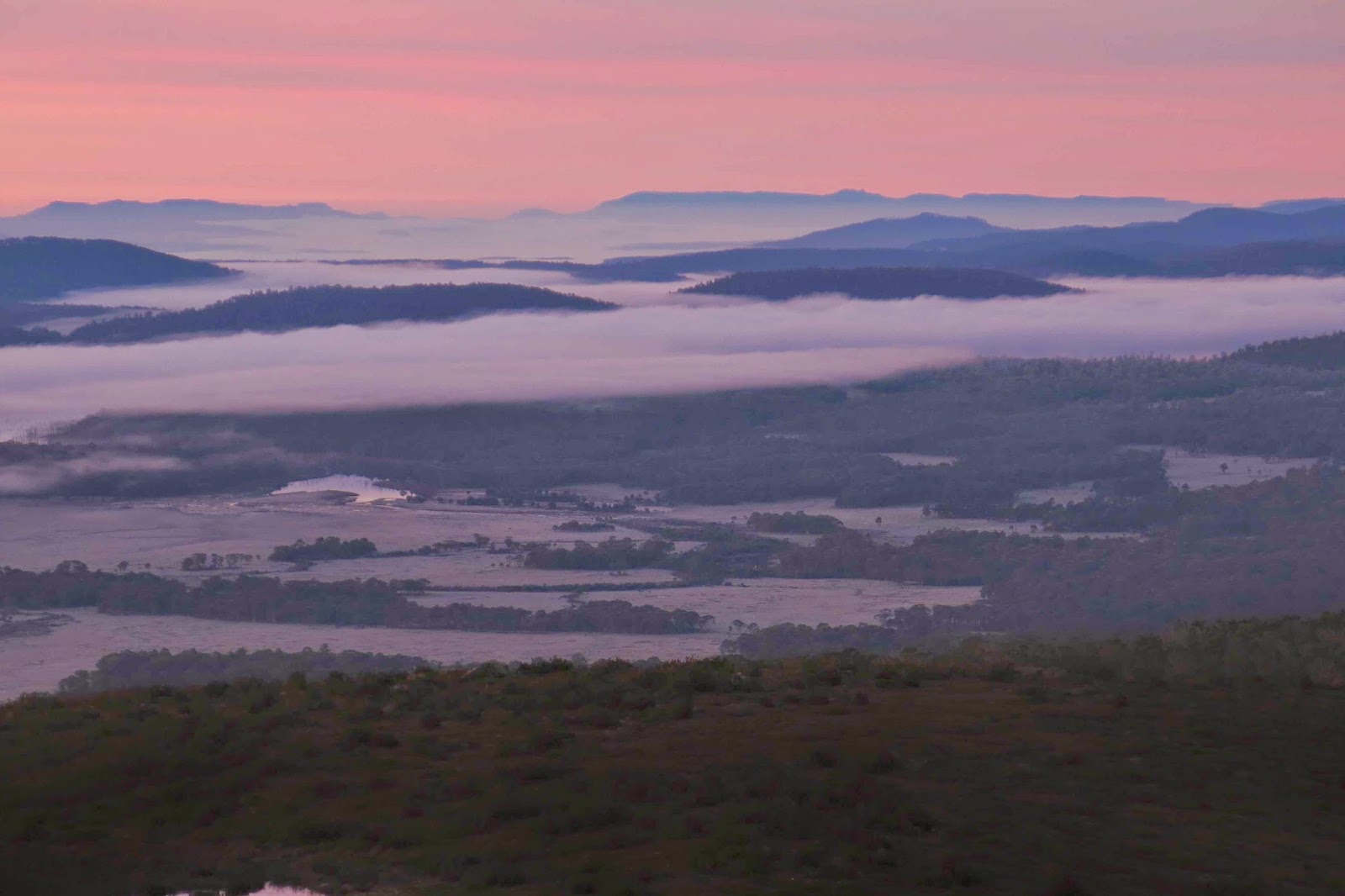
View from the second highest point on the eastern ridge line.

It is fitting that he has been given a mountain in Tasmania (he climbed Mt Wellington whilst here, no mean undertaking in those days). He also has mountains named after him in QLD, NT, WA and on an island in the north Atlantic, a mountain range in New Guinea, a glacier (and a lovely hut) in NZ and a waterfall in Brazil, as well as plants that bear his name, such as Boronia muelleri that grows in my garden.

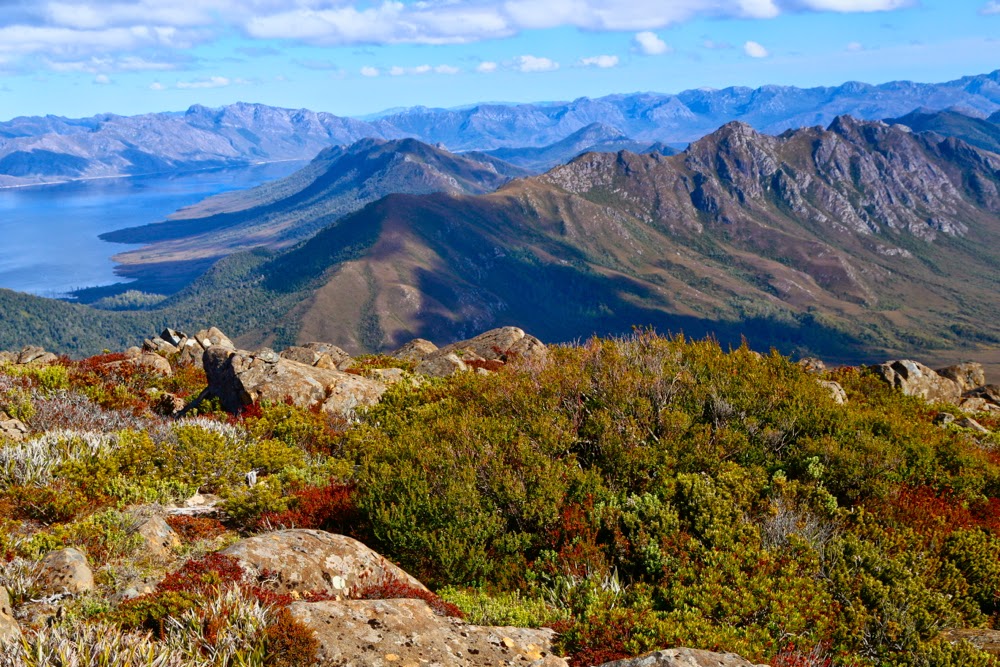
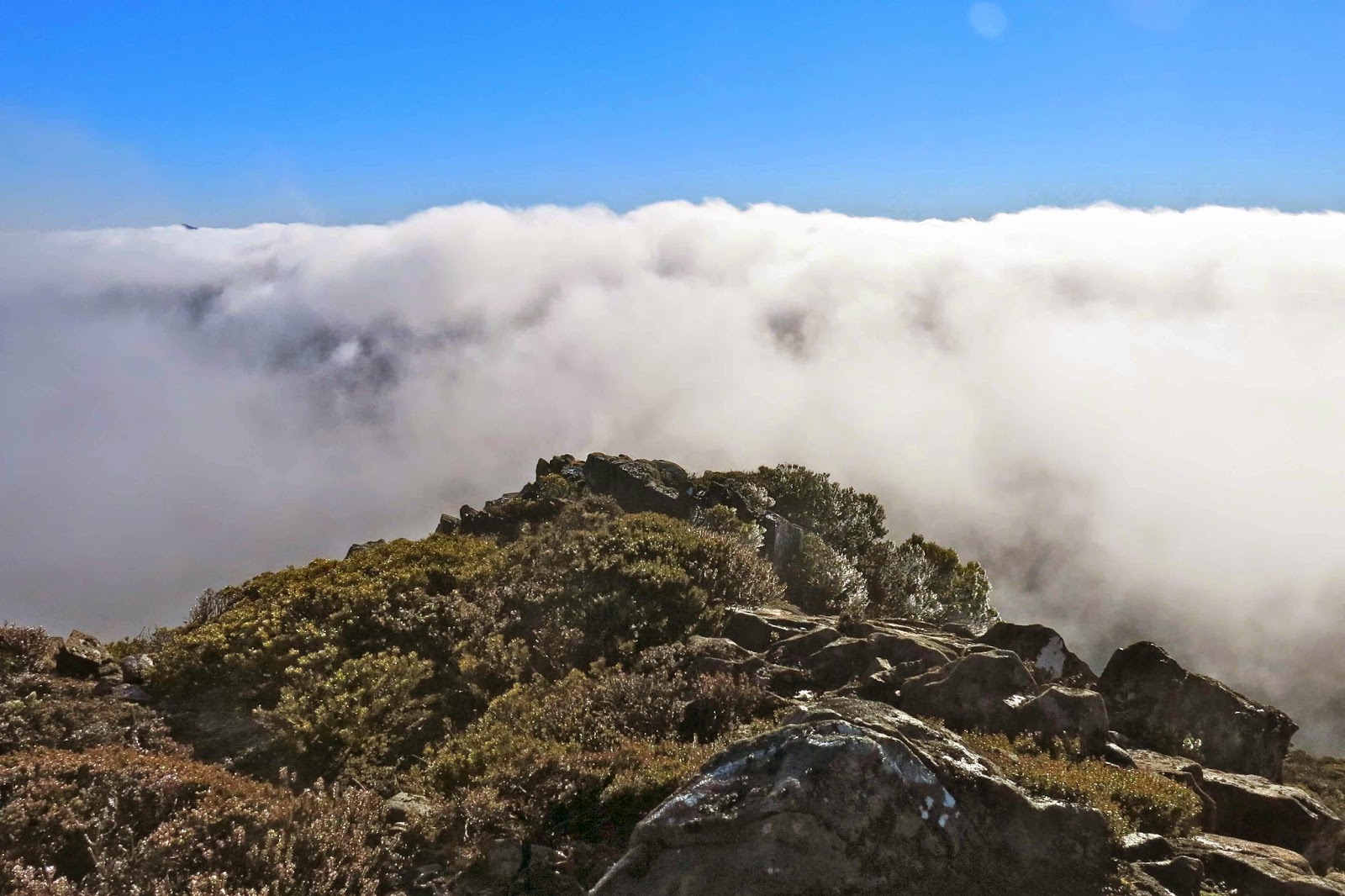
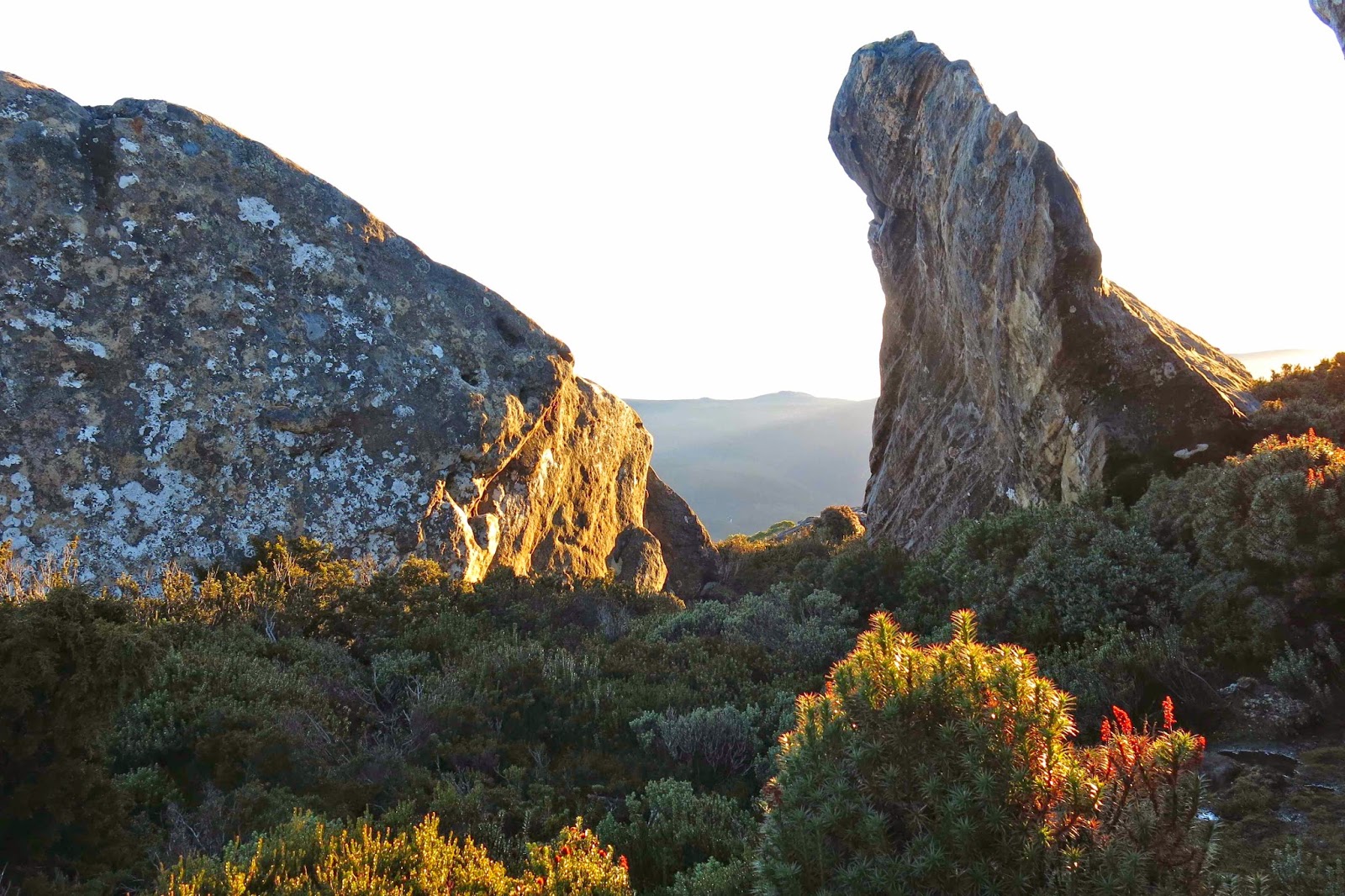
Looking down on the Needles.
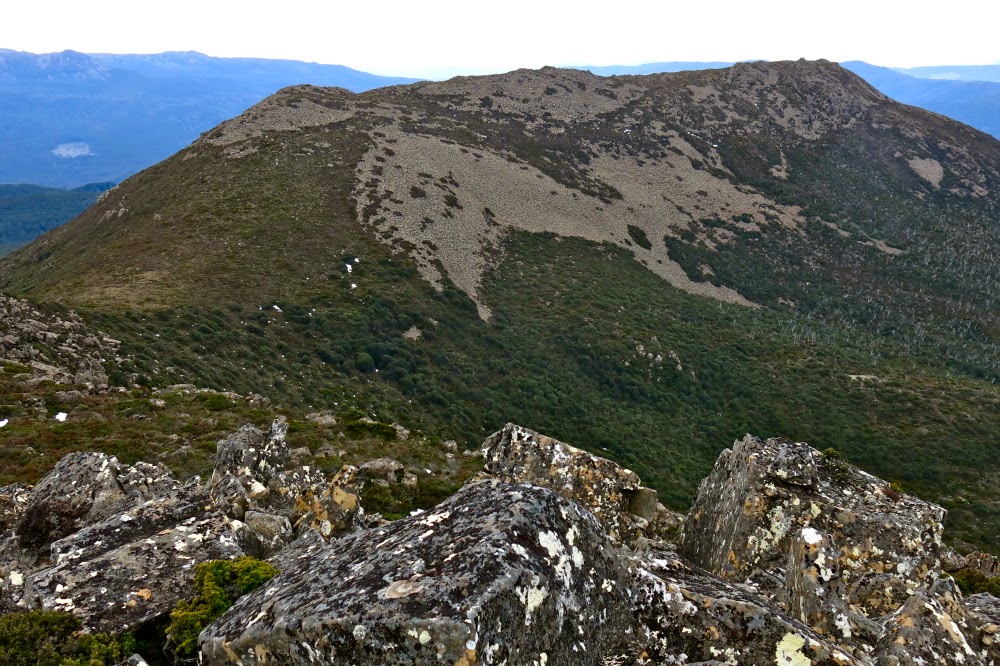
Looking back at the eastern half of the mountain. This is a “two for the price of one” peak.
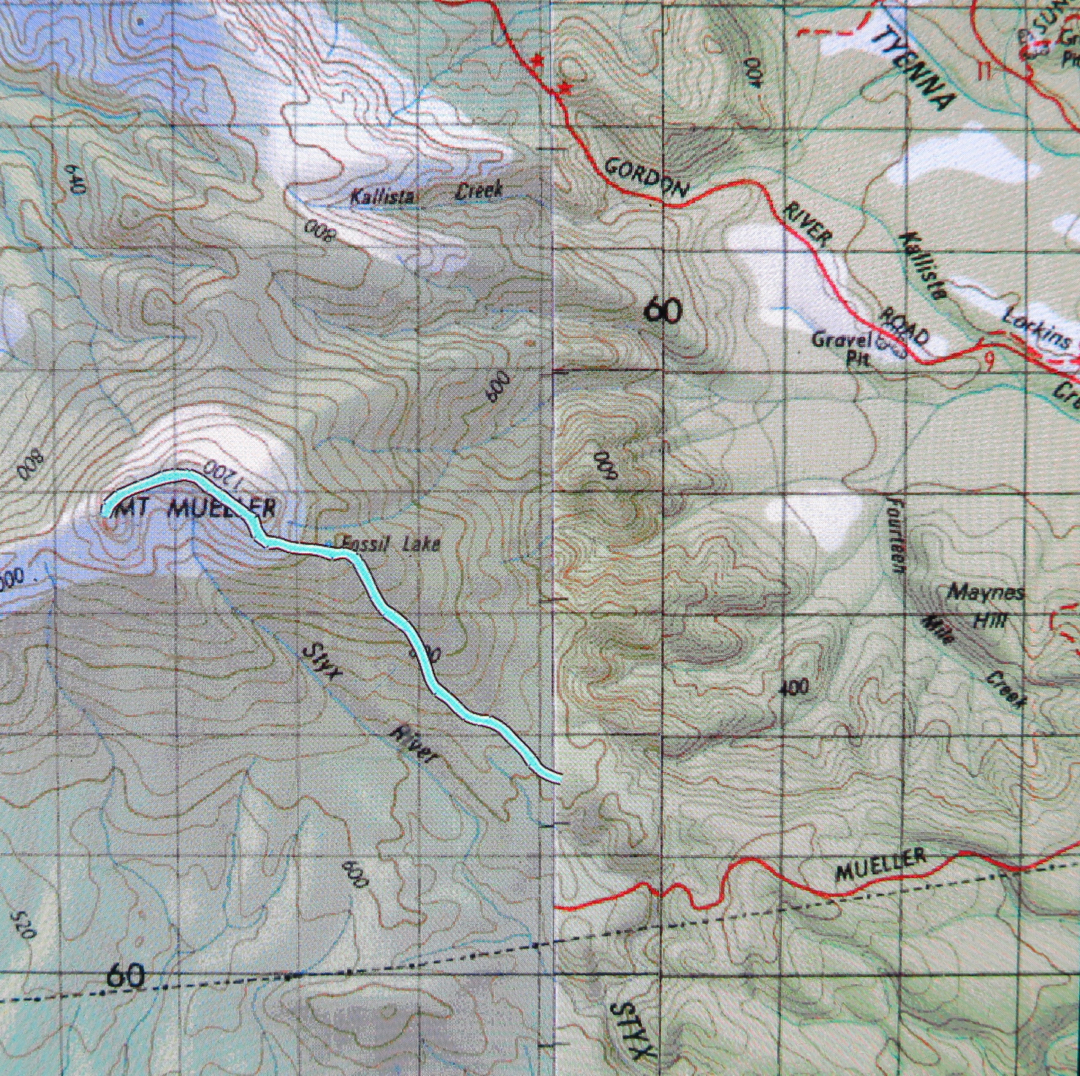
On Sunday, at last, I climbed his Tasmanian mountain, often seen, but with access problems due to the inevitable Tasmanian locked gate syndrome. It also doesn’t help that the access roads are not on the map – and, of course, neither is the track. I find it odd that Tasmania wants tourists and their money, yet at the same time fails to provide information on places like this that they could go to. If we gave them better (free) access to these places, they may well stay in our state longer, as there would be more to do. For locals, the need for a key makes this a good walk to do with a club. I let Graham from Pandani club do this irksome key-work for me.
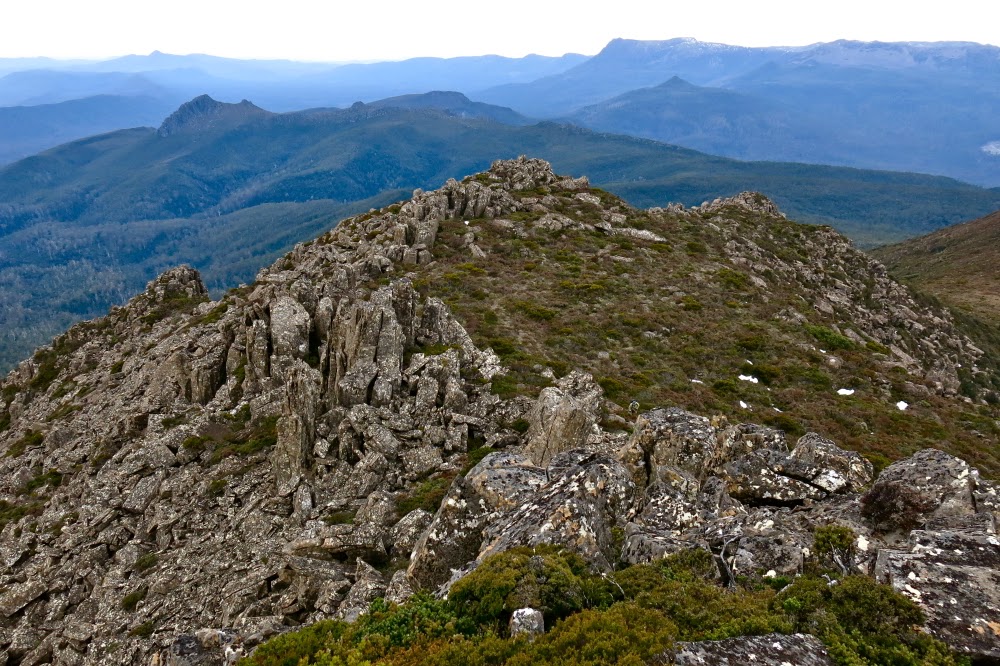
Looking back along the final scramble section. The saddle is to the right.

There is a very visible track with pink ribbons leading from where the Abels book tells you to park. Said track is overgrown, requiring goose-stepping so as not to trip on horizontal arms of bauera, but it’s there, and marks the easiest way through the tangle. After 30 minutes of battling this (and mud), the vegetation changes, as does the gradient, and the remaining 30 mins to Fossil Lake are easier to travel. Don’t look forward too much to the lake. I can’t think of a lake that I find less attractive. Although natural, it resembles an artificial dam with the dead trees and mud around its circumference, legacy of a previously higher water level. (In terms of measured moving times, the lake represents the half-way mark to the western – real – summit).

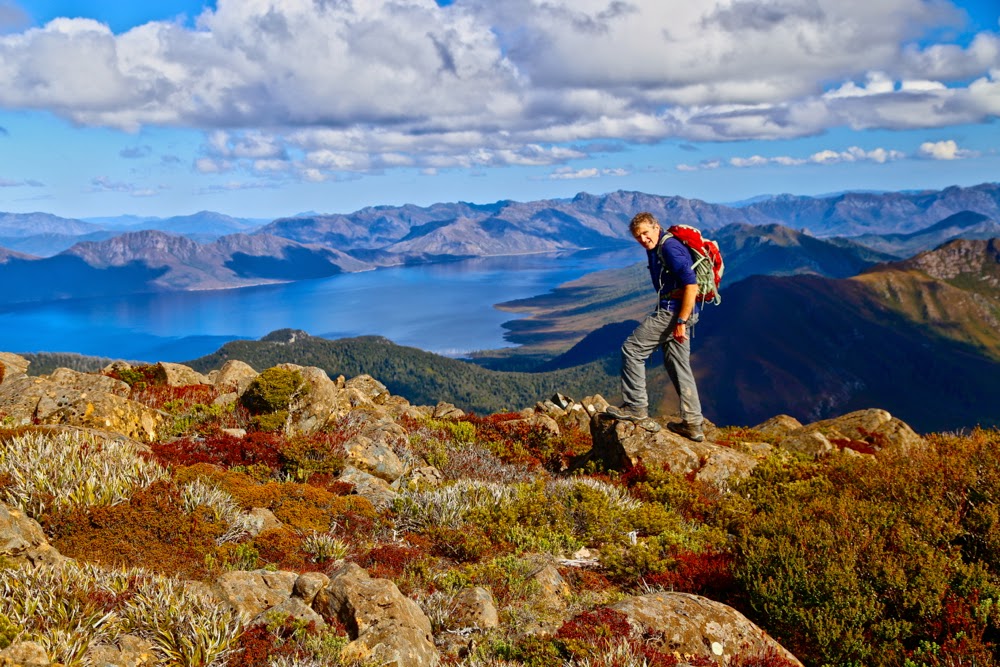
Me, having fun on top. Mt Anne group in background.

After the lake, the pad becomes very narrow (a human foot wide), but still easily visible until you reach the eastern summit of the mountain. From there its presence is patchy, but you don’t need it: all you do is stay high and enjoy the views and the pleasant ramble along the tops of the eastern high section that curves around and then descends to a saddle, after which there is a final scramble (which has cairns every now and then – they’re not needed either) to the top.

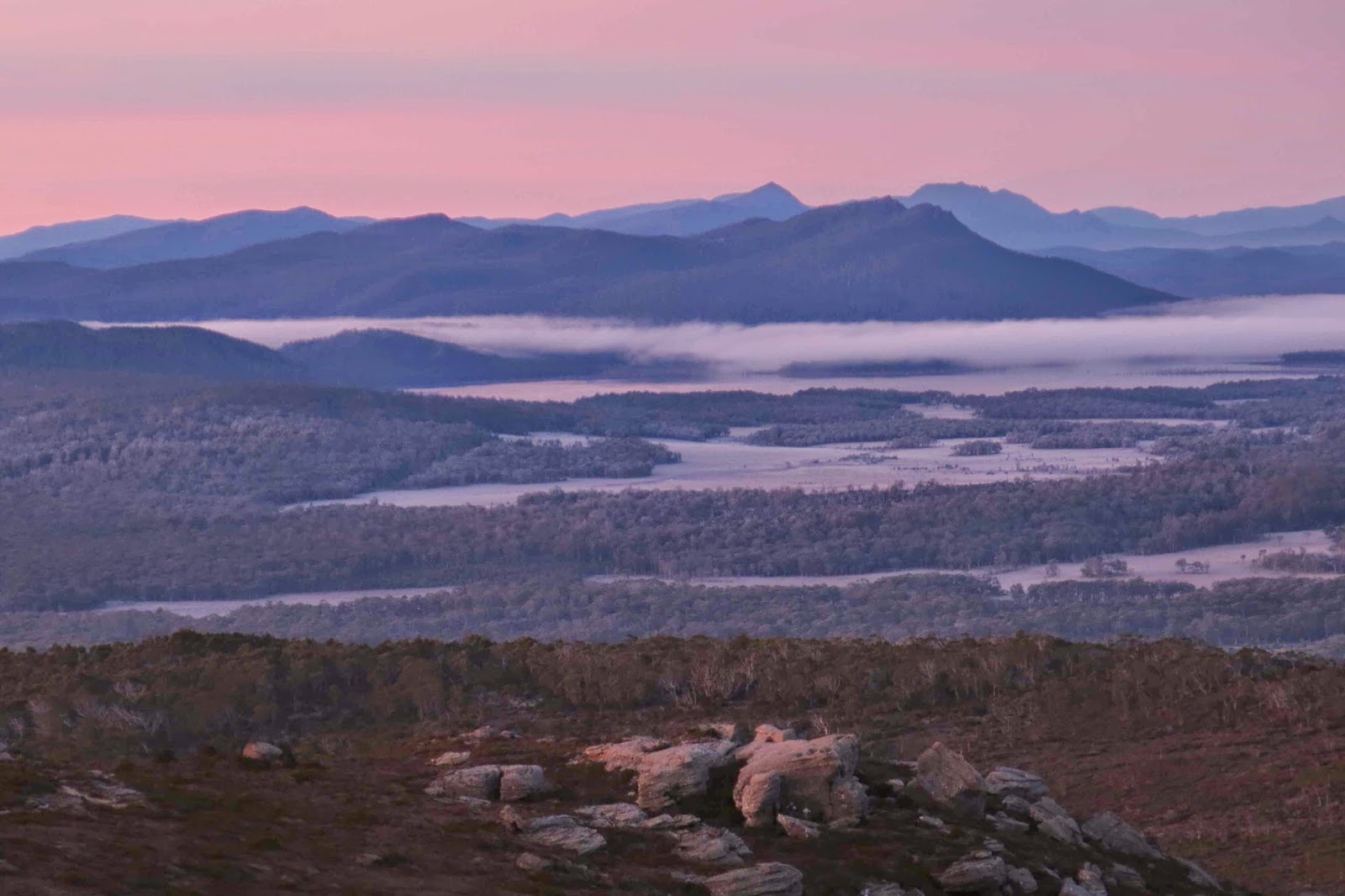
The view from both summits was expansive with innumerable mountains and ridges and ranges to be admired. Unfortunately for photography, the day was rather hazy, outlines not sharp and the lighting was flat. I hadn’t even bothered taking up my full-frame camera, but that was mostly because I was expecting it to rain in the afternoon. It held off, a favour for which, considering my pet virus which is still an unwanted bodyguest, I am extremely grateful.

From the saddle on the descent

See:
Mosley, Geoff, Natural for World Heritage, Appendix C
Harper, Melissa, The Ways of the Bushwalker, 42
Fairfax, Louise, Complexity and Paradigm Change, Melbourne University and   Harris-Manchester, Oxford University, libraries.

Wedge 2014 Aug

Mt Wedge

 I am amazed at the number of times I have climbed a mountain and gazed across to a cloud-covered giant near the waters of Lakes Gordon and Pedder and had a friend identify the leviathan as Mt Wedge. It seems to loom large in the vistas from an unlikely number of places and directions – almost as often as Frenchman’s Cap – and has an uncanny knack of turning up to every party, even when least expected. Whether you are on the Western Arthurs, the Mt Anne group, the Sentinels, Snowy Range, Denison Range, on Clear Hill, Frenchman’s Cap, or Wylds Crag, Mt Field West or Mt Mueller (the list goes on), there it is.

 So, why have I waited so long to make its acquaintance, and why choose precisely this weekend to end the drought? I guess part of that was the knowledge that it has a track up it, and is therefor a mountain that can be done at any old time, and solo or in company; there was no rush. When other, less-hospitable mountains appeared on an agenda, it seemed more sensible to do them as the opportunity presented itself. But this weekend there was nothing else calling, and I have been sick in bed all week, so it seemed a perfect time to do a mountain that has a track. (Tracks are much less demanding than making your own way through ‘scrubbery’).  The day packs from last week’s failed attempt at getting out of the house still littered the bedroom floor. No packing was needed – just a bit more health than last week. I was no longer running a temperature. Let’s go.

 Unfortunately we had a flat battery and required the services of RACT before we could get started, killing a precious hour, but at last at 11 o’clock we were in the carpark and ready for our mountain. The sign said 5 hrs return, so even if we took the time it said, we still had enough light. Ideally we’d be faster than that and would get a decent chunk of the long drive home in the light. The early section of the walk is through myrtle forest with lots of lush moss and brown humus – not as green as some forests, but refreshing nonetheless. One goes through a sort of nature trail for a very short way and hangs a left where indicated by a sign to eventually go along a road for a couple of minutes, from which another sign points right, to the top, and the real climb begins. We took 11 mins to negotiate that kind of “pre-start” area.

The real climb is good and steep. After 36 mins (for us) the forest type changed from being predominantly mixed myrtle to a congeries of melaleuca and rather skinny pandanis. That pleasant band only lasted 12 mins, so that after 48 mins of climbing from the road, we emerged out of the forest into very low scrub, and our first close-up view of some dolerite columns that marked the cap of the mountain we were climbing. We also got our first – very exciting – view of water below and of our surrounding mountains. It looked as if the summit was just perched there above the mini organ pipes, but it took me another 21 minutes to actually touch the trig from there. Bruce was tired by that stage, and it took him about double that. I realised as I gave way to the irresistible pull of the summit that although I adore being on mountains for the view and the sense of infinitude from the top, I also love the act of climbing, even on a day like today when I have been sick and am not able to push my absolute limits. I am still able to push my own available limits of that day, and even that is pleasurable.

We descended a bit from the windy summit to perch on a rock and enjoy our lunch gazing out at the lakes far below us, and the shapely Sentinels which I adore, before a descent that was the same speed as our ascent, afternoon tea at one of our favourite little cafes in the world, viz. the Possum Shed at Westerway, with brilliant coffee and luscious cakes, and on to Launceston where we arrived in time for dinner. A goodly day.

Nevada Peak 2016, 2014

Nevada Peak, Second try. Feb 2016. (Attempt 1 is below).
Yesterday, I at last reached the summit of Nevada Peak, and, of course, was pleased to finish this (at the time) uncompleted business. The mountain is very beautiful, and I wish to return there with my husband, turning it into an overnight trip, and sleeping at Snowdrift Tarns. My photos, however, do not please me, as the lighting was tricky and I didn’t do a good job. At the end I have provided a jpeg image of the route in case that should help you. I would also like to offer a different opinion to the writer of the essay in the Abels book, as the writer made it sound rather arduous. I did not find it at all so, and was at the top in just over two hours, rather than the three said by the book – and that was at a very measured, happy-chatty pace.
My favourite images remain the snowy ones from my first, failed attempt, below.

Attempt 1, Aug 2014


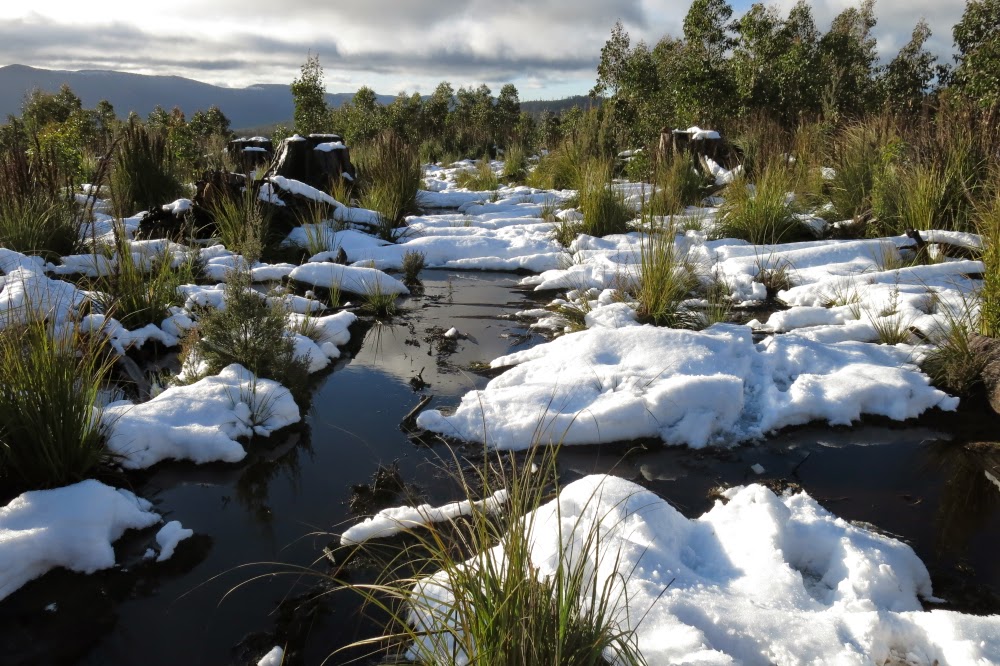
The track at the start.

Not for the first time (see two other links below) one of my best walks in terms of beauty and fun has been a walk where we failed to reach the summit. I was going to write “our goal”, but isn’t the goal actually to have a wonderful day in the wilderness rather than necessarily to reach a summit? The summit will wait for me. I’ll get there some other time, but we had a beautiful day in the bush, that’s for sure.

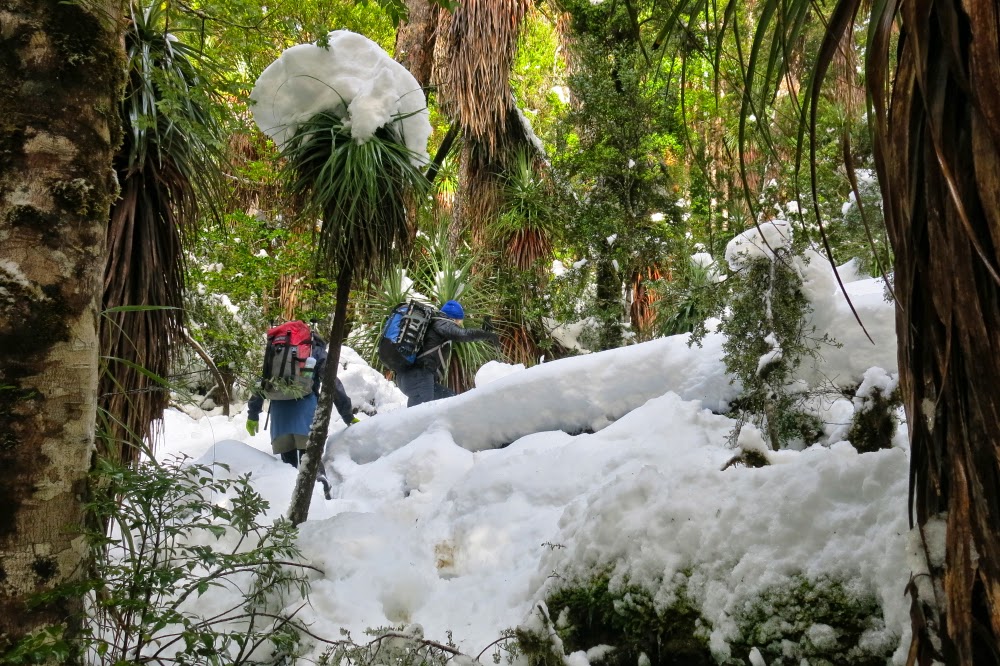
There is a beautiful Pandani grove on the way up.

For me, the day began very, very early, as I had to get up at 3.30 in order to meet my friends at 6.30 at Kingston, and then drive some more with them. We all knew there had been a heavy, fresh dump of powder; we also knew that there was a possibility that we could not even reach the starting point of our walk due to deep snow or floods or a thick tree blocking our path, but we were all ready to give it a go anyway.

Pandani with hat

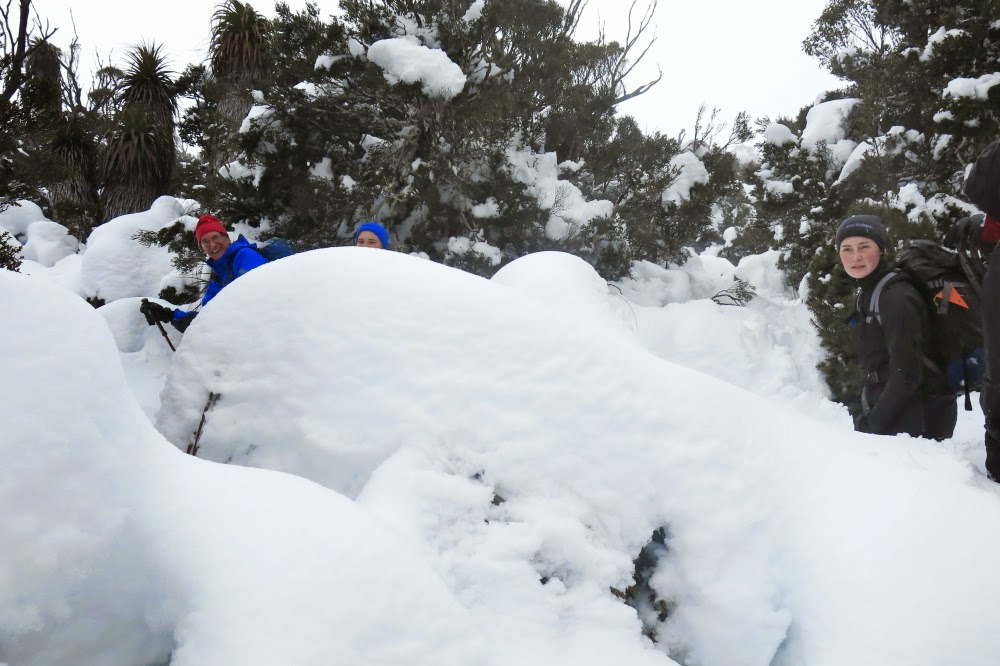
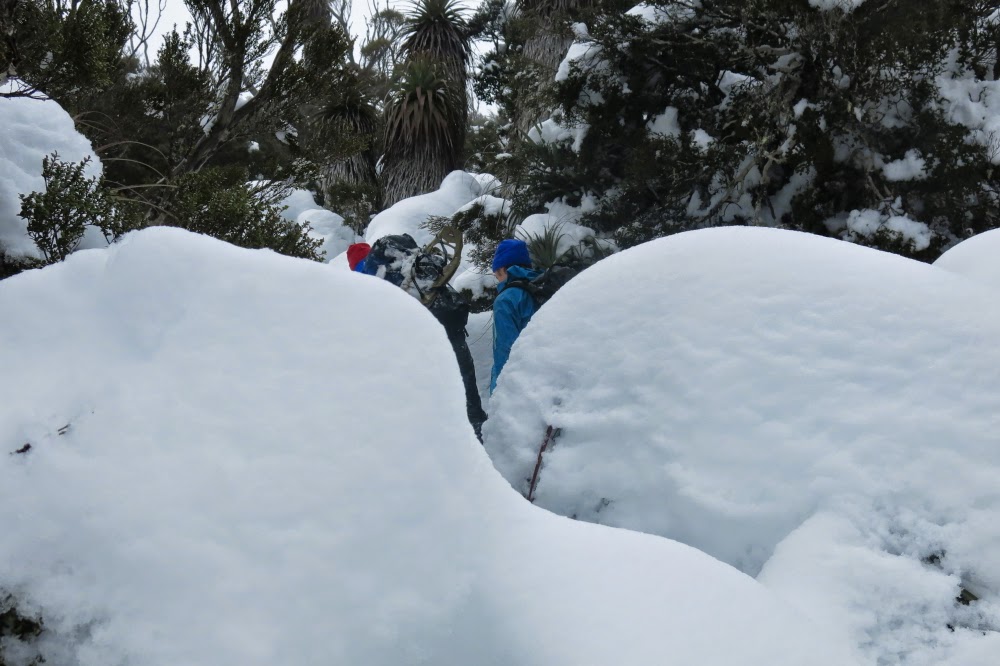
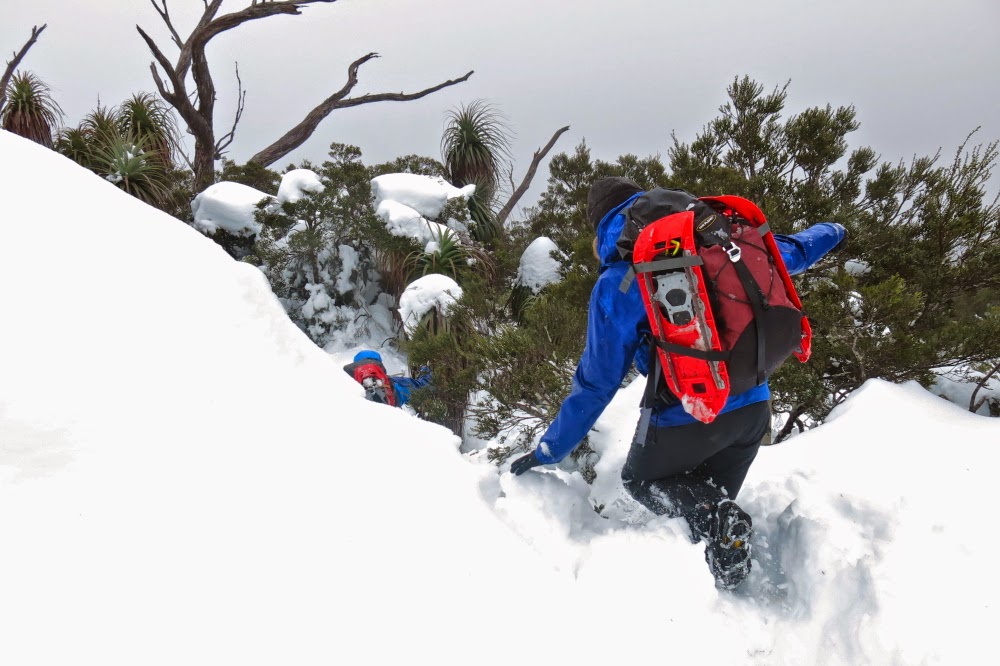
Tasmanian rainforest with a cover of snow is a very beautiful sight. We worked our way through the snowy fairyland, stopping to regroup, climbing steadily, but not speedily. My main impression of the day was just the joy of being there in such a fabulous environment. Towards our turnaround point, the snow was chest deep and it was becoming even slower, and extremely tiring for anyone in the lead to force a passage through. It didn’t matter. Nothing mattered. We were all enjoying the moment, and also all aware that we were starting to get pretty cold. It was time to head for home.

 Working the thick snow

As I enjoyed the downwards trip – made significantly easier by the fact that we just had to follow our own snow ditch – I pondered how good it is to be doing this with other like-minded people: people willing to get out of bed early and enjoy a couple of minor hardships (like being cold, carrying a pack, being fit enough to enable the project) in order to be in supreme beauty and have fun while being there: it would be much too dangerous (idiotic?) to go into an extreme environment like that solo.

Route taken for summer completion of the job.
Links to two other walks that are amongst my favourites even though we never made the summit due to snow:

Rufus 2014 Icy sleepover. Jun

Mt Rufus and my coldest tent night ever. June 2014.

The morning of my climb, Here is Rufus as seen from King William 1 earlier in the day. Should I climb her?

It was the depths of winter, and I was out and about solo.
I decided to camp on Mt Rufus and see what sunset and dawn were like from up there. I like sleeping on summits. I chose the Gingerbread track as my route.
All went well as I made height, until, just short of the summit, I came to a dramatic halt, and the first of many slides backwards. The top was now tantalisingly close, but every attempt to gain more height was met with a backwards skate which even wild clutching at green matter could not avert. There are two small huts on this approach to Rufus, and I had inspected both en passant while climbing. However, there was no way I was staying in either. Among the many objections (dust, gloom) was the main one, viz., that one little bod could never generate enough personal warmth to heat a hut. Much better to sleep in my tent, and to pitch it very quickly. I was rather alarmed at how speedily and suddenly everything was now freezing up. The whole mountain seemed to have instantaneously turned to ice. It was 4.40. Retreat to the bottom was not in question. I had to find something relatively flat and get the tent up, pronto, before my fingers froze to numb incapacity.
Closer shot of Rufus calling from afar.
I worked quickly, trying to feed the pole into its slot, and sighing with relief when I heard the final click that meant the ends were now in their rightful positions. With light now waning, I decided that the next important job was to cook. I didn’t want to use the vestibule and create a condensation problem, so felt very brave and cooked outside. First a cup of soup. While I drank it, enjoying warming my hands around the mug’s circumpherence, I noticed with alarm the way ice crystals were forming on both my gaiters and boots, climbing, as I watched, like a march of white ants up my legs. The tent flaps were also icing over as I drank. Quick. Cook main course too before you need to retreat inside. Dessert (chocolate, nuts and honey) could be had in my bag, later.

Climbing Rufus now

By 6 pm, I was inside, everything arranged for the night. I’d brought in a bottle of water and placed it under my sleeping bag so I’d have flowing drinking water in the morning when all creeks would be frozen. I placed another cup of water just outside, in the vestibule, about 20 cms away from me, so my body warmth would hopefully prevent it from solidifying. (I didn’t have it inside in case I knocked it over). I didn’t want frozen boots, so brought my boots and gaiters inside and placed them under the bottom edge of my sleeping bag (which is too long for me, so protects items like that).
To bed, I wore 2 icebreakers, an O top, a fleece jacket, an Arcteryx thick jacket with hood up, possum gloves, helly long johns, O pants, lined outer pants, and 2 pairs of thick woollen socks, all inside my down bag which is good to minus five degrees. Underneath, I had a thick sleeping mat, and beneath that, a layer of carpet underlay. Then I tucked the end of my sleeping bag into one of my goretex jackets to protect the bag from moisture dropping from above (should the ice somehow melt), and another goretex jacket over my shoulders and upper torso. Over the middle section of my body, I placed my other down jacket. I was, you might say, well rugged up for this night … yet I was still cold.
I thus embarked on a multi-hour exercise programme designed to keep me alive. Whenever I stopped, I could feel the cold creeping into my core, so began again. Mostly, I did bicycles, sometimes “Worms” – a kind of wave or serpentine writhing. Other times I did crunches and sit ups, and at yet others, went through a series of exercises our national coach once taught us, where we isolated each muscle in the body, and practised contracting and then relaxing it. His emphasis was on learning to relax; mine was on movement of every muscle to try to generate warmth and keep my metabolic rate at survival level. I kept all this up without looking at my watch, as a watched watch never progresses.

At 10 pm, however, I indulged in a peek. I was happy. Five hours down, nine to go. Over a third of the way there. Next peep was at midnight. Seven down, seven to go. Hey, I’ve survived half this night, I can do the other half.
At 1 a.m., however, doubt crept in. My toes were getting numb, the backs of my hands were hurting, and I had developed a headache. When I sat up, I had to prise my now frozen hood from the also frozen tent flap, to which it had stuck in an unbroken stalactite. I noticed that the cup of water 20 cms from my body was a solid frozen block: not just iced over, solid. I remembered at this point that the worst was yet to come, that the coldest hour of any night is one hour before dawn, which meant there were five more hours in which it would get even colder. Could I keep up five hours more of this? I wasn’t fatiguing yet, but feared I might at some point in the future. At this juncture, I had a little midnight feast, not because I was hungry, but because eating raises your metabolism. Down went more chocolate and nuts, and some dried mango for variety.
Believe it or not, I never posed the question: “What am I doing here?”, as I knew the answer. However, I did hear other imaginary people asking me, and while I lay there, I answered them. I explained that however much I enjoy contemplation – reflecting the sapiens part of my species’ name – I was also of the genus homo, order primates, member of the animal kingdom, and want to be allowed to be part of nature – and nature, is, by definition wild, not tamed by the pusillanimous and rapacious desires of bureaucrats and politicians.
Like Roger Deakin or Robert Macfarlane, whose books I greatly enjoy, as much as I enjoy culture – fine wine, theatre, restaurants, artwork,  musical concerts – I also want to be part of the Wild, to be truly free. I do not want to be a member of our Brave New World of cosseted, somatised and compliant beings. I want to live, truly live, which means to know extremes. Here I was, experiencing a variety of the fury of nature, being wild and truly free.
I was worried about falling asleep, as I know that to fall asleep under certain conditions of hypothermia is to die, and that one must keep moving. I thought of the Jews who scored outer layers in the vans heading for Auschwitz, who died overnight. Penguins take turns at taking the outside, but not these prisoners, it seems. I thought of the Germans retreating from Russia, many of whom just lay down to die in the snow. I thought of the gutsy Russian survivors of Hitler’s siege of Leningrad, who, despite having almost no food or warmth during Hitler’s long cutting of supplies and energy to their city, nonetheless managed to endure much harsher conditions than I was now experiencing. I thought of how I’ve trained in Sweden when it was minus 15. The key is to keep moving. And I thought of my athlete friend from Austria, Gudrun Pfluger, four times world champion in my sport, who has run with wolves in Canadian forests, tracking and observing them in order to help save them. She must have withstood nights much worse than this. And while I thought, I cycled and continued my regime.
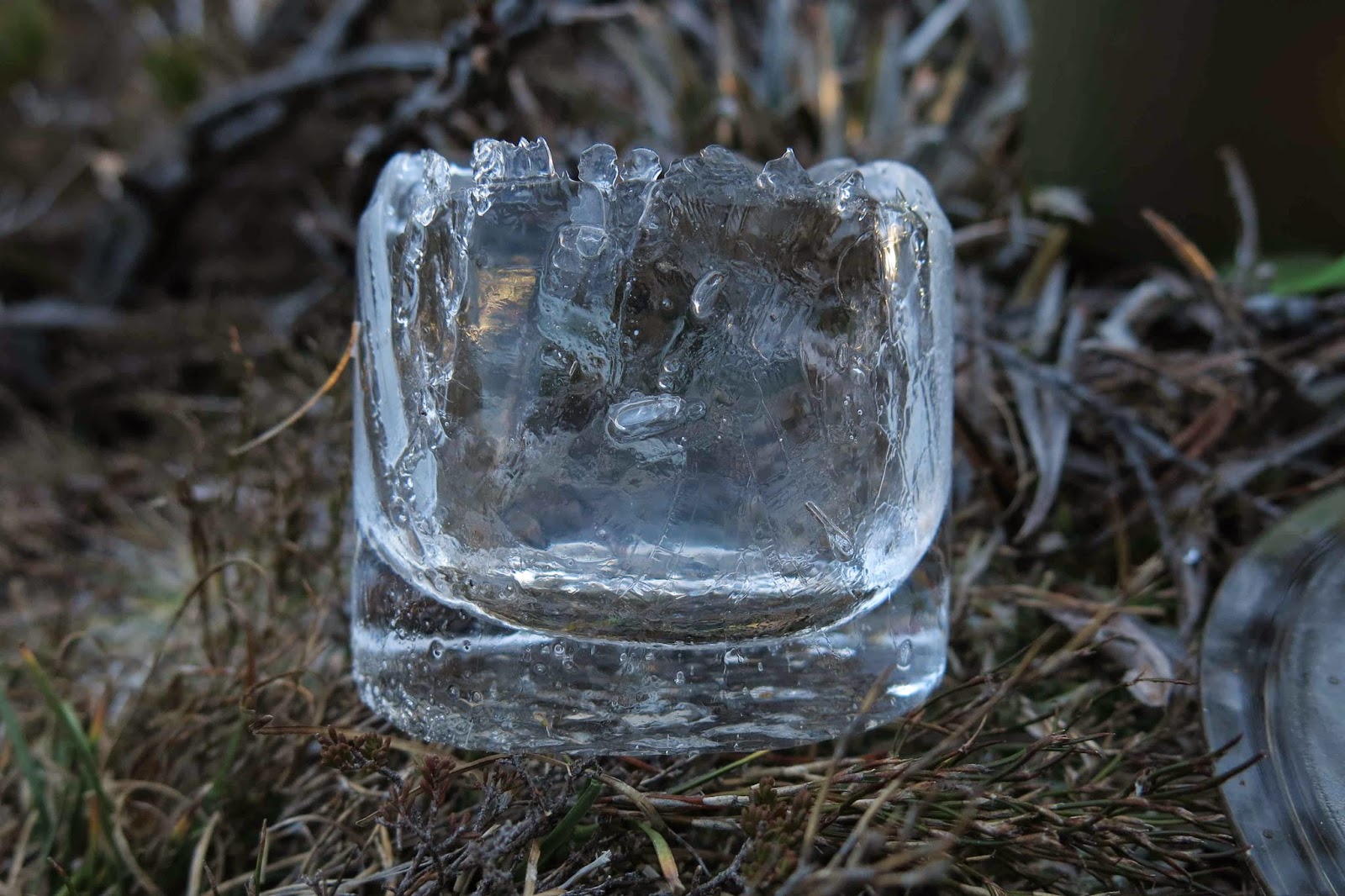
My cup-iceblock after I’d melted out its innards
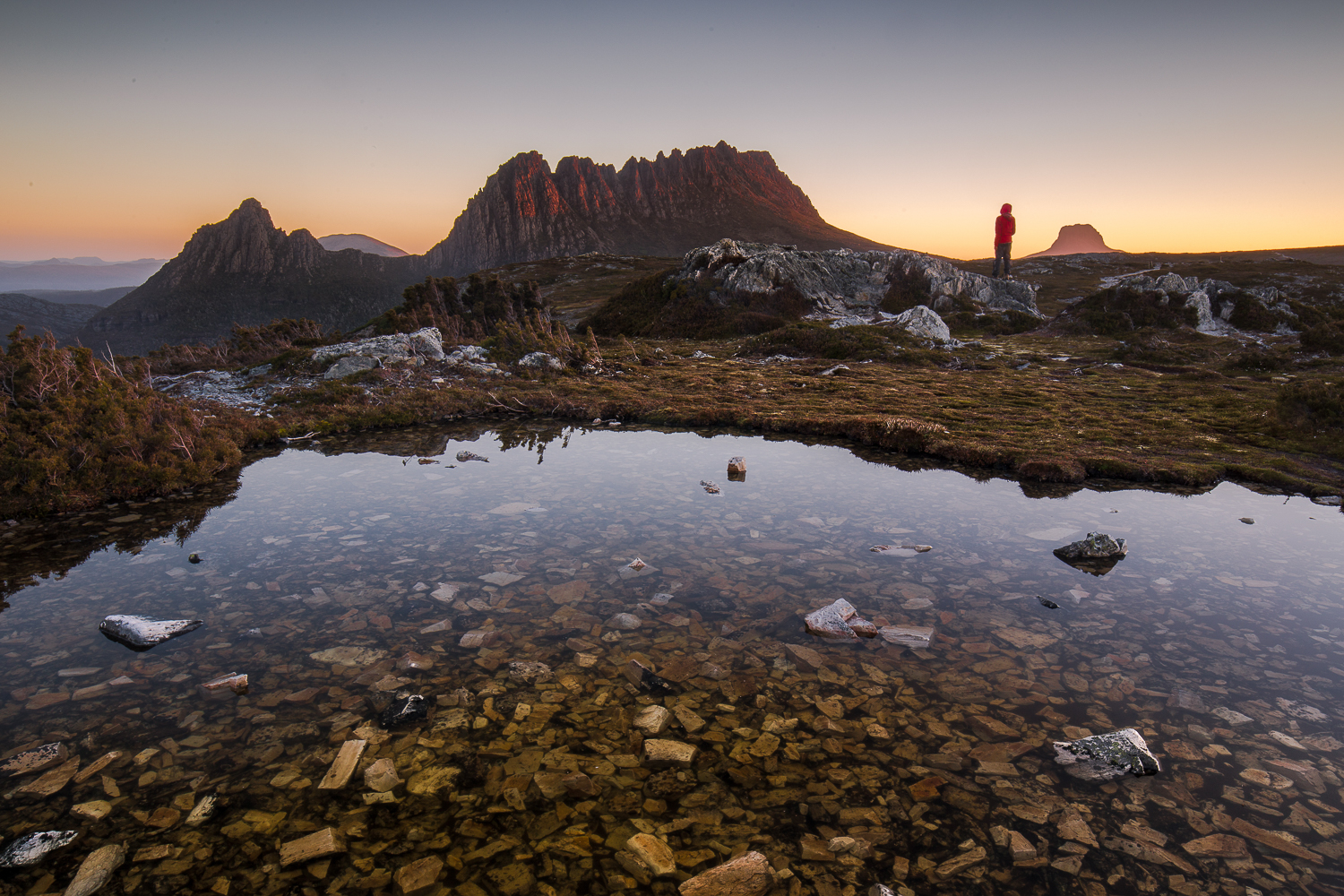
Somewhere in all that thinking, I did the unthinkable: I dozed off. The next thing I knew it was light, 7.15 in the morning. I had survived. I opened my flap to a bright red north-western sky. High above, I could see cirrostratus clouds, heralding a change – a warm front. Perhaps that front is the reason it didn’t get any colder so that I could fall asleep in safety. My boots under my sleeping bag were frozen solid, and it was very difficult to force my feet into the steel frames they now seemed to be. My gaiters, too, also stored under my bag you’ll remember, were sheets of resistant metal that didn’t want to bend around my legs. I pushed and shoved and grunted and got there. Out I went to inspect the dawn (the beauty of which is depicted in the photos above).
At breakfast, porridge was fine, but I couldn’t have my next course –  coffee, biscuits and honey – as my cup had this frozen block in it that wouldn’t budge. I put the mug in boiling water for a few minutes, but it still didn’t melt the ice. Then I poured boiling water on it, and that managed to dislodge it, melting the middle section, so I could tip it out.

Down near the bottom
As I descended later – in the bush, as the track was just a ribbon of black ice – I waited to drop below the freezing line, but it never happened. 600 metres below my camping spot, the world was still white. My guess is that it could have been colder than minus ten up there.

My car was enveloped in white crystals, but it worked. Off to the Hungry Wombat I went. I was alive, and aware of it in a completely new way. Every cell in my body was tingling with it, and it felt very, very good. I was positively bursting with the joy of the gift of life.
It’s the heart afraid of breaking
That never learns to dance.
It’s the dream afraid of waking
That never takes the chance.
It’s the one who won’t be taken
Who cannot seem to give;
And the soul afraid of dying
That never learns to live. (The Rose)
King William 1 2014 Jun

Mt King William 1  Jun 2014.
The weather looked as if it would clear, as promised and then rescinded by BoM, so I took a punt on climbing Mt King William 1, another peak not yet summited, but one continually beckoning me. I would also take in Mulligan’s Peak and Mt Pitt if the weather cleared. It didn’t.

The route began along a “road”, but as it was a heavily potholed, trickling-streamed, fungi-growing and boom-gated way, I did not feel threatened by the prospect of traffic. Instead, I enjoyed the feast of white and soft-grey trunked eucalypts set against mustard-coloured button grass and mossy green rocks. My mountain was not yet in sight. Mist was. There was plenty of beauty to entertain.

Up I climbed (almost imperceptibly; this was not a steep path). After 35 mins, I came to a flat, open section, and gained my first view of the elusive object of my quest, dressed for now in a diaphanous negligee that was being slowly cast off. Dolerite columns were visible yet also obscured, floating in the soft lace. It was a pleasing view.

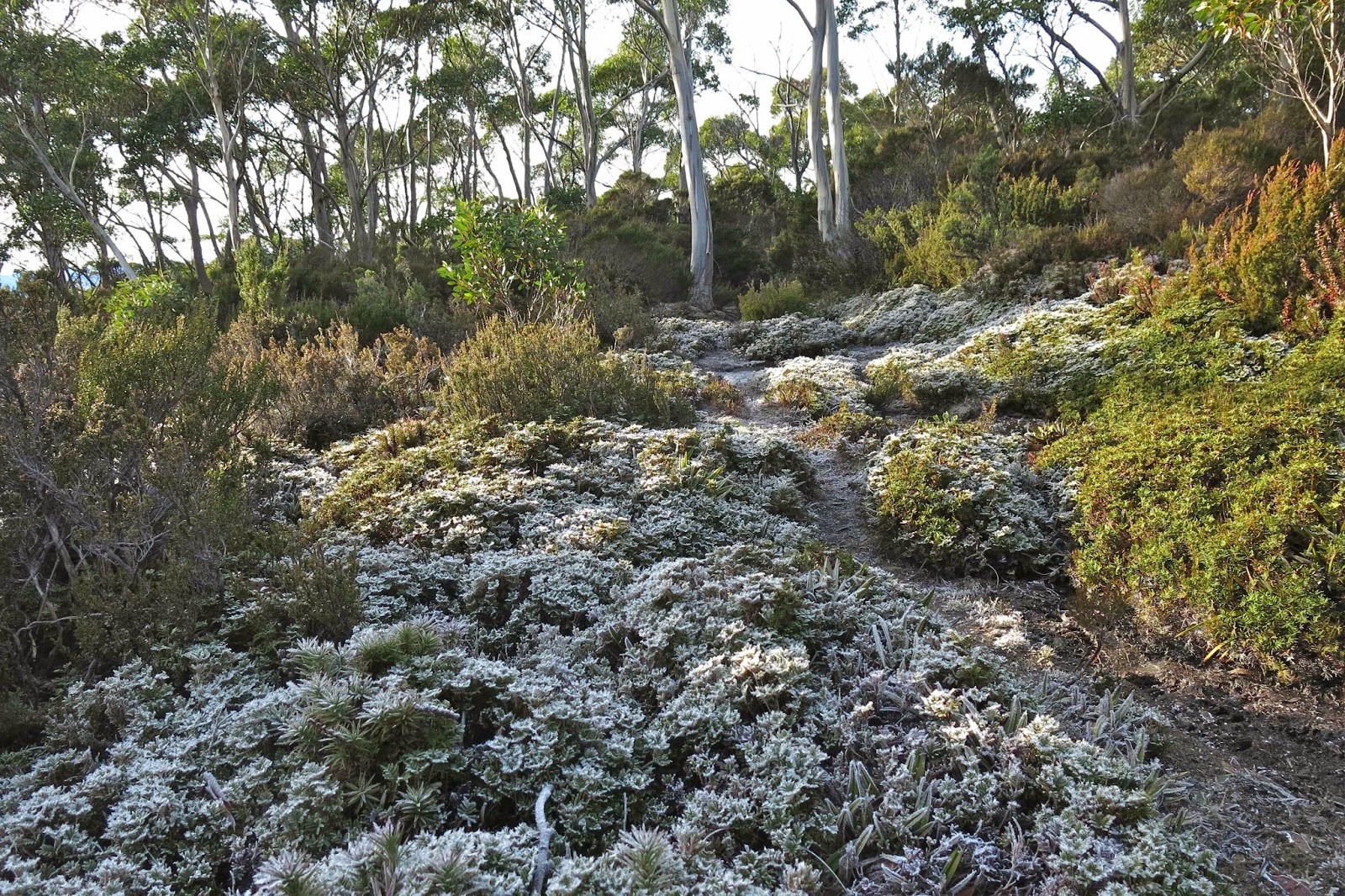
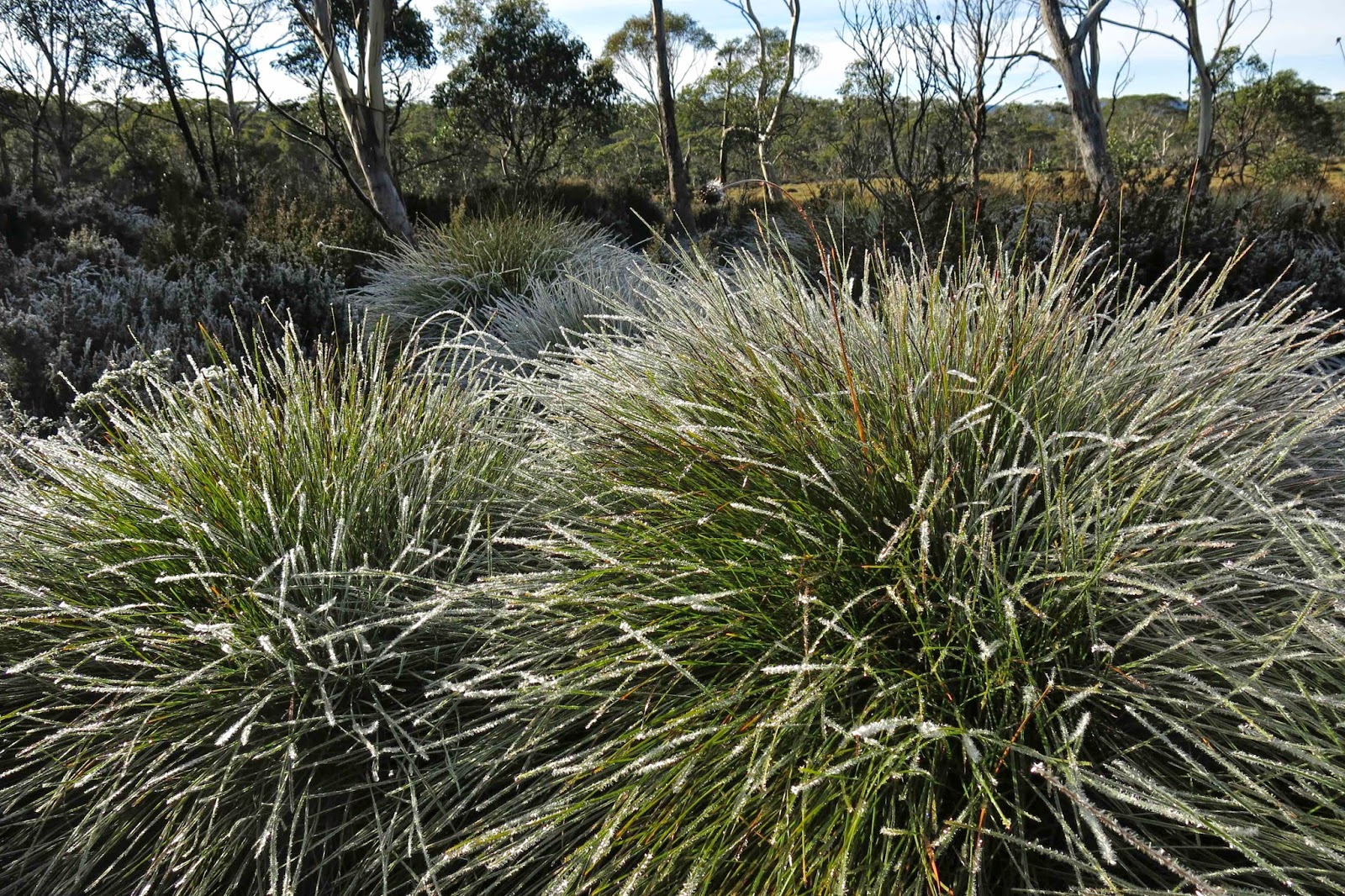
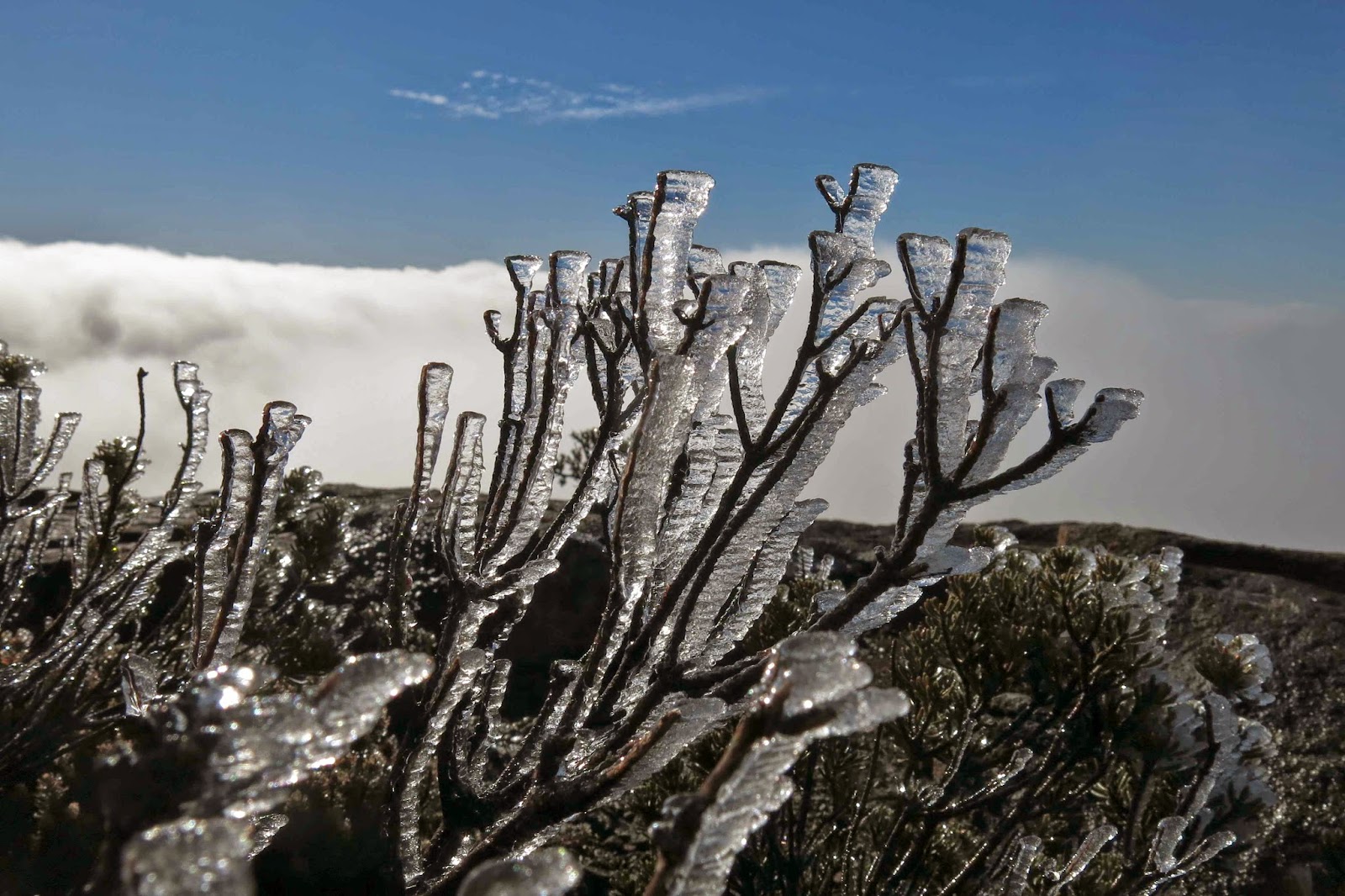
A bit further on, I found and signed the logbook, wondered why you’d stick a book nearly an hour along the track and not at the start, and kept climbing. The top still seemed a long way off – maybe an hour, I thought from there. I was totally shocked when after 23 minutes I took the next step to come almost face to face with moon equipment. There must be some mistake. Was this another false summit like yesterday? No. It was the real thing, and the rocks up there were covered in a sheet of “black ice”, an unofficial skating rink with heavy penalties for misjudgement. Crystals of ice adorned all shrubbery and shone startlingly white against the darker rock or sky. I clutched sharper sections to stabilise myself, but they were too slippery even for hands. I resorted to virtually crawling around up there for safety.

The clouds were rising, thickly this time. Mulligan’s Peak came and went, but in the brief period of visibility, she looked to be a perilous route at this distance. Certainly straight ahead you seemed to be required to nose dive over an ice cliff. I didn’t like the idea of climbing in these conditions, so had a little snack and began a reluctant descent, back to my car. That night I would spend an amazingly cold night on Mt Rufus (see separate post)