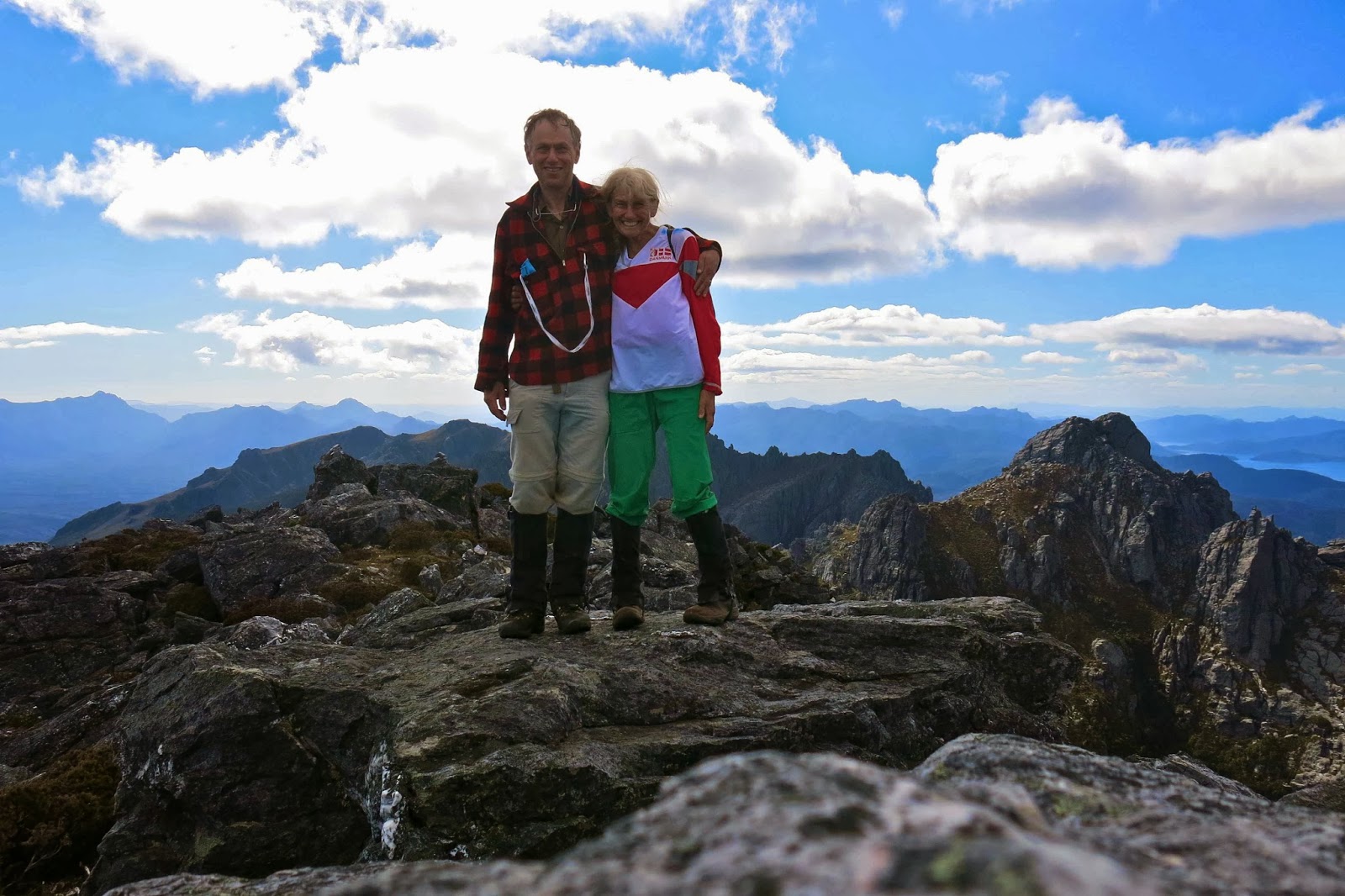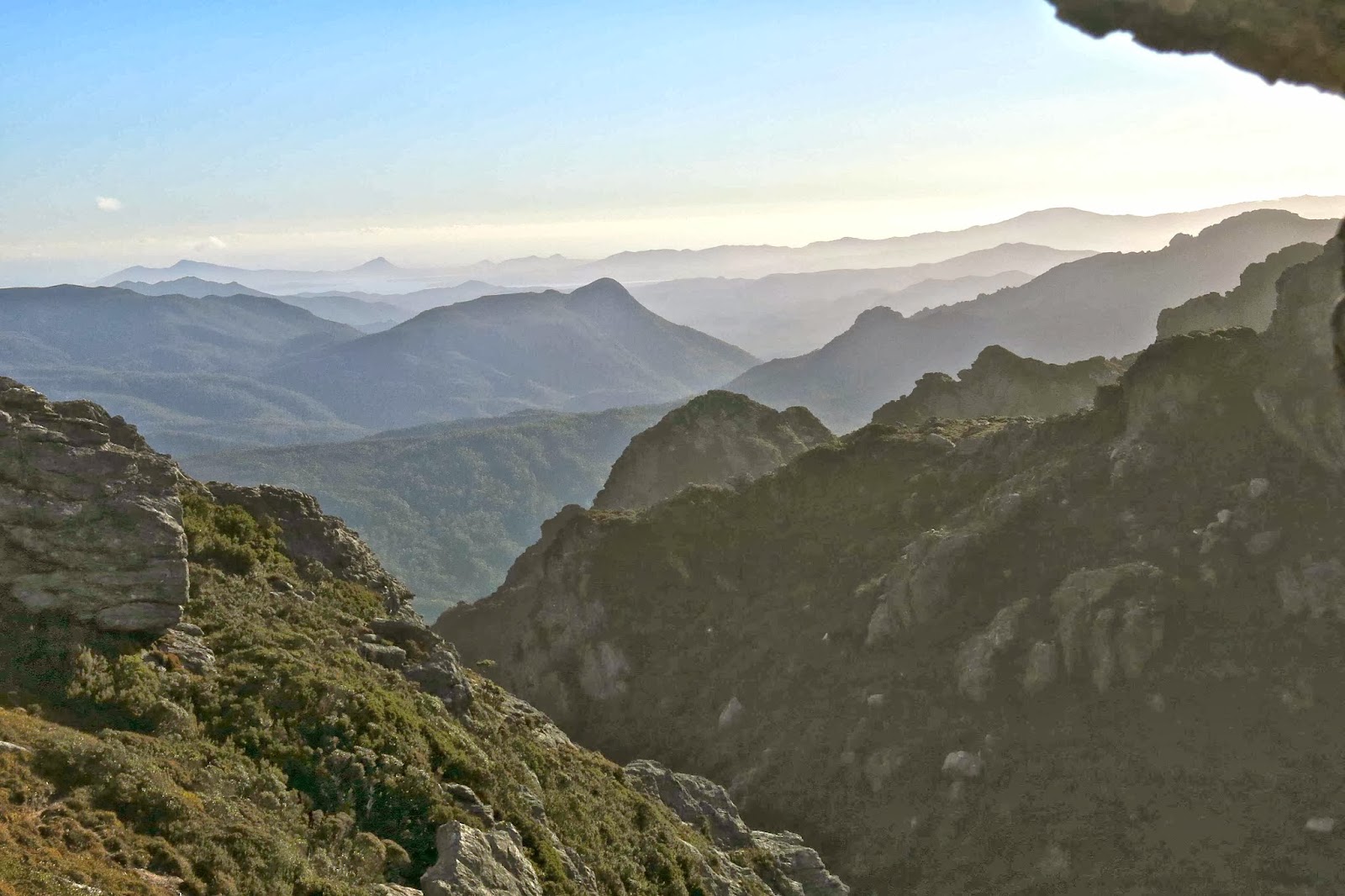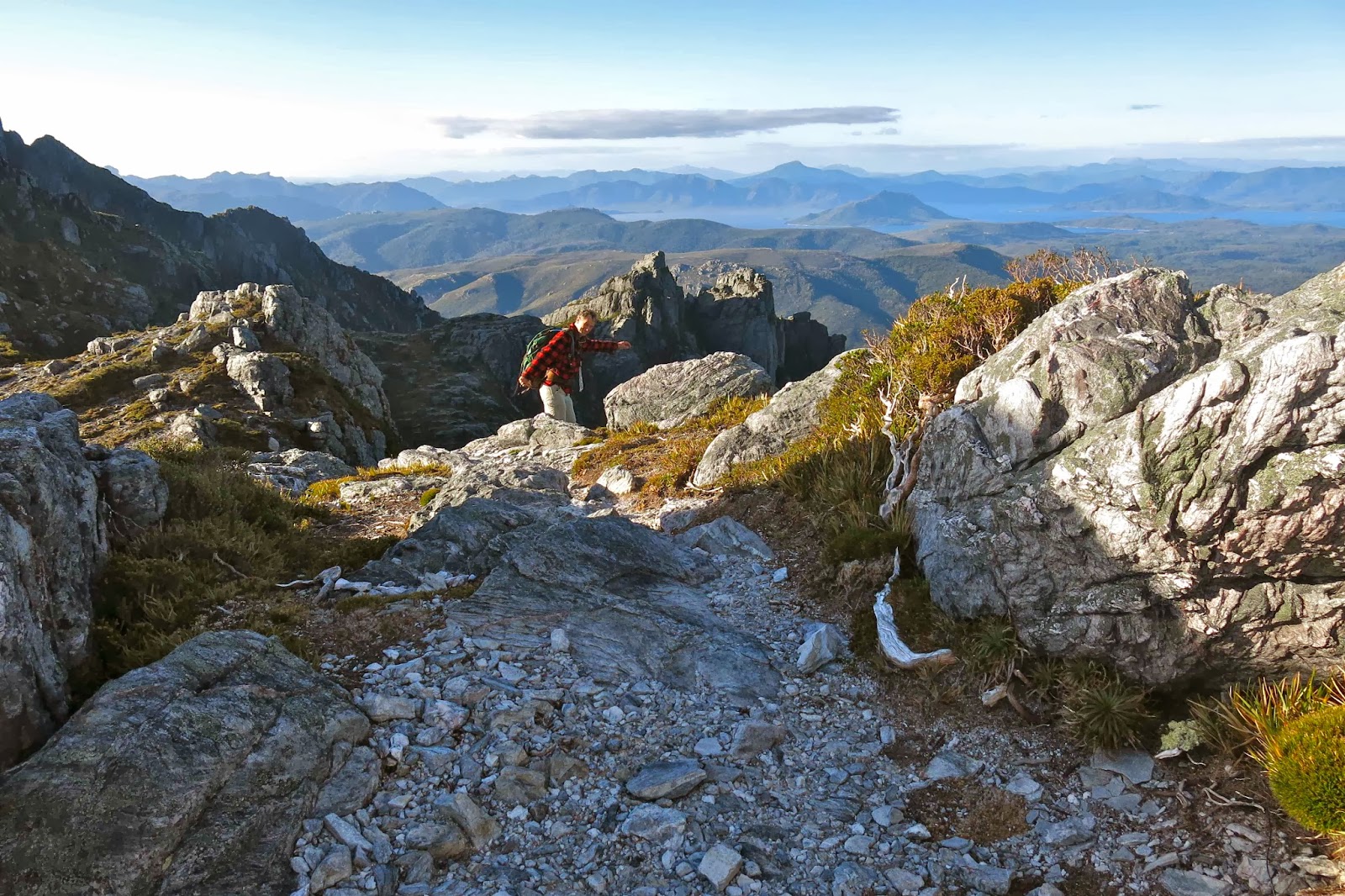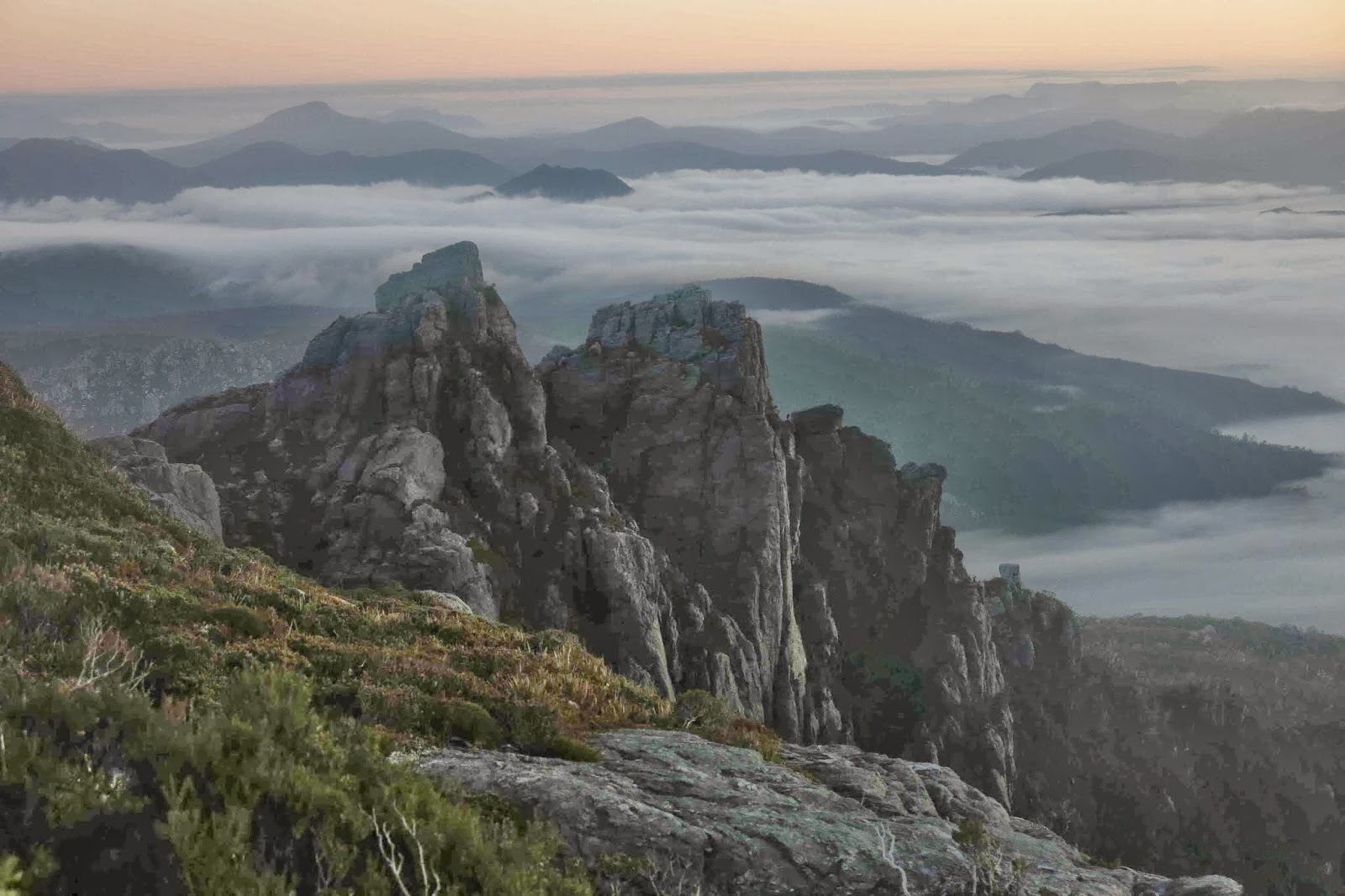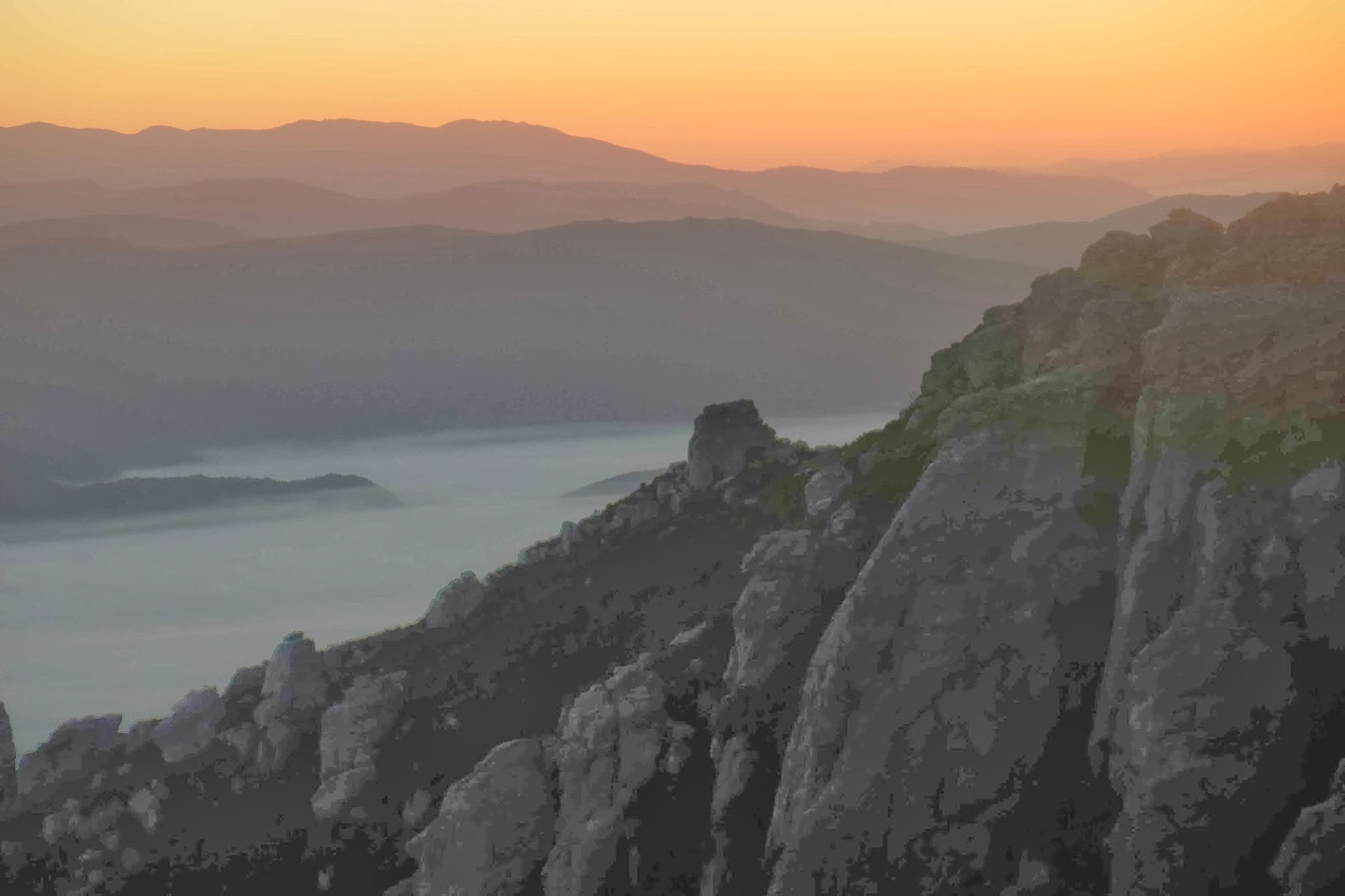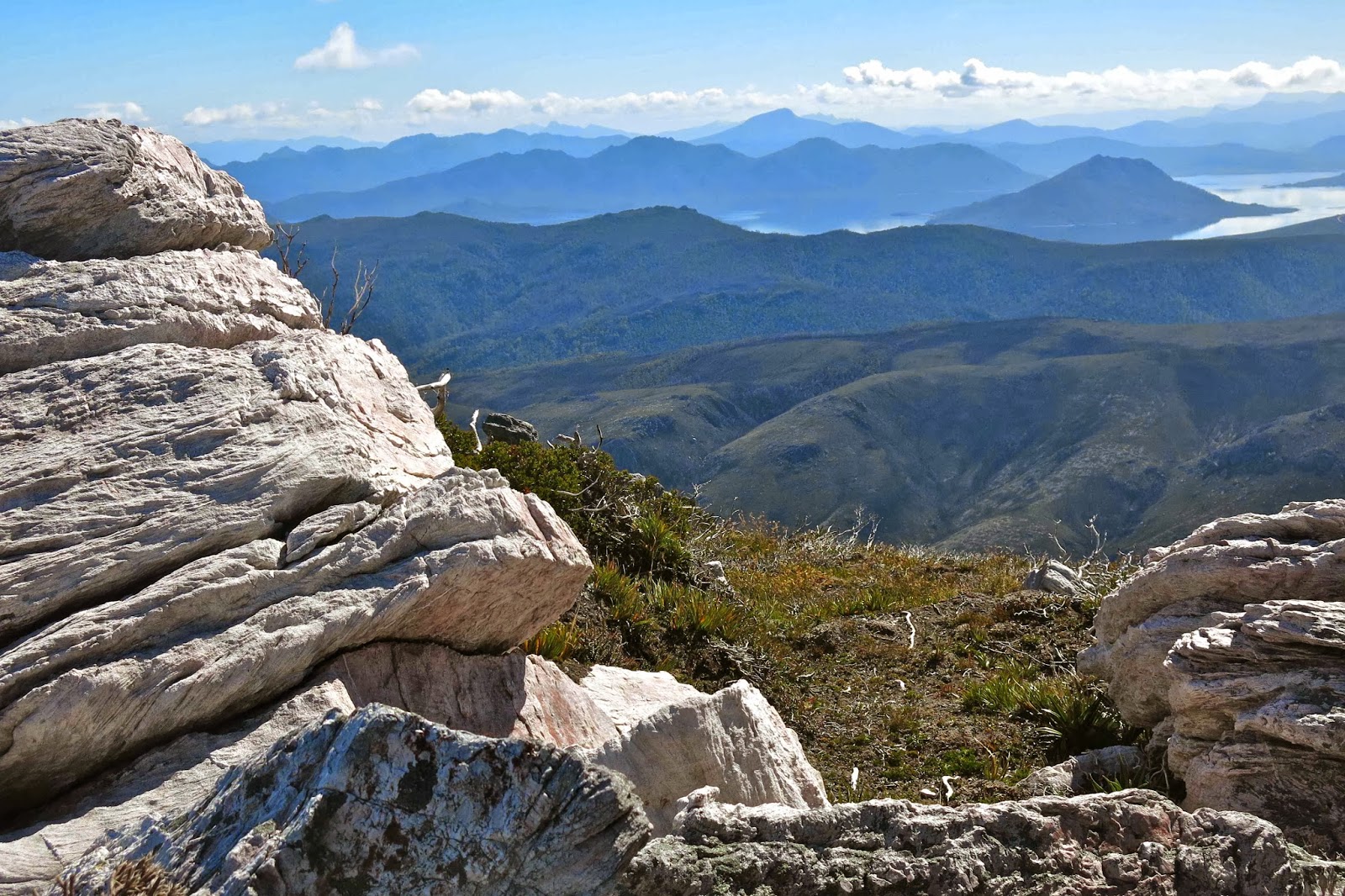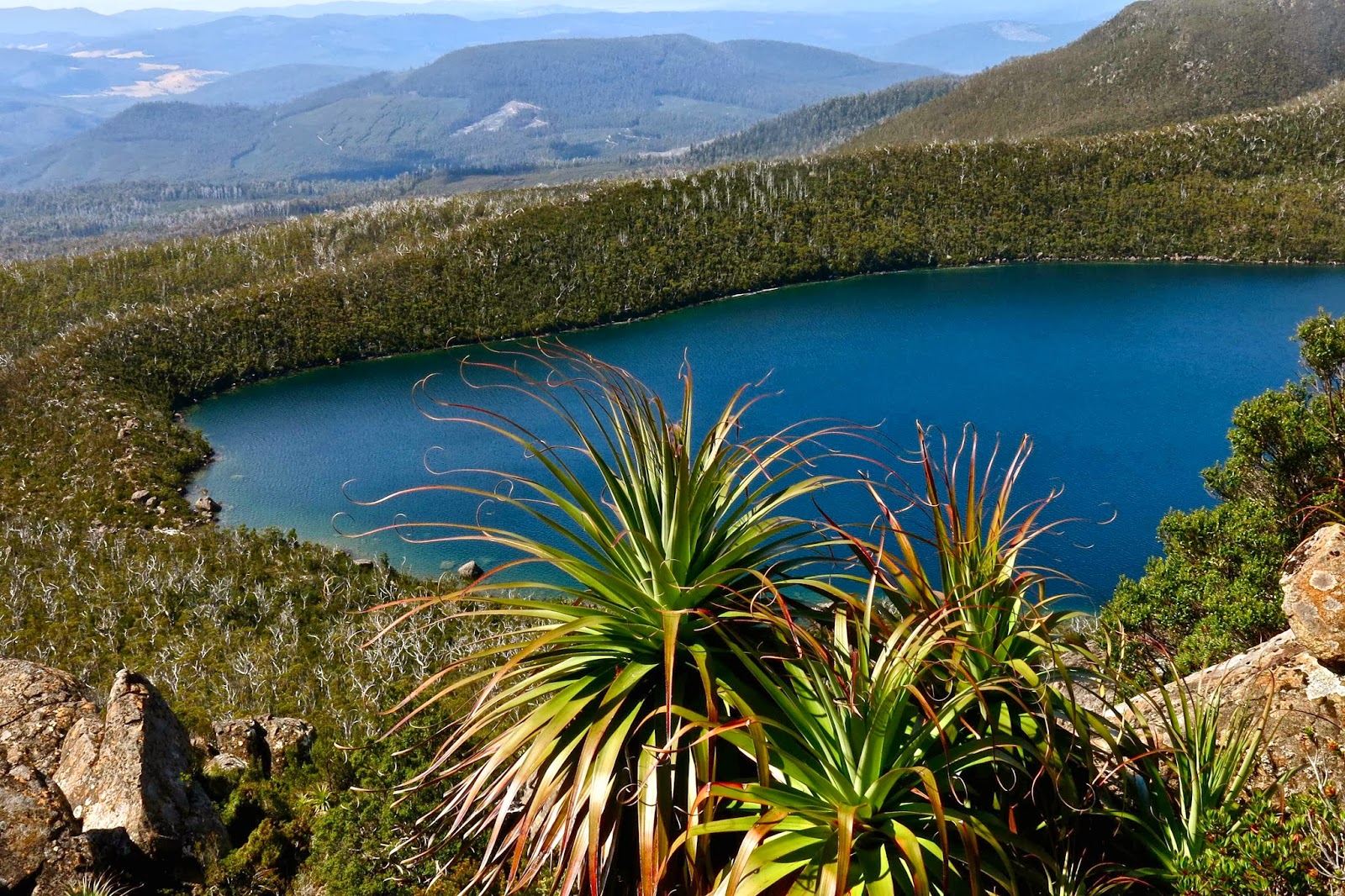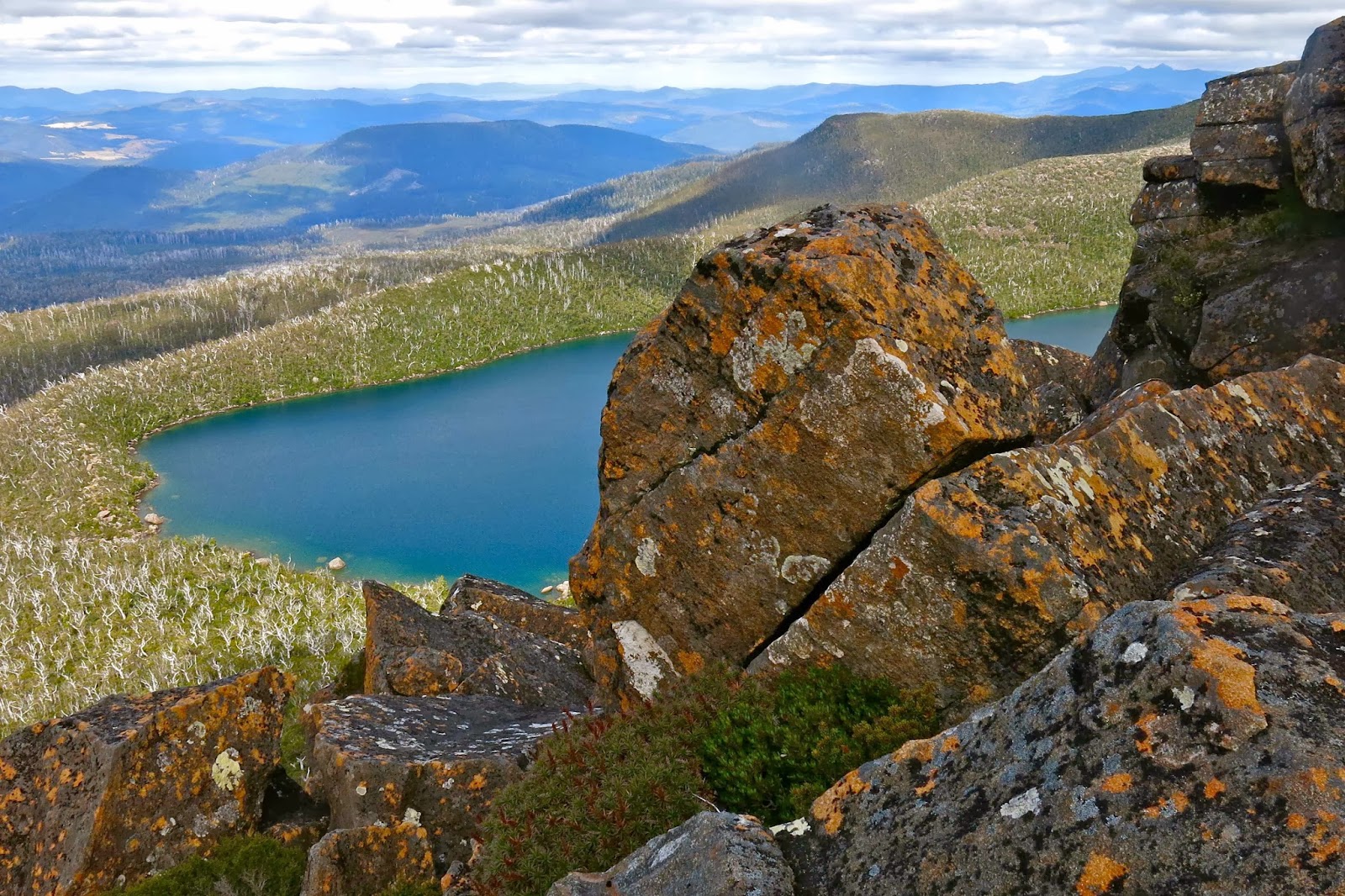
West Tower, East Tower 2014 Mar

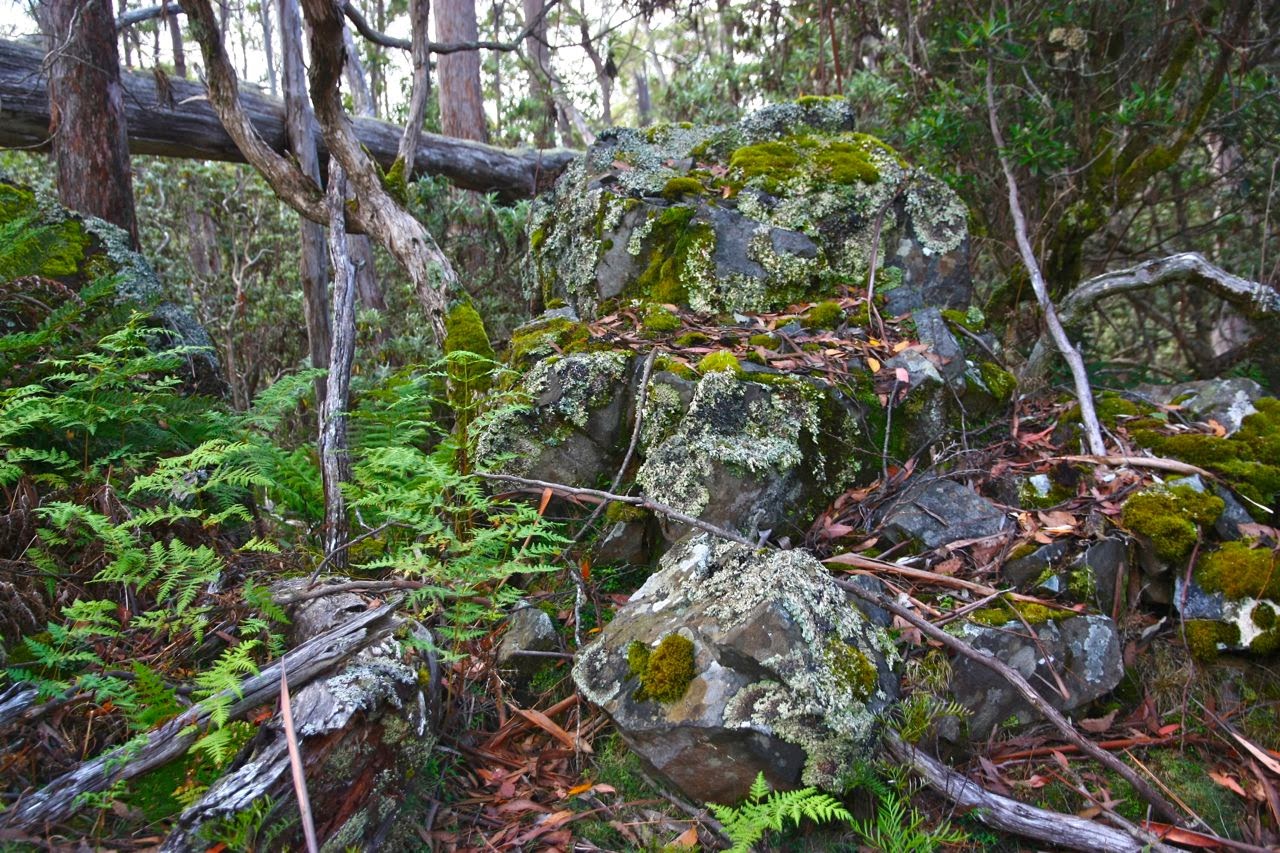
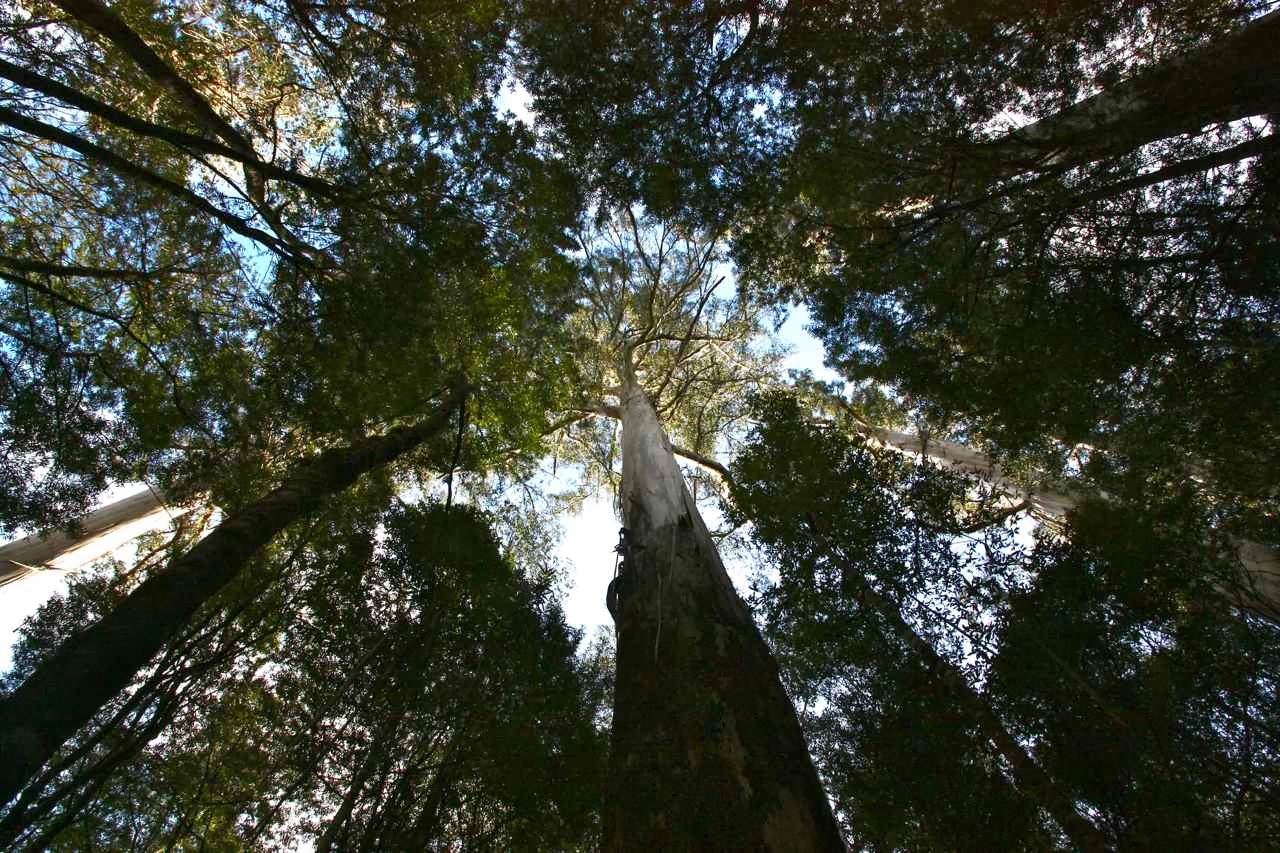
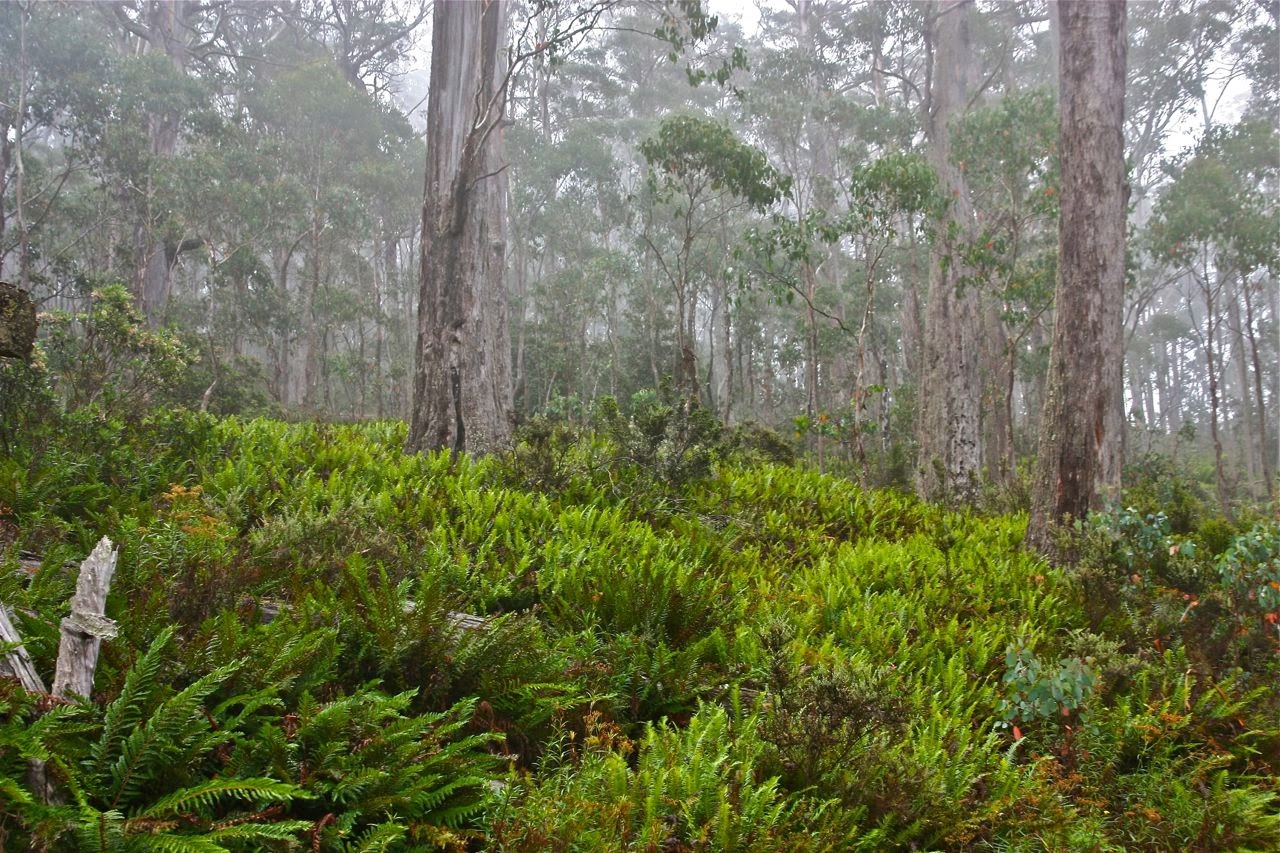
Bush in the early stages of the walk
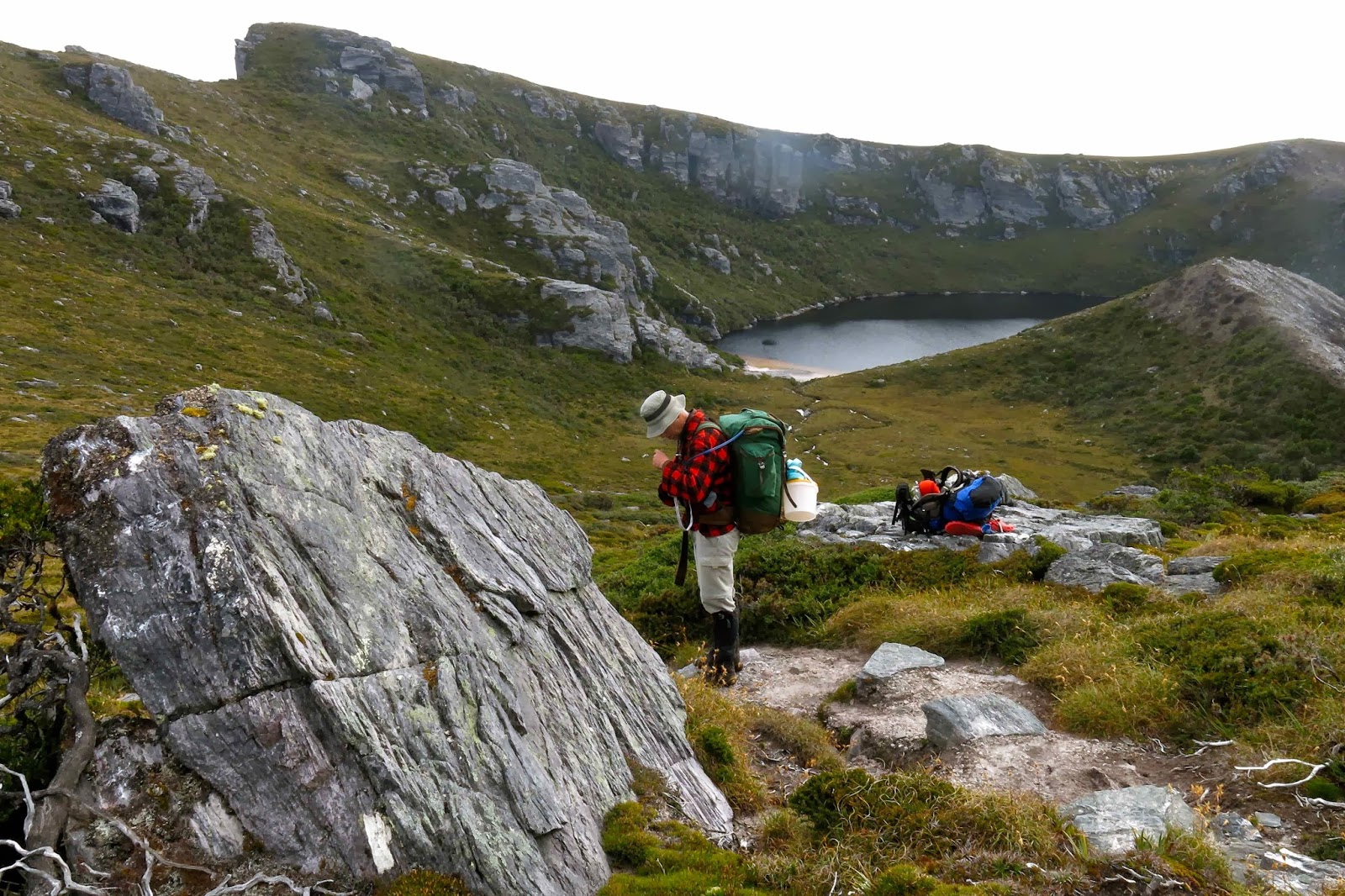
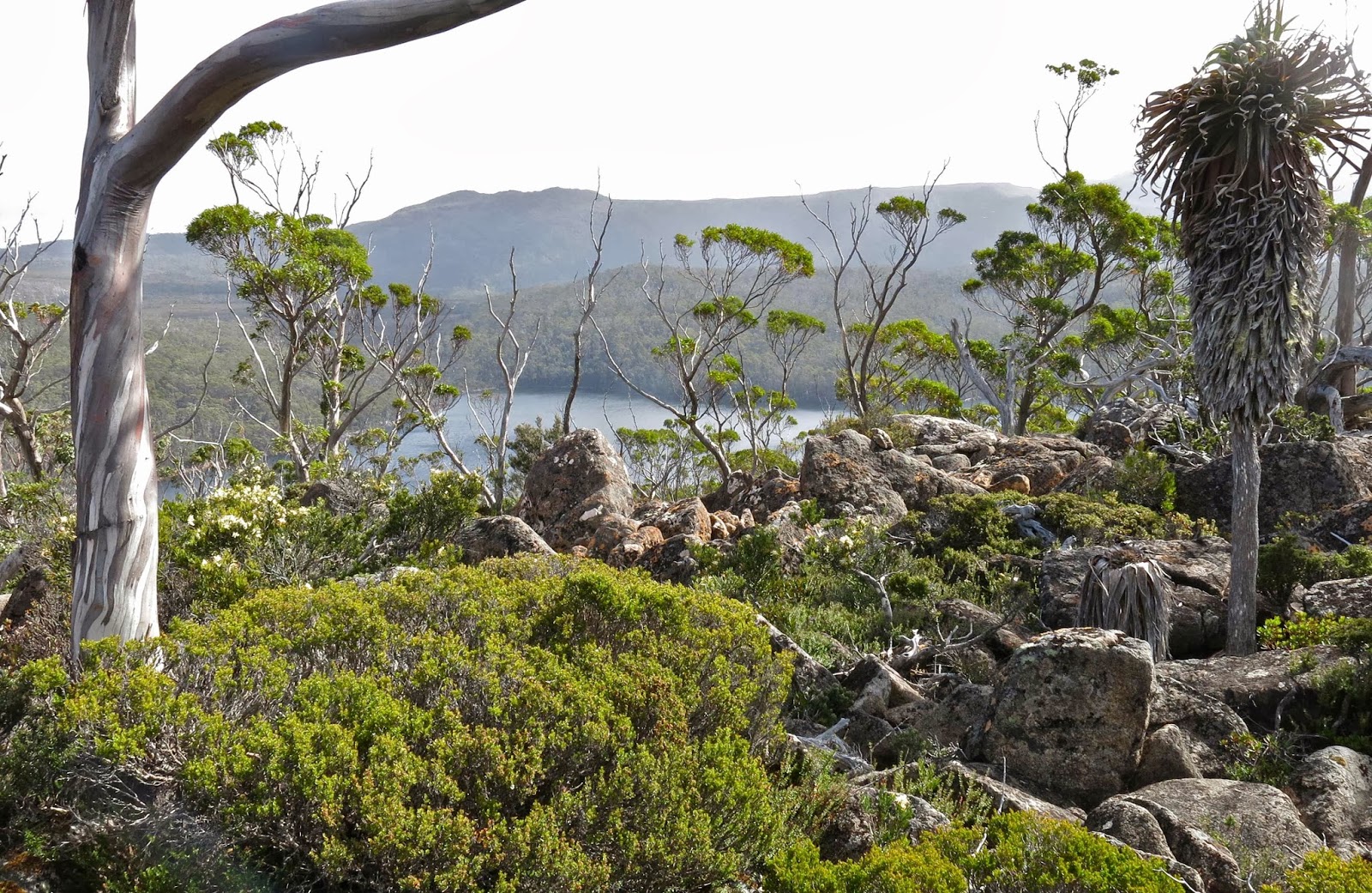
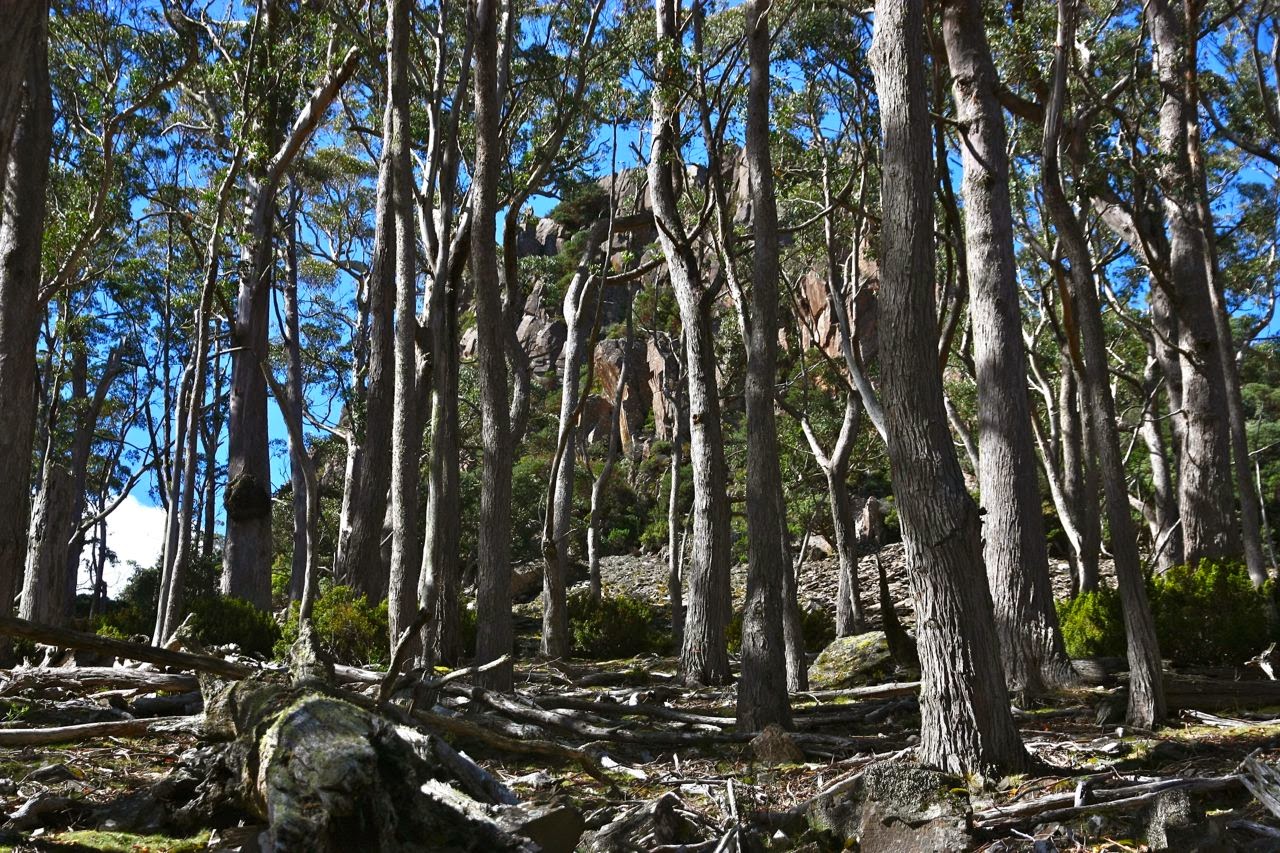
Contouring around Tower Hill

William Buckland, a delightfully eccentric Oxford Don of the early-mid 1800s (born 1784), not only poked around seashores for fossils dressed in his academic gown, but also decided to eat his way through the animal kingdom, often working his way through it in alphabetical order. Thus students visiting him for dinner not only had to negotiate their way through an untidy array of often gigantic fossils, but also were treated to such delicacies as bluebottle, mole or mouse for the evening meal. Buckland’s devotion to completing his collection of eaten animals was as thorough as it was outlandish.
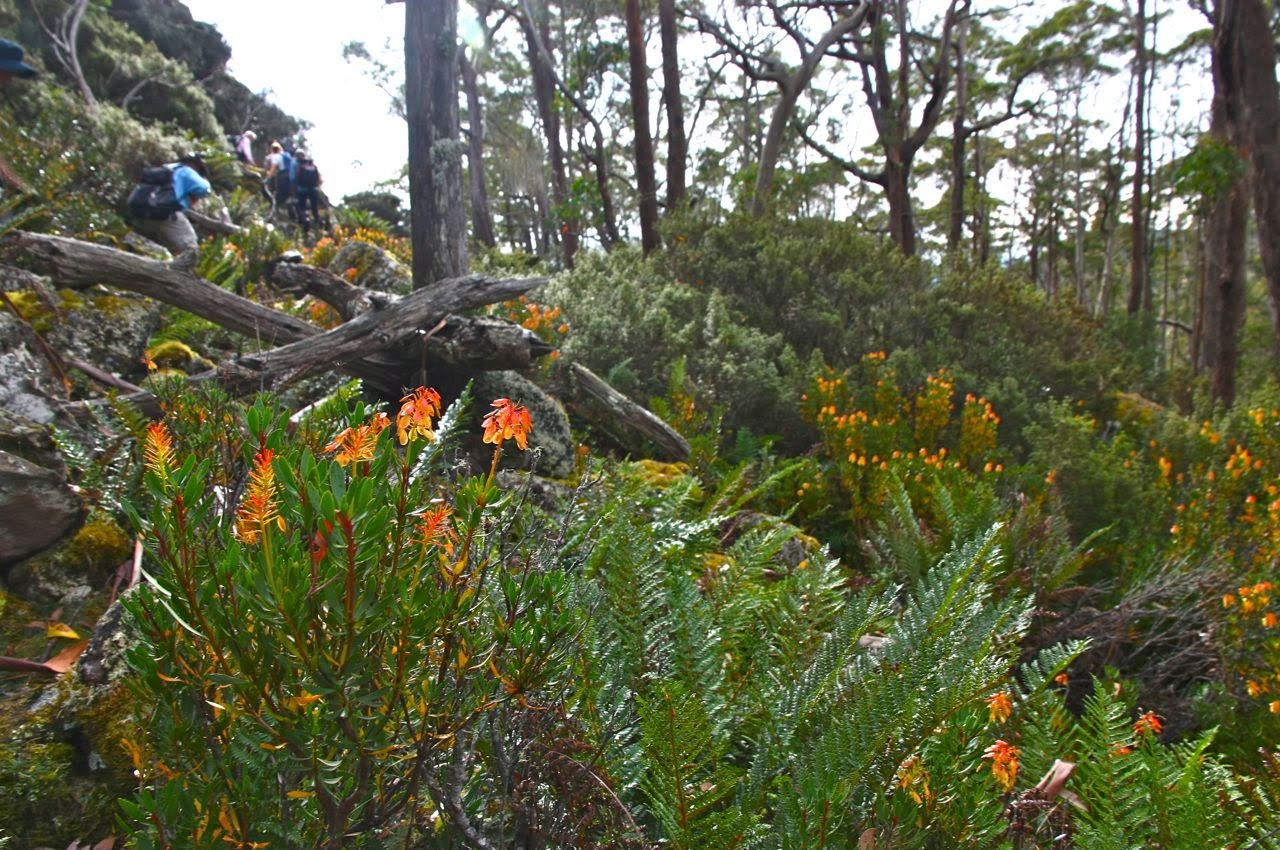
Bellendena montana lined much of the way, adding a splash of colour
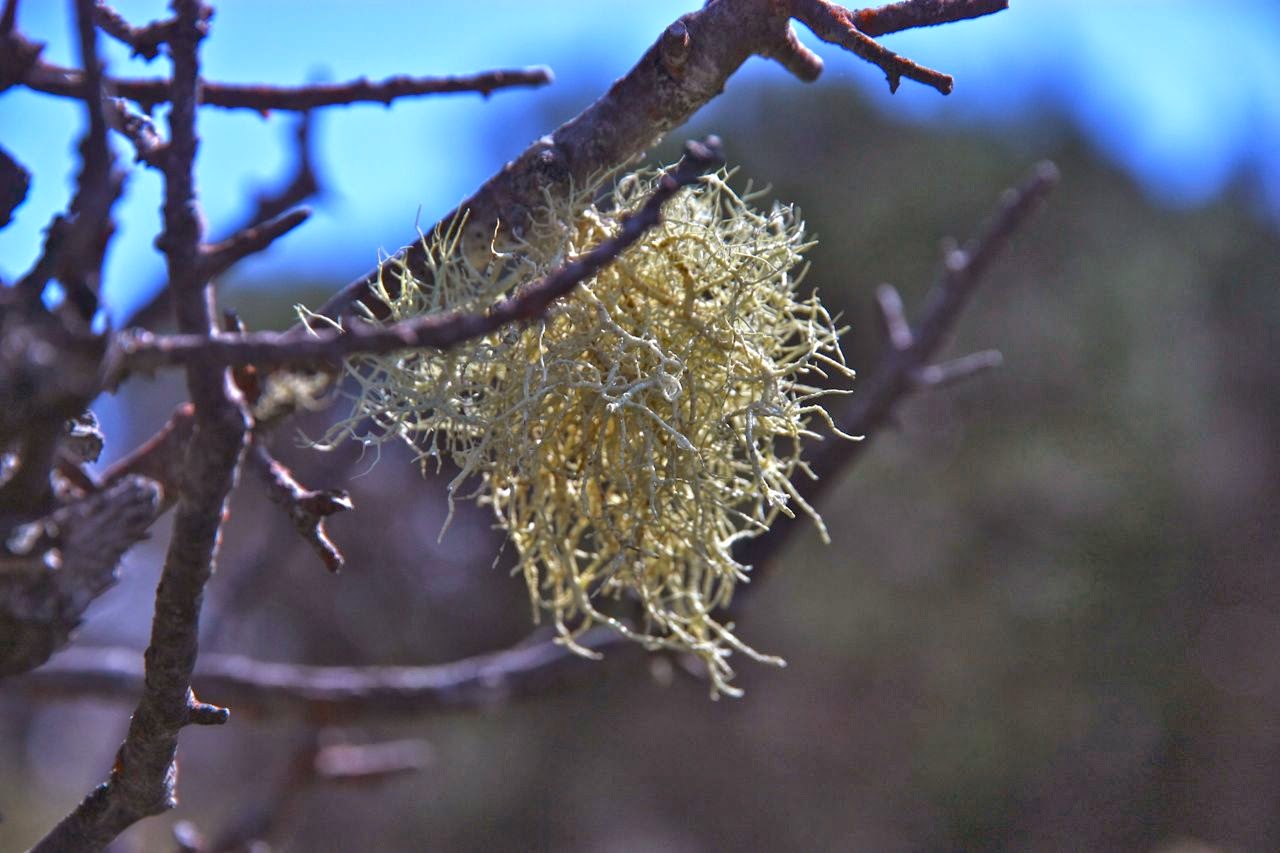
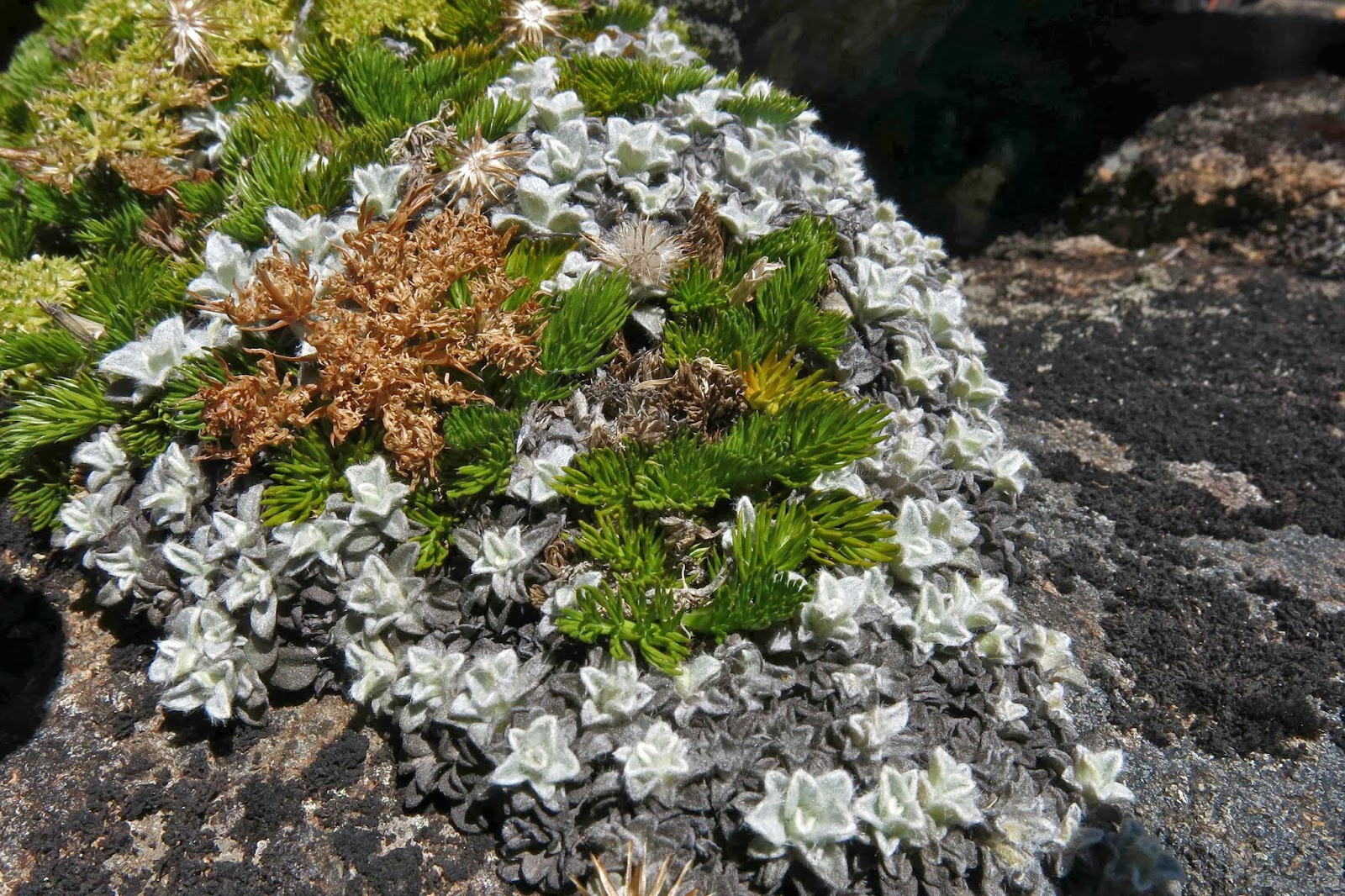
Lichen detail is always fun
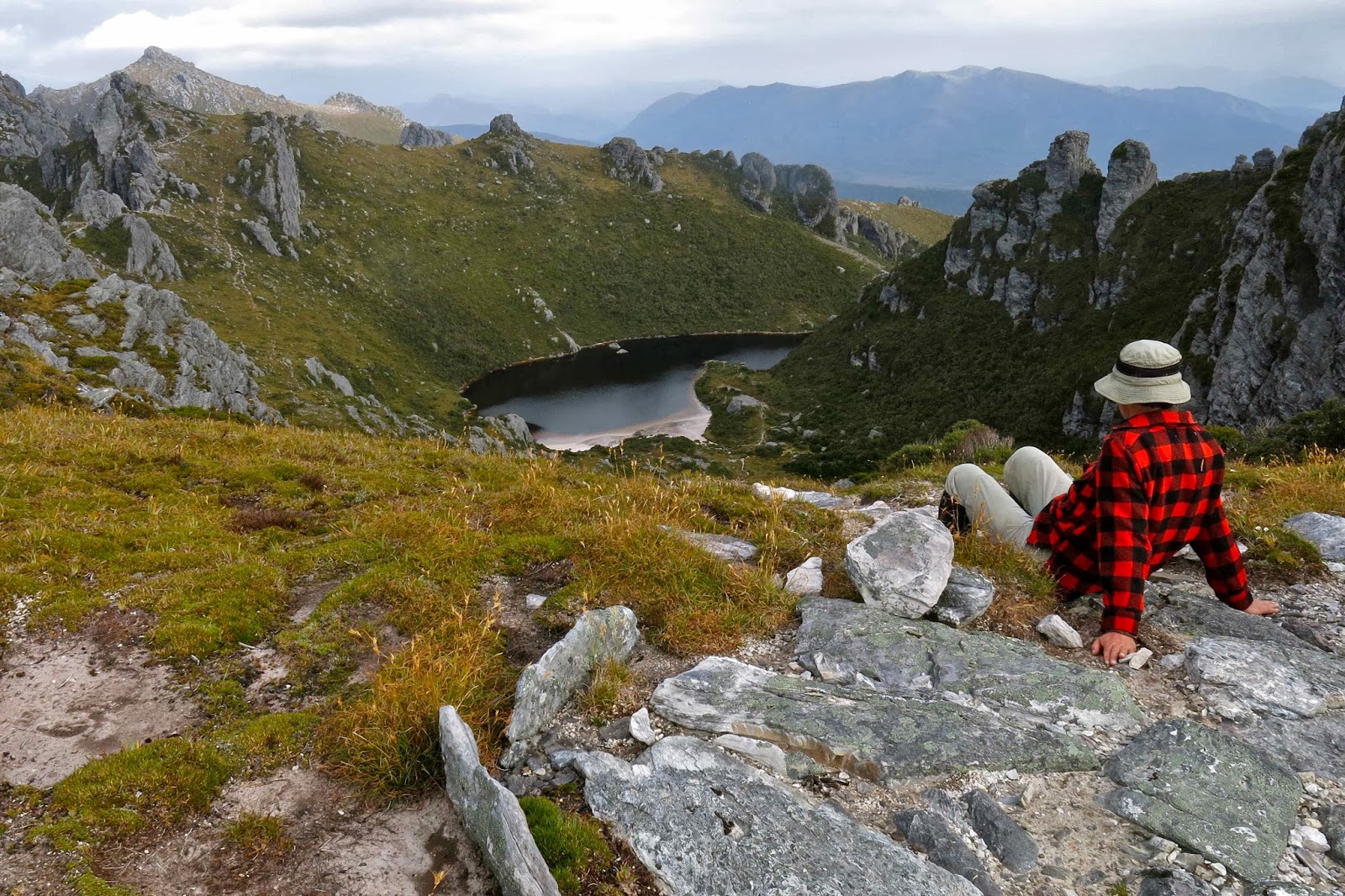
How much more tame – how very plebeian – it is to collect mountains one has climbed, and to tick mountains climbed rather than animals eaten on a list. Possibly the only characteristic I share with Buckland is the devotion of a good collector to get the next item even if it might be distasteful. And thus it was that I set out to climb West Tower, an Abel that does not have good street cred; in fact, rumour and gossip have it that West Tower is unbearably scrubby, has negligible view and is barely worth the effort for the point. As with most gossip and rumour, this is based on hasty generalisations with only a modicum of truth, I found. I was expecting a scrub fight, but only encountered a tiny patch of scrub which had enough leads through it to make progress quite bearable. I didn’t even bother to put on my scrub gloves. I think I only had to push and shove once, and that for only a metre. However, the view from the top was very ordinary, and I am happy to put a tick in that box and move on to more glorious mountains. 
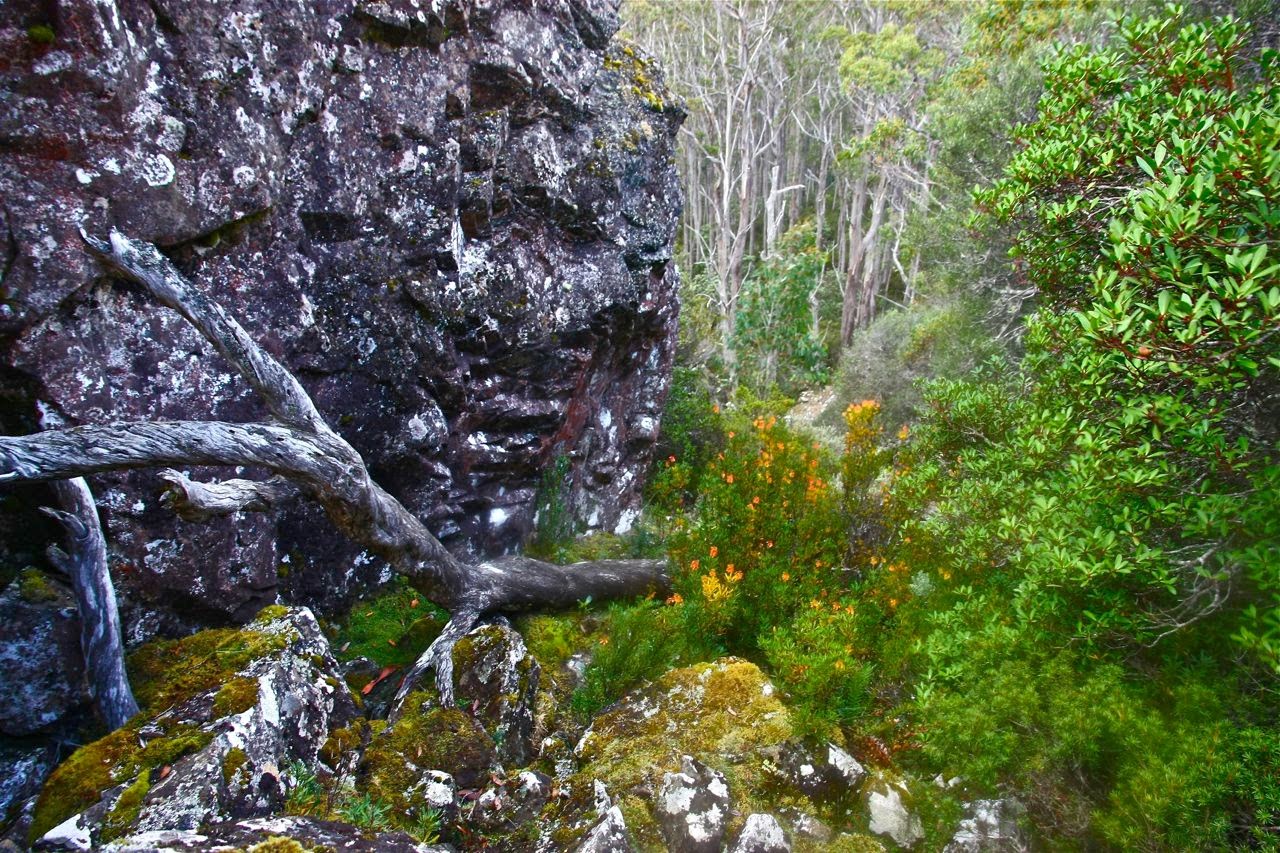
With regard to the route, we walked uphill from the locked boom gate for 12 mins before finding the remains of an old road to the left. A cairn marks the intersection. This old route travels in a rough arc, not changing height much until dropping four contours as it curves around the picturesque Tower Hill cliffs before meeting the main spur heading down from East Tower (which travels at this point a bit west of north). On joining this ridge (still on the “road”) a further six contours are lost until a broad saddle connecting the two towers is reached. After a couple of hundred metres along this saddle, there is a rusty stake with two horizontal bits at the top, and the road becomes much narrower. Time to say thanks for the lift and leave it, heading NW, keeping at first slightly left of the main turning point of the broad spur you’re climbing, but swinging further right. Ribbons magically appear at this point, and guide you up over the cliffs and down the other side, where you lose quite a lot of contours before beginning a traverse along the northern side of the cliffs, along a route that sometimes has cairns, sometimes old, and at other times new, ribbons. Mostly the path is on the border between rocks and bush, but don’t just take that for granted, and don’t go into this area if you can’t navigate without the aid of cairns, assuming the path will get you there. You need to know what you’re doing for the guides to be of assistance. The fastest route is to stay below the cliffs until the last minute, although getting onto the ridge line earlier and following it is possible, but is a prickly option.
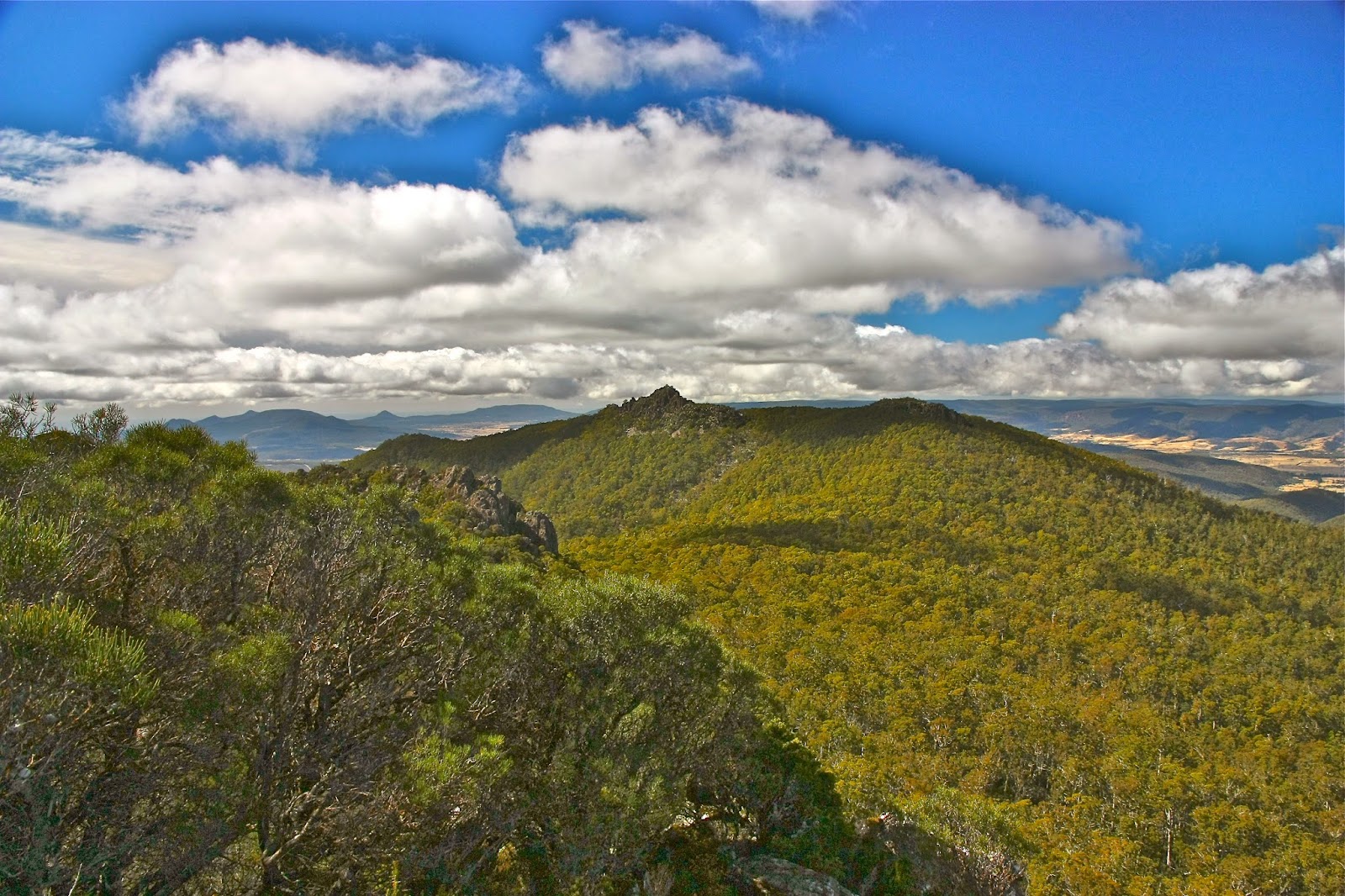
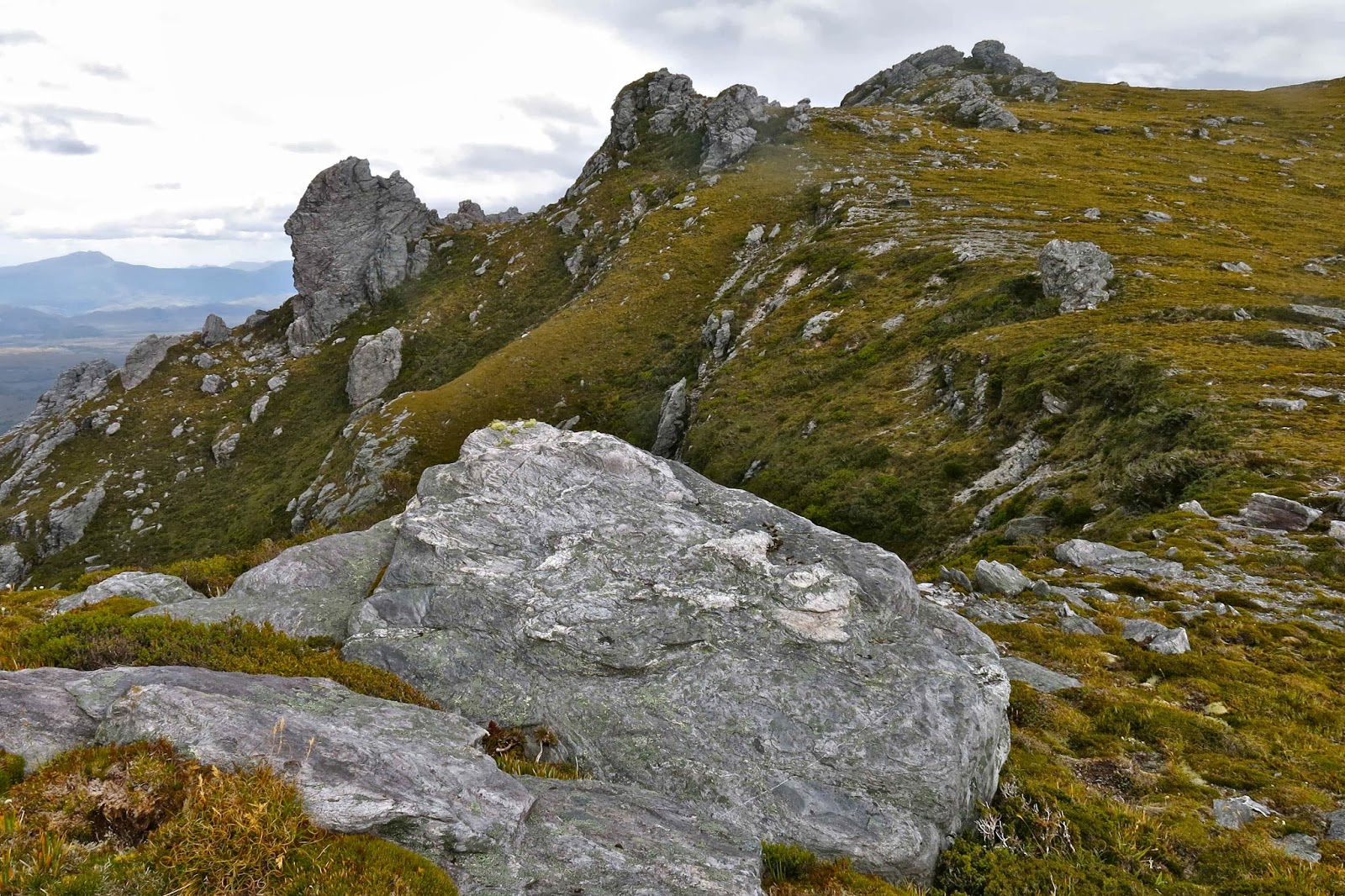
East Tower from West
I didn’t expect to find any enjoyment in East Tower (done at the end, after the return from West), with its steps and ugly infrastructure, but I actually enjoyed it far more than its western mate. Climbing up and around the locked gate was particularly good fun – even got a grunt out of me – and the view from the top was much better than that offered by the western cousin.
Western Arthurs 2014 Mar

Western Arthurs 2014 


In the 1320s, Petrarch wanted to climb Mt Ventoux (Windy Mt), as he was curious to see the view from the top of that mountain that dominated the landscape where he was situated at the time. In those days, climbing a mountain was not regarded highly, so he tried to justify his actions by precedent: King Philip of Macedon had climbed Mt Haemus to satisfy his curiosity about the view, so why couldn’t he, “a young man who holds no public life” do likewise?


Having assuaged his guilt at seeking to admire something so tellurian as a mountain, Petrarch’s next problem was to find a suitable companion. His words, written 700 years ago, mirror my own concerns when choosing a fellow climber. He wrote: “I now began to think over whom to choose as a companion. […]. One was too apathetic, the other over-anxious; one too slow, the other too hasty; this one too gloomy of temper, that one too gay. One was more simple, the other more complex than I should have liked. This man’s taciturnity, that man’s loquacity; the heavy weight and obesity of the next, the thinness and weakness of still another were reasons to deter me.” His solution was to choose his brother.


Like Petrarch, I have had a plan: namely, to return to the Western Arthurs and climb the peaks I walked past last time. Like Petrarch, I too would normally choose a family member. But this trip was too ambitious for my husband; my first-born daughter has a baby to mind; and my second-born daughter not only lives far away, but never has any time free for such extended trips. Meanwhile, my venture was too dangerous to do solo. My plan got put on my queue of other similar plans with problems.


Imagine my delight when I received an email from a new climbing buddy asking me if I would like to do the trip I had been forced to postpone. Excitedly, we made our plans. We’d climb everything as far as Pegasus (which I had already climbed) and then, on the third day, descend to meet up with our Pandani club friends and climb Mt Robinson with them. My husband would come in with the Pandani group.

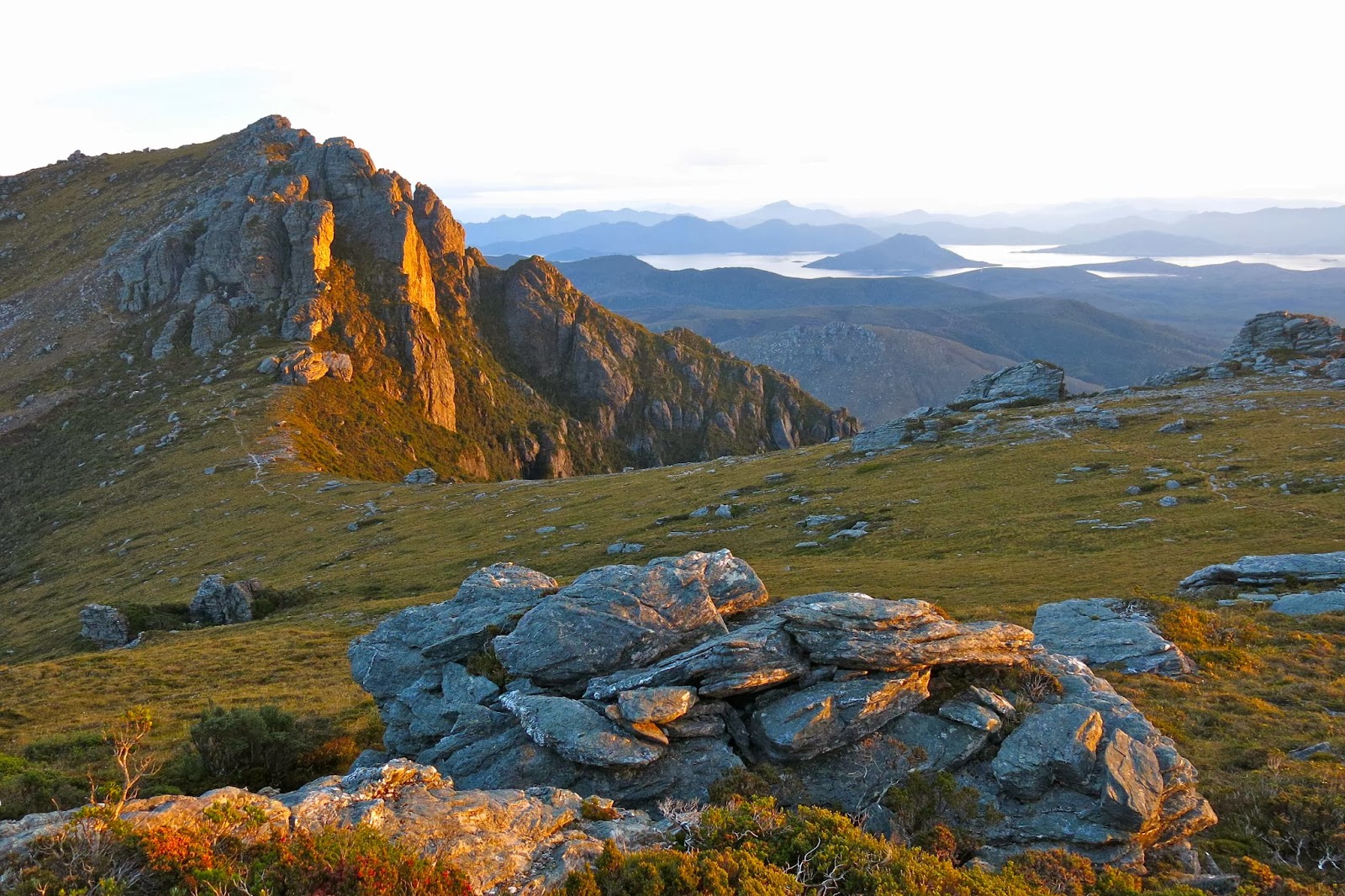
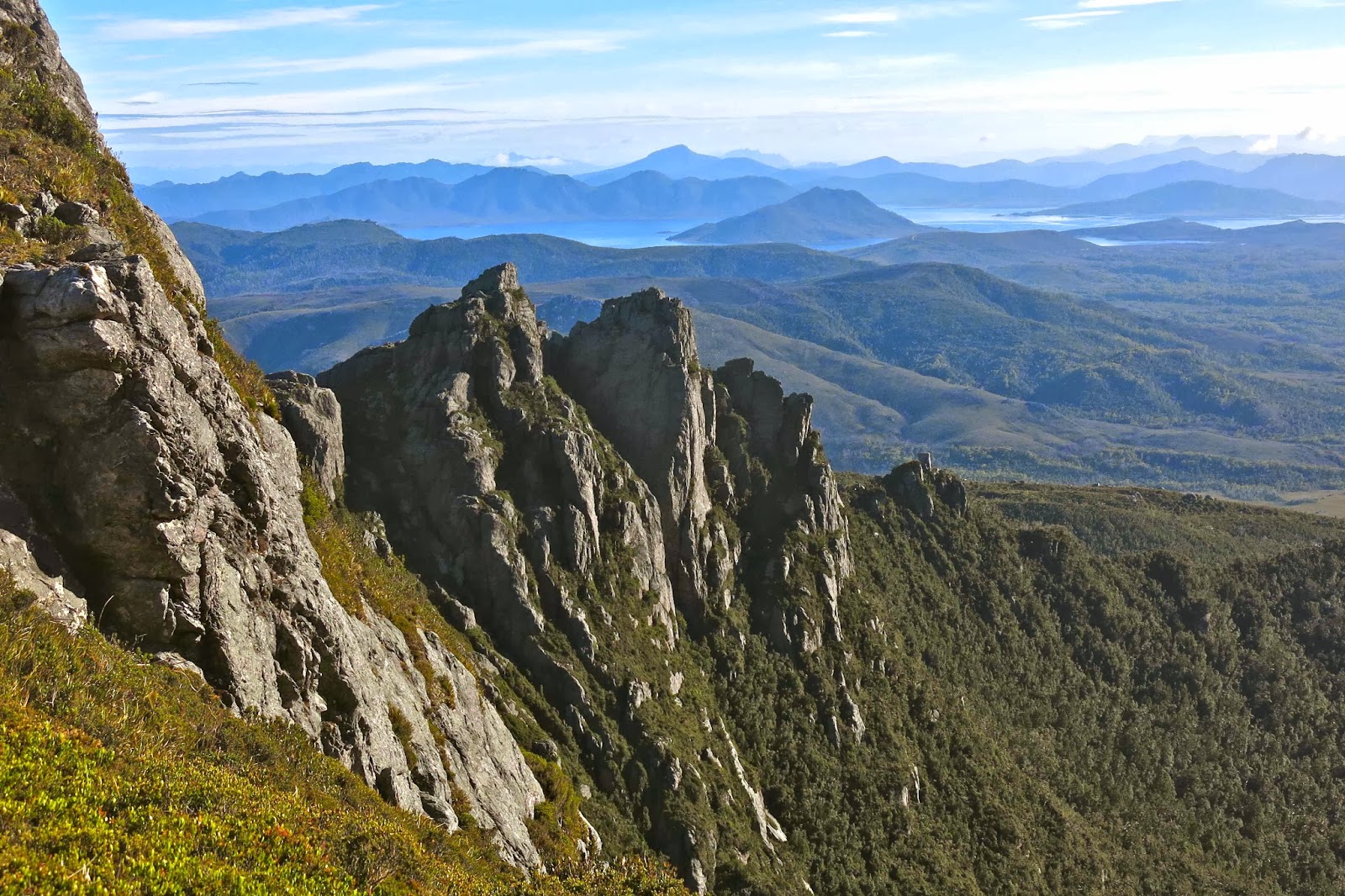
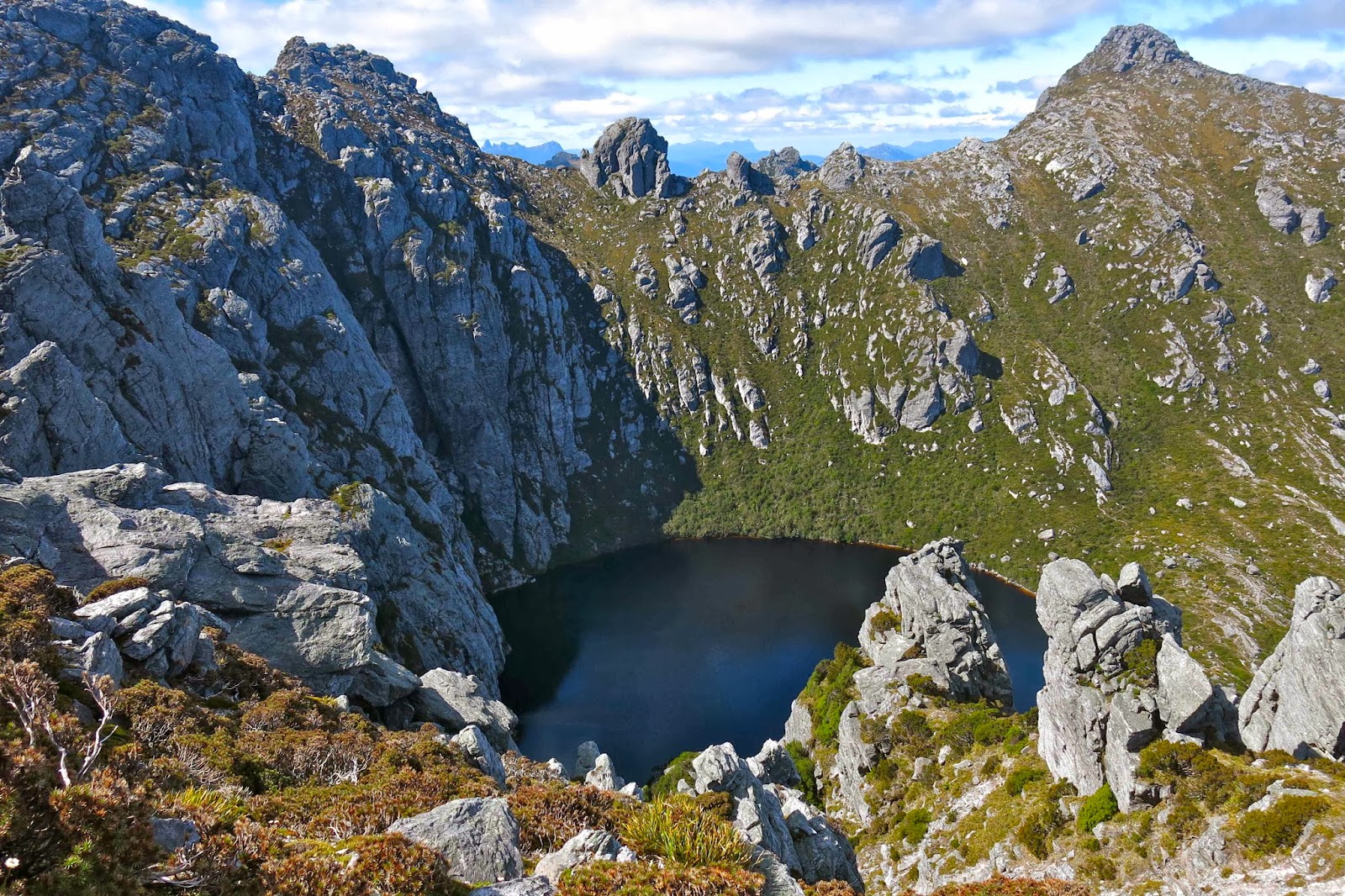
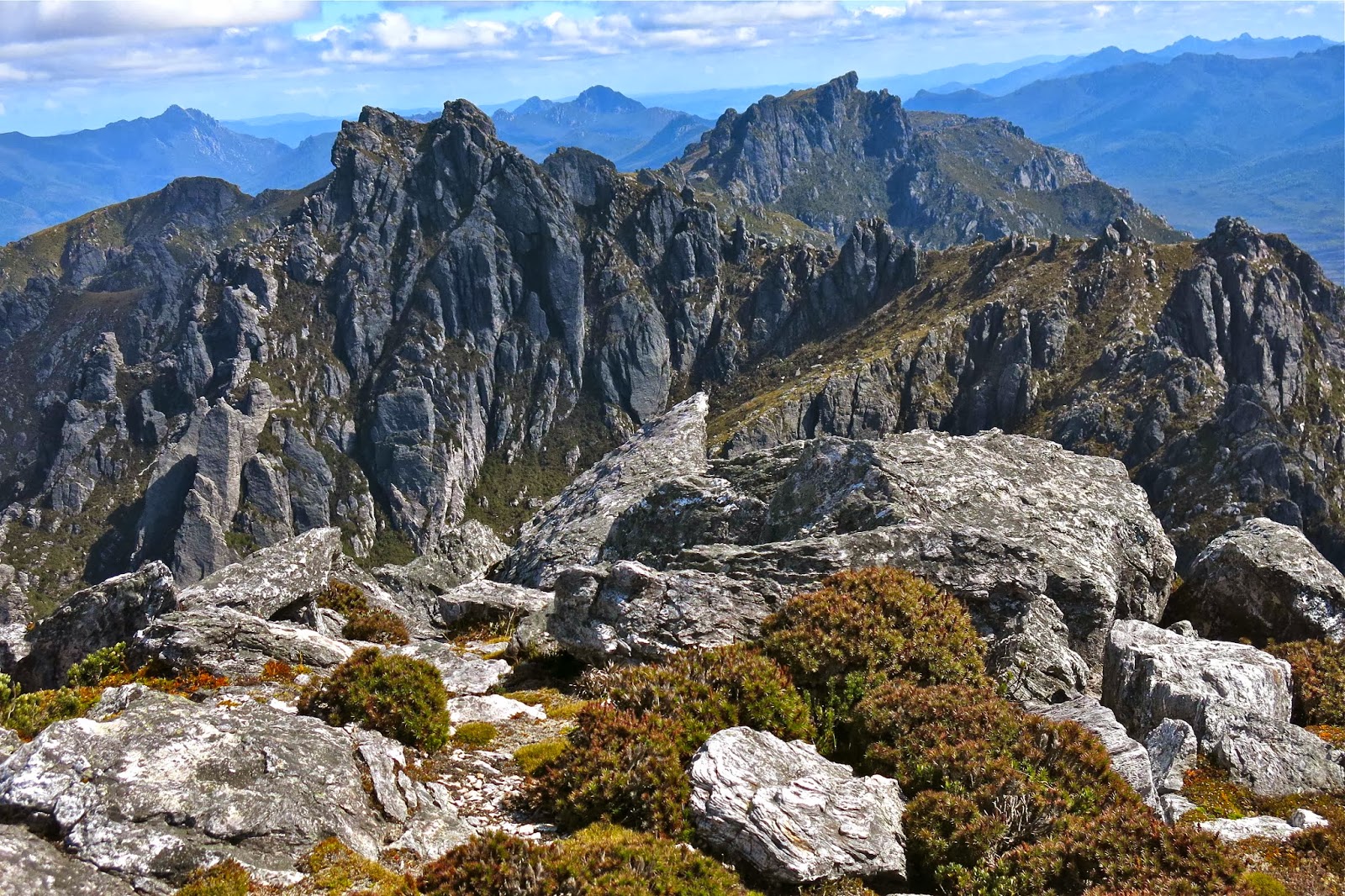
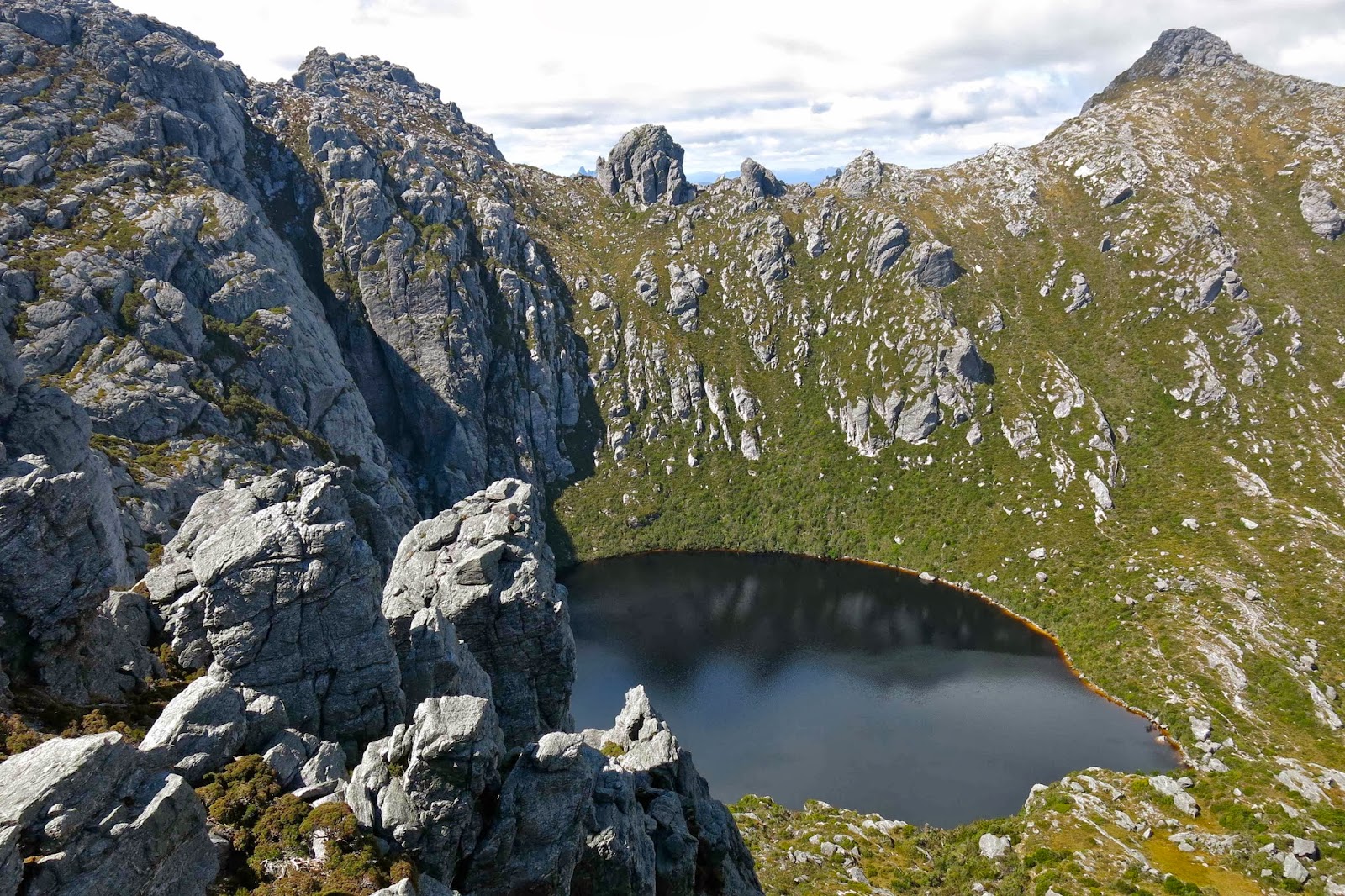
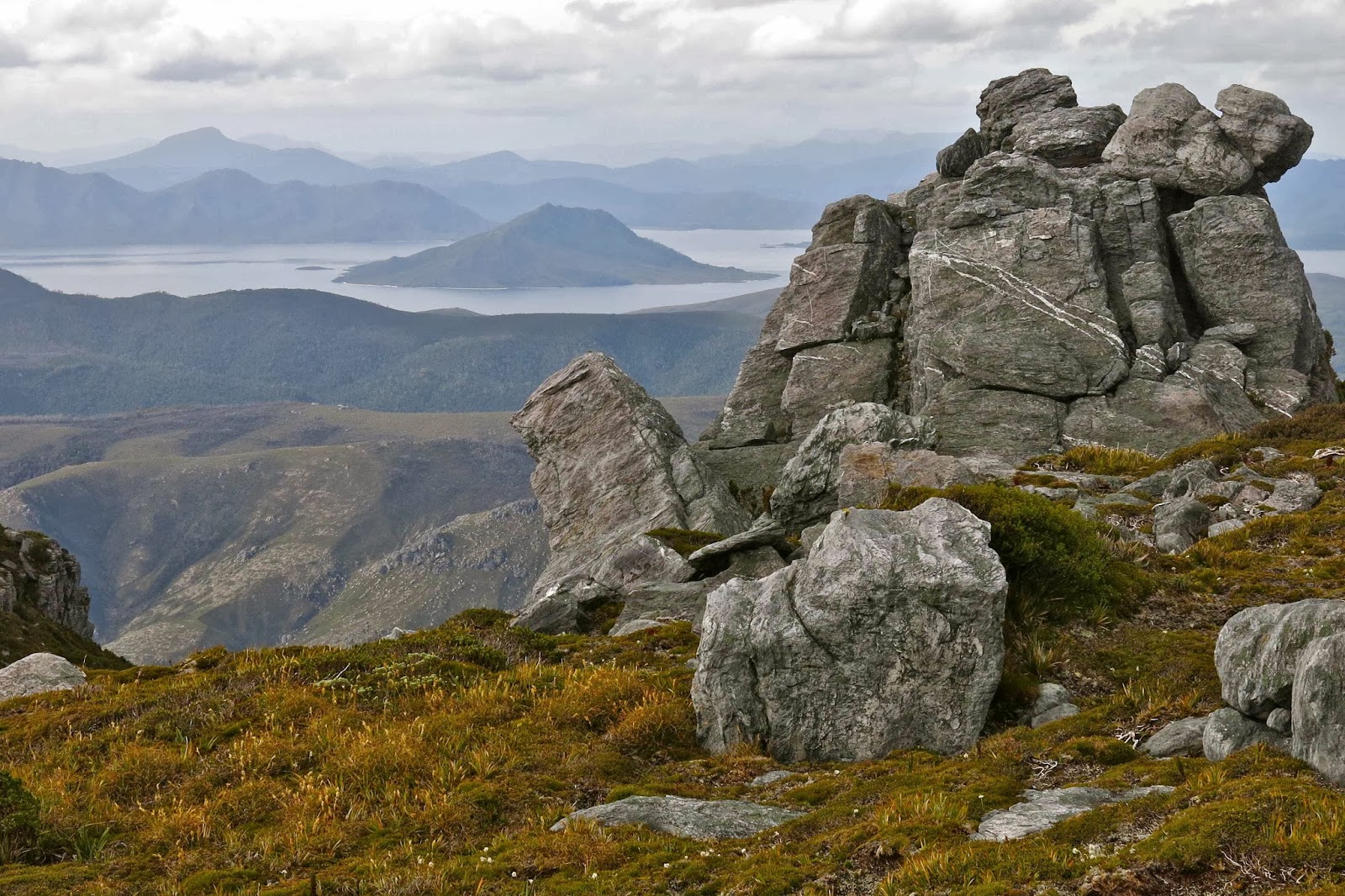
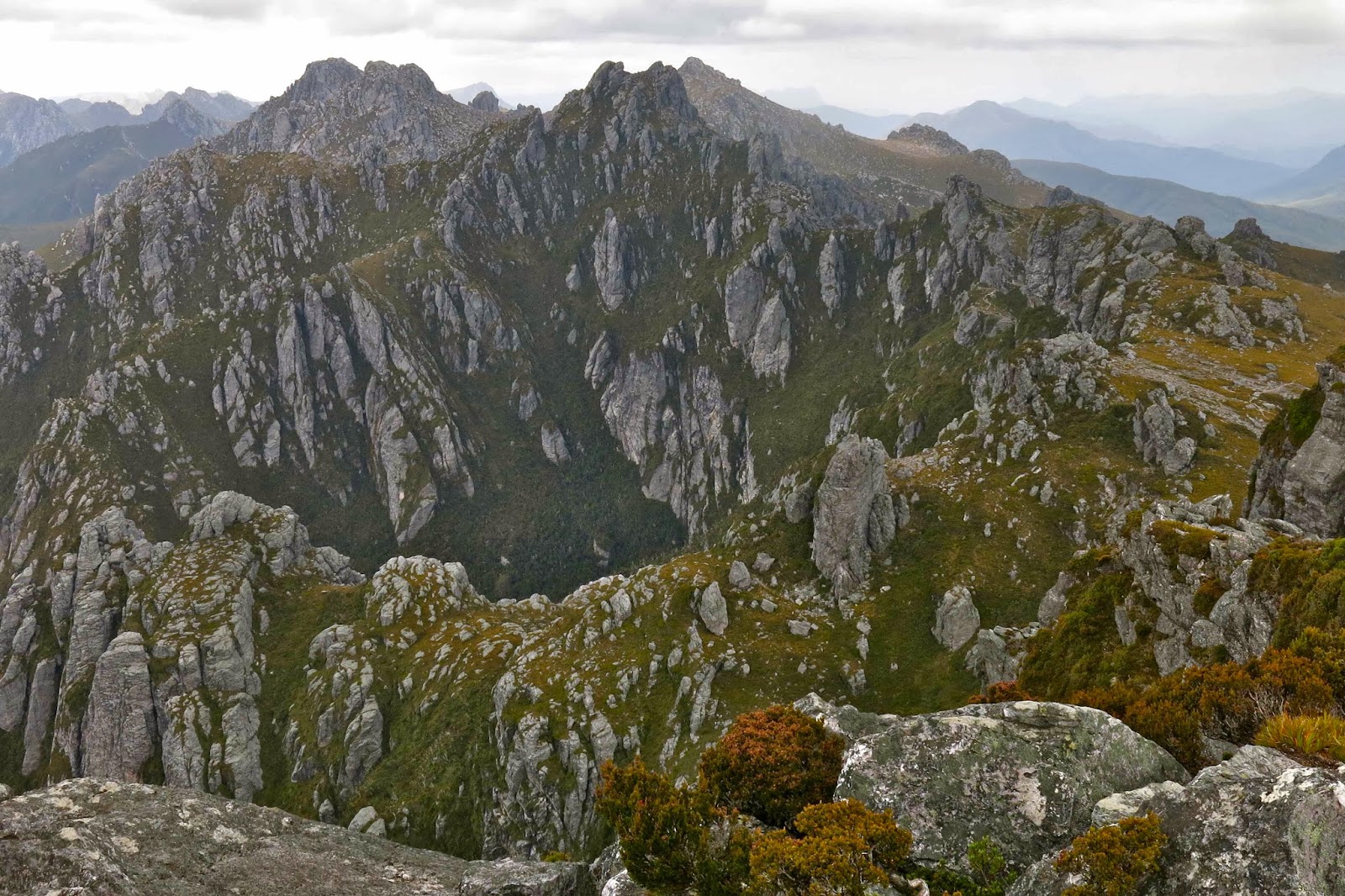
I have my old photos; I have seen those of others. Nothing, however, can quite succeed in conveying the wonder and glory of the view that begins near the top of alpha moraine and continues with you as you delight your way along the ridgeline of the range. It’s not just that you can see “forever” (so it seems), or that the mountains that form layer after layer of graduated silhouettes are so shapely: part of the allure is from changing focus from infinity to macro and still finding wonder. For me, the rocks are particularly appealing. Some are piles of pancakes; some have been twisted and warped, while others jut sharply into the sky. Some are soft grey, others pure white; some have a hint of pink.

Unfortunately, most of the wildflowers had finished for the year, but stunted Eucryphia (leatherwood) perfumed the air with their blossom as did another (unidentified) regrowth plant, which seemed to project its fragrance afar like a ventriloquist.

There were some Blandfordia (Christmas Bells) in flower, and an orchid or two; the Drosera (sundews) had huge flowers, and the darling Utricularia dichotoma (fairy aprons) spotted the dark mud with their delicate mauve beauty. Up high I saw a few Ranunculas. Meanwhile, the approach of autumn was heralded by mycena and hygrocybe fungi. Near and far, it was all magnificent.


The other thing I love about mountains is that you have to climb them, and I adore the act of gaining height: I find it exhilarating (and hate being asked to stop before I reach the top). In the Western Arthurs, there is an endless variety of lumps and bumps. It’s one of the best playgrounds imaginable in its perfect provision of “structures”and vistas.

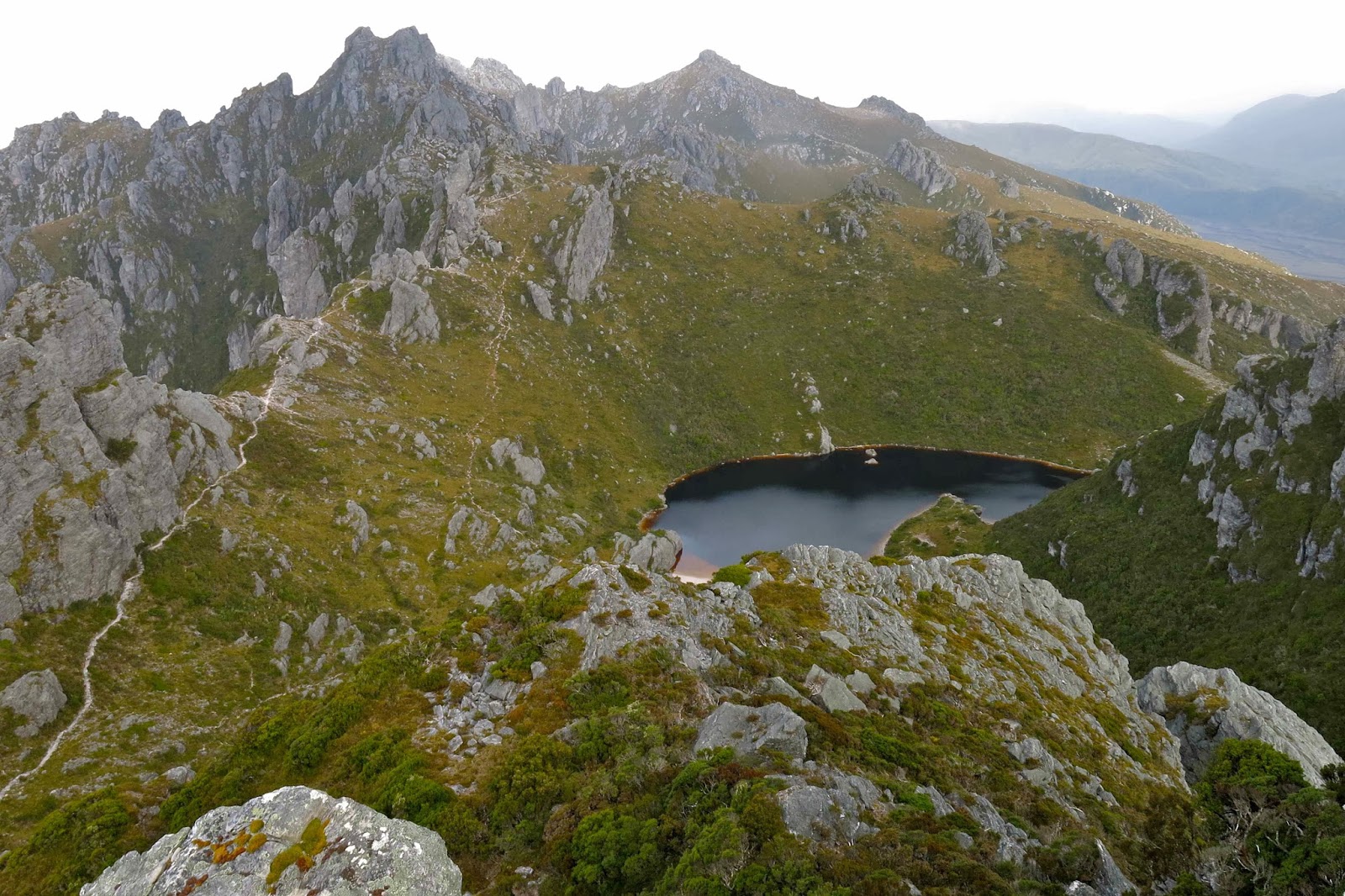
Once we were up on the ridge, forward movement was retarded by much clicking of cameras. Who can resist, with sparkling, tannin-coloured, white-beached lakes below; a cornucopia of other mountains around, and the blue of the much larger expanse of Lake Pedder to the north, and Bathurst Harbour and Cox’s Bight in the southern distance? We only climbed two mountains that day (Hesperus and Capella Crags), but were very satisfied as we descended to Lake Cygnus.

Day 2.

The next morning I was up before dawn and reclimbed Capella Crags before joining John for breakfast and the day proper. The sky became bluer as the day progressed, and we feasted on more wonderful high views to eternity. After Hayes and Procyon Peak, we tried to do the back route to Orion, but after 49 minutes gave up in a scrubby gully that looked as if it could lead to the summit, but gave no guarantees. For most of our route, drops into Square Lake were huge and precipitous. I was worried about ruining my camera if I fell in, but John assured me I’d be dead by the time I hit the water, so wouldn’t be bothered by this detail. Later, from Square Lake, we could see that the gully did not end in an unclimbable cul de sac, but we couldn’t waste the time experimenting when there. Off we set up Orion on a longer but easier way. It had been fun being adventurous and forging our own route.

Mission accomplished – on top of Sirius, our last mountain

I think the views from Orion were perhaps my favourite, although I did love Sirius as it marked our “mission accomplished”. It was with a jubilant spirit that we waltzed our way back behind the mountains, popping out at various saddles that offered views to the north, and wended our way home to Lake Cygnus.

Day 3.
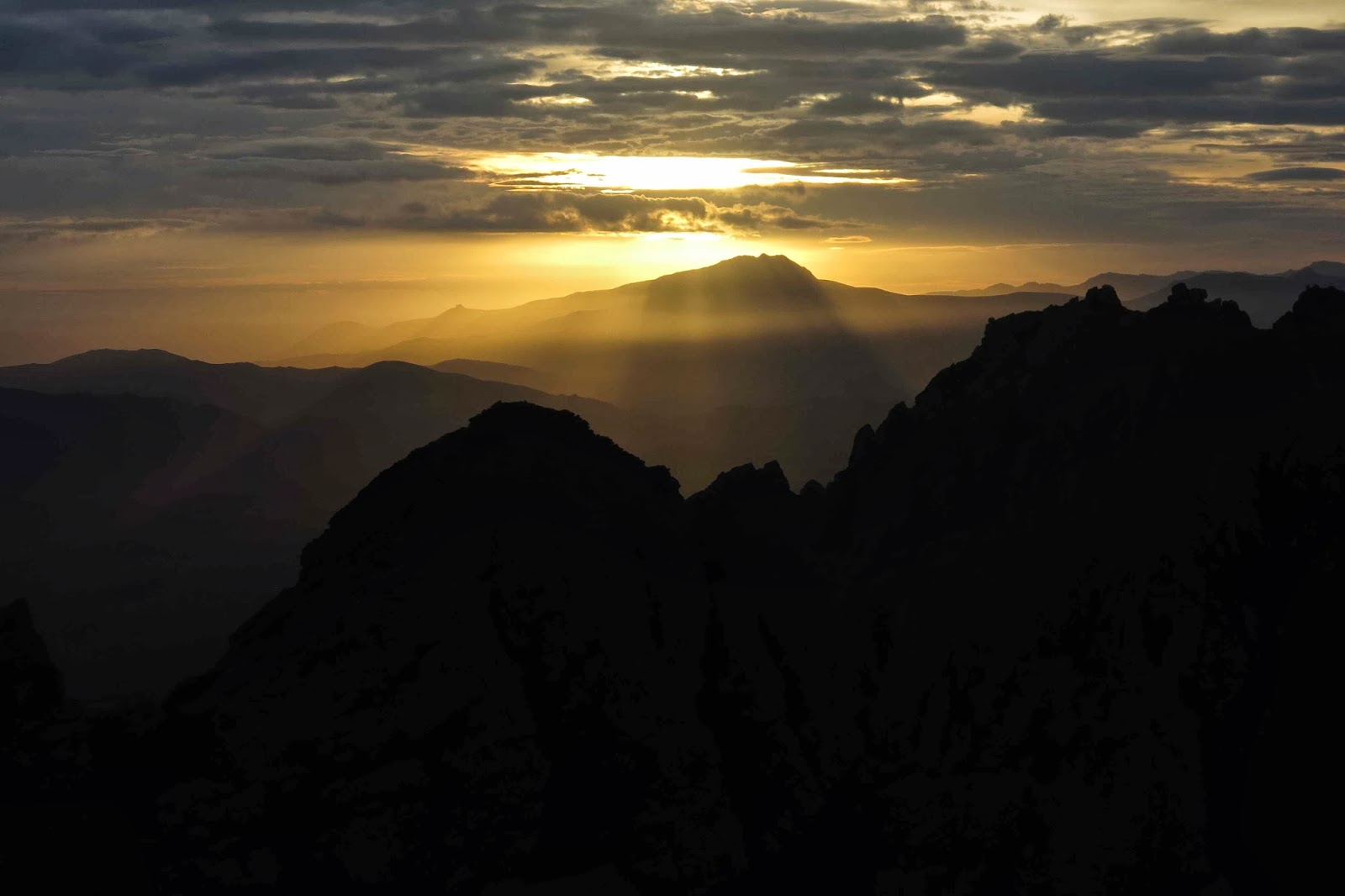
Once more, I was up before dawn, donning warm clothes and grabbing my camera to race to my chosen saddle window to see the sun rise behind Mt Anne. There seems to be something faulty about my hypothalamus, as I have trouble recognising satiety, so kept climbing, finding myself eventually on Hayes (but photographing while I went). This dawn was my favourite sort – soft pink tones over fluffy cotton balls in the valleys.
 After breakfast and a very leisurely decamping process (trying to avoid departure), we left our haven. Instead of following alpha moraine back, we pursued a spur leading not quite 180 degrees from it, and connected up with the Port Davey Track much further along. This spur is marked on old maps as having a route, but we found no trace of one. The fire of a year ago burned the vegetation out, and you can still smell ashes. Yabby holes abound. We got very black indeed. It was great fun freelancing over the hills and far away, choosing our own sub-spur until we reached the track again. Later that afternoon, the Pandani Group arrived, having walked in from Scotts Peak Dam. Everyone except wusses swam. I went to bed disguised as night.

Snowy South 2014 Feb


Mt Snowy South Feb 2014
I have heard a lot of different stories of groups who tried to summit Mt Snowy South and failed, so I was not full of confidence as our nice small party set out, but the rainforest was so beautiful, it hardly mattered. Meanwhile, the climb to Lake Skinner helped clear my head from the overdose of caffeine I’d had to make sure I stayed awake, having got up at 4.30 in order to join the others in Hobart on time – and the conversation was fun. Up we climbed.

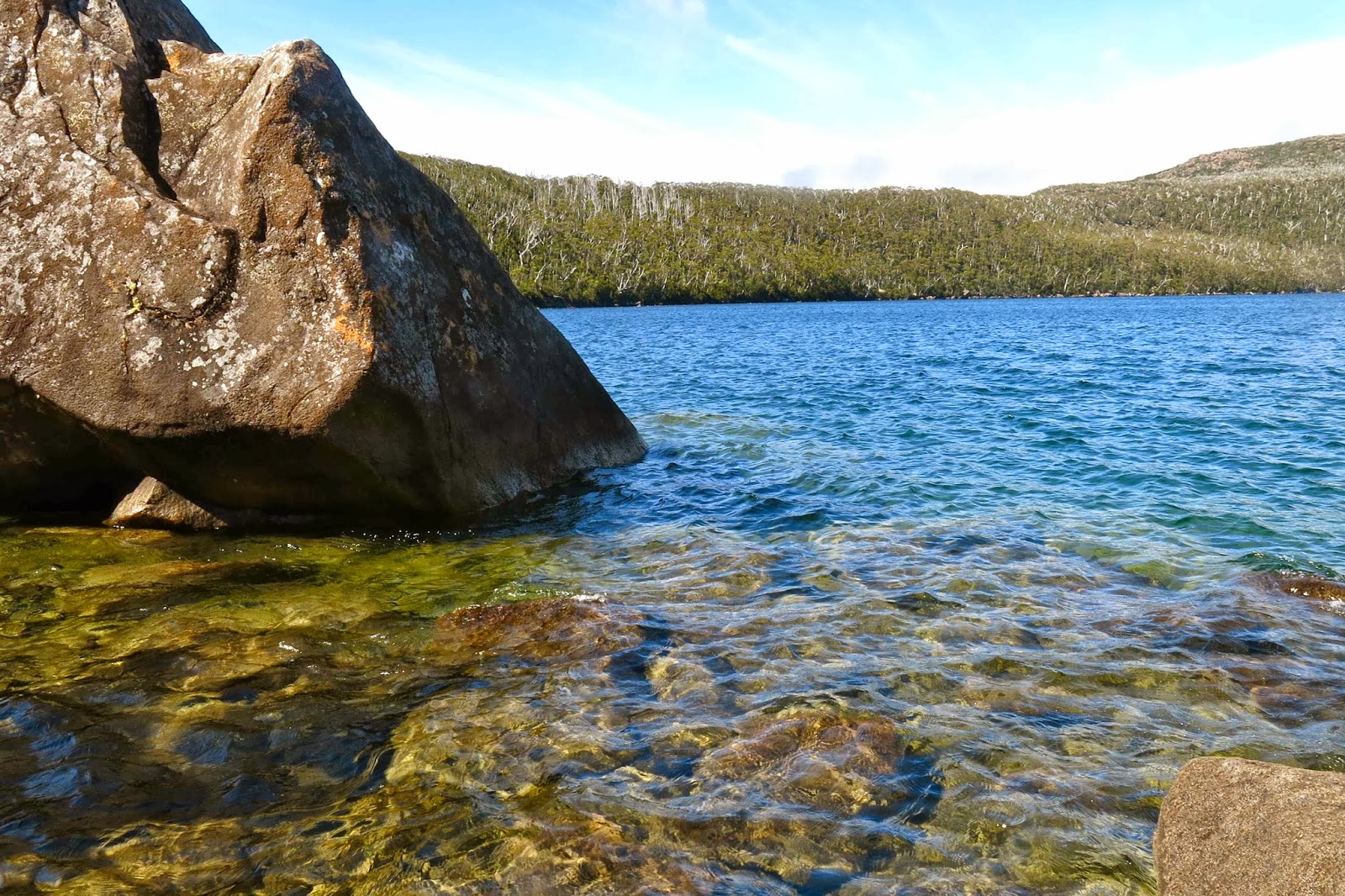
Lake Skinner surprised, as it was a beautiful blue that I associate more with the glacial lakes of Europe than with Tassie.

After morning tea by the lake, we set out to finish off the climb, up onto the main ridge and over the boulders to the summit, out of sight at this stage. After a short amount of time two of us found ourselves alone at the front, and decided to have fun moving nice and quickly up the boulders, chatting while we went, but not stopping – just a nice steady but satisfying pace. It was very enjoyable indeed to be allowed to go at our own pace to the top and just meet the others there. We were both exhilarated by the climb and the dancing on the rocks of the ascent. When we reached the top, neither wanted to touch the summit before the other, so to maintain the non-competitive nature of what had taken place, we held hands to jump onto the final summit rock, ensuring we touched it simultaneously.

A summit is, after all, a summit, so of course it was good to be up there in the grand arena with its sense of space. However, I enjoyed the colours, textures and shape of the boulders as much as the rather murky vista. In terms of view, it would not rank in a list of my all time favourites. We all, of course, enjoyed our lunch break surveying the scene, but for me, this particular mountain will be remembered for the fun of the scramble to the top rather than what I saw once I got there.

More chatter filled the way down, bouncing again over rocks, descending past the pandani overlooking the lake and dropping further through the inviting green rainforest to the car. “Make sure you keep singing all the way home”, my new friends encouraged me as we parted in Hobart, having been told that that’s how I stay awake on long journeys. After five hours of solo driving (two and a half each way), my voice was quite hoarse as I pulled into our drive.

Field East 2014 Feb

Mt Field East 22 Feb 2014


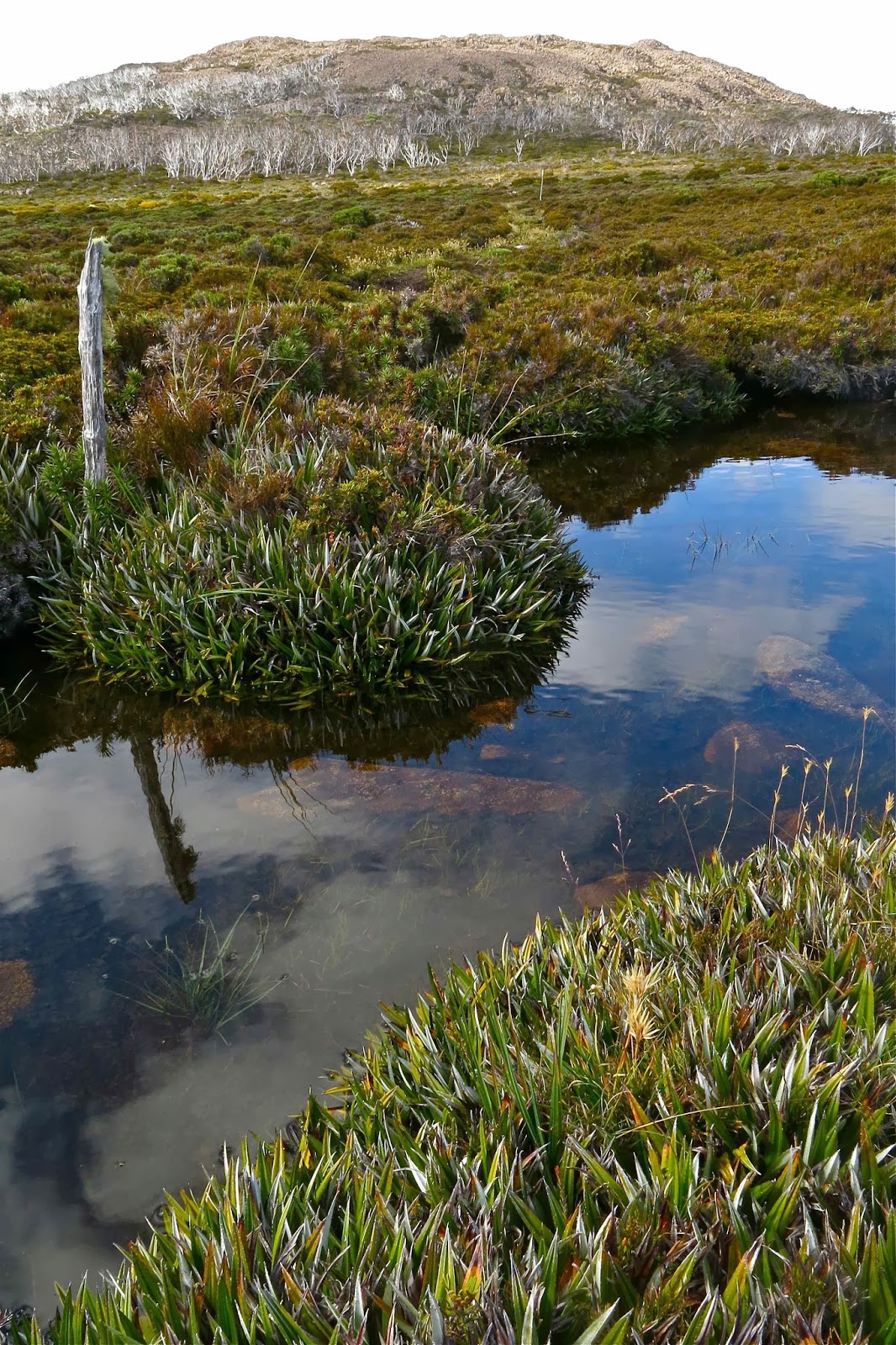
Approaching our mountain, across Windy Moor

When deciding on a mountain to show our Swedish friends, we chose Mt Field East, as it was a mountain we could get up and down in a hurry, having not arrived at the National Park until the day was too far gone for anything longer. It only took us an hour each way, and offered some nice detail at the macro level. The wind was very strong, and views were murky, so it was not a day for grand vistas or panorama shots.

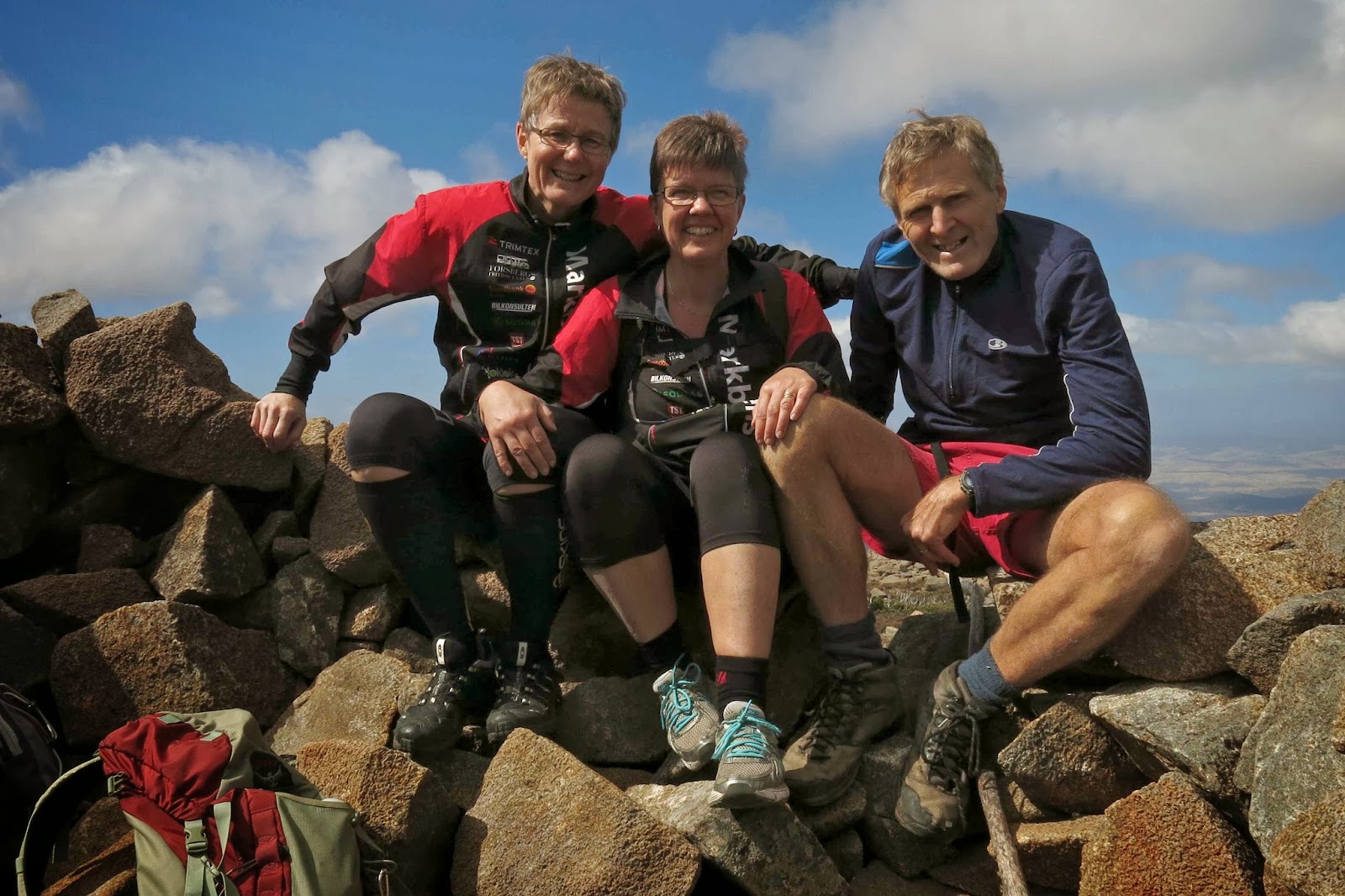
Swedes on the summit (and Bruce)


As the walk was short, it gave us time to take in waterfalls and tall trees further down. It was a pleasant introduction to the park for the Swedish guests we are showing around.


Black Bluff Range 2014 Feb

Black Bluff and Black Bluff Range, 15 Feb, 2014

Banks of the Leven River near Taylors Flats, below Black Bluff.
Surprised by Joy is the title of a book by C.S. Lewis, but I’ll steal his words to use as a summary to describe our walk to Black Bluff and the Black Bluff Range on Saturday.
 
Paddys Lake

First, we were surprised by the beauty of scenery, which far surpassed any expectations, and second, surprised by the weather, which went nowhere near the grim predictions of the Bureau of Meteorology. I was also surprised by the appealing banks of the Leven River from Taylors Flats to the start of the climb proper. The only thing that didn’t surprise was fun of the climb. I once received the double-entendre cognomen “Mountain Maid”, and that journalist really did get it right. I am always high in more than one way when on top of a mountain, and I invariably adore the actual activity of climbing to get up there.

Near the summit
Taylors Flats – a location seemingly in the middle of nowhere – turned out to be a grassy oasis with bright green banks leading down to a tranquil, delightfully clear and inviting Leven River. One parks there and follows the peaceful banks along for a short while before climbing. I noted that the depth was probably just right in places for a dip at the far end of the day. Pity the forecast was for plenty of rain.
We startled a wedge-tailed eagle munching a morning tea (of possum) as we went along. He didn’t enjoy our interruption, actually, so did not fly away or even ascend to giddy heights, but just moved along to perch in a tree only slightly out of reach so he could resume his gastronomic pleasures once we’d departed. This gave us a good view of him!
Up we went into the clouds, stopping at Paddys Lake for our first proper stop with drink and snacks.
Fun rocks on the range

The only photos I had seen of this lake had not been taken in advantageous lighting, and were rather flat. Now we were at the real thing, we were further surprised by joy. She had on a silk clouded mantel that suited her complexion perfectly, with diamond studded jewellery that offset the soft greys of the cloak. The form of the Bluff behind was completely obscured, but hints of shapely rocks and King Billy pines teased us from their hiding places in the mist.

Climbing the last rocks on the range summit
Many photos later, we were off, higher up into thicker mist and our first objective, the Bluff hiding up there. We saw nothing from the top, but we were fine with that, and ready to press on to the highest point of the range, about two kilometres further on. We wanted to finish our climbing before lunch, and, more importantly, before the heavy rain fell. As visibility was often down to about 50 metres or less, we agreed on a route before setting off, making good use of my phone gps, which has a lovely big screen and offers fully contoured maps. We marked a couple of way points that we wanted to go through en route. Off we set down the rocks into the thick grey soup.

Paddys Lake from above, on the way back down.
We had arrived at the first saddle separating the two goals, which is only a very short distance from Black Bluff itself, when all of a sudden the mist cleared, revealing an alpine moor of magnificent walking through ankle-high vegetation – mostly pineapple grass – over the hills and far away. We were excited by the beauty and by the sense of wide open space with vistas appearing and disappearing as the mist swirled around, playing games with us and the rocks around. I sang with joy. It was totally wonderful up there.

Same (but lower)
All too soon we were on the second summit, high point of the range itself, and then it was time for lunch. Thanks to the mist, the view was not static, but changed by the moment as we watched the actors in our private drama – well known, academy-award winning ones like Cradle and Barn, Murchison, Pelion West and more – make their entry, and then leave the stage.
Mycoacia subceracea: Colourful strip of fungi
Back down the bottom, there was time and warmth for a swim in the river before going to have a look at the Leven Gorge, not too far away. I’m glad BoM gets it wrong sometimes.